- Private car and driver in Delhi / India
- +91-8447445445
- info@discoverindiabycar.com sugar.ankit@yahoo.com
 +91-9818434712
- Follow us:



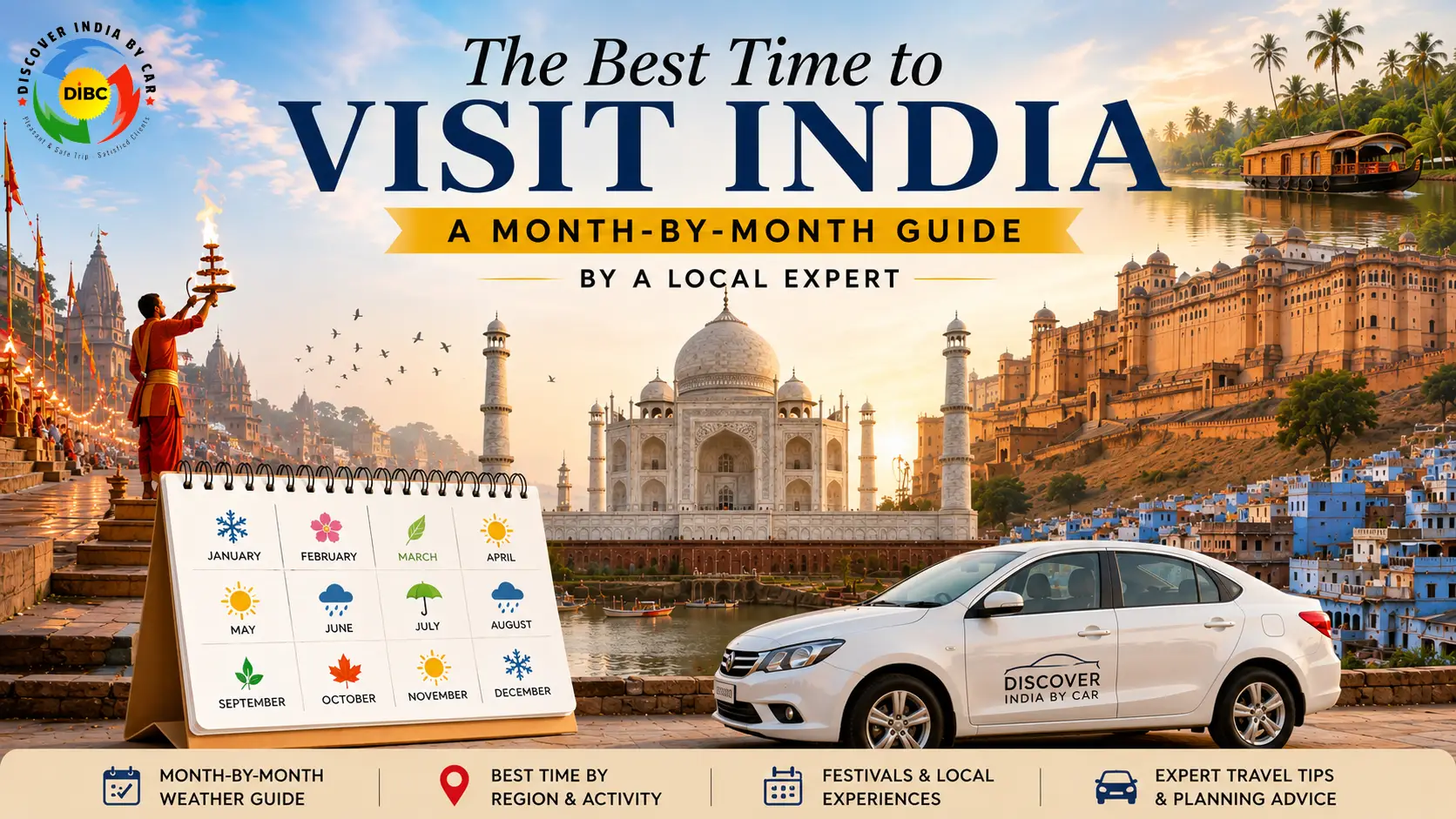
Best Time to Visit India: Month-by-Month Local Guide
✍️ Written by Ankit Sugar | North India Road Trip Expert & Founder, Discover India By Car
Having navigated tens of thousands of kilometres across India’s most iconic routes — from the fog-heavy winter highways of the Golden Triangle to the sun-baked stretches of the Thar Desert — I created this ground-reality guide to save you from the most common seasonal blunders. I haven’t just researched India’s travel seasons; I have driven through them. From surviving the brutal May heat in Agra to chasing the perfect post-monsoon greenery in Rajasthan, everything in this guide is born from my own lived experience behind the wheel and alongside travellers just like you.
The Best Time to Visit India: A Month-by-Month Guide by a Local Expert
People often ask me, “When is the absolute best time to fly to India?” The truth is, India doesn’t just have one travel season. Depending on where you land, it essentially has twelve. Pick the wrong month for your destination, and your dream vacation can quickly turn into a logistical nightmare.
I have been guiding tourists across India for over 14 years. I have watched families arrive in Delhi in May expecting a pleasant holiday and find themselves gasping in 45°C heat. I have seen honeymooners land in Rajasthan during the monsoon and discover that the romantic desert experience they had dreamed about is, in July, a muddy, flooded road. On the other hand, I have watched first-time visitors step out at the Taj Mahal on a cold, crisp November morning and burst into tears at the sight of it.
The difference between these experiences is not money, not the itinerary, and not the hotel. It is simply timing.
In this guide, I am going to break down — honestly and in detail — the best time to visit India based on the season, the region, and what you actually want to do. By the end of this, you will know exactly when to book your trip.
India’s 3 Travel Seasons Explained (Peak, Shoulder, Monsoon)
Before we go month by month, you need to understand that India operates on three distinct travel seasons. Every decision you make — when to go, where to go, what to pack, how much to budget — flows from this.
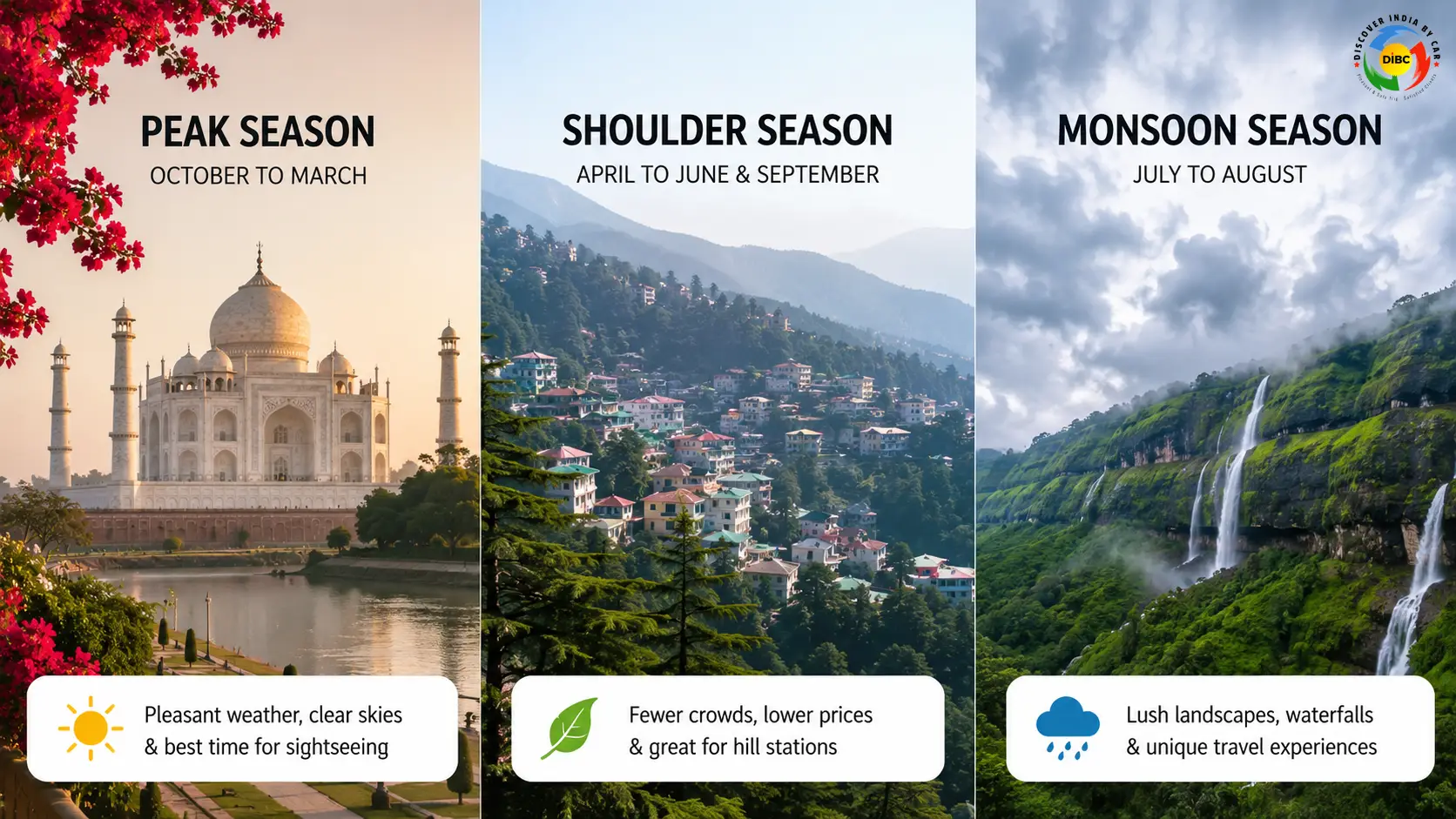
The Peak Season: October to March
This is when India is at its best for most travelers. The weather across North India, Rajasthan, and the Golden Triangle (Delhi–Agra–Jaipur) is cool, clear, and comfortable. Days sit between 15°C and 28°C, evenings are cool but manageable, and the skies are almost always blue. This is the india travel season that fills flights and hotels, and for good reason — it is genuinely wonderful.
If you are visiting for the first time, a honeymoon, or a two-to-three week vacation, the peak season is almost certainly when you should come.
The Shoulder Season: April to June (Hill Stations) and September (Transition)
April and May are intensely hot in the plains — Delhi regularly hits 42–46°C — but this is when India’s hill stations come alive. Shimla, Manali, Mussoorie, Darjeeling, and Ooty are at their lush, green best. June and September are transition months: the south and Kerala can be excellent, and the crowds in popular north Indian monuments thin out considerably.
If you have flexibility and want lower prices and fewer crowds, the shoulder season rewards smart planners. For budget-conscious travelers, this is the golden window. You can often see flight prices to major hubs like Delhi or Mumbai drop by 15% to 25%, and luxury heritage hotels in Rajasthan suddenly become surprisingly affordable.
The Monsoon Season: July to August
The monsoon transforms India visually. The parched, brown landscapes become green and dramatic. Waterfalls appear out of nowhere. Forts and ancient ruins take on a different atmosphere entirely. However, heavy rain, flooding, and disrupted transport can make travel genuinely difficult.
The monsoon is not off-limits — but you need to know which regions it helps and which it punishes.
Month-by-Month Breakdown: January to December
Here is the complete india weather month by month guide, based on firsthand experience across the country.
October to March — The Golden Season (Best for North India)
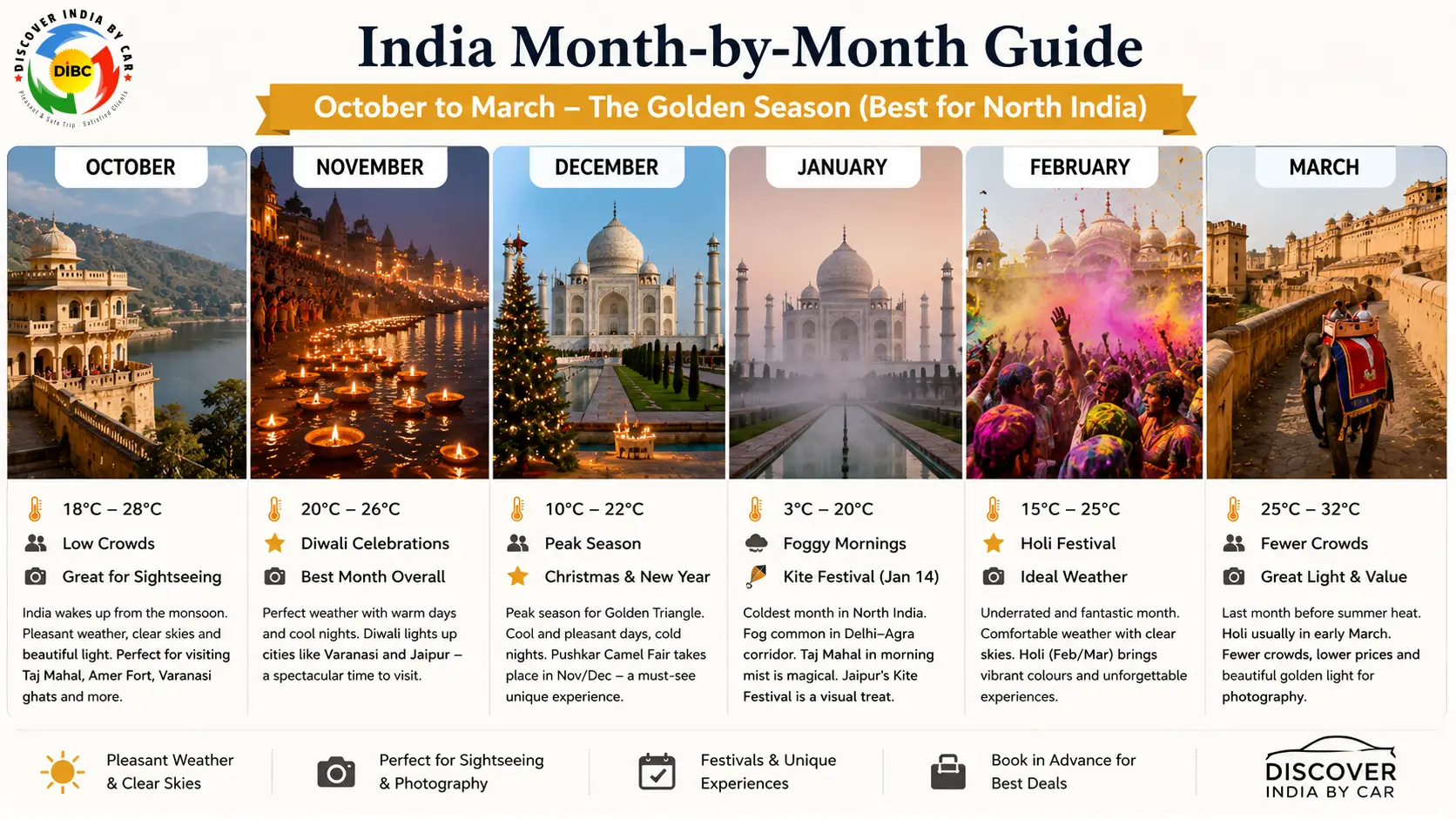
October is the month when India wakes up from the monsoon. The air is freshly washed, the temperatures drop to a very comfortable 18–28°C, and the crowds have not yet arrived in full force. This is personally one of my favourite months to travel. You can visit the Taj Mahal, Amer Fort in Jaipur, and the ghats of Varanasi without the shoulder-to-shoulder crowds of December. Hotels are well-priced, and the light in the late afternoon is extraordinary for photography.
November is arguably the best single month for a first-time trip to North India. Temperatures are perfect — warm in the daytime (20–26°C) and pleasantly cool at night. This is also the time of Diwali (the exact dates follow the lunar calendar, usually landing between late October and mid-November), which is one of the most spectacular festivals you will ever witness. If your dates align with Diwali in Varanasi or Jaipur, go. Do not think twice.
December is peak India weather for golden triangle best season visits. Christmas and New Year bring a wave of Western tourists, and honestly, for good reason. The weather in Delhi, Agra, and Jaipur is like a mild English autumn — around 10–22°C during the day and genuinely cold at night (sometimes near 5°C in Delhi). Fog can occasionally delay trains and flights in late December and January, so build a little buffer into your itinerary. Rajasthan in December is magnificent — the Pushkar Camel Fair falls in November/December and is one of the most extraordinary events on the planet.
January brings the coldest temperatures of the year to North India. Delhi and Agra can dip to 3–5°C at night. Thick fog in the early mornings is common along the Delhi–Agra highway and often delays the popular Taj Express train. If you are travelling by private car, however, this is not an issue — you leave when the fog clears and arrive on your own schedule. The Taj Mahal in January morning mist is one of the most photographed and genuinely magical sights in the world. Jaipur’s Kite Festival (Makar Sankranti) falls on 14 January and is a remarkable spectacle.
February is, in my experience, the most underrated month to visit India. india weather february is ideal — warming up from the January cold to a comfortable 15–25°C, with clear skies and none of the intense summer heat still months away. Holi, the iconic festival of colours, typically marks the transition into spring around late February or March. If you can align your itinerary with Holi in Mathura or Vrindavan, you’ll experience something genuinely unforgettable.
March is the last fully comfortable month before summer arrives. Temperatures climb to around 25–32°C, which is warm but manageable. Holi often falls in early to mid-March. By late March, the heat in Rajasthan starts to build noticeably. The good news: crowds are thinning out from the peak December–January rush, prices are dropping, and the light is beautiful. March is excellent value.
April to June — Summer and Hill Station Season
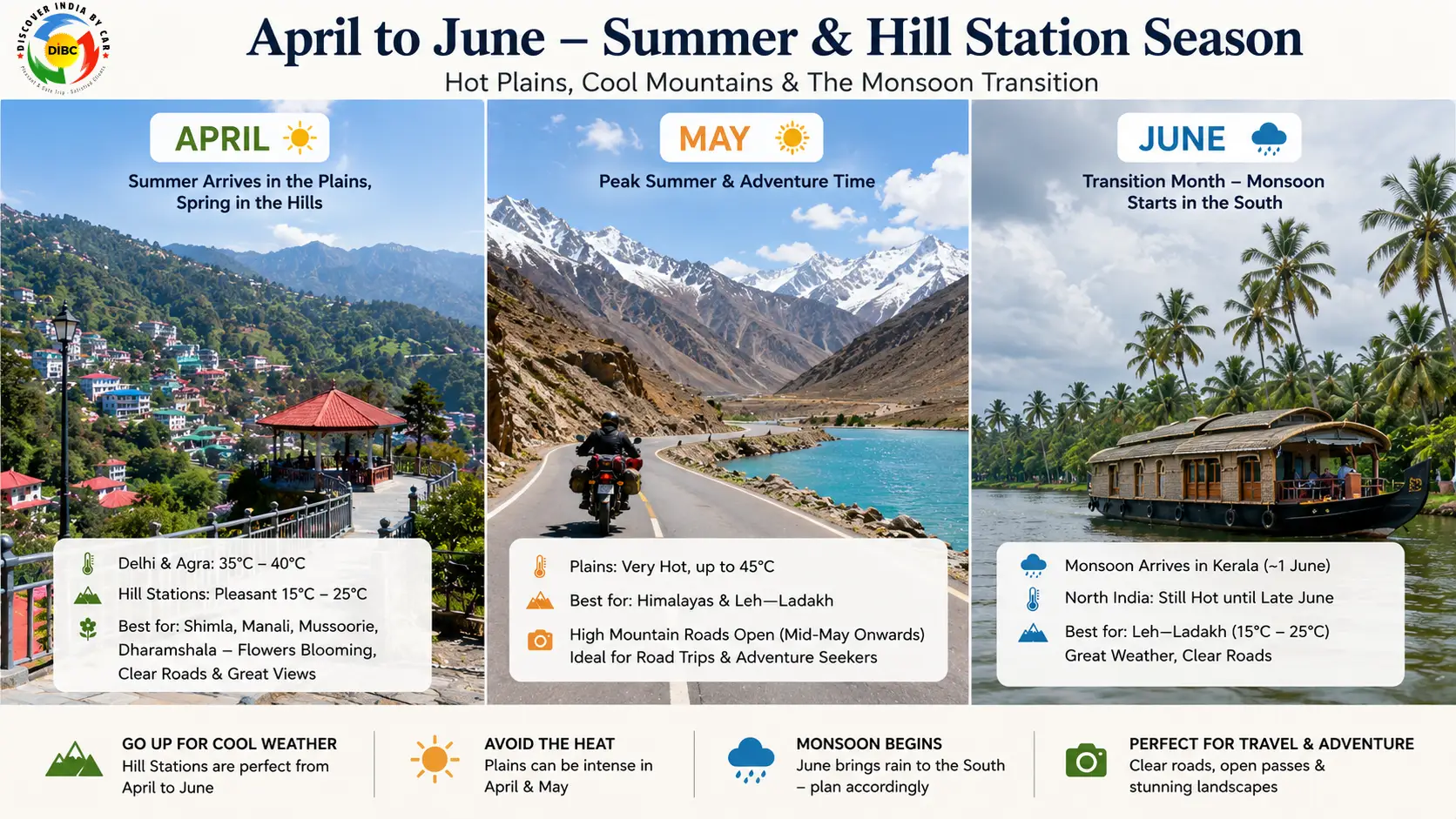
April marks the rapid arrival of summer across the Indian plains. Delhi and Agra climb to 35–40°C, and Rajasthan is already intensely hot. For plains travel, April is the beginning of difficult territory. However, this is when Shimla, Manali, Dharamshala, and Mussoorie are genuinely spectacular — snow is melting, flowers are blooming, and the mountain roads are clear. India summer travel, if planned correctly, means going up.
May is the peak of india summer travel to the Himalayas. Leh in Ladakh opens its high mountain roads in May (usually by mid-month), and this is when the overlanders and adventure seekers head north. On the plains, india weather in May is brutal — Delhi regularly touches 45°C. Unless you are specifically seeking hill stations, avoid the plains in May entirely.
June is a month of transition. The monsoon begins arriving in Kerala around 1 June and moves northward through the country during the month. The south is wet. The north is still extremely hot until the monsoon arrives (usually late June in Delhi). The one exception: Ladakh. June and July are the best months for Leh–Ladakh, because the extreme altitude keeps temperatures moderate (15–25°C) even while the rest of India swelters.
July to September — Monsoon Season (What Still Works)
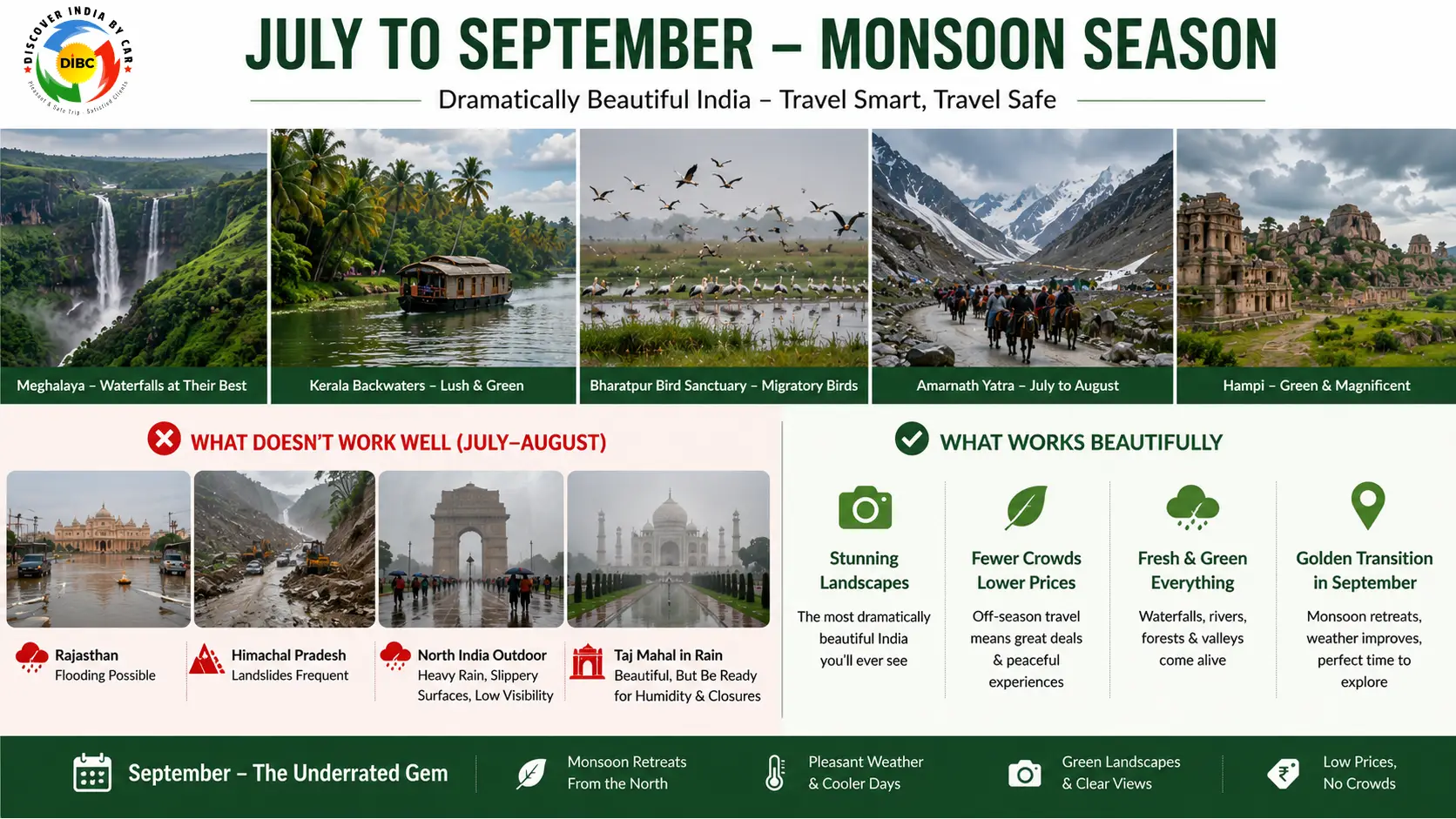
July and August are the heart of the Indian monsoon season. india monsoon travel tips: first, accept that this is the most dramatically beautiful India you will ever see — and the most logistically challenging. Waterfalls in Hampi, Meghalaya, and the Western Ghats are at their absolute peak. Kerala’s backwaters are lush and green. The famous Keoladeo Bird Sanctuary in Bharatpur (near Agra and Jaipur) fills with migratory birds. The Amarnath Yatra pilgrimage in Kashmir takes place in July–August.
What does not work well in July–August: Rajasthan (flooding possible), Himachal Pradesh road trips (landslides are frequent), and outdoor monument visits in North India (heavy rain, slippery surfaces, reduced visibility). The Taj Mahal in the rain is actually beautiful, but be prepared for humidity and occasional closures.
September is the underrated gem of the Indian calendar. The monsoon begins retreating from the north, temperatures drop noticeably after months of heat, and the landscapes are at their greenest. This is the start of what I call the “golden transition” — prices are still low (india off season travel rates), crowds are absent, and the weather is beginning to cooperate. I have brought several travellers to Rajasthan in late September and they have been astonished by both the emptiness and the vivid green landscape against the desert architecture.
Best Time by Region
Understanding india travel seasons by region saves you from making the most common planning mistakes.
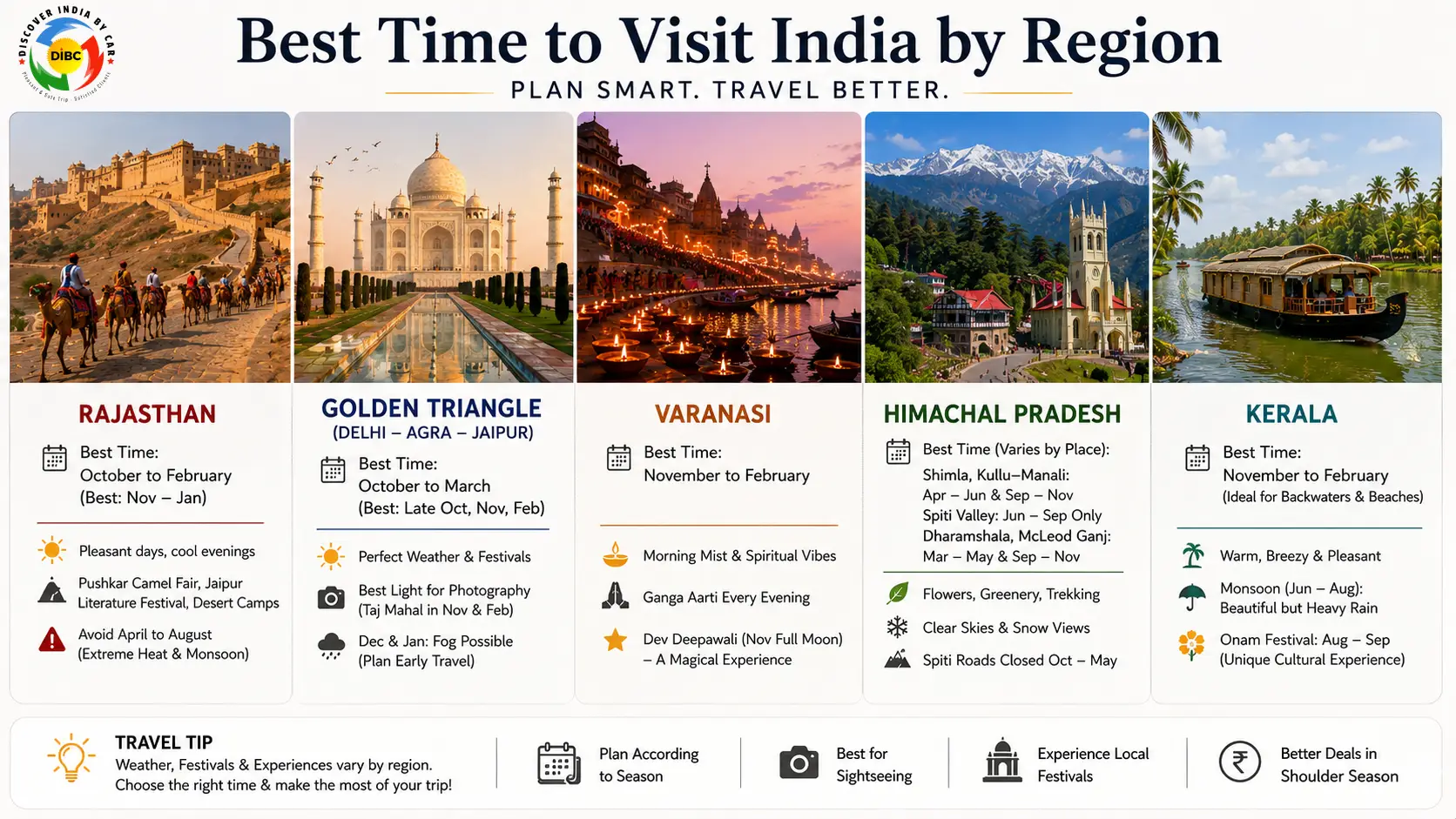
Best Time to Visit Rajasthan
October to February is the window. The best time to visit rajasthan is November through January — comfortable days, cool evenings, and access to the incredible Pushkar Camel Fair, Jaipur Literature Festival, and desert camp experiences in Jaisalmer. Avoid April through August entirely unless you are specifically seeking summer monsoon landscapes.
Best Time for the Golden Triangle (Delhi–Agra–Jaipur)
The golden triangle best season runs from October to March without exception. The specific sweet spots are: late October for post-monsoon freshness, November for festival overlap and perfect weather, and February for Holi timing and thinning crowds. December and January are excellent but bring fog advisories for early morning highway travel.
The taj mahal best season visit is either November or February — the light is extraordinary, humidity is low, and the monument photographs unlike anywhere else in the world.
Best Time for Varanasi
Varanasi in the winter months (November to February) is deeply special. The ghats are atmospheric in the morning mist, the Ganga Aarti at Dashashwamedh Ghat happens every evening regardless of season, and the Kashi Vishwanath corridor is best navigated in comfortable weather. The Dev Deepawali festival (November full moon) transforms Varanasi into a sea of 800,000 lamps along the ghats — it is one of the most profound experiences available anywhere in India.
Best Time for Himachal Pradesh
This depends entirely on what you want. For Shimla and Kullu–Manali: April to June (flowers, greenery, comfortable trekking) and September to November (snow on peaks, clear skies, autumn colours). For Spiti Valley: June to September only — the roads are snowbound the rest of the year. For Dharamshala and McLeod Ganj: March to May and September to November.
Best Time for Kerala
November to February is ideal for Kerala backwaters, beaches, and Alleppey houseboats — warm, dry, and pleasantly breezy. The monsoon (June–August) hits Kerala hardest but also makes it dramatically beautiful for those who want to experience it. The Onam festival in August–September is a cultural highlight unlike anything in North India.
Best Time for Specific Activities
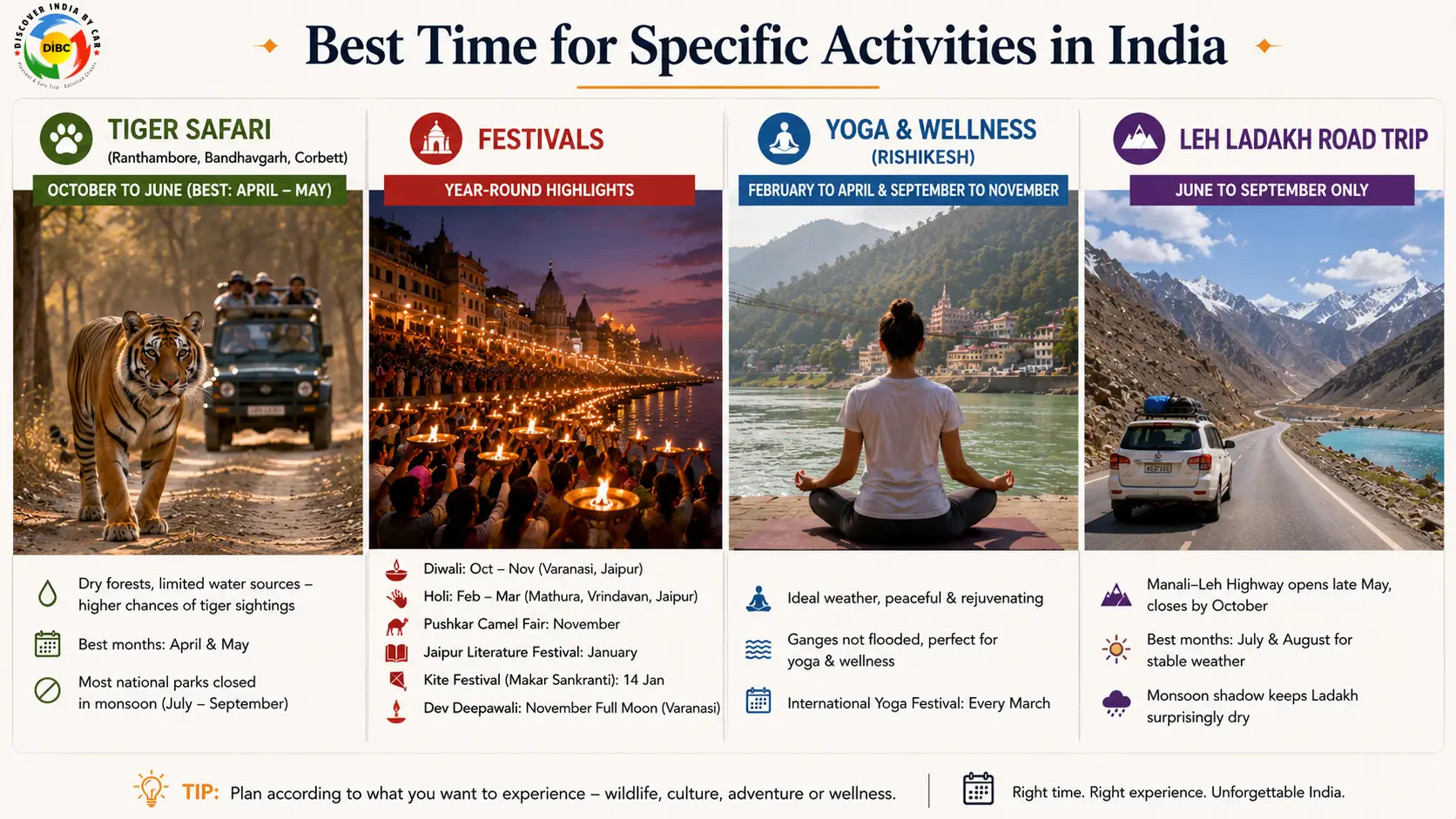
Tiger Safari (Ranthambore, Bandhavgarh, Corbett)
October to June. The best months are April and May when the forests are dry, water sources are limited, and tigers come out to drink — your sighting chances are highest. Most national parks close for the monsoon (July–September).
Festivals
Diwali: October or November (city-wide celebrations best in Varanasi and Jaipur) Holi: February or March (best experienced in Mathura, Vrindavan, and Jaipur) Pushkar Camel Fair: November Jaipur Literature Festival: January Kite Festival (Makar Sankranti): 14 January in Jaipur Dev Deepawali: November full moon in Varanasi
Yoga and Wellness (Rishikesh)
February to April and September to November are ideal for Rishikesh yoga retreats. The weather is moderate, the Ganges is not flooded, and the ashrams are in full session. The International Yoga Festival happens every March.
Leh Ladakh Road Trip
June to September only. The Manali–Leh Highway typically opens in late May and closes again by October. July and August offer the most stable weather for high-altitude driving, though the monsoon shadow of Ladakh keeps it surprisingly dry compared to the rest of India.
India Travel Season Overview Table
Month | North India | Rajasthan | Himachal | Kerala | What to Pack | Overall Rating |
January | Cold, foggy mornings | Cool, excellent | Heavy Snow | Perfect | Heavy jackets for North, light layers for South | ⭐⭐⭐⭐ |
February | Perfect | Perfect | Snow/thaw | Excellent | Light sweaters, comfortable walking shoes | ⭐⭐⭐⭐⭐ |
March | Warm, Holi festival | Warm, Holi | Opening up | Good | Breathable cottons, sunglasses, hats | ⭐⭐⭐⭐ |
April | Hot (35°C+) | Very hot | Excellent | Good | Loose linens, high SPF sunscreen, hydration kits | ⭐⭐⭐ (hills only) |
May | Very hot (42°C+) | Extreme heat | Best for hills | OK | Strictly light summer wear, umbrellas | ⭐⭐ (plains) |
June | Extreme/monsoon starts | Extreme heat | Good | Heavy Monsoon | Raincoats, quick-dry clothes, sturdy sandals | ⭐⭐ |
July | Monsoon | Monsoon | Risky (landslides) | Monsoon | Waterproof gear, mosquito repellent, waterproof bags | ⭐⭐ |
August | Monsoon | Monsoon | Risky | Monsoon | Sturdy umbrellas, waterproof footwear | ⭐⭐ |
September | Transition/Greenery | Transition | Good | Transition | Light layers, occasional rain gear | ⭐⭐⭐ |
October | Excellent | Excellent | Good | Perfect | Comfortable evening layers, daytime cottons | ⭐⭐⭐⭐⭐ |
November | Perfect | Perfect | Cool | Perfect | Light jackets for evenings, camera gear | ⭐⭐⭐⭐⭐ |
December | Cold/clear | Cool, excellent | Snow | Excellent | Warm coats, thermal innerwear for mornings | ⭐⭐⭐⭐⭐ |
When to Avoid India Travel (Honest Advice)
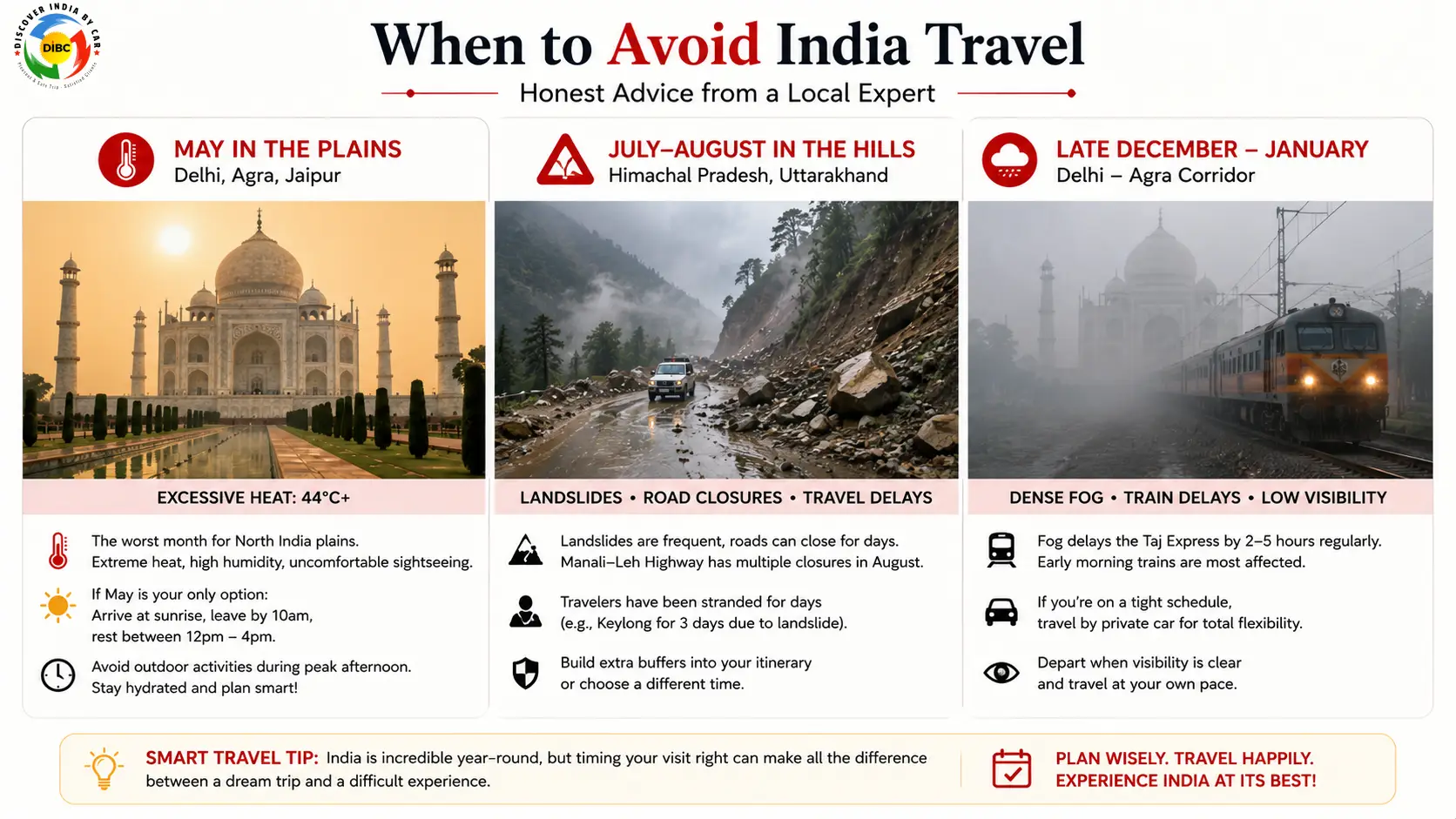
May in the plains: This is the single worst month for Delhi, Agra, and Jaipur. Temperatures exceed 44°C regularly, humidity builds before the monsoon, and the experience of standing in front of the Taj Mahal at noon in 46°C heat is the opposite of the dream you had. If May is your only option, arrive very early (gates open at sunrise), leave by 10am, and do nothing between noon and 4pm.
July–August if you are planning a driving itinerary through Himachal or Uttarakhand: Landslides close roads frequently, sometimes for days. The Manali–Leh Highway sees multiple closures in August. I have had guests stranded for three days in Keylong because of a landslide. Build extreme buffers or choose a different time.
Late December and January if you have early morning trains: Fog in the Delhi–Agra corridor regularly delays the Taj Express by 3–5 hours. If you are on a tight schedule, a private car gives you complete flexibility to depart when visibility is clear.
India Peak Tourist Season vs Off Season: What It Means for You
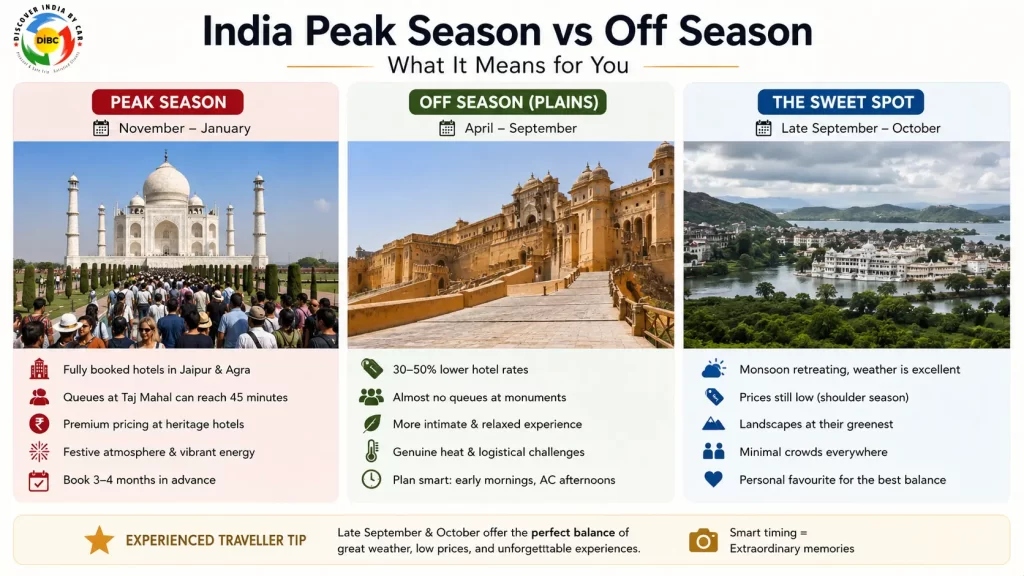
The india peak tourist season (November to January) means: fully booked hotels in Jaipur and Agra, queues at the Taj Mahal that can reach 45 minutes at the gate, premium pricing at heritage hotels, and a generally festive atmosphere. Book accommodation 3–4 months in advance for this window.
India off season travel (April to September in the plains) means: 30–50% lower hotel rates, almost no queues at monuments, a more intimate experience — but genuine heat and logistical challenges. For the experienced independent traveller who can plan around the heat (early mornings, air-conditioned afternoons), the off season offers remarkable value and surprisingly good experiences.
The sweet spot that most experienced travellers do not talk about: late September and October. The monsoon is retreating. Prices are still shoulder-season low. The landscapes are their greenest. Crowds are minimal. And the weather is genuinely excellent. This is my personal favourite time, and I recommend it strongly to repeat visitors or anyone with flexible dates.
Planning October–March? We Can Handle Your Golden Triangle Tour
If you have landed on October to March as your travel window — and based on everything above, that is almost certainly the right call for a first visit — then the next question is how to actually get between Delhi, Agra, Jaipur, and beyond.
Train connections exist, but they are frequently delayed (especially in winter fog), require advance booking, and do not give you the flexibility to stop at Fatehpur Sikri, Chand Baori stepwell, or the dozens of other extraordinary places that sit between the major cities.
Navigating this country requires patience. Booking a private car rental in North India with an experienced driver completely shifts the dynamic of your trip. You leave when you want, stop at hidden stepwells along the highway, and arrive at your hotel ready to explore.
Discover India by Car has been operating private car tours across North India for 14 years. Our drivers are professional, English-speaking, and know every route, shortcut, and hidden stop between Delhi and Jaipur. Whether you are looking for a customized 5-day Golden Triangle tour package, an extended heritage circuit through Rajasthan, or a bespoke itinerary heading down to the ghats of Varanasi, my team handles the ground realities.
📞 Call or WhatsApp: +91-9818434712 📧 info@discoverindiabycar.com
Explore the Golden Triangle & Rajasthan at Your Own Pace
Traveling between October and March? Skip the stress of navigating winter fog, delayed trains, and rigid schedules. Let our experienced English-speaking drivers handle the long highways while you enjoy a fully customized, hassle-free North India journey.
Clean, comfortable fleet — Premium Sedans, SUVs & Innova Crysta.
Local expert drivers who know every scenic shortcut and heritage stop.
100% flexible itineraries. Depart and stop exactly when and where you want.
Frequently Asked Questions
Q1. What is the best time to visit India for a first-time traveller?
October to March, with November and February being the two finest individual months. November offers ideal weather, potential Diwali overlap, and the beginning of the peak season energy. February offers Holi, thinning crowds, and warming temperatures without summer heat.
Q2. When is India too hot to visit?
May is the peak of summer heat across the plains — Delhi, Agra, Jaipur, and Varanasi can all reach 44–46°C. April is manageable with early morning activity and afternoon rest. If you must travel in summer, hill stations (Shimla, Manali, Mussoorie) are perfectly pleasant.
Q3. Is December a good time to visit India?
Yes, December is one of the best months. The weather is cool and clear, Christmas and New Year create a festive atmosphere, and the Taj Mahal and Rajasthan are absolutely beautiful. Book accommodation well in advance as December is peak season.
Q4. When is India cheapest to visit?
The lowest prices hit during the monsoon season (June to September), where you can sometimes find luxury stays for 40% to 50% less than peak rates. April and May also see price drops, though the intense heat makes the plains tough to handle. My insider tip? Target late September to mid-October. You get a perfect balance of post-monsoon greenery, lower off-season prices, and manageable weather.
Q5. What is the best time to see the Taj Mahal?
Sunrise visits in November, December, January, or February. The light is extraordinary at dawn in winter, the air is cool, and the early morning mist occasionally creates an almost supernatural atmosphere. Taj Mahal best season for photography: November to February without question.
Q6. When should I visit Rajasthan?
October to February. The best time to visit Rajasthan is November through January — Pushkar Camel Fair, cool desert evenings, clear skies, and the magnificent forts of Jaipur, Jodhpur, and Jaisalmer at their most comfortable. Avoid April to August.
Q7. Can I visit India in the monsoon?
Yes, but with planning. July and August are excellent for Kerala backwaters, Meghalaya’s living root bridges, and the dramatic waterfalls of Hampi and the Western Ghats. They are poor months for Rajasthan road trips and Himachal highway travel. If you want the “green India” experience at low prices with minimal crowds, late September to early October is a smarter, safer choice than peak monsoon.
Q8. How far in advance should I book an India trip in peak season?
For November to January: book hotels and tours 3–4 months in advance. Heritage hotels in Jaipur and Udaipur sell out quickly. For February to March: 6–8 weeks is usually sufficient. For April to September: you can often book 2–3 weeks out with no problem.