- Private car and driver in Delhi / India
- +91-8447445445
- info@discoverindiabycar.com sugar.ankit@yahoo.com
 +91-9818434712
- Follow us:



Best Yoga Retreats in Rishikesh 2026: Where to Stay, What to Expect
✍️ Written by Ankit Sugar | North India Travel Expert & Founder, Discover India By Car
Having helped thousands of foreign travellers navigate the chaotic maze of Indian travel logistics — from managing tight airport transfers to decoding the red tape of remote ashram coordinates — I created this ground-reality guide to save you from the most common itinerary blunders. I haven’t just researched Rishikesh’s yoga routes; I deal with the real-world operational fallout every single day. From rescuing panicked spiritual seekers stranded at transit hubs to successfully structuring seamless private car transfers for their ultimate Golden Triangle and Himalayan road trip combo, everything in this guide is born from my own lived experience solving paperwork and transport nightmares for travellers just like you.
Rishikesh Yoga Retreat Guide 2026: Best Ashrams, Courses & Everything Foreigners Must Know
There is a particular moment in Rishikesh, usually somewhere around the fourth or fifth morning, when you notice that you have stopped checking the time. Your phone is somewhere in your room. The bell for the morning class has rung, or it hasn’t, and either way you are sitting cross-legged on a stone step above the Ganges watching the river move, and the thing you came here to fix has gone quiet for a while.
Rishikesh doesn’t just teach you yoga. It changes how you see yourself.
I have been bringing foreign travellers to Rishikesh for 14 years — as part of longer India tours, as standalone yoga trips, as the unexpected last stop of itineraries that were “supposed to be just the Taj Mahal.” In that time, I have watched stockbrokers become beginner students of Vedanta, women in their fifties take their first 200-hour teacher training, and rafters who came for the Ganges rapids end up staying for the meditation hall.
This guide is everything I would tell you if we were sitting across a table in my Uttam Nagar, Delhi office over a cup of chai, looking at the custom itineraries we designed for over 120 international travelers last season. No marketing fluff. No AI-generated travel advice. Just the raw, honest insights from 14 years of ground experience, what works, what doesn’t, and what you should actually know before you sign your booking form.
Why Rishikesh Is the Yoga Capital of the World
It is a real title, by the way. The Government of India officially designates Rishikesh as the “Yoga Capital of the World.” But the title came later. The reason is geography.
Rishikesh sits at the precise point where the Ganges leaves the Himalayan foothills and enters the northern plains. For Hindus, this is one of the most sacred locations in the country — the holy river still cold from the high mountains, still relatively unpolluted, surrounded on three sides by forested hills. Sadhus and yogis have come here to meditate for at least 2,000 years. The town is mentioned in the Ramayana.
In the modern era, three things turned Rishikesh into the global yoga destination it is today.
First, Swami Sivananda — one of the great teachers of 20th-century Hindu philosophy — established his ashram here in 1936 and trained an entire generation of teachers who would go on to spread Hatha and Vedanta yoga worldwide. B.K.S. Iyengar studied here. So did dozens of others whose lineages now teach in every major city on earth.
Second, in February 1968, four young men from Liverpool arrived in Rishikesh to study Transcendental Meditation with Maharishi Mahesh Yogi. The Beatles stayed for several weeks, wrote most of the songs that became the White Album in their forest cottages, and turned the small Himalayan town into a name that every backpacker, hippie, and spiritual seeker in the West would eventually recognise.
Third — and this is more practical than the other two — Rishikesh works as a destination. The infrastructure is genuinely good for foreigners. There are real cafes (some excellent), reliable Wi-Fi in most guesthouses, English-speaking yoga teachers in abundance, well-organised ashrams, vegetarian food that you can actually eat without worrying, and a walking-friendly old-town layout along the river. You do not need to brace yourself the way you do in Varanasi. Rishikesh feels softer.
And critically: it is not a tourist trap pretending to be spiritual. Rishikesh is genuinely spiritual and also accommodates tourists. The combination is rarer than you might think.
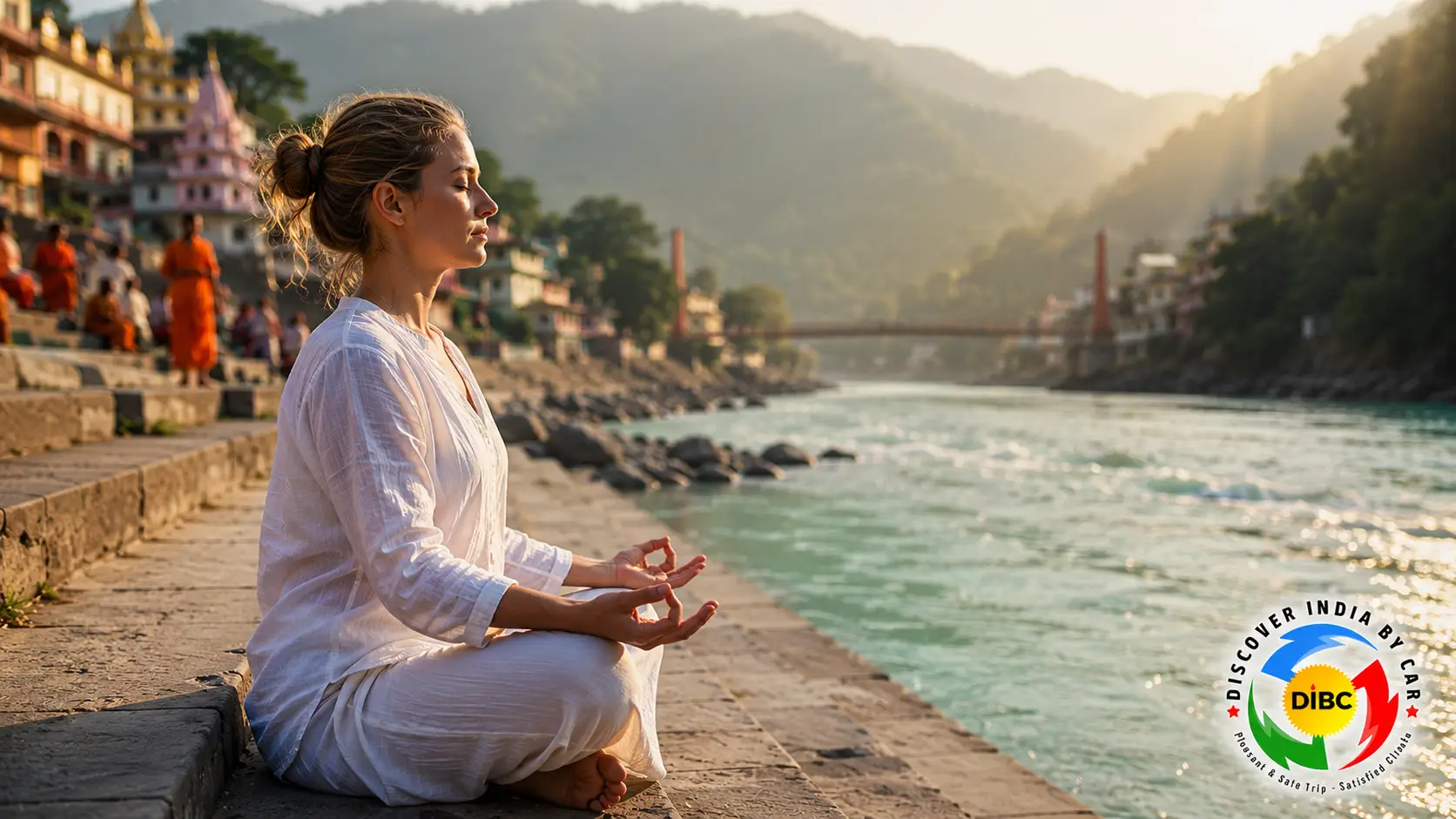
Best Ashrams in Rishikesh for Foreigners (Rated and Compared)
Before we get into specific recommendations, one thing to understand. The “best ashrams in Rishikesh” depends entirely on what you want. There is no single best one. A serious philosophy student and a yoga teacher trainee and a “stressed corporate worker looking for a reset” should all stay in different places.
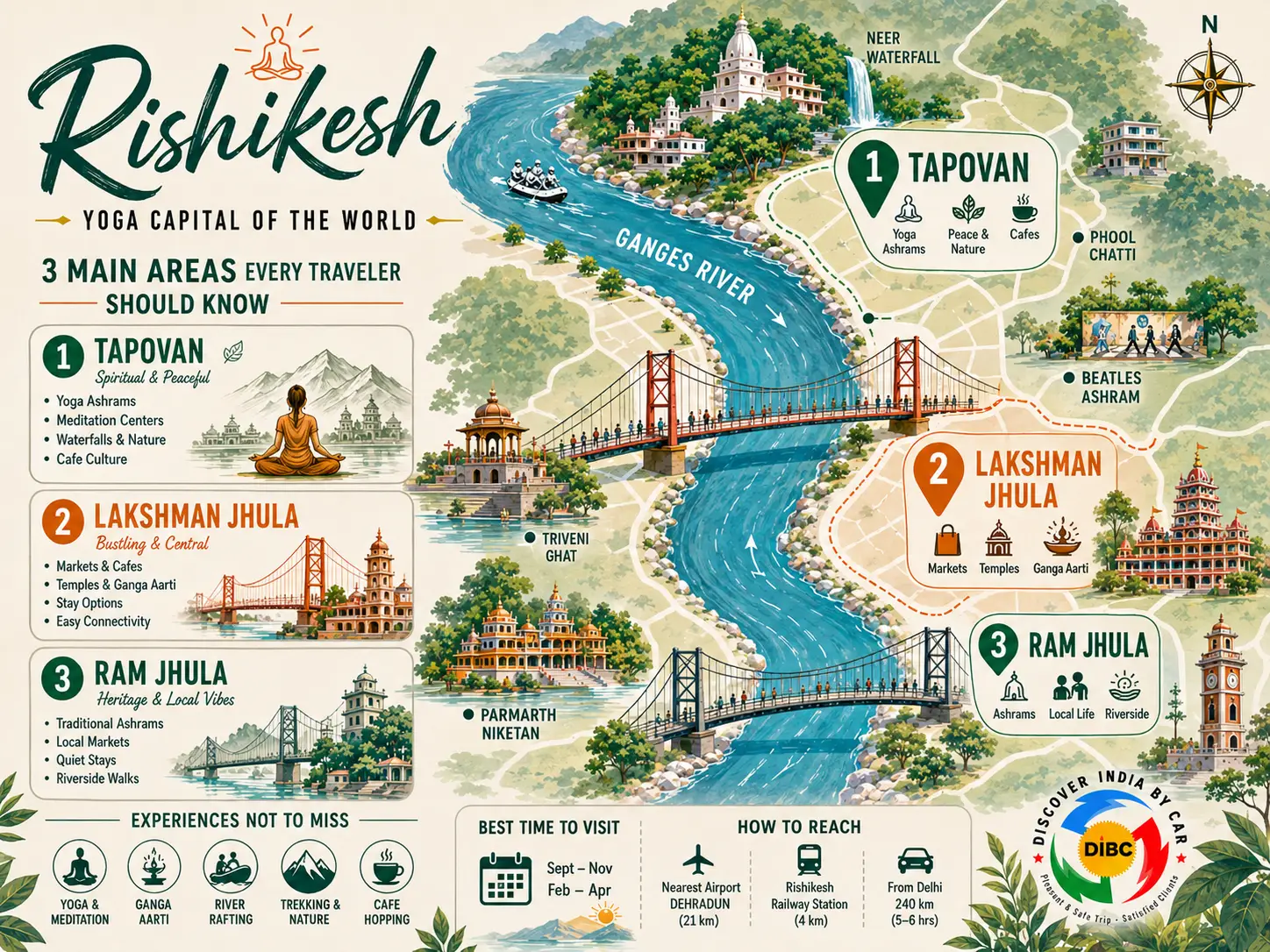
Most foreign travellers concentrate in three areas: Lakshman Jhula (the older traveller hub, though the actual Lakshman Jhula bridge has been closed since 2019 — there is a new bridge nearby called Bajrang Setu), Ram Jhula (slightly more traditional, with the major ashrams), and Tapovan (the upper area, foreigner-heavy, full of yoga schools and cafes). Where you stay shapes the entire experience.
Here are the ashrams and yoga centres I send guests to most often:
| Ashram Name | Location | Core Focus | Vibe / Atmosphere |
|---|---|---|---|
| Parmarth Niketan | Ram Jhula | Spiritual Retreats & Ganga Aarti | Vibrant, Culturally Immersive |
| Sivananda Ashram | Ram Jhula | Traditional Vedanta & Philosophy | Strict, Monastic, Quiet |
| Anand Prakash | Tapovan | Yoga Alliance Teacher Training | International Community, Structured |
| Phool Chatti | Upriver | 7-Day Complete Ashram Lifestyle | Intentional, Contained, Meditative |
| Aurovalley | Outskirts | Silent Contemplation & Integral Yoga | Secluded, Slow-Paced, Micro-Crowd |
Parmarth Niketan
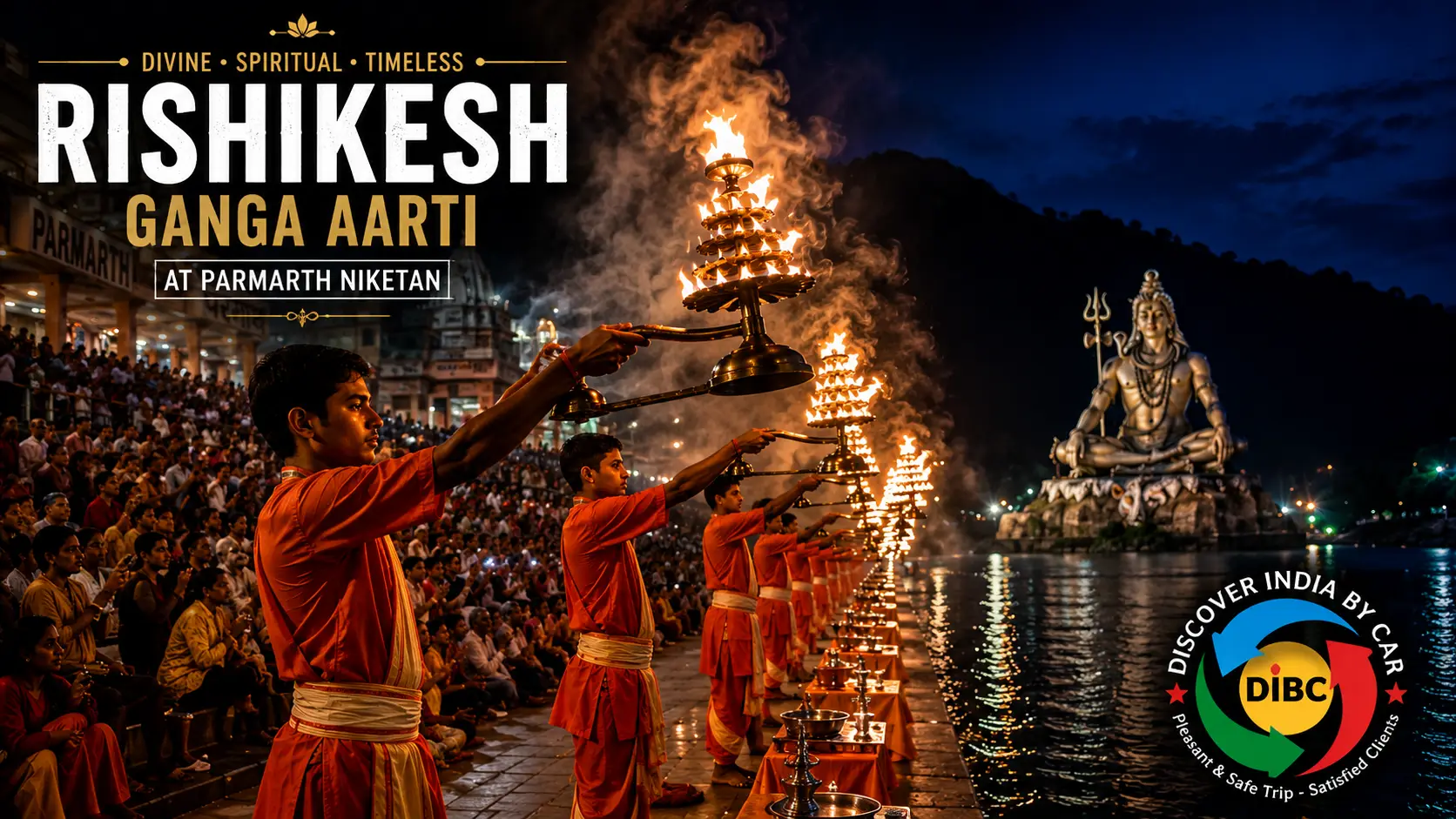
The most well-known ashram in Rishikesh, sitting right on the Ganges at Ram Jhula. Beautiful campus, a temple, gardens, and the famous evening Ganga Aarti that attracts hundreds of visitors and pilgrims daily. Foreign-friendly, English-speaking, well-organised. Offers short retreats, yoga classes, and the annual International Yoga Festival in March.
- Best For: First-time international visitors who want comfort, clean dining, and a structured, soft introduction to ashram life.
- The Reality Check: Because of its global fame and the massive nightly Aarti crowd, the campus feels like a bustling cultural hub. If you are seeking absolute silence and isolation, this is not the place for you.
Sivananda Ashram (Divine Life Society)
The original — established by Swami Sivananda in 1936. Located just outside Ram Jhula. Free classes (yes, free) for serious students, with a library and a more academic atmosphere. The atmosphere is reverent, not casual.
- Best For: Hardcore practitioners and academics dedicated to traditional Vedanta study and serious spiritual text analysis.
- The Reality Check: This operates like a monastic retreat, not a wellness holiday. You must strictly commit to their fixed, conservative daily schedule. Casual tourists or drop-in curiosity seekers are not entertained.
Anand Prakash Ashram (Akhanda Yoga)
Run by Yogrishi Vishvketu, this is one of the most popular ashrams among Western yoga students. Highly organised teacher training programmes, beautiful campus in Tapovan, excellent food, and an international student body. Strong reputation for their 200-hour Yoga Teacher Training programmes — among the most respected in India.
- Best For: Aspiring instructors wanting globally recognized certification within a warm, community-driven international environment.
- The Reality Check: Due to high demand for their Akhanda lineage certifications, programs book out 3 to 4 months in advance. It is a mid-range financial investment, not a rock-bottom budget option.
Phool Chatti Ashram
Located further upriver, about 30 minutes from Lakshman Jhula. Famous for its 7-day immersive programme that introduces foreigners to ashram life — yoga, meditation, karma yoga (selfless service), silent walks. Very intentional, very contained.
- Best For: Solo female travelers, couples, or busy professionals seeking a quick, highly secure, and well-managed 1-week taste of authentic lifestyle transformation.
- The Reality Check: The 7-day program runs on a strict, non-negotiable track. There is zero room for personal customization or skipping sessions—you either commit fully or look elsewhere.
Aurovalley Ashram
Sister ashram of Auroville in South India, with the same Sri Aurobindo philosophical foundation. Located slightly outside Rishikesh in a quieter forested area. Smaller, more contemplative, with an emphasis on integral yoga rather than physical practice alone.
- Best For: Contemplative travelers who want deep quietude, meditation, and are already familiar with Integral Yoga and Mother’s philosophy.
- The Reality Check: The primary focus is silent reflection and internal work. There is very little physical asana alignment class here. If your goal is sweating through intense physical drills, this will disappoint you.
Vinyasa Yogashala / Rishikul Yogshala / Tattvaa Yogashala
Not ashrams in the strict sense — these are dedicated yoga schools that offer Yoga Alliance-certified teacher training programmes. They tend to attract serious students, are highly reviewed online, and are concentrated in the Tapovan area.
These institutions are premier choices specifically for dedicated students aiming for globally recognized 200-hour and 300-hour Yoga Alliance certifications. Prospective trainees should be aware that these centers operate strictly as intensive academies rather than traditional ashrams, meaning you will trade the slow, devotional atmosphere of morning temple bells for a structured, fast-paced, and highly focused classroom environment.
Ananda in the Himalayas (For the Luxury End)
This is not an ashram. It is a five-star wellness resort on a hilltop estate above Rishikesh, set in a former Maharaja’s palace. Mention it only because I get asked about it constantly. World-class spa, beautiful setting, and luxury-tier prices to match (₹40,000+ per night).
This estate caters exquisitely to high-budget wellness travelers and couples looking for a refined, therapeutic spa getaway rather than strict spiritual asceticism. The main logistical drawback is its geography; being perched high up the mountainside isolates you completely from the raw energy of Rishikesh town and the active ghats, placing you in a stunning luxury enclave that happens to overlook the spiritual heartland rather than being inside it.
Yoga Retreat vs Yoga Teacher Training: Which Is Right for You?
This is the question I get asked most often. People hear about “yoga teacher training” and either get intimidated or — sometimes — assume it’s just a longer retreat. Neither is quite right.
A rishikesh yoga retreat typically runs 3 to 14 days. You arrive, you follow a daily schedule (usually two yoga classes, meditation, lectures, sometimes excursions), you eat saatvik (vegetarian, no onion or garlic) food, and you leave refreshed and with some new practices. The goal is experience and reset. You do not graduate, you are not certified, and there is no exam. For most foreign travellers, this is what they actually want even when they think they want something more.
A Yoga Teacher Training (YTT) programme in Rishikesh — most commonly the 200-hour foundational certification, sometimes the 300-hour advanced or 500-hour combined — is academic and demanding. You commit 4 weeks of your life, you study anatomy, philosophy, teaching methodology, and asana technique to a depth that most casual practitioners are not prepared for, and you finish with a Yoga Alliance certification that lets you teach professionally anywhere in the world.
If you are a recreational practitioner who has done 50 classes at your local studio, a 200-hour YTT will be one of the most demanding things you have ever done. I have had guests who underestimated this and quietly suffered through it. I have also had guests who finished the 200-hour and immediately signed up for the 300-hour because the experience genuinely transformed their relationship to their own body.
A simple rule: if you cannot articulate a specific reason for wanting the teacher certification — beyond “I’d like to do something serious” — start with a retreat. You can always come back. A two-week retreat is also genuinely sufficient to learn enough to deepen a personal practice for years.
Cost of Yoga Retreats in Rishikesh
Here is the actual cost breakdown for a Rishikesh yoga retreat, based on what foreign travellers are currently paying.
| Programme Type | Duration | Cost Range (USD) | What's Typically Included |
|---|---|---|---|
| Drop-in classes | Per session | $5–$10 | Single class only |
| Short retreat (budget ashram) | 7 days | $300–$500 | Room, meals, classes |
| Mid-range retreat | 7 days | $700–$1,200 | Better accommodation, smaller groups |
| Premium retreat | 7 days | $1,500–$2,500 | Private room, en-suite, organic meals |
| 200-hour YTT (basic) | 4 weeks | $1,200–$1,800 | Shared room, food, certification |
| 200-hour YTT (premium) | 4 weeks | $2,200–$3,500 | Private room, better facilities |
| 300-hour YTT | 4 weeks | $1,800–$3,500 | Advanced certification, private or shared lodging, deep anatomy modules & all meals |
| Luxury wellness (Ananda) | 7 days | $5,000–$10,000+ | Five-star, spa, everything |
Note for International Travelers: All costs listed above are denoted in USD ($) as most registered yoga schools and ashrams process international bookings in US Dollars. Local expenses, tips, and personal shopping in Rishikesh markets will require Indian Rupees (INR). For quick reference during your 2026 trip, $1 USD equates to approximately ₹93–₹94 INR, depending on current exchange rates.
When evaluating the financial layout of your retreat, a few practical realities dictate the pricing.
Decoding the Fine Print of Rishikesh Packages
Based on our agency’s actual bookings for the 2026 season, here is what those numbers mean on the ground:
- The Under $400 Tier (Budget): Expect cold water or timed hot buckets, multi-bed dorms, and standard Saatvik meals (dal, rice, chapati). Group sizes often exceed 25 students. Fine for backpackers, but tough if you value privacy.
- The $700–$1,200 Tier (Mid-Range): This is our sweet spot. It gets you an attached Western-style bathroom, 24/7 hot showers, filtered water systems, and smaller batches (under 12 people) ensuring personalized posture correction from the master teachers.
- The $1,500+ Tier (Premium): Private rooms, air-conditioning/heating units, organic farm-to-table menus, and direct one-on-one mentor access. Highly recommended if you are doing a exhausting 4-week YTT course.
Rishikesh Yoga & Travel Budget Estimator (2026)
Shared rooms, basic timed hot buckets, standard Saatvik group meals (dal, rice, chapati). Batch sizes over 25 students.
Hidden costs to budget for: Tips for staff (₹500–1,000 over a week), airport transfers if not included, occasional Ayurvedic treatments or massages (₹1,500–4,000 per session), shopping at the markets (you will buy things, do not pretend you won’t).
Best Time to Visit Rishikesh for Yoga
The best time for rishikesh yoga is February to April and September to November.
That is the short answer. The longer answer involves understanding what Rishikesh feels like in each season, because some travellers will deliberately want the off-season for reasons I’ll explain.
October to early December is widely considered the best window. Temperatures sit between 12°C at night and 25°C during the day. The river is at its clearest, the air is crisp, and the post-monsoon foliage in the hills is still vivid green. The International Yoga Festival is not in this window (that’s March), but you get the genuine atmosphere of the town without festival-level crowds.
February to April is the second peak. The cold of January is breaking, the air is warming, and the International Yoga Festival in early March brings together teachers and students from across the world. If you are interested in a more international, more conference-like atmosphere, March is exceptional. Just book accommodation early.
May to mid-June is hot — Rishikesh can hit 38°C — but still workable if you can tolerate heat. Prices drop. Ashrams have space. The rafting is at its peak. Many serious students prefer this season because the town is quieter.
Late June to August is monsoon. The Ganges runs brown and full, rafting closes, the rains can be heavy, and the road from Delhi sees occasional landslides. Ashrams stay open and operate full schedules, but the experience changes. If you want minimal crowds, low prices, and dramatic landscapes — and you don’t mind some rain — monsoon Rishikesh has its own deep appeal. It is also when local Hindus undertake the Kanwar Yatra pilgrimage, which means certain weeks in July see vast crowds of pilgrims in saffron clothing carrying Ganges water. Beautiful to witness; chaotic for retreating.
January can be cold. Mornings drop near freezing. The river is icy. Heating in budget ashrams is often nonexistent or insufficient. If you go in January, pay for the better accommodation. You will appreciate the heater.
For 200-hour yoga teacher training india programmes, most major schools run sessions year-round, with the busiest months being January, March, October, and November.
How to Get to Rishikesh from Delhi (Private Car vs Train)
Rishikesh sits 240km north of Delhi. There are three realistic ways to get there.
Option 1: Private Car (Delhi to Rishikesh by Car)
The route leverages the Delhi-Meerut Expressway (NE 3) and then follows the national highway via Muzaffarnagar and Roorkee into Haridwar. While the expressway segments drastically cut down travel times compared to previous years, the final 25km bottleneck between Haridwar and Rishikesh through the Chilla forest range zone can still face major slowdowns during peak pilgrim hours (around 4 PM to 7 PM). We advise our self-drive or private car clients to clear Delhi by 6:00 AM to skip this gridlock entirely.
Delhi to Rishikesh Driving Roadmap
Early Morning Departure
Start early from Delhi to clear the heavy outer city limits traffic and seamlessly enter the Delhi-Meerut Expressway (NE 3) before peak office commuter rush builds up.
Expressway to National Highway Transition
Transition smoothly off the main expressway grid into the regular national highway corridor that passes through the automotive checkpoints of Muzaffarnagar and Roorkee.
The Haridwar-Chilla Bottleneck Bypass
Aim to touch the entry limits of Haridwar by midday. This specific strategy ensures you navigate the complex final 25km stretch through the Chilla forest range zone well before the local 4:00 PM to 7:00 PM heavy pilgrim gridlock activates.

Why most foreign travellers I work with choose this: Direct hotel-to-ashram pickup. Air conditioning. Stops whenever you need them. Can pick up at Delhi airport for an immediate transfer if you’ve flown in tired. Can include Haridwar (the holy city 25km from Rishikesh) on the same trip — a dedicated Delhi to Haridwar and Rishikesh tour itinerary is one of our most-requested routes, combining two of the most sacred locations in northern India in a single journey.
Cost: Approximately ₹6,500–9,500 ($78–115) for a one-way private car transfer from Delhi to Rishikesh, depending on vehicle type. Round-trip with a few days of intermediate use is cheaper per day.
For international travellers, booking a verified private car and driver hire in Delhi service through a registered agency ensures a seamless, air-conditioned transfer directly from Delhi Airport to your ashram’s doorstep, bypassing local transit hubs completely.
Option 2: Train
The Dehradun Shatabdi from New Delhi Railway Station to Haridwar takes about 4.5 hours. From Haridwar, a 45-minute taxi or auto-rickshaw covers the remaining 25km to Rishikesh. Total journey: 5.5–6 hours with the transfers.
Pros: Fixed timing, reliable, comfortable (Shatabdi is air-conditioned with meals included).
Cons: You need to get from your Delhi hotel to New Delhi Railway Station (1+ hour in traffic), manage your luggage on the train, and arrange transport at Haridwar end. For three or four people travelling together, the math often tips toward a private car.
Option 3: Flight
There is a small airport at Dehradun (Jolly Grant) 35km from Rishikesh, with daily flights from Delhi taking 50 minutes. Add airport time at both ends and the total is roughly 4 hours. Useful if time is short, but the train is honestly better value.
The rishikesh + golden triangle Combination
This is one of my favourite itineraries for travellers with two and a half to three weeks. You arrive in Delhi, do the Golden Triangle (Delhi–Agra–Jaipur, roughly 7–8 days), and then drive up from Delhi to Rishikesh for a 5 to 10-day yoga retreat or a longer teacher training. You finish your India trip with something quite different from how you started it — the philosophical and physical balance to the cultural and historical weight of the south Delhi-Agra-Jaipur leg.
We design these custom combinations regularly. The logistics work well by private car, and the contrast of experiences is something most guests value enormously in retrospect.
Beyond Yoga: Rafting, Beatles Ashram, and the Ganga Aarti
Some travellers come to Rishikesh for yoga and only yoga. Most don’t. And honestly, you shouldn’t — the town has more to offer than its reputation suggests. serving as a perfect extension to your deeper Northern India heritage travel exploration across ancient spiritual hubs.
Rishikesh Bungee Jumping and Adventure Sports
Rishikesh has quietly become India’s adventure sports capital alongside its yoga identity. The bungee jumping setup at Jumpin Heights, just outside Rishikesh (Mohan Chatti, 25km from Rishikesh town) is the highest fixed-platform bungee in India at 83 metres. The same site offers giant swings and flying fox zip-lines.
White-water rafting on the Ganges runs September to June — the season is shaped by monsoon water levels and is closed July–August. The classic 16km Brahmpuri to Lakshman Jhula run is suitable for beginners. The Marine Drive to Shivpuri stretch has more demanding rapids.
I have had guests do a morning of rafting and an evening of meditation in the same day. The contrast is genuinely transformative for some — and exhausting for others. Plan accordingly.
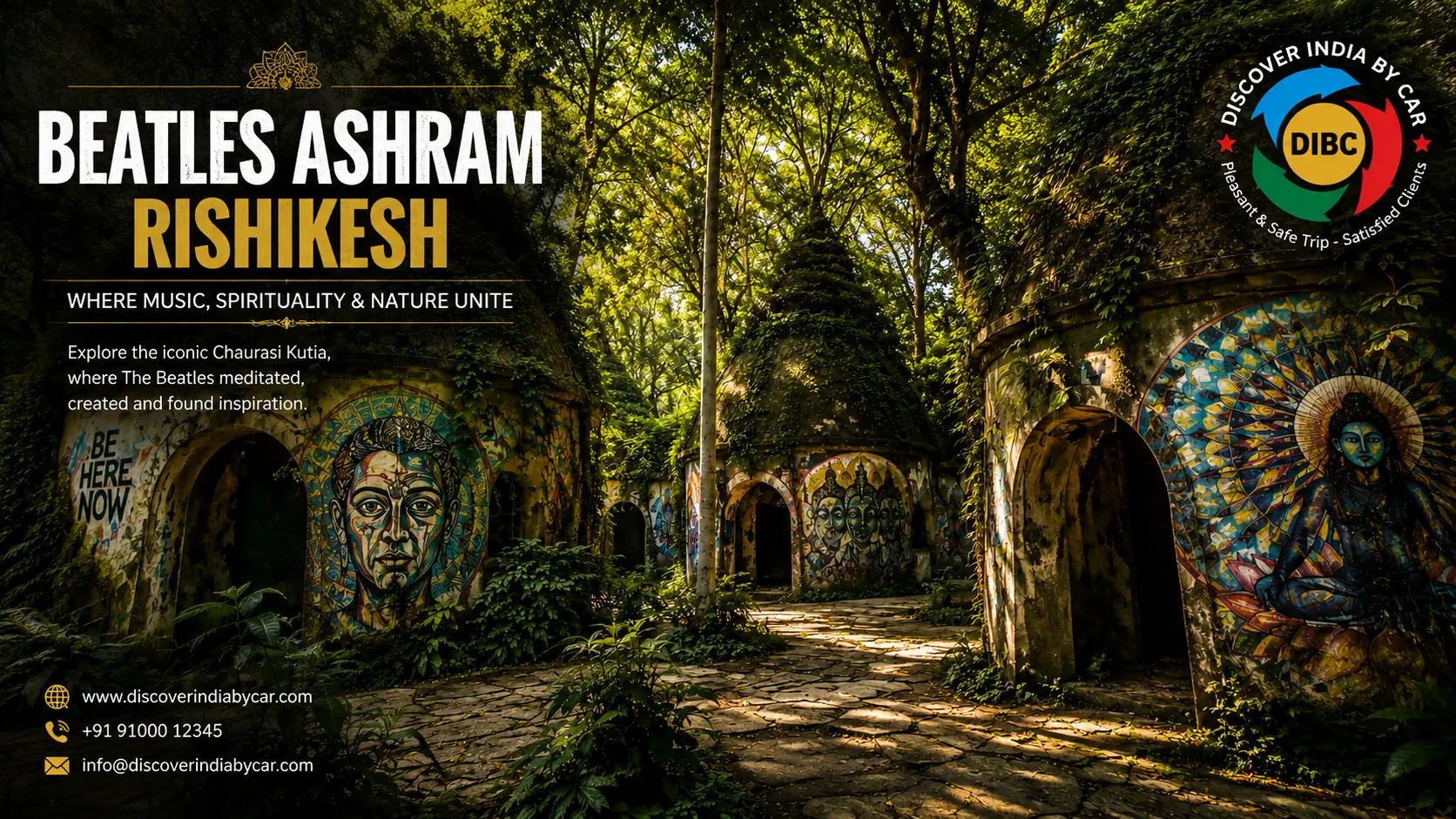
Beatles Ashram (Chaurasi Kutia)
The original ashram where the Beatles stayed in 1968 is officially called Chaurasi Kutia, located on the eastern bank of the Ganges near Swarg Ashram. It was abandoned after Maharishi Mahesh Yogi left, taken over by the forest department, and reopened to the public in 2015 as a heritage site.
The buildings are crumbling and overgrown. They have been covered in murals and graffiti — some beautiful, some less so. Walking through the meditation pods, the abandoned lecture hall, and the forest paths is genuinely atmospheric. For Beatles fans, it is essential. For everyone else, it is still worth two hours of a free morning.
- Foreigner Entry Fee: ₹600 per person (SAARC citizens pay ₹300; Indian nationals pay ₹150).
- Timings: 10:00 AM to 4:00 PM (Give yourself at least 2 full hours to explore the ruins without rushing).
Pro Tip: Carry mosquito repellent if you are visiting in the afternoon; the forested paths inside the ashram campus have heavy insect activity.
Heading to Rishikesh? Avoid the Delhi Airport Chaos.
You booked your ashram retreat or YTT course to find inner peace. Don't ruin it by haggling with aggressive transit touts at the airport terminal. Secure a reliable, seamless private transfer directly from Delhi Airport to your ashram's doorstep in Rishikesh. Or, let us seamlessly blend your spiritual trip into a custom Golden Triangle sequence.
Direct Ashram Drop — Zero tracking issues. We know exactly where the Tapovan, Ram Jhula, and Upriver campuses sit.
Smart Bottleneck Routing — Our drivers are trained to beat the heavy 4 PM Haridwar gridlocks cleanly.
Premium Comfort Fleet — Recover from long international flights in immaculate, air-conditioned Sedans & SUVs.
The Ganga Aarti
The Ganga Aarti at Rishikesh is one of the most beautiful evening ceremonies in India. Unlike the larger, more performative Varanasi aarti, Rishikesh’s version is more intimate.
The most famous version happens at Parmarth Niketan at sunset — chanting by the resident students, oil lamps offered to the river, hundreds of small leaf-boats with candles released to float downstream. The atmosphere is reverent rather than touristic.
A second, smaller aarti happens at Triveni Ghat around the same time and tends to draw more local pilgrims than foreigners.
Either is worth witnessing. Both, if you have the time on different evenings.
Day Trips and Slower Experiences
Neelkanth Mahadev Temple — a Shiva temple 32km up into the hills from Rishikesh, surrounded by forest. Quiet, important, often missed.
Vashishta Gufa — a meditation cave 22km from Rishikesh where the sage Vashishta is believed to have meditated for centuries. Small, simple, deeply atmospheric. You can sit inside.
Walking the river between Ram Jhula and Lakshman Jhula areas, at any time of day, is itself one of the great experiences. Coffee shops, secondhand bookstores, dharma talks happening informally on rooftops, sadhus, dogs, monkeys, the constant background presence of the river. There is no particular destination. That is the point.
A Few Practical Things to Know Before You Come
The town is entirely vegetarian, and alcohol is officially banned (in practice, this is enforced). If either of these is going to ruin your experience, choose a different destination — Rishikesh is not negotiable on these points.
Modest clothing is expected in ashrams and temples. Shoulders and knees covered. This applies regardless of gender. You can wear what you like in your own room.
Most ashrams have a curfew (usually 9pm or 10pm gates close). If you are someone who likes late nights, this will frustrate you.
Wi-Fi is generally available but inconsistent. Treat it as a feature, not a bug — a week with bad Wi-Fi is genuinely part of why people come.
ATMs in Rishikesh are reliable. There are several near Lakshman Jhula and Ram Jhula. Carry cash for street food, small shops, and rickshaws.
Monkeys steal food, sunglasses, and occasionally cameras. Do not carry food openly. Do not feed them.
Frequently Asked Questions
Q1. Is Rishikesh safe for solo female travellers?
Yes — among the safest destinations in India for foreign women. The town is small, the foreigner community is dense and visible, and the ashram culture means people understand and respect solo female travel. Standard precautions apply, but Rishikesh is much easier than Delhi or Agra in this respect.
Q2. How long should I spend in Rishikesh for my first visit?
Minimum 5 days, ideally 7–10. A 3-day visit is too short to settle into the rhythm. If you are doing a teacher training, the programme dictates your length (usually 4 weeks for 200-hour).
Q3. Can I drink the Ganges water?
No. Despite its sacred status, the river is not safe to drink. Bottled or filtered water only.
Q4. What should I pack?
Comfortable yoga clothing, modest layers, a shawl or wrap, sunscreen, mosquito repellent (especially monsoon season), a refillable water bottle, basic medications, and a notebook (you will write things down — guests always do, surprising themselves).
Q5. Are Rishikesh ashrams strict?
It varies. Sivananda Ashram is genuinely traditional and strict. Parmarth Niketan is moderate. Most yoga schools in Tapovan are quite flexible. Read the rules of any programme before booking.
Q6. Can I combine Rishikesh with the Golden Triangle?
Yes — this is one of the most popular combined itineraries we organise. Navigating this entire custom North India heritage tour loop is highly efficient when managed by a single private vehicle and an experienced driver who understands highway traffic across Uttar Pradesh and Uttarakhand.