- Private car and driver in Delhi / India
- +91-8447445445
- info@discoverindiabycar.com sugar.ankit@yahoo.com
 +91-9818434712
- Follow us:




Udaipur Travel Guide 2026: 14-Year Driver’s Expert Advice
Ankit Suga
Senior Heritage Content Strategist & Founder, Discover India By Car
Having spent 14 years arranging private car-and-driver journeys across North India and Rajasthan for foreign travellers. I've personally driven hundreds of guests through Udaipur's old city lanes, waited out more sunsets on Lake Pichola than I can count, and learned the hard way which ticket queues are worth skipping.
With its palaces floating on mirror-still lakes, Udaipur is routinely called the most romantic city in India — and for once, the hype is earned.
I say that as someone who’s a little suspicious of travel-brochure language. After fourteen years of this work, you stop believing in “magical” anything. But Udaipur keeps winning people over, including the cynics. I’ve watched couples who arrived tired and over-planned go completely quiet on a boat at golden hour, just looking. That’s the city’s trick. It doesn’t shout. It just sits there reflected in the water, looking impossibly composed, and lets you fall for it.
This guide is the version I wish I could hand every guest before they land — what to actually see, what things cost in 2026, how to get there, and how many days you really need. No fluff. Just the stuff that makes a Udaipur trip work.
Why Udaipur is India’s Most Romantic City
Here’s the honest answer: it’s the lakes plus the scale.
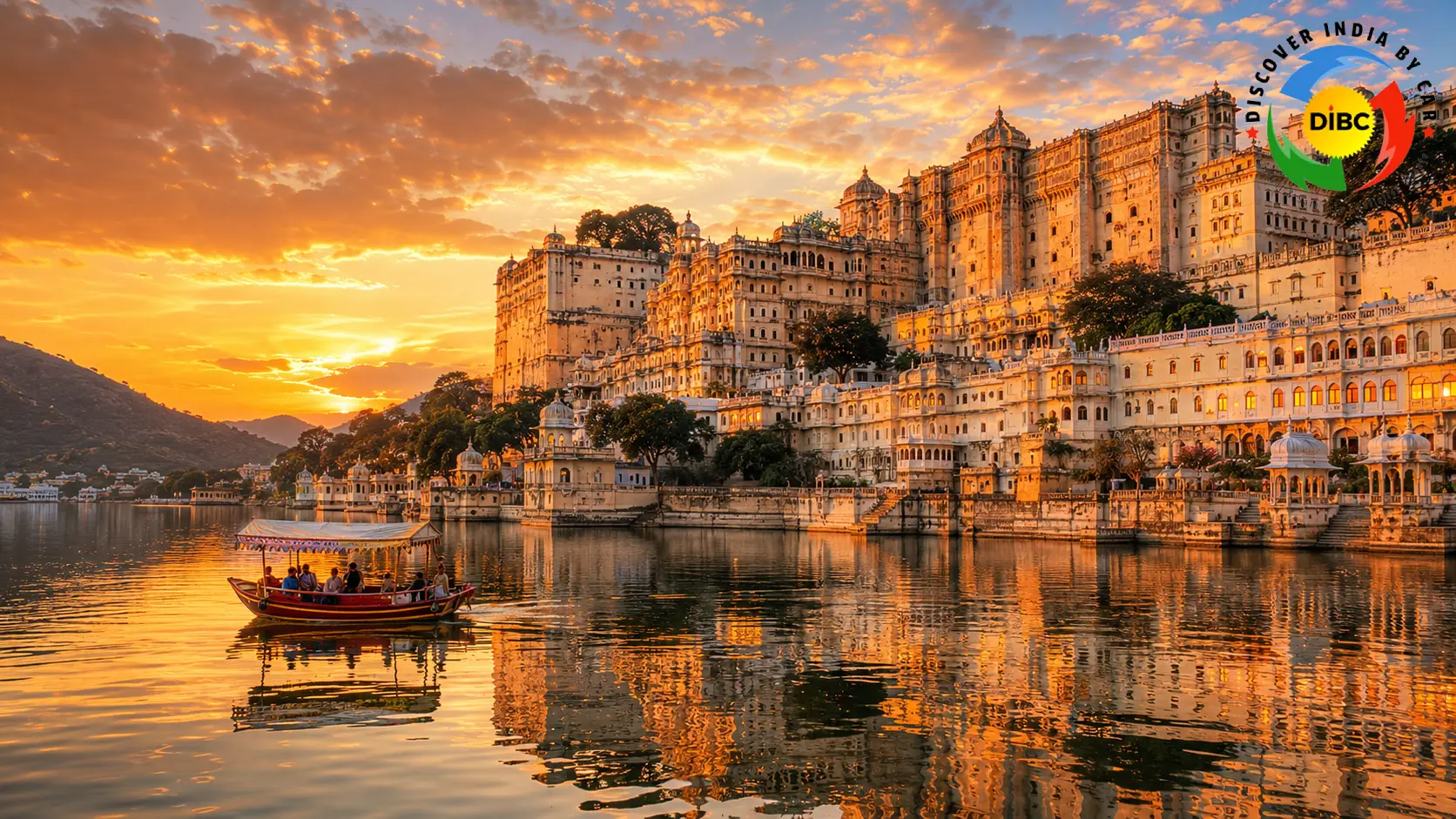
Most of Rajasthan is big, dusty, and gloriously chaotic — Jaipur’s traffic, Jodhpur’s blue sprawl, Jaisalmer’s golden vastness. Udaipur is the opposite. It’s compact. It’s soft. The whole old city wraps around Lake Pichola, and wherever you stand, there’s water catching the light and a palace somewhere in the frame. You can walk most of it. You can sit by it. The city slows you down whether you planned to slow down or not.
Then there’s the Lake Palace — the white marble hotel that genuinely looks like it’s floating in the middle of Pichola. You’ve probably seen it in photos without knowing where it was. Bond fans will recognise the skyline too; the 1983 film Octopussy was shot here, and half the rooftop cafés in town still screen it nightly, which is either charming or a bit much depending on your mood.
But what actually makes it romantic isn’t any single monument. It’s the rhythm. Slow mornings in the City Palace. A long lazy afternoon doing very little. And then, every single evening, a sunset that turns the lakes orange and the palaces gold, with rooftop tables and boats and temple bells all happening at once. Couples consistently rank it India’s number-one honeymoon city, and I don’t think that’s marketing. It’s just what the place does to people.
A small reality check, because I believe in those: Udaipur is romantic, not silent. The old city is a working Indian town — narrow lanes, scooters, cows, vendors, the lot. The magic and the mayhem share the same streets. Lean into both and you’ll love it. Expect a sanitised resort and you’ll spend your trip slightly annoyed.
City Palace & Lake Pichola
If you only do one thing in Udaipur, make it the City Palace — and give it more time than you think you need.
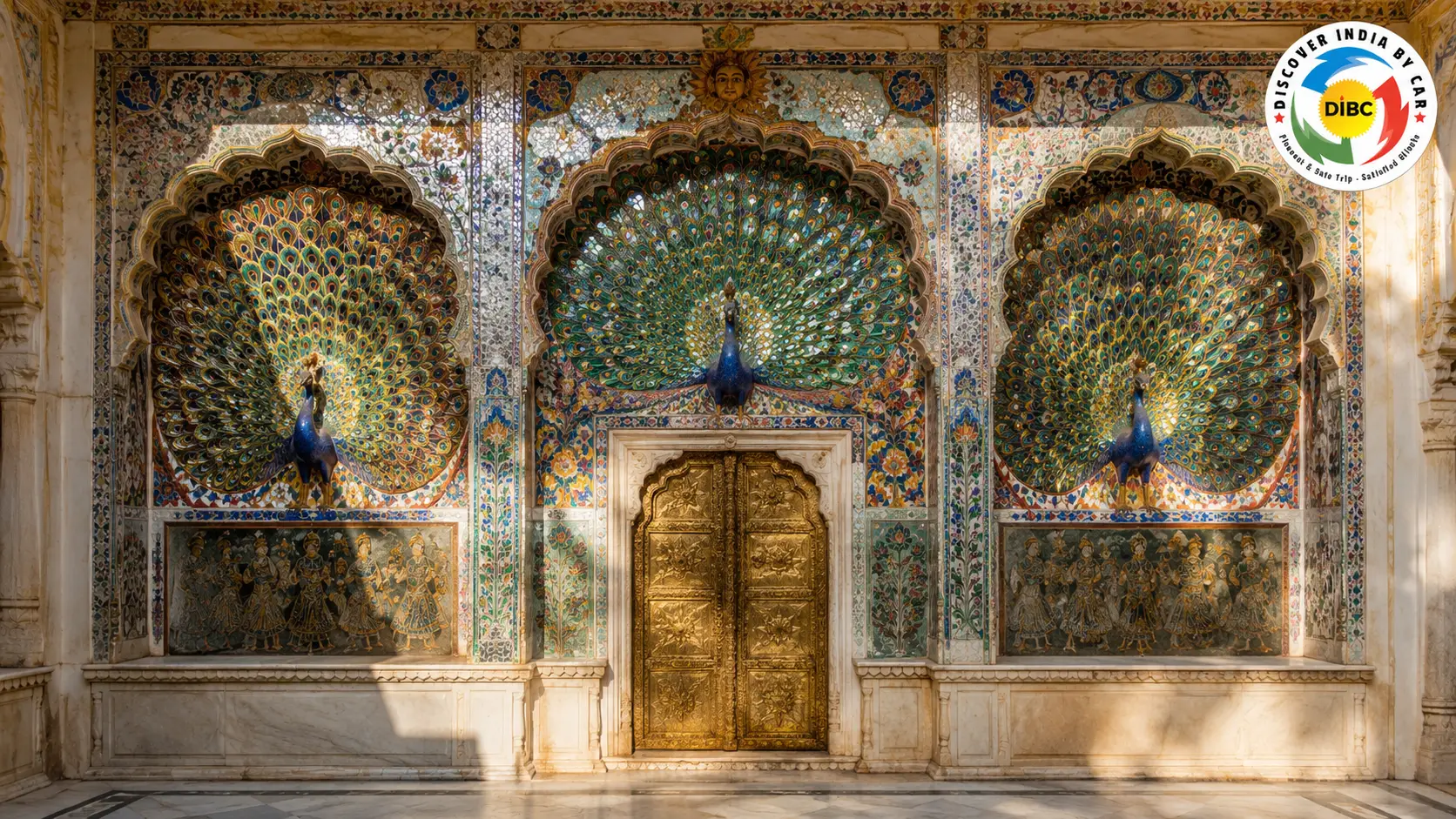
People underestimate this place. They picture a single palace and budget ninety minutes. In reality it’s a sprawling complex built up over nearly four centuries by the Mewar rulers, all granite and marble, perched right on the eastern edge of Lake Pichola. Inside you’ve got courtyards, museums, mirror-work rooms, peacock mosaics, and balconies with the best lake views in the city. The corridors are deliberately zigzagged — old defensive design, built to slow down attackers — which means it’s also very easy to get pleasantly lost.
The bits worth lingering on: Mor Chowk (the peacock courtyard, with its glittering glass mosaics), the Sheesh Mahal mirror palace, and the upper terraces where the whole lake opens up below you. The museum sections hold the personal side of Mewar history — royal weapons, miniature paintings, old photographs, the kind of detail you actually slow down to read.
My one piece of timing advice, learned from doing this on repeat: get there at opening. The palace runs daily from around 9:30 AM, and if you walk in then, you’ll have the courtyards almost to yourself. Arrive at 10:30 and you’re queuing behind the tour buses, shuffling through Mor Chowk shoulder to shoulder. Ticket counters close roughly half an hour before the palace shuts, so don’t leave it till late afternoon either.
And right below the palace walls sits Lake Pichola — the reason the city exists. It’s a man-made lake, built back in the 14th century, and it’s the stage for everything Udaipur is famous for: the Lake Palace, Jag Mandir island, the ghats where life carries on, and those sunsets. Most boat rides launch from inside the City Palace complex itself, so the two attractions naturally fold into one half-day. More on the boats shortly, because they deserve their own section.
Udaipur entry fees & timings at a glance (2026)
Prices and hours are revised periodically by the authorities and tend to creep upward — always confirm the latest at the ticket counter. The figures below reflect approximate 2026 rates.
| Attraction | Timings | Indian (approx.) | Foreign (approx.) | Notes |
|---|---|---|---|---|
| City Palace Museum | 9:30 AM – 5:30 PM, daily | ~₹300 | ~₹600–700 | Audio guide ~₹200 extra Counter closes ~30 min early |
| Crystal Gallery (City Palace) | 9:30 AM – 5:30 PM | ~₹500–700 | ~₹500–700 | Separate ticket from the museum |
| Jagdish Temple | ~5:00 AM – 2:00 PM 4:00 – 10:00 PM |
Free | Free | Remove shoes; modest dress required |
| Bagore Ki Haveli (Museum) | 9:30 AM – 5:30 PM | ~₹60 | ~₹100 | Camera fee ~₹50 extra |
| Dharohar Dance Show | 7:00 – 8:00 PM, daily | ~₹90–125 | ~₹150 | Sells out fast Counter opens ~6:00 PM; camera ~₹150 |
| Monsoon Palace (Sajjangarh) | 9:00 AM – 6:00 PM | ~₹120 | ~₹500 | Separate wildlife-sanctuary vehicle fee on access road |
| Lake Pichola — Day Boat | ~10:00 AM – 5:00 PM | ~₹400 | ~₹400 | Children tickets are roughly half price |
| Lake Pichola — Sunset Cruise | Evening Slots | ~₹700–800 | ~₹700–800 | Stops at Jag Mandir; book late slot for sunset |
Top Things to Do (Jagdish Temple, Monsoon Palace)
The City Palace and a boat ride are the headline act. But the supporting cast is what fills out a proper two- or three-day stay.
Jagdish Temple is the easiest one to fold in, because it’s a two-minute walk from the City Palace gate. It’s a tall, 17th-century temple dedicated to Vishnu, covered in carved figures, and it’s still very much a living temple — you’ll have aarti, bells, flower sellers, the works. Entry is free. Pop your shoes off, dress modestly, and give it ten quiet minutes. It’s a nice grounding contrast to all the palace grandeur.
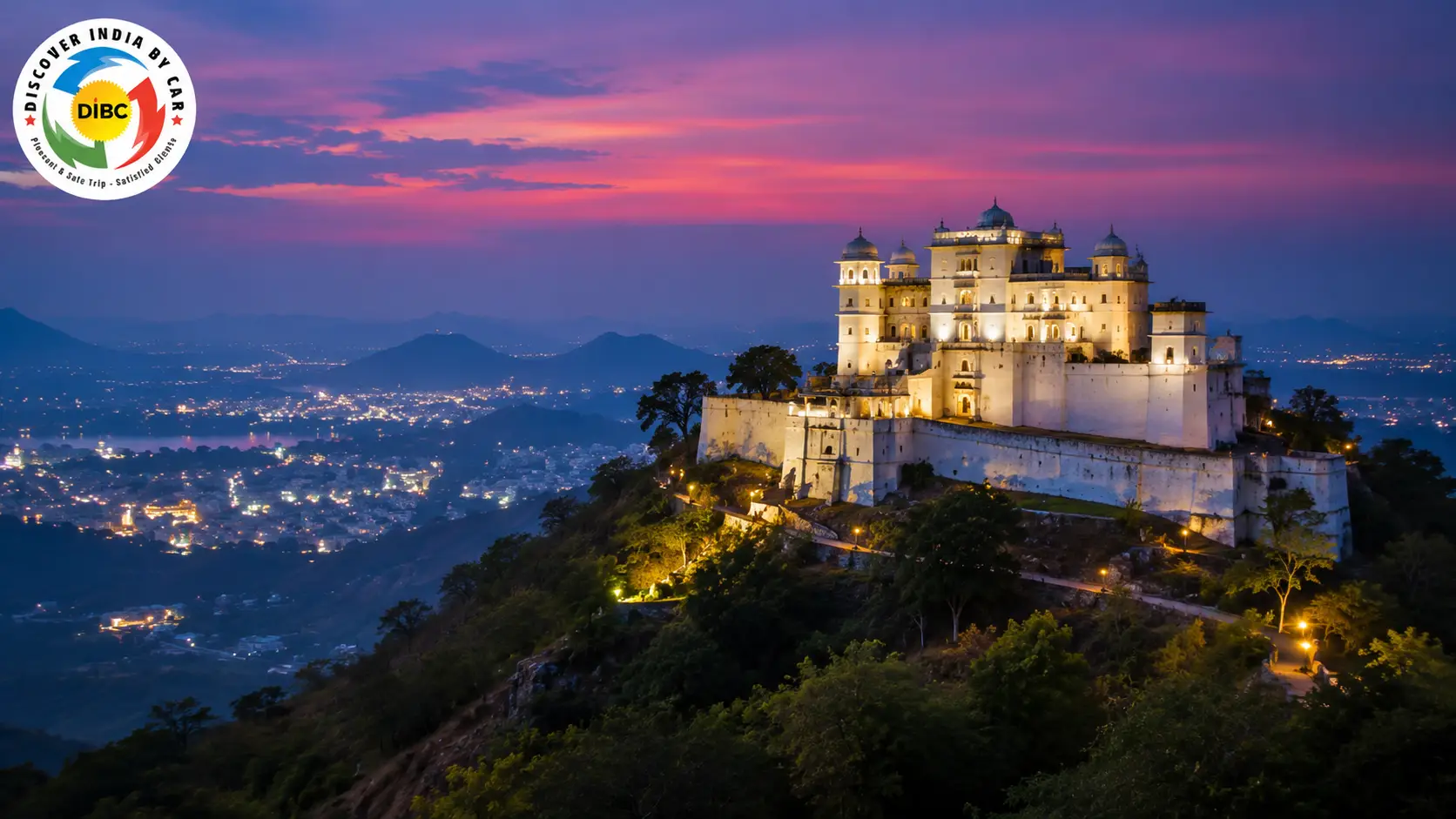
Monsoon Palace (Sajjangarh) is the sunset move. It sits on a hilltop about 10 km out of town, built in the 1880s by Maharana Sajjan Singh, originally to watch the monsoon clouds roll in over the Aravalli hills — hence the name. The palace itself is half-ruined and honestly not the point. You go for the view. From up there the whole city spreads out below, the lakes catch the last light, and on a clear evening it’s one of the best sunsets in Rajasthan. Quick heads-up: the access road runs through the Sajjangarh Wildlife Sanctuary, so there’s a separate vehicle/sanctuary charge on top of the palace ticket, and gates close around sundown — don’t cut it fine.
A few more that earn their place:
- Bagore Ki Haveli — a restored 18th-century mansion on the waterfront, now a museum, but the real reason to come is the Dharohar folk dance show every evening at 7 PM. Ghoomar, Kalbeliya, the pot-balancing Bhavai dance, a puppet show — it’s touristy, sure, but it’s genuinely good and the courtyard setting is lovely. Tickets sell out, so get there by 6:15 to grab a decent spot on the floor cushions.
- Saheliyon Ki Bari — the “garden of the maidens,” all fountains, lotus pools and marble pavilions. A calm half-hour, good in the late afternoon.
- Fateh Sagar Lake — Pichola’s quieter, more local sibling. This is where Udaipur families come in the evening for boating, street food and a stroll. Less postcard, more real life.
- Vintage & Classic Car Collection — the royal family’s old fleet, Rolls-Royces and all. A fun, low-effort hour, especially if there’s a car lover in your group.
Best Boat Rides & Sunset Spots
This is the part you’ll remember. So let me be specific.
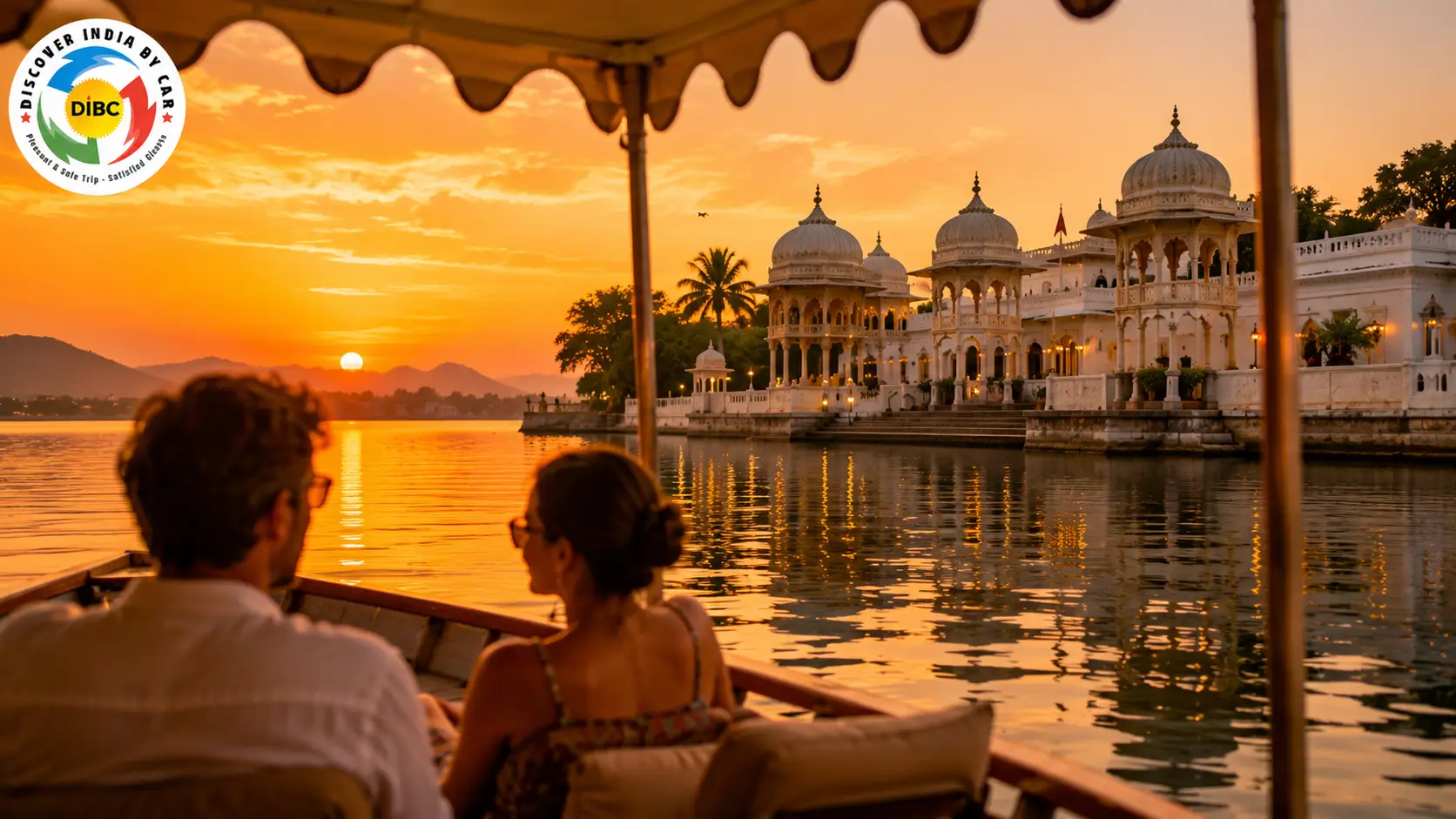
The classic experience is the Lake Pichola boat ride, launched from Rameshwar Ghat inside the City Palace complex. The route drifts past the Lake Palace, pulls in at Jag Mandir — the island palace where you can wander the gardens for twenty minutes — and gives you the angle on the city you simply can’t get from land. There’s a regular daytime ride and a pricier sunset cruise, and I’ll be blunt: pay for the sunset slot. The daytime ride is pretty; the sunset ride is the thing people fly across the world for. As the light drops, the palace walls turn from cream to gold to deep amber, and the water goes still and glassy. Book the latest departure you can.
One practical note from experience: tickets for the sunset boat are sold on the day, not far in advance, and the popular slots go quickly in peak season. If you’re with a driver or guide, let them grab the tickets early while you’re still inside the palace — it saves the scramble.
If you’d rather watch the sunset from land than from the water, Udaipur is spoilt for spots. Here’s where I send people, depending on the vibe they’re after:
| Sunset Spot | Best For | The Vibe |
|---|---|---|
| Lake Pichola Sunset Cruise | First-timers, couples | The iconic one — palaces glowing from the water |
| Ambrai Ghat / Ambrai Restaurant | Romantic Dinner | Front-row view of the City Palace lit up across the lake |
| Monsoon Palace (Sajjangarh) | Big panoramic views | Whole-city sunset from a hilltop, Aravallis in the distance |
| Fateh Sagar Lake | A relaxed local evening | Street food, families, low-key boating |
| Old-City Rooftop Cafés | Budget, slow evenings | Chai, Octopussy on a screen, lake at your feet |
Mix and match across your stay — a boat one evening, a rooftop the next, the hilltop on your last night. You won’t get bored of Udaipur’s sunsets. I haven’t in fourteen years.
How to Reach Udaipur
Good news: Udaipur is well connected, and it’s an easy place to reach from almost anywhere a foreign traveller is likely to start.
By air is the simplest. Maharana Pratap Airport (Dabok) sits about 22–24 km from the city centre, roughly a 35–45 minute drive, and has regular domestic flights to and from Delhi, Mumbai, Jaipur, Jodhpur, Ahmedabad and a few other hubs. If you’re flying into India internationally, you’ll usually connect through Delhi or Mumbai. There are limited seasonal international links, but plan around a domestic hop and you’ll have far more options.
By train, Udaipur City railway station is only about 3 km from the centre, with direct trains from Delhi, Jaipur, Jodhpur, Ahmedabad, Mumbai and Chittorgarh. The overnight train from Delhi is a popular, characterful way to arrive — book the air-conditioned classes well ahead, especially October to March.
By road is where Udaipur really shines for a Rajasthan trip, because it strings together so naturally with the rest of the state. A private car with a driver is, frankly, the way most of my guests do it — door to door, stops where you want, no haggling with taxis at every monument.
| Route | Approx. Distance | Approx. Drive Time |
|---|---|---|
| Delhi → Udaipur | ~660 km | 10–12 hrs Most fly or take train |
| Jaipur → Udaipur | ~395 km | 6–7 hrs |
| Jodhpur → Udaipur | ~250 km | 5 hrs |
| Ahmedabad → Udaipur | ~260 km | 4.5–5 hrs |
| Mount Abu → Udaipur | ~165 km | 3.5 hrs |
| Kumbhalgarh → Udaipur | ~85 km | 2.5 hrs |
| Chittorgarh → Udaipur | ~115 km | 2.5 hrs |
Within the city itself, the attractions are spread out and the old-city lanes are tight, so a car-and-driver or autos make far more sense than trying to self-drive. Park the car, walk the old city on foot, and let someone else handle the hills out to Monsoon Palace.
Best Time & Ideal Itinerary
Let’s settle the season question first, because it shapes everything.
October to March is Udaipur at its best. Cool, clear, comfortable days, cold-ish evenings in deep winter, and that crisp light that makes the lakes look unreal. This is peak season for a reason. July to September brings the monsoon, and there’s a real case for it — the Aravallis turn green, the lakes fill, and the Monsoon Palace finally earns its name. It’s humid and you’ll get rain, but it’s atmospheric and quieter. April to June is genuinely hot, regularly pushing 40°C, and I’d only recommend it if it’s the only window you have — in which case, do everything early morning and after sunset, and hide indoors at midday.
A simple way to think about it:
| Season | Months | What to Expect |
|---|---|---|
| Winter (Peak) | Oct – Mar | Best weather, best light, biggest crowds, highest hotel rates |
| Monsoon | Jul – Sep | Lush, green, dramatic skies, fewer tourists, some rain |
| Summer | Apr – Jun | Very hot; early-morning and evening sightseeing only |
Now, how many days? Most people rush Udaipur and regret it. Two nights is the sensible minimum; three is the sweet spot. Here’s how I’d lay it out.
If you have 2 days:
- Day 1 — City Palace at opening, Jagdish Temple next door, a slow old-city lunch, then the sunset boat ride on Lake Pichola. Dinner at a lakeside rooftop.
- Day 2 — Saheliyon Ki Bari and the vintage car collection in the morning, an easy afternoon, then the Dharohar dance show at Bagore Ki Haveli (7 PM).
If you have 3 days, add:
- Day 3 — A drive out to Kumbhalgarh fort (those colossal walls, the second-longest in the world) and the marble Ranakpur Jain temple — an easy, spectacular day trip about 2–2.5 hours out. Back in time for one last sunset, this time from Monsoon Palace.
That third day is the one people thank me for. The fort-and-temple day trip is the moment Udaipur stops being “pretty city” and becomes “trip of a lifetime.”
Udaipur + Golden Triangle Route
Here’s the planning insight that saves the most trips: don’t visit Udaipur in isolation. It’s the natural southern anchor of a Rajasthan journey, and it slots beautifully onto the end of India’s classic Golden Triangle.
The standard Golden Triangle is Delhi → Agra (Taj Mahal) → Jaipur. Gorgeous, but it’s three cities of forts and monuments. Extending down to Udaipur adds the one thing the Triangle lacks — water, calm, and a softer, more romantic finish. You end the trip on a boat at sunset instead of in another fort. It’s a far better emotional arc.
A typical extended route, by private car, looks like this:
Delhi → Agra → Jaipur → (Pushkar) → Jodhpur → Udaipur, ending with a flight or train out of Udaipur. Depending on how many stops you add, that’s roughly a 9 to 12-day trip, and it covers the genuine highlights of North India and Rajasthan in one clean, logical loop — no backtracking.
This is exactly the kind of route I build for foreign guests, and it’s where a private car-and-driver makes the biggest difference. You’re covering long distances between cities, you want comfort and flexibility, and you don’t want to spend your holiday negotiating with drivers at every railway station. One car, one trusted driver, the whole way down.
Planning Your Udaipur Trip With Us
(Our commercial bit, stated plainly)
I run Discover India by Car, a Delhi-based private car-and-driver tour service. For fourteen years we've specialised in exactly this kind of journey — Golden Triangle trips, full Rajasthan circuits, and Udaipur as the romantic finale — built around foreign travellers who want it comfortable, flexible and properly planned.
Because Udaipur sits right on our core Rajasthan route, we can take you there door to door, handle the City Palace and boat tickets, get you to Monsoon Palace in time for sunset, and run the Kumbhalgarh–Ranakpur day trip without you lifting a finger.
If you'd like a custom Udaipur or Rajasthan plan built around your dates, reach out:
FAQ: Udaipur for Couples
Q1. Is Udaipur good for a honeymoon?
Yes — it’s consistently ranked India’s most romantic city and a top honeymoon pick. The lakes, palace hotels, sunset boat rides and intimate, walkable old city make it ideal for couples. Two to three nights is the sweet spot for a honeymoon stay.
Q2. How many days do you need in Udaipur?
Two days covers the essentials (City Palace, Lake Pichola sunset cruise, Jagdish Temple, the dance show). Three days lets you add a Kumbhalgarh fort and Ranakpur temple day trip, which is the strongest reason to extend.
Q3. What is the best time to visit Udaipur?
October to March, for cool, clear weather and the best light. The monsoon (July–September) turns the hills lush and green but brings rain. April to June is very hot and best avoided unless you sightsee only early and late in the day.
Q4. How much does the Lake Pichola boat ride cost in 2026?
Approximately ₹400 for a daytime boat and ₹700–800 for the sunset cruise per adult, with children roughly half price. Tickets are sold on the day from inside the City Palace complex; sunset slots sell out fast in peak season.
Q5. What is the City Palace Udaipur entry fee for foreigners?
Roughly ₹600–700 for the main museum complex in 2026, with the Crystal Gallery and audio guide ticketed separately. It’s open daily from about 9:30 AM, and arriving at opening is the easiest way to beat the crowds. Always confirm current rates at the counter.
Q6. Is the Monsoon Palace worth visiting?
For the sunset, absolutely. The palace itself is mostly empty, but the hilltop panorama over Udaipur’s lakes and the Aravalli hills is one of the best sunset views in Rajasthan. Note the separate wildlife-sanctuary vehicle fee and the early closing time.
Q7. How do you get to Udaipur?
Fly into Maharana Pratap Airport (about 22–24 km from the city) on a domestic flight from Delhi, Mumbai or Jaipur; take a direct train to Udaipur City station; or arrive by private car, which pairs perfectly with a wider Rajasthan or Golden Triangle trip.
Q8. Can you add Udaipur to the Golden Triangle?
Yes, and you should. Udaipur extends the Delhi–Agra–Jaipur Golden Triangle into a fuller Rajasthan loop — typically a 9–12 day private-car journey — and gives the trip a calmer, more romantic finish on the lakes.
Q9. Is Udaipur safe for tourists?
Udaipur is one of the more relaxed, tourist-friendly cities in Rajasthan. Normal travel sense applies — watch your belongings in crowded markets, agree auto fares in advance, and dress modestly at temples — but couples and solo travellers generally find it comfortable and welcoming.