- Private car and driver in Delhi / India
- +91-8447445445
- info@discoverindiabycar.com sugar.ankit@yahoo.com
 +91-9818434712
- Follow us:



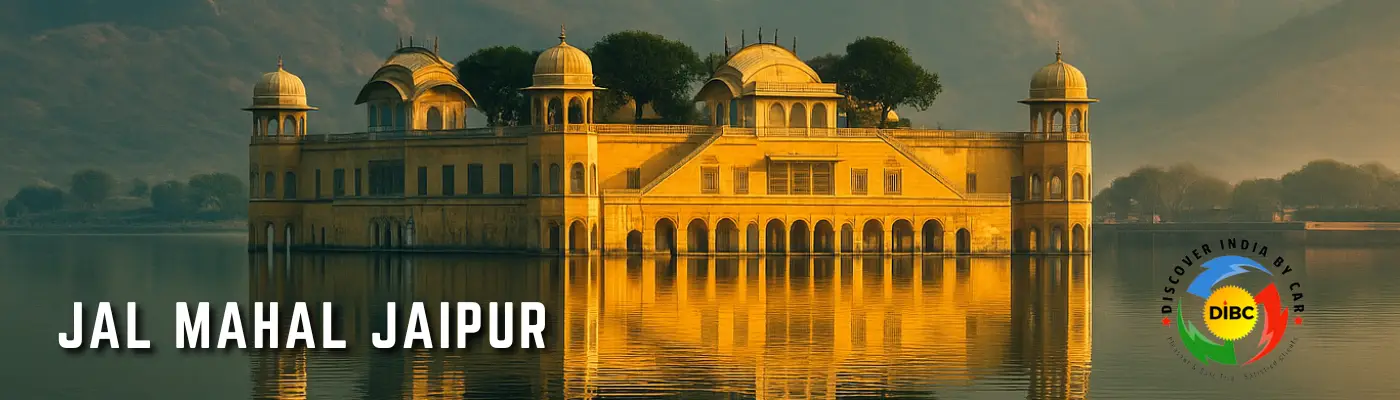
Don’t Visit Jal Mahal Jaipur Until You Read This
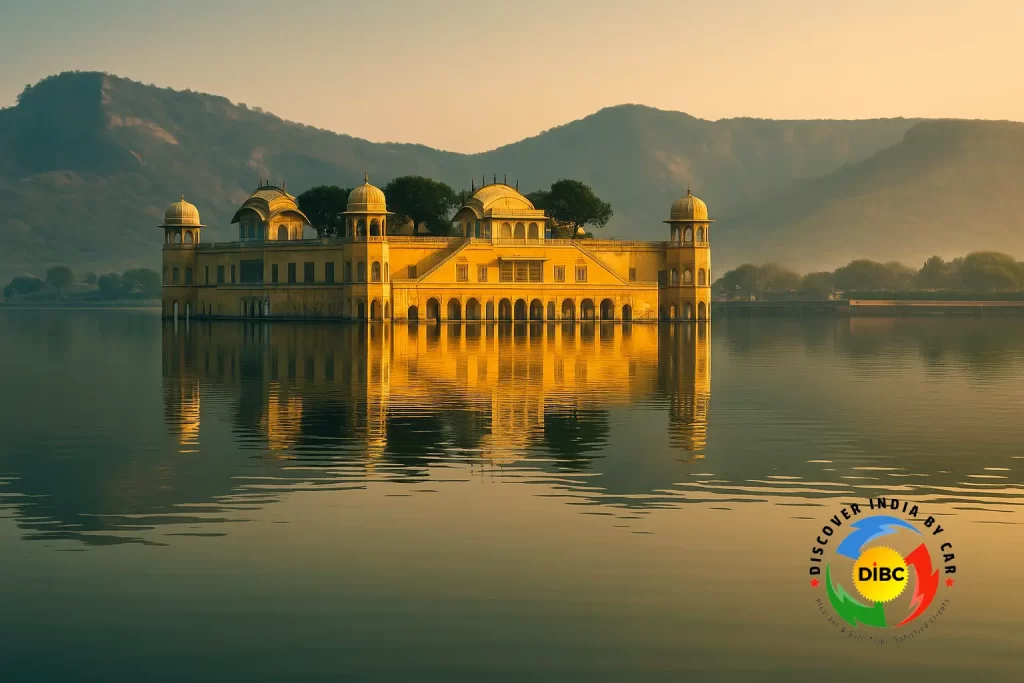
The Floating Dream: My Unfiltered Guide to Jal Mahal Jaipur
You’ve seen the pictures. Everyone has. A stunning, golden-stone palace floating impossibly in the middle of a serene lake. And you think, “Wow, that’s beautiful.”
But let me tell you, as someone who has chased stories and sights across the globe for over 15 years, pictures don’t do the Jal Mahal Jaipur justice. Not even close. Seeing it for the first time, especially as the morning mist burns off Man Sagar Lake, is a moment that sticks with you. It feels less like architecture and more like a hallucination. A beautiful, silent mirage against the rugged, time-worn Aravalli Hills.
Here’s the thing, though. I watch so many travelers make the same mistake. They pull their car over on the busy Amer road, jump out, snap that obligatory photo, and then leave. They’ve seen it, but they haven’t felt it. They’ve missed the soul of the place.
This guide is my attempt to fix that. We’re going to pull back the curtain. We’ll talk about its wild history, the genius engineering hiding beneath the water, and get brutally honest about the practical stuff like the Jal Mahal timings and the much-misunderstood Jal Mahal entry fee. Forget the generic tourist spiel. This is the real story of the magnificent Jal Mahal.
That First Look: What’s the Magic All About?
So, what is it about this one building that captivates everyone?
Unlike the city’s other famous landmarks—the colossal, battle-ready forts of Amer or Nahargarh that loom over you—the Jal Mahal Jaipur has a completely different energy. It’s soft. It’s romantic. It wasn’t built to intimidate enemies; it was built for pleasure. For moonlit royal parties, for lazy afternoon picnics, for a king who wanted a place to escape the world.
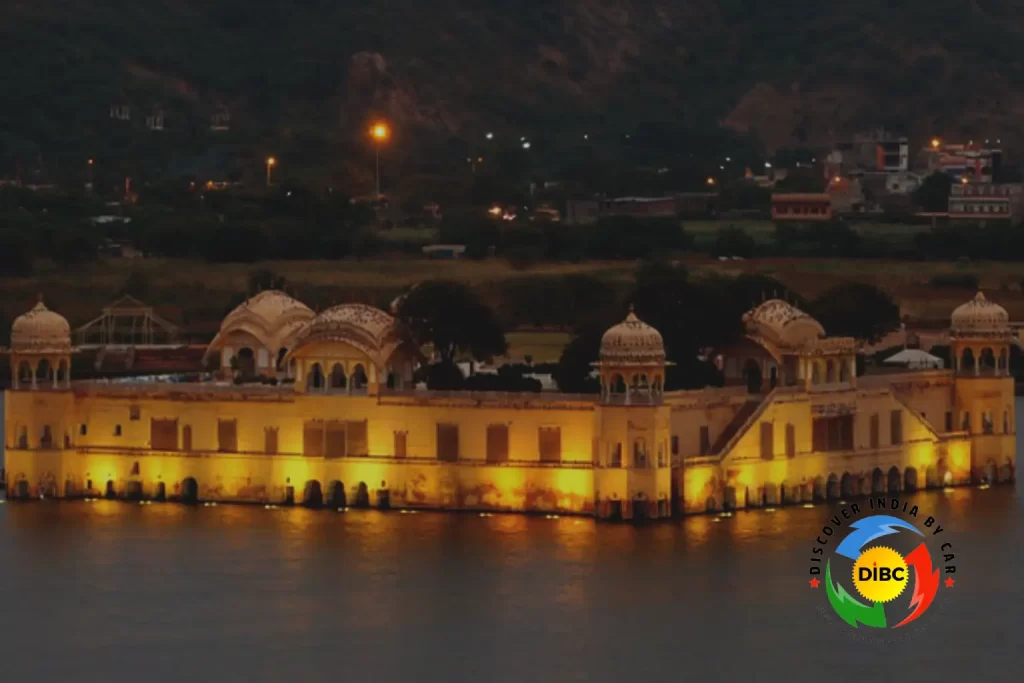
And you can feel that. It doesn’t shout for your attention. It whispers. The real magic happens at the edges of the day. At sunrise, when the water is like glass and the palace and its reflection merge into one. Or at dusk, when the lights flicker on and it transforms into a golden jewel box floating in the dark. It’s a place that calms the noise in your head.
The Stories Buried in the Water: A Quick History Dive
The tale of the Jal Mahal isn’t as simple as “a king built a palace.” It’s more interesting than that.
It Started as a Duck Blind (A Very Fancy One)
Most people link this palace to the guy who built the Hawa Mahal, but the credit for its origin actually goes to Maharaja Madho Singh I way back in the 1750s. And he wasn’t thinking of a grand palace. He wanted a hunting lodge. A really, really nice one. Man Sagar Lake was teeming with birdlife, and the royals loved their sport. So, the first structure here was a beautiful, but practical, stopover for royal duck hunting parties.
The Glow-Up: From Lodge to Legend
It was his son, Maharaja Madho Singh II, in the 18th century, who looked at the humble lodge and saw its potential for greatness. He was the one who invested heavily in it, transforming it into the five-story pleasure palace we see today. He brought in the best craftsmen, who masterfully wove together Rajput and Mughal architectural styles. The purpose changed. It was no longer about the hunt; it was about indulgence, leisure, and creating a breathtaking piece of art.
From Neglect to National Treasure
For a long, sad period, the palace was forgotten. It fell into ruin, a ghost of its former self. The lake became a swampy, polluted mess. It was a heartbreaking sight for anyone who knew its history. But then, a massive restoration project began in the 2000s. And this wasn’t just a patch-up job. They didn’t just restore the palace; they revived the entire lake ecosystem. The clean water and the vibrant birdlife you see today are a direct result of that incredible effort. It’s one of India’s great conservation success stories.
The Engineering is a Mind-Bender: How Does It Not Sink?
This is the part that still gets me. The sheer genius of its construction is staggering, especially for its time.
You’re only seeing 20% of the building.
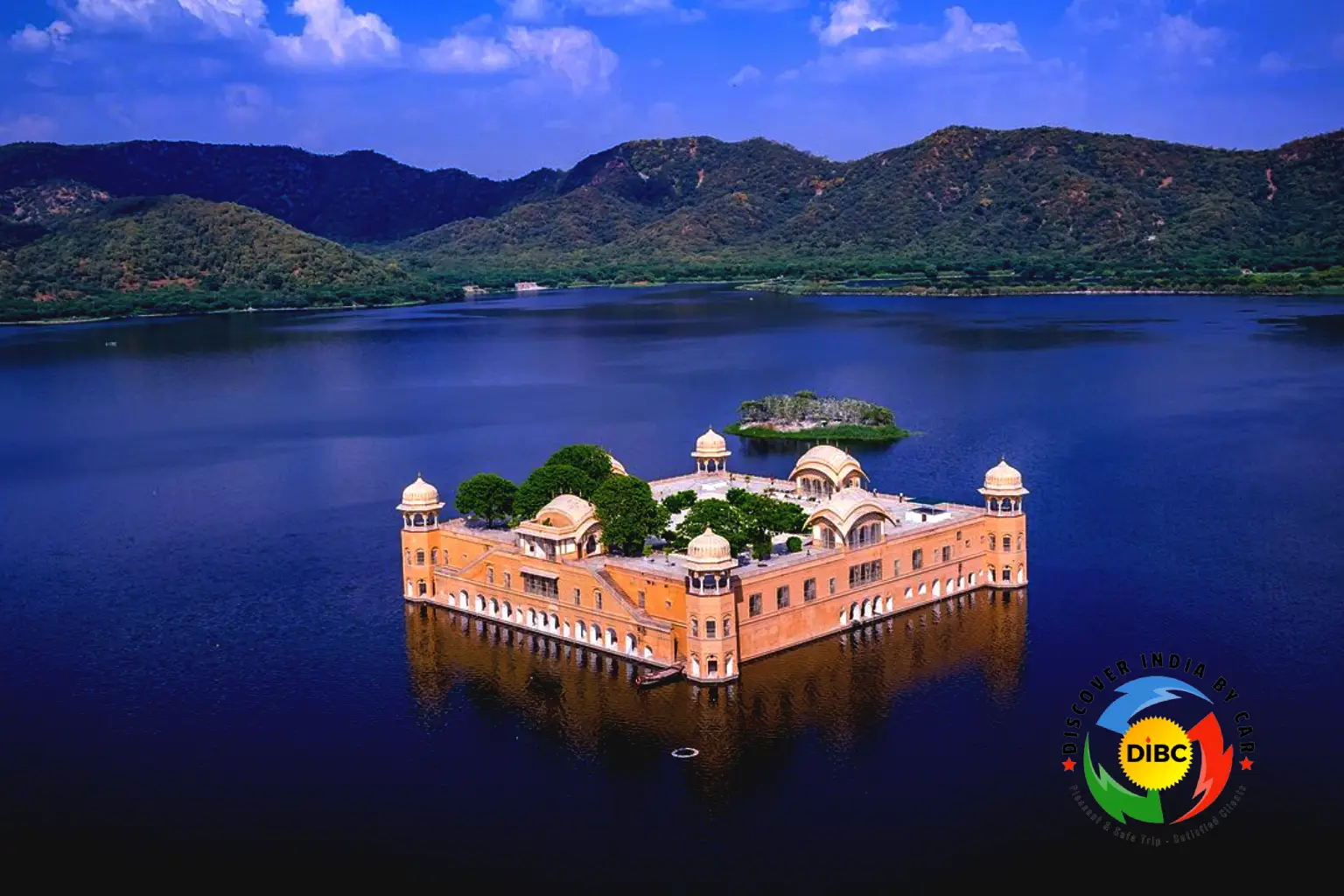
- The Iceberg Palace: The Jal Mahal is a five-story structure. The top floor, with its beautiful garden and pavilions, is all you can see. The other four floors are completely submerged underwater. This was a deliberate, brilliant design choice. The surrounding water acts as a natural coolant, making the submerged chambers comfortable even when it’s over 45°C (113°F) outside.
- Ancient Waterproofing: How have the lower floors stayed dry for centuries? The builders used traditional Rajasthani lime mortar, a special recipe that is incredibly dense and water-resistant. Combined with thick, robust stone walls, they essentially built a structure that could withstand the constant pressure of the lake. It’s an absolute marvel of pre-modern engineering.
- A Perfect Blend: The design itself is a beautiful conversation between two dominant styles. The arched gateways have that classic Mughal grandeur. But the balconies (jharokhas) and the elegant, umbrella-shaped cenotaphs (chhatris) are pure Rajputana. All of it is carved from that beautiful red sandstone that gives Jaipur its famous glow.
Let’s Get Practical: Your Game Plan for Visiting
Okay, enough history and architecture. Let’s talk about what you really need to know for your visit.
When Should I Go? The Real Deal on Jal Mahal Timings
This is the most common question, and the answer can make or break your experience. You can technically see the palace any time of day from the road, but if you want the magic, you need to be strategic.
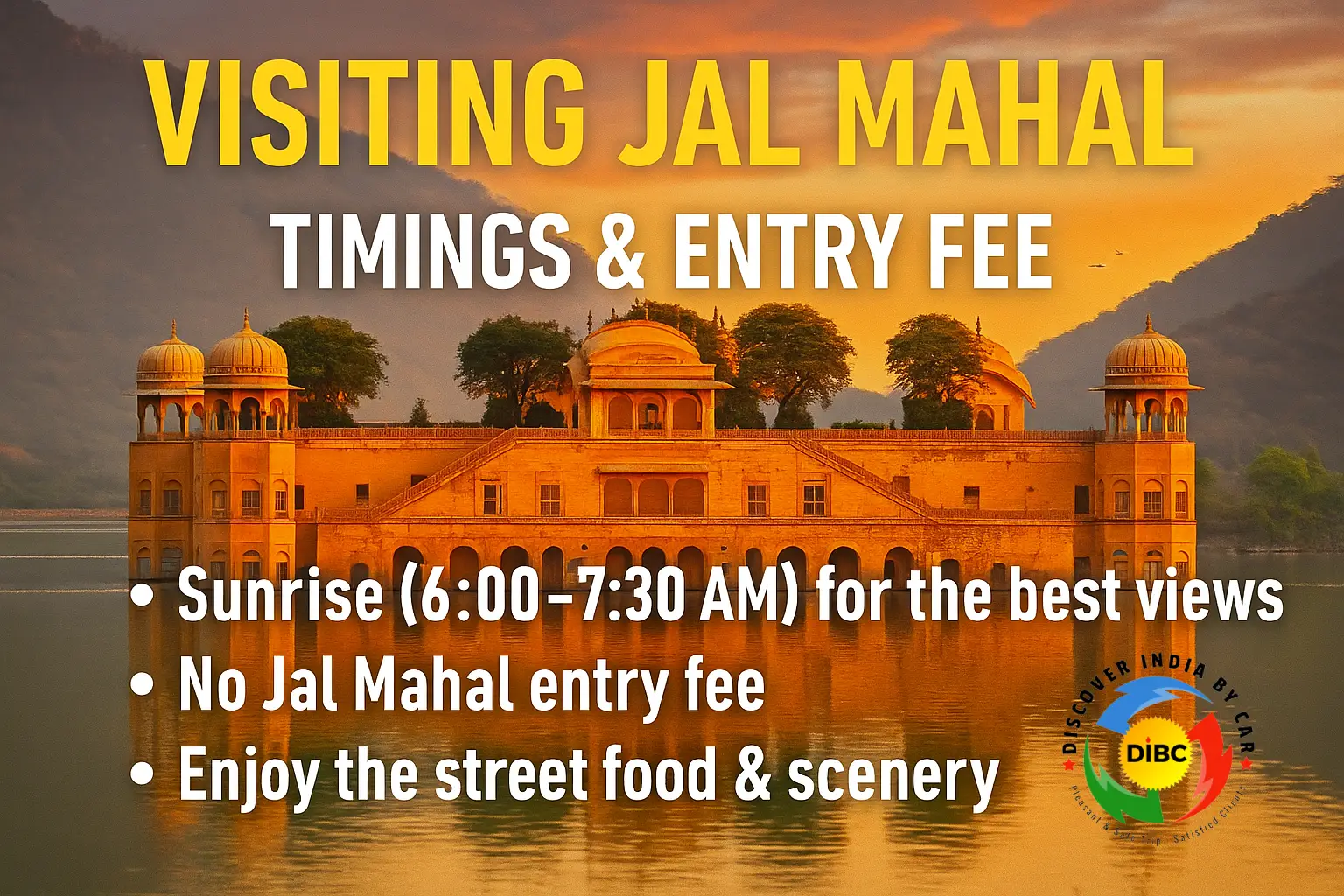
- Sunrise (The Pro Move): Get here between 6:00 AM and 7:30 AM. I know it’s early. Do it anyway. The light is soft and otherworldly. The tour buses haven’t arrived. It’s just you, the palace, a few locals, and maybe a chai-wallah. This is when you’ll get your best photos and your most peaceful moments.
- Sunset (The Social Hour): From 5:00 PM to 6:30 PM is also fantastic. The sun sets behind the hills, the sky puts on a show, and the promenade fills up with families, couples, and street food vendors. The vibe is lively and cheerful.
- After Dark: For about an hour after sunset, the palace is illuminated. It’s a completely different and equally stunning view.
So yes, the Jal Mahal timings are flexible, but for an experience that truly moves you, aim for the golden hours.
Let’s Settle This: The Jal Mahal Entry Fee
I want to be crystal clear about this because there is a lot of confusion.
There is NO Jal Mahal entry fee.
Let me say it again. It costs absolutely nothing to view the palace from the lakeside. You can walk the entire length of the promenade, take photos, sit on a bench, and admire it for hours, and you will not have to pay anyone a single rupee.
CRITICAL UPDATE: You cannot go inside the Jal Mahal palace. Public access to the interior is closed. In the past, there were some exclusive boat tours, but these are not operating for the general public. So, if a tout or guide on the street approaches you selling “tickets to get inside,” walk away. They are scamming you. The entire joy of the Jal Mahal Jaipur is its external view, and that view is, thankfully, free for all.
Don’t Just Look at It—Experience the Area
The palace is the star, but the supporting cast is pretty great too.
- Go Beyond the Selfie: Get creative with your camera. Use the arched viewing posts on the promenade to frame your shot. Capture a reflection in a puddle after a monsoon shower. Take a picture of a camel with the palace in the background. Tell a story.
- Street Food Crawl: The promenade is a fantastic spot for cheap, delicious snacks. Grab a bhutta (roasted corn on the cob) slathered in lime and masala, try some bhelpuri, or cool down with a traditional kulfi.
- Haggle for Souvenirs: You’ll find vendors selling everything from colorful lac bangles to miniature paintings and leather shoes. It’s a fun, low-pressure place to practice your bargaining skills and pick up a few trinkets.
- Spot the Birds: If you’re a nature lover, bring binoculars. The lake is a surprisingly rich ecosystem. You can often spot flamingos, pintail ducks, cormorants, and many other species, especially in the winter months.
How to Get There
It couldn’t be easier. The Jal Mahal sits right on the main Amer Road, the main artery connecting Jaipur to the famous Amer Fort.
- Auto-Rickshaw/Uber/Ola: The most common way. Just plug “Jal Mahal” into your app or tell any driver. It’s a mandatory stop on the standard Jaipur sightseeing circuit.
- Local Bus: For an authentic and incredibly cheap option, Jaipur’s city buses run this route constantly.
My Final Take: It’s More Than Just a Palace
The Jal Mahal Jaipur is one of those rare places that lives up to the hype. It’s a testament to royal imagination, a marvel of engineering, and a powerful symbol of rebirth. It doesn’t need to be the biggest or the loudest monument to be the most memorable.
Its power is in its serenity. In a city as wonderfully chaotic as Jaipur, the Jal Mahal is a pause button. A place to breathe. You may not be able to explore its submerged floors, but the vision of it floating on the water at dawn is an experience that will stay with you long after you’ve left. Don’t just drive by it. Stop. Linger. Let it do its thing.
Frequently Asked Questions (FAQs) about Jal Mahal Jaipur
Q1: Seriously, can I get inside Jal Mahal? No exceptions?
A: As of right now, no. Public entry into the Jal Mahal is not permitted. The experience is entirely visual, from the promenade on the shore. Think of it like admiring a beautiful sculpture in a gallery—you can get close, but you can’t touch.
Q2: What is the real Jal Mahal entry fee? I’m getting mixed info.
A: The real Jal Mahal entry fee is zero. It is 100% free to view from the lakeside. Don’t let anyone tell you otherwise. The best things in life (and in Jaipur) are sometimes free.
Q3: For the best photos, what are the ideal Jal Mahal timings?
A: For those dreamy, postcard-perfect shots, the best Jal Mahal timings are definitely the first hour after sunrise or the hour around sunset. The light is soft and golden, and the reflections are at their best.
Q4: Why is the Jal Mahal Jaipur so famous? What’s the big deal?
A: The big deal is that it’s just so unique! A multi-story palace that looks like it’s floating on a lake is a pretty wild concept. The blend of stunning architecture, its romantic purpose, and the sheer mystery of its submerged floors make the Jal Mahal Jaipur a true one-of-a-kind wonder.
Q5: Can I fly a drone there for an aerial shot?
A: It’s generally a bad idea without specific, official permission. Due to its prominence and location, drone flying is restricted in many parts of Jaipur, especially around key monuments. Best to stick to your camera on the ground.
Q6: How much time should I set aside for a visit?
A: Plan for at least 30-45 minutes. That gives you enough time to walk around, take plenty of photos from different angles, and just soak it all in. If you’re visiting at sunrise or sunset, you’ll probably want to stay for a full hour to watch the light change.


