- Private car and driver in Delhi / India
- +91-8447445445
- info@discoverindiabycar.com sugar.ankit@yahoo.com
 +91-9818434712
- Follow us:




Birla Mandir Delhi – History, Timings, Architecture & Travel Guide
There’s a specific feeling you get when you turn off the chaotic roundabout near Connaught Place onto Mandir Marg. The blare of horns starts to fade, and a different kind of energy takes over. As the majestic, multi-toned spires of the Birla Mandir Delhi rise into view, you feel a sense of calm wash over you. It’s a feeling I’ve seen on the faces of countless travelers I’ve brought here over the years with Discover India by Car.
Trust me on this—it’s more than just a quick stop on a tour. This temple is a piece of Delhi’s soul.
Often one of the first landmarks we visit on our Delhi City Tour by Car, the Birla Mandir isn’t just a place of worship. It’s a story told in stone, a symbol of national unity, and a quiet haven in a city that never sleeps. So, grab a cup of chai, get comfortable, and let me walk you through everything that makes this place so special.
The Enduring History of Birla Mandir Delhi
Every great monument has a backstory, and this one is a truly fascinating slice of 20th-century Indian history. Officially, this landmark is the Laxminarayan Temple Delhi, but it earned its popular name from its creators, the philanthropic Birla family. The project was the brainchild of industrialist Baldeo Das Birla and his son Jugal Kishore Birla, who envisioned a grand Hindu temple that broke from convention.
They broke ground in 1933. For six long years, artisans and craftsmen toiled, bringing an ancient architectural style back to life. But the most defining moment of its history wasn’t about the construction—it was about who opened its gates.
The Birlas invited Mahatma Gandhi to inaugurate the temple in 1939. Gandhiji, ever the champion of the downtrodden, agreed, but he had one simple, powerful condition. The temple, he insisted, must be open to every single person, regardless of their caste, including the so-called ‘untouchables’ (Harijans) who were cruelly barred from most temples at the time.
This wasn’t just a suggestion; it was a demand for social revolution. The Birlas immediately agreed.
When you visit today, look for the plaque at the entrance. It immortalizes Gandhi’s condition, stating the temple is open to all. It’s a potent reminder that the foundation of this sacred space is built on equality and compassion, a principle that feels just as revolutionary today as it did back then.
A Symphony in Stone: The Architecture of Birla Mandir

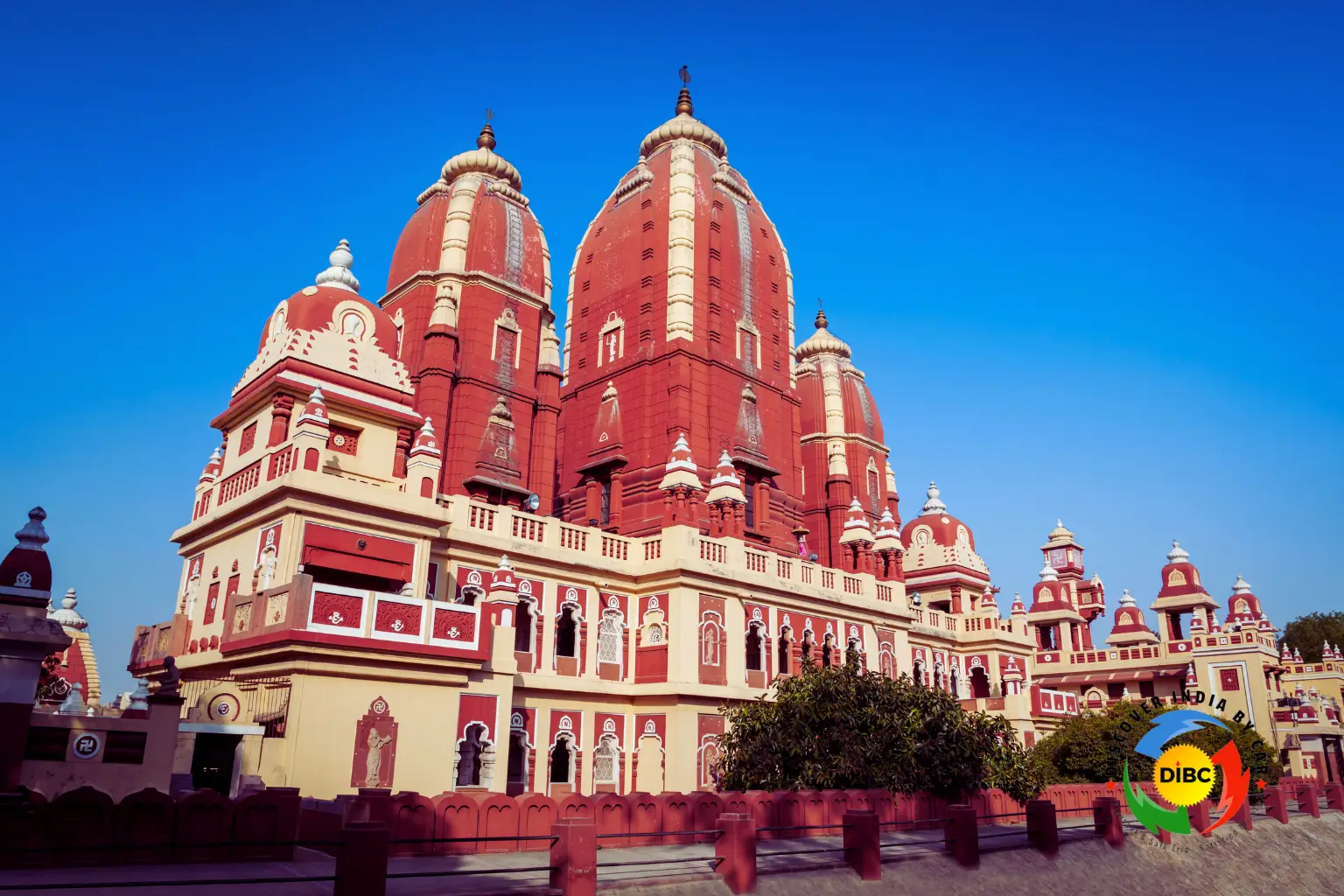
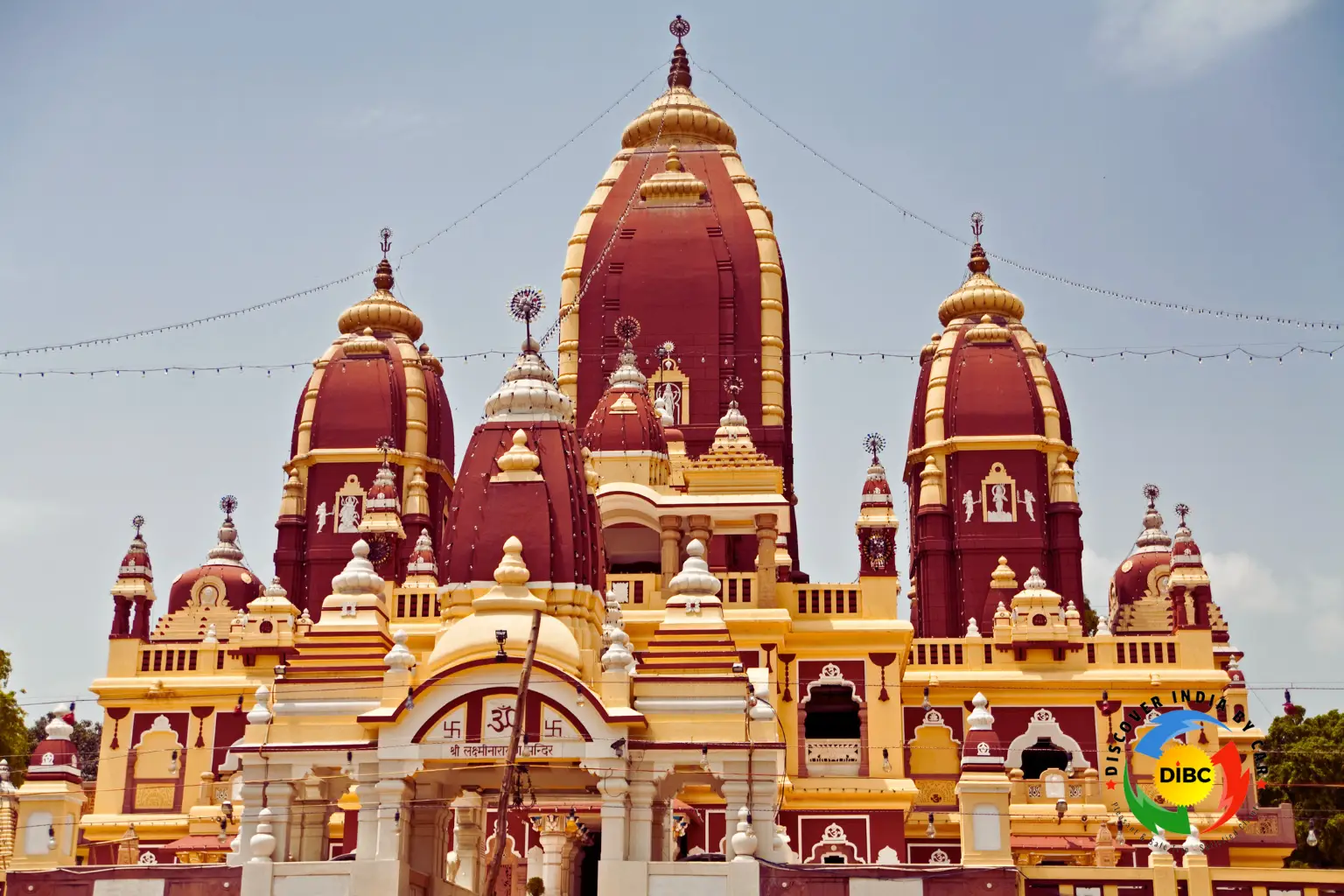
The moment you step inside the gates, you’ll want to just stand still and take it all in. The architecture is simply stunning. It’s a modern revival of the classic Nagara (or North Indian) style, and it’s a feast for the eyes.
Think soaring spires (shikharas) that seem to poke the clouds, with the main one climbing over 160 feet. The entire building is a gorgeous dance of two iconic stones: the pristine white marble from Makrana (yes, the same source as the Taj Mahal!) and the warm, deep red sandstone from Agra. The contrast is just beautiful.
As you wander, a few things will really grab your attention:
- The Main Sanctum: The heart of the temple is dedicated to Lord Vishnu, the Preserver, and his consort, Goddess Lakshmi, the Giver of Wealth. As you approach their shrine, you can feel a palpable sense of peace. The intricate decorations on their idols are worth a closer look.
- A Family of Gods: This isn’t just a temple to one god. Flanking the main shrine are smaller temples dedicated to other major deities. You’ll find shrines for Lord Shiva, Lord Ganesha, and even Lord Buddha. Including a shrine to Buddha was a deliberate and beautiful choice, underscoring the inclusive spirit of Sanatana Dharma.
- Stories on Every Surface: Look closely at the walls and pillars. You’ll see that every inch is covered in art. The outside walls feature detailed carvings of gods and scenes from Hindu mythology. Step inside, and you’ll find vibrant frescoes (wall paintings) that bring tales from the Ramayana and Mahabharata to life.
- The Hall of Wisdom: Tucked away to the north is a quiet hall called Geeta Bhawan. This is a space for pure reflection. The walls are covered with profound verses from the Bhagavad Gita and the Upanishads. I often see people sitting here in quiet contemplation, a world away from the city outside.
- The Hidden Gardens: Don’t just stay within the temple walls! The entire complex is wrapped in lush, beautifully maintained gardens. You’ll find fountains, little man-made caves to explore, and plenty of benches. It’s the perfect spot to sit down, process the beauty you’ve just seen, and just… breathe.
Birla Mandir Timings & Entry Fees: Plan Your Visit
Now for the practical stuff. Planning your trip here couldn’t be easier, and I’ve got the essential info right here.
- Entry Fee: Good news! There is absolutely no entry fee. The temple welcomes everyone with open arms, completely free of charge.
- Birla Mandir Timings: The temple operates in two daily sessions, a common practice in India to give the deities their rest.
- Morning Hours: 4:30 AM – 1:30 PM
- Evening Hours: 2:30 PM – 9:00 PM
A small tip from me: The temple is most atmospheric during the morning or evening aarti (a ritual of light and sound). There’s nothing quite like hearing the chants and bells echo through the complex. The evening aarti, in particular, as the sun sets, is a magical experience.
Festivals & Special Events at Birla Mandir
If you’re lucky enough to be in Delhi during a major festival, you have to visit Birla Mandir. The place absolutely transforms.
- Janmashtami: This is the big one! Celebrating the birth of Lord Krishna, Janmashtami turns the temple into a carnival of faith. The entire place is smothered in flowers and twinkling lights. The energy is electric, with thousands of devotees singing and chanting. It’s a vibrant, unforgettable chaos.
- Diwali: As a temple dedicated to Goddess Lakshmi (the Goddess of Wealth), Diwali here is a spectacular affair. During the festival of lights, the Laxminarayan Temple Delhi glows. Thousands of earthen lamps (diyas) and fairy lights trace every line of its beautiful architecture. It looks like a jewel box lit from within.
How to Reach Birla Mandir Delhi
Getting here is a breeze since it’s located so centrally on Mandir Marg.
- By Car: Honestly, this is the most stress-free option. Delhi’s streets can be… intense. Having a private car and driver, like the ones we provide at Discover India by Car, means you arrive refreshed and don’t have to worry about parking. You’ll be dropped off right at the gate.
- By Metro: Delhi’s metro system is world-class. Your stop is R.K. Ashram Marg on the Blue Line. From there, it’s a short 5-minute ride in an auto-rickshaw or an e-rickshaw to the temple.
- By Bus: If you’re familiar with the local bus system, plenty of DTC buses will get you to the Connaught Place or Central Secretariat area, from where the temple is a short ride away.
- By Cab/Auto-Rickshaw: Apps like Uber and Ola are everywhere in Delhi and can drop you right at the temple entrance.
Essential Travel Tips for Visitors
A little bit of know-how goes a long way. Here are some personal tips I always share to make sure your visit is perfect:
- Dress Respectfully: This is a place of active worship. It’s best to cover your shoulders and knees. So, maybe save the shorts and sleeveless tops for another day.
- Lose the Shoes: You’ll need to take off your footwear before entering. There’s a free and well-managed shoe-minding service right near the entrance. The feel of the cool marble under your feet is part of the experience!
- Phones and Cameras: You can’t take photos inside the main shrine. It’s a rule meant to maintain the sanctity of the space. Feel free to click away at the stunning exterior and in the lovely gardens, though! And please, switch your phone to silent.
- Beat the Crowds & Heat: Early morning is my favorite time to visit. It’s peaceful, less crowded, and you miss the worst of the Delhi sun. The evening aarti is also a fantastic, albeit busier, option.
- Make it a Combo Trip: Birla Mandir’s location is a gift. It’s just a stone’s throw from other must-see spots. You can easily pair it with a visit to the quirky Jantar Mantar observatory, the majestic Gurudwara Bangla Sahib, or some retail therapy at Connaught Place. Our day tours of Delhi are designed to cover these logical clusters seamlessly.
Frequently Asked Questions (FAQs)
Q1: What is the official name of Birla Mandir in Delhi?
A1: Its official name is the Laxminarayan Temple. People call it Birla Mandir because the Birla family funded and built it. It’s a nickname that stuck!
Q2: Are there any entry fees for Birla Mandir Delhi?
A2: Nope, not a single rupee. Entry is completely free for everyone, Indian and foreigner alike.
Q3: What are the Birla Mandir timings?
A3: The temple is open in two slots: from 4:30 in the morning until 1:30 in the afternoon, and then it reopens from 2:30 PM until 9:00 at night.
Q4: Is photography allowed inside the temple?
A4: You can take pictures of the outside of the temple and in the gardens, which are very photogenic. However, photography is strictly prohibited inside the main prayer hall to maintain a serene atmosphere.
Q5: Who inaugurated the Laxminarayan Temple?
A5: It was inaugurated by one of India’s most important figures, Mahatma Gandhi, back in 1939. His involvement cemented its status as a temple for all people.
Q6: How much time is needed to see Birla Mandir properly?
A6: I’d recommend giving yourself a solid hour to an hour and a half. This gives you enough time to really explore the main shrine, check out the smaller temples, walk through the gardens, and maybe even sit for a few minutes to soak it all in without rushing.
Conclusion: Your Moment of Peace in Delhi
Birla Mandir is more than just another building. It’s an experience that engages all your senses—the low murmur of prayers, the cool touch of marble on bare feet, the sight of intricate art wherever you look. It’s a place that tells a profound story of faith, art, and a more inclusive India. In a city as wonderfully hectic as Delhi, finding a spot that offers such profound peace is a gift.
So, are you ready to experience it for yourself?
Let us at Discover India by Car handle the driving so you can handle the discovering. We’ll get you there comfortably and ready to explore. Reach out to us to plan your personalized Delhi car tour, and let’s start your Indian adventure together.


