- Private car and driver in Delhi / India
- +91-8447445445
- info@discoverindiabycar.com sugar.ankit@yahoo.com
 +91-9818434712
- Follow us:




City Palace Udaipur: Timings, Tickets & Travel Guide
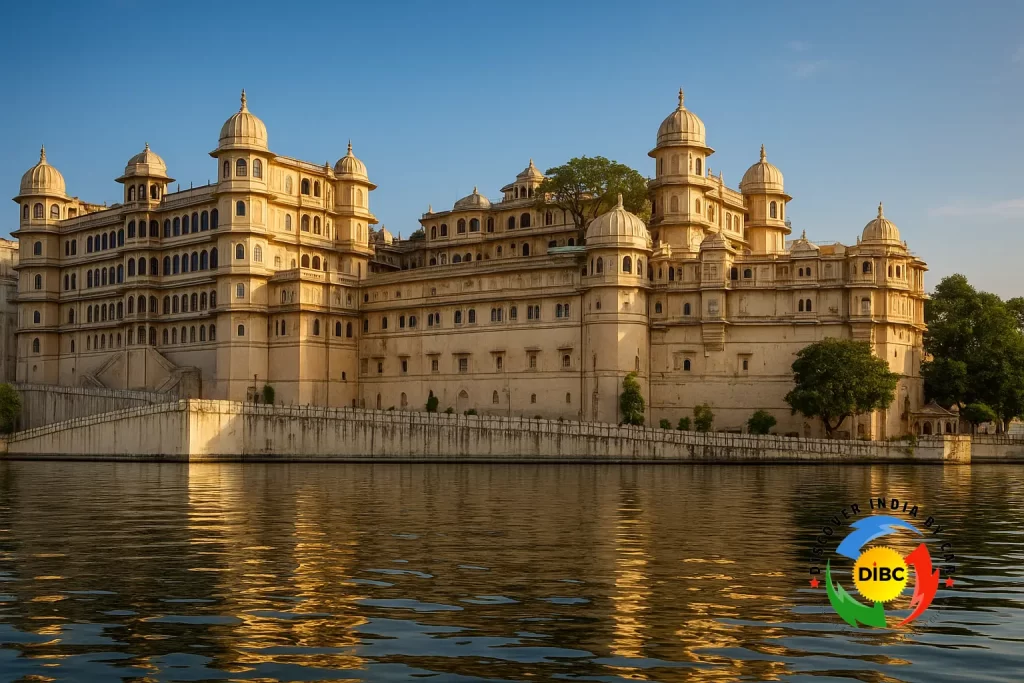
Welcome to the City of Lakes, where the waters reflect echoes of splendor and every cobblestone seems to murmur secrets of courtly romance. Anchoring the city is the City Palace Udaipur, a monument so poised above Lake Pichola that it appears to have been born of moonlight and memory. Its monumental silhouette commands the hillside, and within its walls the entire saga of Mewar unfolds, framed by battlements and mirrored corridors. For the modern traveler crossing the sunburned plains of Rajasthan, the palace looms as a historical necessity, as unskippable as water itself.
This guide will unfold the City Palace Udaipur in measured stages. We will trace the serpentine paths of its rise, linger over the filigreed balconies and mirrored chambers, and supply every essential detail—hours, fare, and the least crowded vantage points. Come ready to absorb the layered alchemy of valor, extravagance, and artistry that keeps the monument a beating heart within the centuries.
A Legacy in Stone: The History of City Palace Udaipur
City Palace Udaipur embodies a history as enthralling as the edifice itself. Maharana Udai Singh II, its founding sovereign, laid the first stone in 1559 upon the loss of Chittorgarh to Akbar, the Mughal Emperor. Seeking a site more defensible and strategically sound, the Maharana chose the slopes of the Aravalli Hills, where Lake Pichola glimmers to the west and a dense forest shields the east, crafting a natural bulwark around the nascent capital.
What distinguishes the palace is its collective authorship: 22 successive Maharanas of Mewar contributed to its rise over nearly four centuries. Each sovereign commissioned extra palaces, courtyards, and gates, yet a guiding architectural sensibility preserved harmony within the expanding ensemble. The result is a mesmerizing synthesis of stylistic currents—Rajput, Mughal, and European—woven into the same granite and marble. The fortification, a symbol of political steadiness, reflects the Maharanas’ steady resolve and their enduring pledge to their kingdom.
The City Palace is a demonstration of architectural syncretism, harmonizing traditional Rajasthani forms with refined Mughal ornamentation and a discreet European accent introduced by later sovereigns. Constructed of granite and marble, the entire ensemble presents the illusion of a singular, cohesive mass, the silhouette of which dominates the horizon with inevitable authority.
Approaching the site, one is gradually drawn into the sophistication of its constituent elements:
Jharokhas: These ornately chiselled, cantilevered balconies project outward, framing distant prospects and exemplifying the Rajasthani predilection for open, elevated vantage points.
Cupolas and Turrets: An irregular constellation of chhatris and raised bastions punctuates the upper register of the façades, imparting the ensemble its distinctive, narrative skyline.
Courtyards and Corridors: A deliberately convoluted arrangement of chowks, vaulted alleys, and grander halls, executed under the deviously sober imagination of the creator, prevents any eager visitor, let alone a hostile scout, from comprehending the whole.
Mirror and Marble Work: Within the chambers, pietra dura, reflective glass, and filament-thin marble lattice combine to create a sensual interiority in which light is refracted and ornamented as meticulously as the tactile surfaces.
The synthesis of formidable bastions and ethereal decoration endows the City Palace with a duality that is both picturesque and invulnerable, securing its place as a prized locus within the larger narrative of Udaipur.
Must-See Attractions inside City Palace
Walking the City Palace complex is itself an expedition worthy of a narrative. To ensure every moment resonates, here are the must-visit highlights that deserve a place on your itinerary.
Tripolia Gate
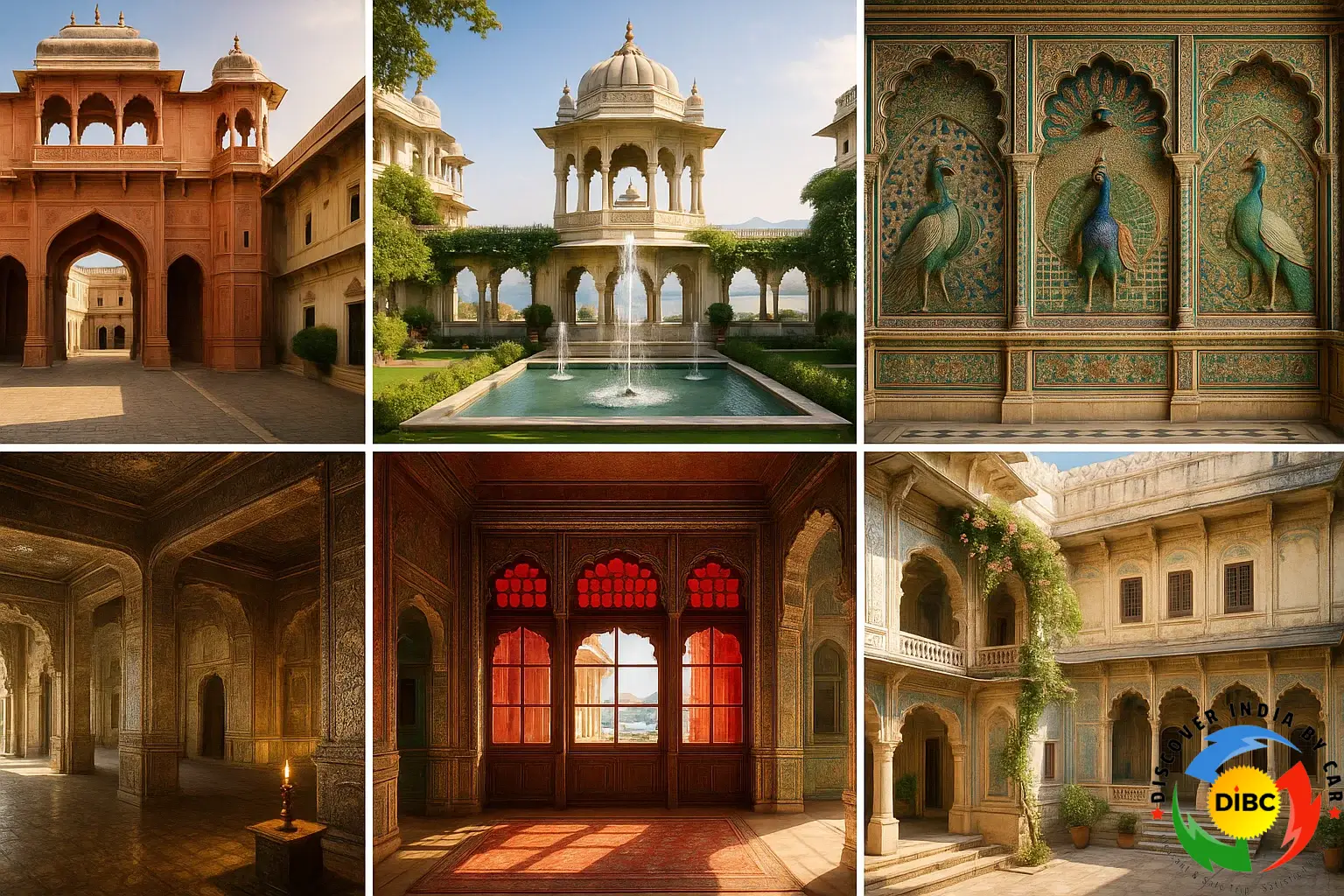
The passage to royalty properly begins beneath the Tripolia Gate, the venerable triple-arch portal raised in 1725. In centuries past, the reigning Maharana would perch on the splendid scale stationed here, the measured gold and silver then poured forth to the townsfolk in a ceremonial distribution. This gate, with its poised arches and scarlet masonry, composes the overture to the treasures that unfold beyond.
Badi Mahal
Towering 27 meters above the gilded walkways yet conceived as a single, seamless component of the complex, Badi Mahal evokes the poetry of architecture. Set upon a gentle rise, it is draped in terraces of whispering jasmine, mirrored by bright fountains that cool the air. From its balconies, the panoramas of the city and of Lake Pichola are painted in aqueous hues. Once the venue for Holi and Diwali, its gardens still seem to echo the laughter and music that once brightened the andronic paths.
Mor Chowk (The Peacock Courtyard)
Step inside Mor Chowk and prepare to be struck silent by the shimmering mosaic peacocks poised at the back of the courtyard. Each of the three birds embodies a season—summer, winter, and monsoon—through 5,000 exquisitely cut shards of glass and mirror. The colour and light dance across the surfaces, shifting as the sun’s angle changes. For the photographer, the play of iridescence presents an ever-changing tableau, and the courtyard stands as the palace’s most recognizable face.
Sheesh Mahal (The Palace of Mirrors)
Constructed in 1716 by Maharana Pratap in homage to his queen, the Sheesh Mahal turns the modest flame of a single candle into an entire firmament. Every wall and ceiling radiates light through tiny, expertly cut glass facets, multiplying the fire until the room resembles a night sky dropped inside the fort. Movement through the space refracts the glow in fractal-star designs that glitter and fade, leaving visitors in a hushed reverence.
Manak Mahal (The Ruby Palace)
Crowning the palace in homage to the sun, Manak Mahal ignites the eye with a crown of ruby-red glass and fine mirrorwork. Every surface, deliberately angled, reflects and refracts the sunlight until it takes on a furnace-like glow. The name “Ruby Palace” speaks to this luminous redness, an alchemical homage to the solar deity the Mewar dynasty claimed as ancestor. Here, the light not only decorates but becomes the palace’s charter, a heraldic blaze of fired colour.
Zenana Mahal (The Queen’s Chambers)
Crossing the threshold into Zenana Mahal is to enter the intimate quarters reserved for the royal ladies of the house. The palace’s soft-hued walls are adorned with delicate frescoes, and the cool interior is softened by shaded courtyards and balconies fragrant with flowering vines. Here, a small collection of portraits, heirlooms, and lattice-screened alcoves quietly narrate the refined tastes and daily routines of the Maharanis.
A Glimpse into Royalty: City Palace Museum Highlights
The larger section of the City Palace now serves as a scholarly museum, under the vigilant stewardship of the Mewar Custodianship Foundation. Visitors are invited to contemplate the unfolding saga of the Maharanas through thoughtfully arranged displays.
Among the museum’s keystones are:
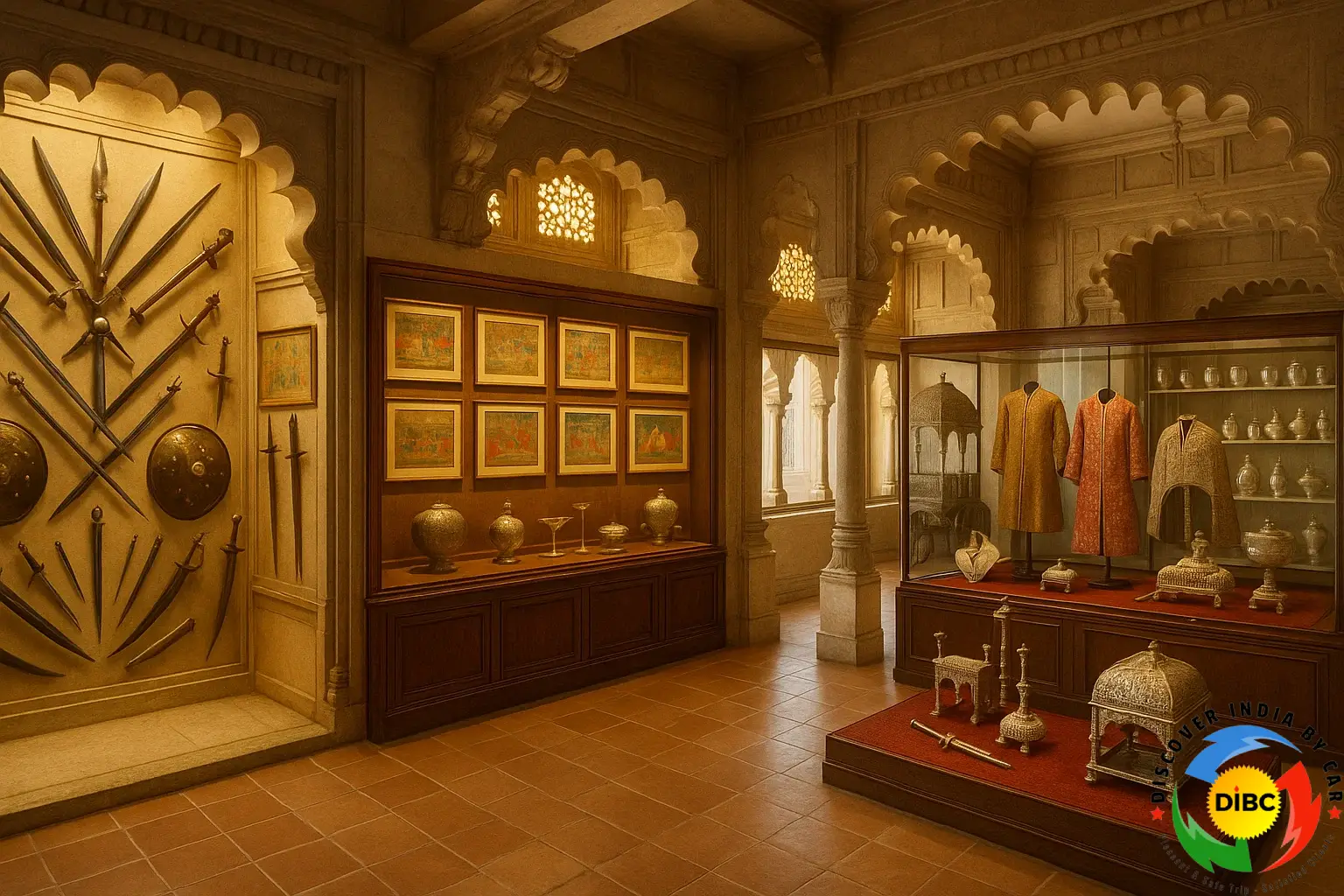
The Armoury: Visitors may marvel at a stout ensemble of arms, highlighted by the resounding battle-axe of Maharana Pratap, further accompanied by a tangle of swords, daggers, and the ornate shields that once guarded noble frames.
Mewar Paintings: The panorama of Mewar miniature paintings records courtly processions, valiant encounters, and mythic generators, rendered with a precision flat yet vivid, suspended between line and emotion.
Royal Garments & Artifacts: Here rest the embroidered drapings once worn by sovereign princes and princesses, alongside silver-gilded palanquins and ivory-hilted daggers, each object a husk of memory that wafts scented of camphor and history.
Silver Gallery: The travelling light of the galleries glints upon rows of vessels, including monumental chariots, intricately-tormmetal cribs, and the minor yet sovereign thrones of the small prince.
Plan Your Visit: Timings & Entry Fees
For a seamless experience at the City Palace, please review the current opening hours and admission charges.
Timings: The City Palace and the adjacent museum welcome guests daily between 9:30 AM and 5:30 PM.
Sound and Light Show: The enthralling production “Legacy of Honour” recounts the Mewar dynasty’s history through sound and luminous displays. Showtimes differ with the seasons, so we recommend verifying the schedule on the morning of your visit.
Hindi Show: 7.00 PM – 8.00 PM
English Show: For the latest scheduling, please visit the official website.
City Palace Ticket Price (subject to change)
The ticket pricing structure can appear intricate. Below is a distilled presentation:
| Ticket Category | Price (INR) for Indian Nationals | Price (INR) for Foreign Nationals |
|---|---|---|
| Adult Entry | ₹ 300 | ₹ 300 |
| Child Entry (5–18 years) | ₹ 100 | ₹ 100 |
| Camera Fee (Still & Video) | ₹ 250 | ₹ 250 |
| Crystal Gallery (Optional) | ₹ 550 (Adult), ₹ 350 (Child) | ₹ 550 (Adult), ₹ 350 (Child) |
| Vintage & Classic Car Museum | ₹ 250 (Adult), ₹ 150 (Child) | ₹ 250 (Adult), ₹ 150 (Child) |
Important: These figures are for reference only. It is advisable to consult the official City Palace Udaipur website to verify the latest rates and any available package offers prior to your visit.
Best Time to Visit City Palace
By Season: For Udaipur, the prime sightseeing months are October through March, when the weather is mild and conducive for walking through the expansive palace grounds. The summer months—April to June—can bring extreme heat, which may complicate daytime touring.
By Time of Day: To circumvent the heaviest foot traffic and the intensity of midday heat, plan to arrive right when the palace opens, at 9:30 A.M. The morning sun, gentle and slanted, enhances the palace’s intricate details and offers the ideal light for photographers. A later visit, when the day softens toward sunset, bathes the palace in a warm, golden glow that is equally captivating.
How to Reach City Palace Udaipur
As Udaipur’s most iconic site, the palace is conveniently reachable.
By Car: Those travelling the subcontinent by car will have a simple route, though the final miles are through the narrow, winding streets of the old city. Parking is restricted, with a small lot adjacent to the gates, so an early arrival is wise. A practical alternative is to leave the car at an established lot further out and complete the approach by auto-rickshaw.
By Air: The closest airport is Maharana Pratap Airport (UDR), located 22 km from the palace. Taxis are available for the drive into Udaipur.
By Train: Udaipur City Railway Station is a quick 3 km from the palace. Auto-rickshaws and taxis stand ready at the station to finish the journey.
Travel Strategies for a Rewarding Udaipur Visit
Schedule Sufficient Time: The Udaipur City Palace complex is extensive. To appreciate it fully without a sense of hurry, budget 3 to 4 hours in your itinerary.
Engage a Licensed Guide: The layers of history embedded in the building and in its collections deserve more than a casual glimpse. Official guides, available by the main gate, will enrich your visit. For independent exploration, audio units may be rented on-site.
Choose Proper Footwear: The visit will require prolonged walking on tiered stone stairways and uneven paths. Sturdy, broken-in shoes are advisable.
Stay Hydrated: Bring a filled bottle, particularly in the hotter months, though chilled drinks may be obtained in the courtyards.
Capture Thoughtfully: The Palace vies for exclusivity on any frame. The entry fee for a camera is a modest investment. For sweeping polychrome halls, a wide-angle lens suffices; for finely detailed inlays, a standard lens is ideal.
Honor the Site: This is both a museum and an active heritage residence. Refrain from touching any exhibits, avoid seating on period furniture, and use flash only where it is explicitly permitted.
Extend Your Exploration: The City Palace lends itself to an itinerary that may be rounded out with other nearby landmarks, all of which are within an easy tuk-tuk ride of the gate.
Lake Pichola: A quiet cruise upon these placid waters provides an altered view of the City Palace and access to the island palaces of Jag Mandir and Jag Niwas, the latter now the opulent Taj Lake Palace.
Jagdish Temple: A brief stroll beyond the Tripolia Gate reveals this grand Hindu temple, its sculptural richness honouring Lord Vishnu and underscoring the region’s artistic heritage.
Bagore Ki Haveli: Perched beside Lake Pichola, the former residence has become a museum and hosts the enchanting “Dharohar” folk dance performance each evening, allowing visitors to encounter living Rajasthani culture.
Saheliyon Ki Bari: Designed for the royal maids who once attended Udaipur’s princess, this tranquil garden displays fountains, lotus-fringed ponds, and delicately carved marble elephants, manifesting the region’s refined taste in landscape and accommodation.
Conclusion: A Legend Embodied
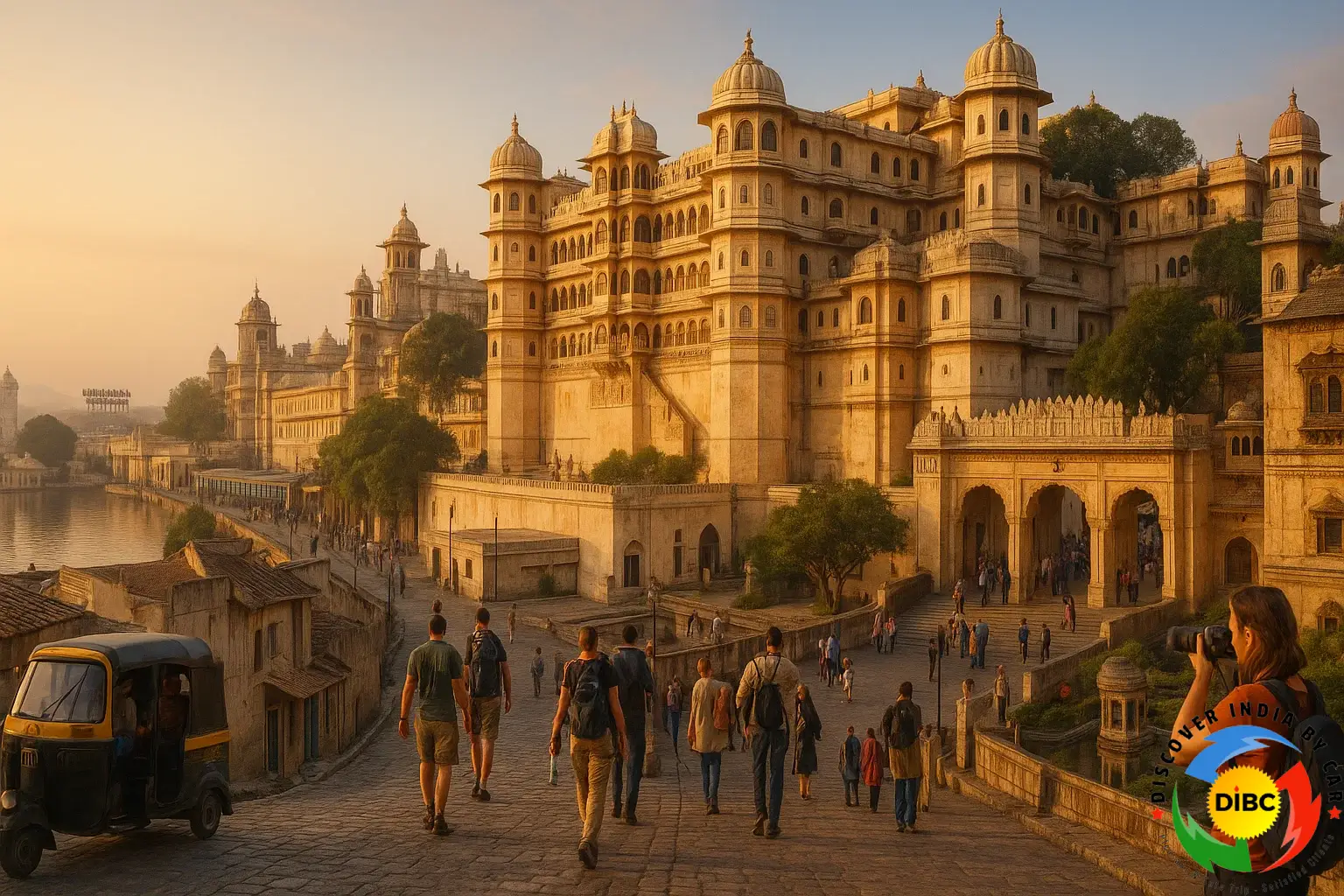
Entering the City Palace Udaipur is more than visiting a monument; it is an immersion into a living narrative of royal magnificence, masterful artistry, and steadfast courage that refuses to fade. Each step through the archway invites you to inhabit the drama that has unfolded within these walls for centuries. The sweeping horizon from the crenellated balcony, the shimmering slip of glass daggers in the chambers, and the faint susurrus of bygone ages in the prismatic courtyards conspire to imprint a visceral memory that lingers long after the gates close behind you. The palace stands, undisputed, as Udaipur’s pulsating heart, a singular emblem of Rajasthan’s enchantment. Therefore, as you chart your course through this extraordinary state, let the City Palace occupy the foremost place on your itinerary. You will not encounter mere stone and mural; you will touch—and be touched by—the living essence of Mewar.
Frequently Asked Questions (FAQs)
Q 1. What is the entry fee for City Palace Udaipur?
A. The standard ticket is priced at ₹300 for adults and ₹100 for children, applicable to both Indian and foreign visitors. Additional fees apply for camera equipment, and for entry to the Crystal Gallery and the Vintage Car Museum. Since tariffs may vary, please consult the official website for the most current information.
Q 2. How much time should I allocate for City Palace Udaipur?
A. Visitors are advised to set aside a minimum of three to four hours to appreciate the primary palace complex and the accompanying museum. If your itinerary includes the Crystal Gallery and the evening sound-and-light show, additional time will be needed.
Q 3. Am I permitted to photograph inside the City Palace?
A. Photography is permitted but requires the purchase of a camera ticket priced at ₹250. Use of flash is restricted in select areas, particularly where fragile paintings and mirror inlays are displayed.
Q 4. When is the optimal time to visit the palace?
A. For the most enjoyable experience, plan your visit between October and March, when the climate is pleasantly mild. Arriving just after the gates open, around 9:30 AM, lets you explore before large crowds assemble, while later in the afternoon offers the added delight of sunsets reflected in Lake Pichola.
Q 5. Is it possible to join a guided tour?
A. Certainly. Officially licensed guides can be engaged at the main entrance. Their expertise fills the corridors with layered history and memorable anecdotes, deepening your appreciation of the place. For those who prefer a self-directed experience, multilingual audio guides are also offered.
Q 6. What distinguishes the City Palace in Udaipur from other Rajasthani palaces?
A. Its striking position on Lake Pichola’s edge, the accumulation of architectural styles over 400 years and the contributions of 22 successive Maharajas, and the continuing presence of the royal family combine to render it a singular site among Rajasthan’s splendid palaces and forts.
The City Palace features multiple flights of stairs and irregular pavements that may pose difficulties for individuals with reduced mobility. While select areas on the ground floor can be navigated without barriers, access to the upper storeys necessitates the use of stairs. Visitors are advised to contact the palace administration in advance to obtain detailed and up-to-date information regarding accessibility accommodations.


