- Private car and driver in Delhi / India
- +91-8447445445
- info@discoverindiabycar.com sugar.ankit@yahoo.com
 +91-9818434712
- Follow us:



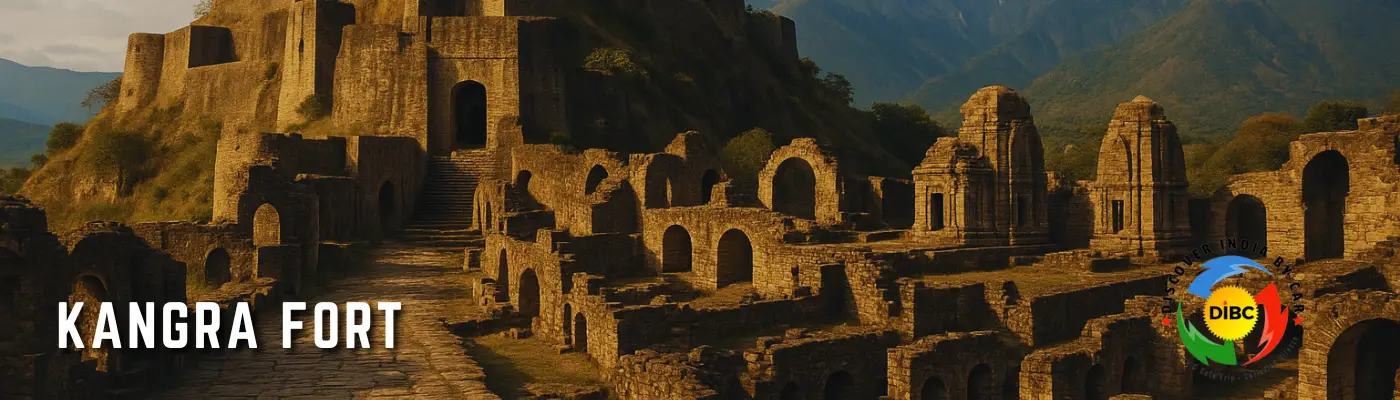
Kangra Fort Isn’t Just a Ruin. It’s a Feeling. My Unfiltered Guide
You Don’t Visit Kangra Fort. You Feel It.
Let’s get something straight right now. This isn’t going to be one of those travel guides. You know the ones. “Nestled in the picturesque foothills…” Ugh. No.
I’m writing this because I can’t get this place out of my head. I’m talking about the Kangra Fort.
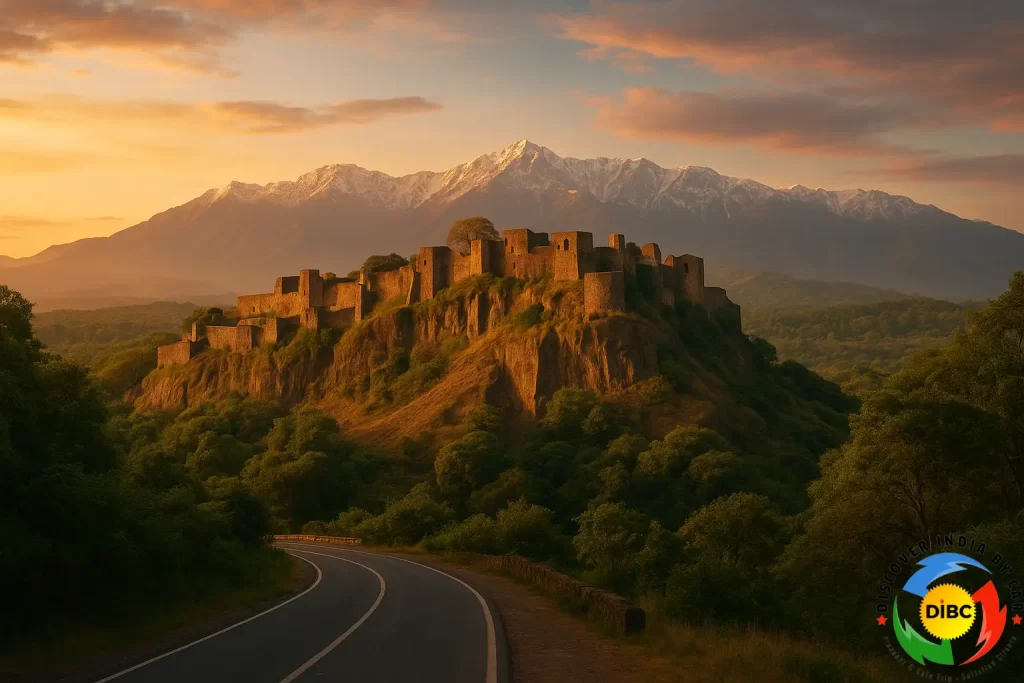
I was on a road trip, heading up to Dharamshala, same as a thousand other people. I had a playlist going, was thinking about what I’d have for lunch, the usual stuff. Then I came around this bend in the road, and my brain just… stopped. There it was. Not sitting on a hill, but clawing its way out of it. This monstrous, magnificent, scarred old thing that seemed to stretch for miles. It was a gut-punch. I literally pulled the car over, cutting off a slightly annoyed bus driver, and just stared.
You see pictures, sure. But nothing prepares you for the sheer presence of it. It radiates an energy. A defiant, stubborn energy that says, “I’m still here. I’ve seen empires turn to dust. What have you got?”
If you’re driving that road, you’re going to be tempted to just take a picture and keep going to McLeod Ganj. Please, for the love of God, don’t do that. You owe it to yourself to park the car, pay the tiny entry fee, and walk through the bones of a giant. This place has a story to tell, and I’m going to try and do it some justice.
The Wild, Unbelievable History I Heard in the Wind
Forget the dusty history books. The story of this fort feels more like Game of Thrones. When you’re walking up its steep stone paths, this is the stuff you need to have in your head. The kangra fort history is absolutely insane.
Older Than Old
So get this. The guys who built this, the Katoch kings, trace their family line all the way back to the Mahabharata. Not a typo. They say their great-great-…-great-granddaddy built this place. That thought alone is enough to make your head spin. While Rome was still a village, this fort was potentially already standing here, guarding this valley. It wasn’t a building. It was the heart of a people. Their literal everything.
A Beacon for Bad Guys
Now, when you’re the oldest and richest kingdom around, with a temple literally overflowing with gold and jewels (the famous Brijeshwari temple), you become very popular. With the wrong crowd.
First came Mahmud of Ghazni, around 1009. A proper villain. He stormed the fort and walked away with a treasure that’s basically unimaginable today. But the Katoch kings? They just waited for him to leave and took their fort right back. That level of “get off my lawn” energy is something I deeply respect.
Then the Mughals got a taste. Emperor Akbar, one of the most powerful men on Earth at the time, apparently attacked it over 50 times. And failed every single time. He eventually had to make a deal. His son Jahangir, however, was obsessed. He laid siege to the Kangra Fort for 14 months. Think about that. Over a year of starvation and fighting. He finally broke them and took the fort in 1620, a victory he celebrated like he’d conquered the world. And in a way, he had.
The Tragic Hero and His Downfall
The fort’s last real blaze of glory was under a king named Sansar Chand II. A total rockstar of his time. He was a brilliant warrior and a massive patron of the arts (Kangra paintings? That was him). He took back his ancestral fort and for a while, it was like the good old days. But ambition can be a killer. He picked a few too many fights, got cornered by the Gurkhas from Nepal, and had to ask for help from the Sikh Maharaja, Ranjit Singh. Help came, but at a price. The price was the fort itself. He had to hand over the keys in 1809. I can’t even imagine the heartbreak.
The Last Enemy
The fort passed from the Sikhs to the British in 1846. It became just another military base. But the fort had one final fight left in it. On April 4th, 1905, it wasn’t an army that attacked. It was the planet. A devastating earthquake shook the valley so hard it leveled towns. The unbreakable fort was broken. What we see today is the survivor. A magnificent, wounded beast.
My Walk-through: What It’s Actually Like to Be Inside
Okay, practical stuff. Put on good shoes. Seriously. This isn’t a walk in the park. It’s a climb into history.
The Seven Gates of ‘You Shall Not Pass’
You don’t just walk in. You pass through seven gates, each one a military masterpiece designed to make an invader’s life hell. The first couple feel grand, but then the path gets narrow and makes these sharp, impossible turns. I stood there and thought, “An elephant couldn’t get through here, but a volley of arrows could.” Chilling. The final gate is the Andheri Darwaza—a long, dark tunnel. I used my phone’s flashlight. Even then, it felt… heavy. Claustrophobic. It was designed to be a kill box. You feel that.
The Temples at the Top and That View
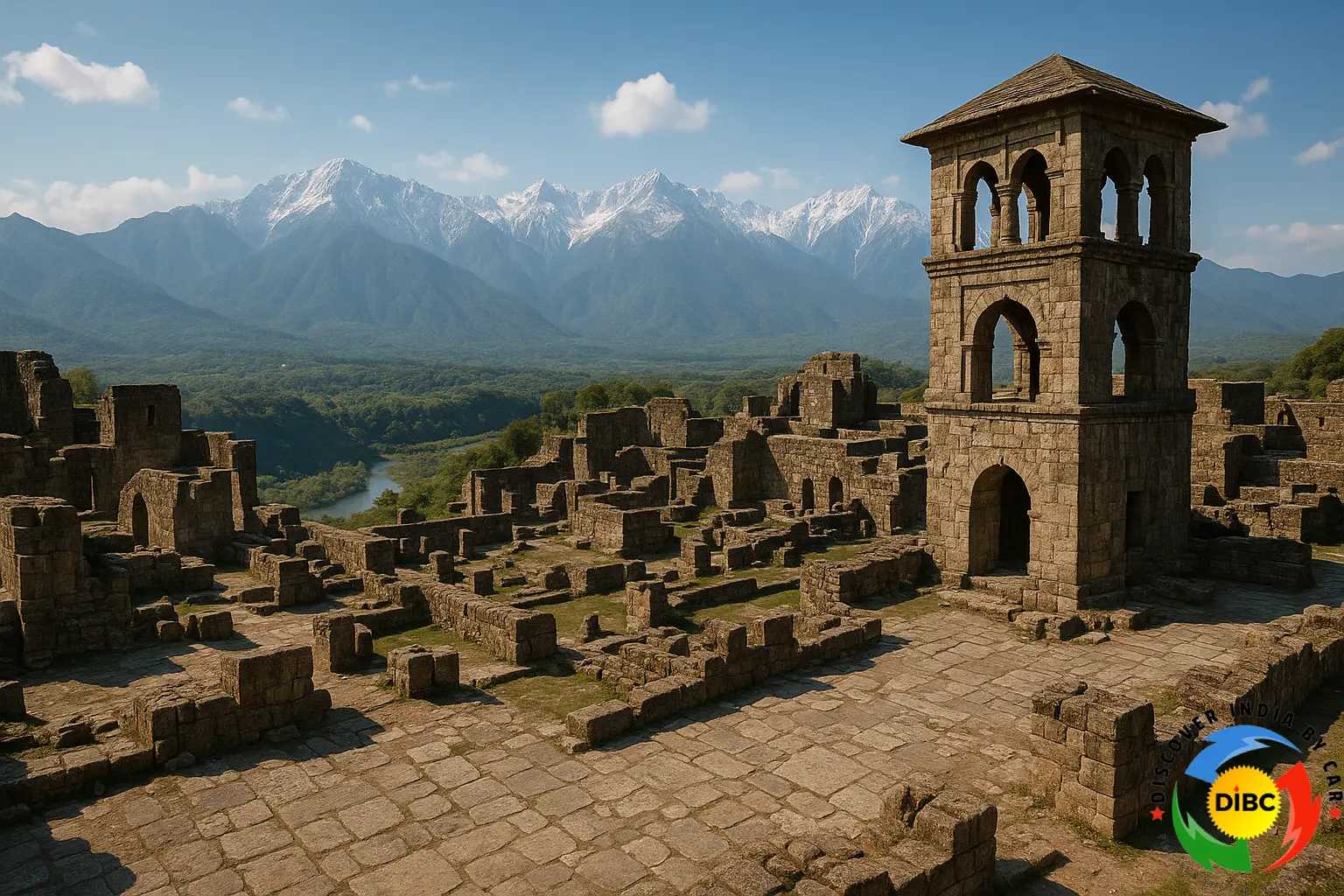
After the climb, you get to the summit. It’s a wide-open space of ruins. The remnants of the Ambika Devi and Lakshmi Narayan temples are there, roofless but with carvings that are still unbelievably detailed. It’s incredibly peaceful. I found a stone, sat down for a good 20 minutes, and just looked.
Then there’s the view. My god, the view. You get to the watchtower, and it’s a 360-degree spectacle that almost doesn’t feel real. The entire Kangra valley is laid out at your feet, rivers snaking through it. And then, there’s the Dhauladhar range. Giant, jagged peaks of ice and rock that dominate the sky. I almost dropped my phone trying to take a panoramic picture. It’s a view that kings would have killed for. And they did. Right here.
The Real-Talk Guide to Your Visit
No fluff. Here’s what you actually need to know.
About the Timings & That Audio Guide
- Kangra Fort Timings: The gates are open roughly from 9 in the morning to 5:30 in the evening. My advice? Go early. Before the sun gets angry and the tourist buses roll in. You’ll have the place almost to yourself.
- The Audio Guide: I almost scoffed when they offered it. An audio guide? Lame. I was wrong. So, so wrong. GET THE AUDIO GUIDE. It’s not a boring narrator. It tells the story of the fort as you walk, bringing the rubble to life. It completely changed my experience. It’s worth every single rupee.
- Entry Fee: Peanuts. ₹150 for us Indians, ₹300 for foreigners. Best ₹150 I spent on my whole trip.
Getting There from Dharamshala
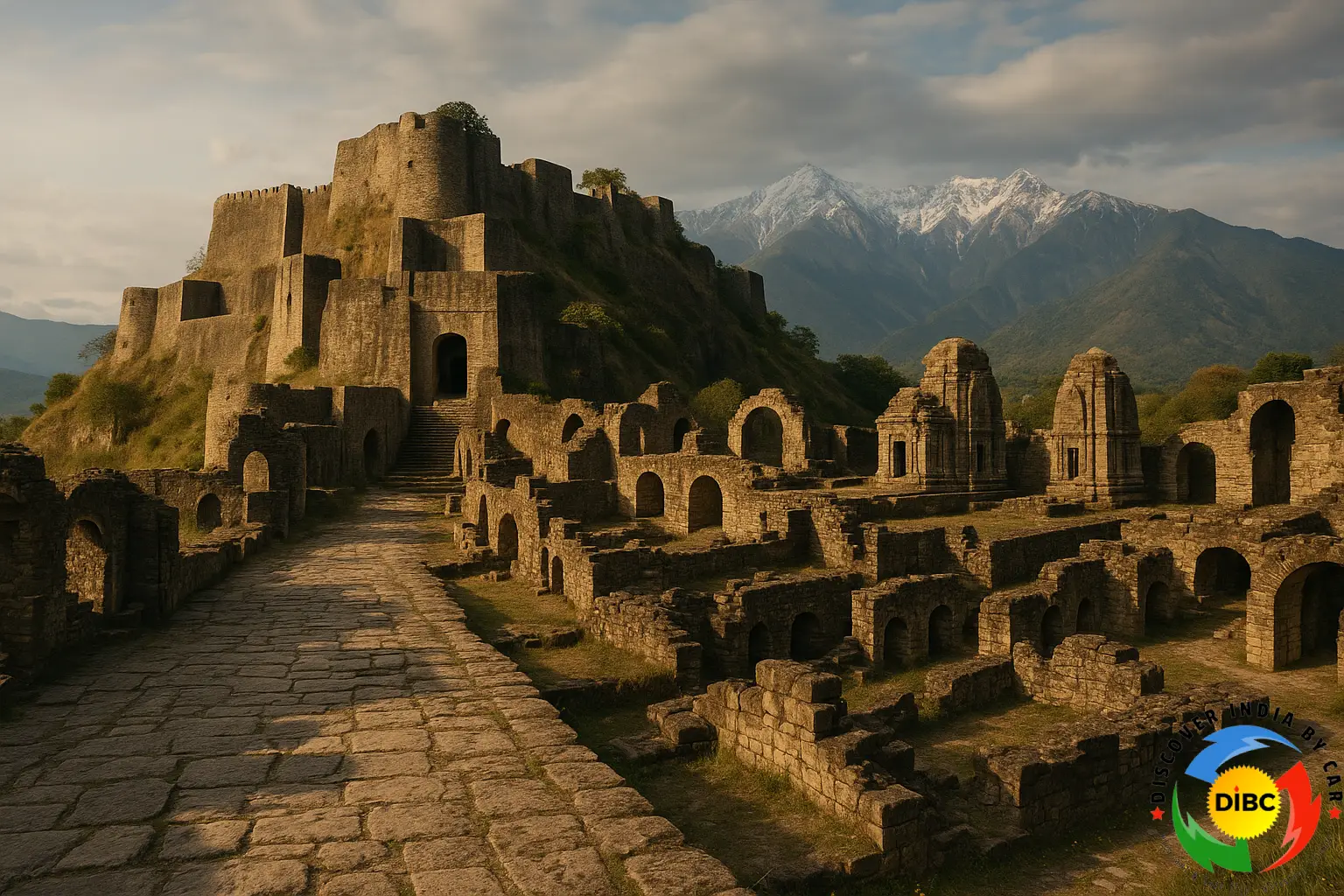
The drive to Kangra Fort Dharamshala is half the fun.
- By Car: If you’re driving yourself, you’re golden. It’s an easy, beautiful one-hour drive (about 25 km) from McLeod Ganj. The roads are decent. There’s parking, don’t worry.
- Taxi/Bus: Easy peasy. Grab a taxi from any stand. Or, if you’re on a budget, the local buses are a real experience and they run all the time to Kangra town. From there, a 10-minute auto-rickshaw ride gets you to the gate.
Questions You’re Probably Asking (FAQs)
Look, you’re going to have questions. Everyone does. Here are the big ones.
Q1: So, what is Kangra Fort really famous for?
A1: It’s famous for being a stubborn old goat that refused to die. It’s one of the oldest forts in India, maybe THE oldest. It’s famous for its mind-boggling wealth, for being the throne of a crazy-old royal family (the Katoch dynasty), and for its legendary toughness.
Q2: Who was the king of Kangra Fort?
A2: The big boss was always the Katoch king. The most famous one, the guy whose story will really stick with you, is Maharaja Sansar Chand II. A tragic hero if there ever was one.
Q3: Is there a current king of Kangra Fort?
A3: Sort of. We don’t have kings who rule anymore, but the family line continues. The current titular head of the Katoch family is Tikka Aishwarya Chandra Katoch. He’s a well-respected man working to keep the local culture alive.
Q4: Seriously, is it the oldest fort in India?
A4: It’s a street fight for that title! But with its deep roots in the Mahabharata legends, Kangra Fort has a claim that’s hard to ignore. Many historians put it at the top of the list. When you stand there, it feels like the oldest.
Q5: Besides the fort, what’s special in Kangra?
A5: Kangra isn’t a one-trick pony. The district is a goldmine. The delicate Kangra miniature paintings, the mind-bending Masroor Rock Cut Temple (go there!), the sacred fires at the Jawalamukhi temple… Kangra is a whole vibe. A whole trip in itself.
My Final Plea: Just Go.
I could write another thousand words and I still wouldn’t capture the feeling of standing on those ancient walls, with the wind whistling a song of battles and kings, with those impossible mountains watching you.
Kangra Fort isn’t a checklist item. It’s an experience. A profound one. It humbles you. It makes you feel small in the face of time, but it also inspires you with its sheer resilience. So when you’re planning that road trip, please, carve out a solid three or four hours for this place. Don’t rush. Let it speak to you.
Go. Just… go. You’ll know what I mean when you get there.


