- Private car and driver in Delhi / India
- +91-8447445445
- info@discoverindiabycar.com sugar.ankit@yahoo.com
 +91-9818434712
- Follow us:



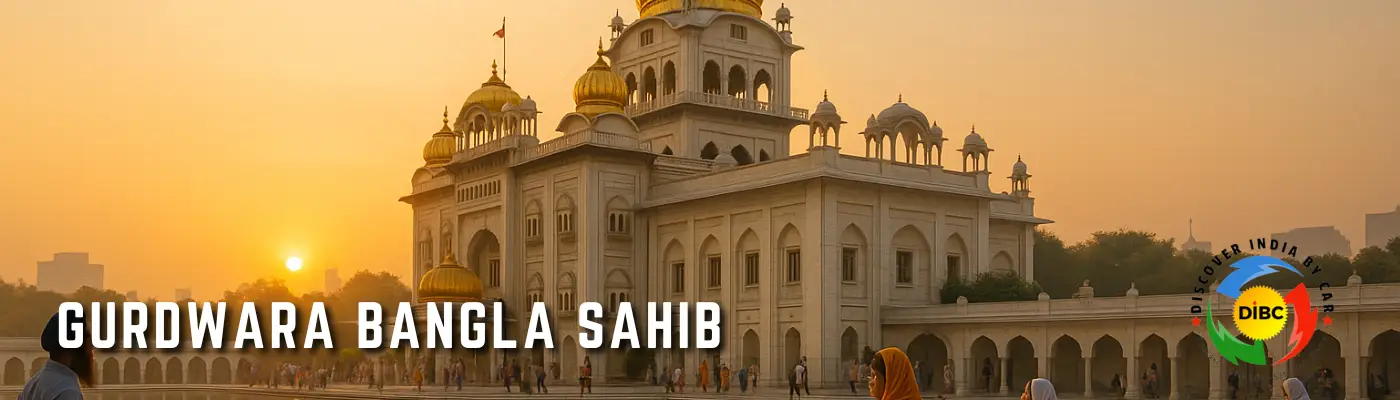
Gurdwara Bangla Sahib Delhi – History, Timings & Travel Guide
The Oasis of Serenity: An Expert’s Definitive Guide to Gurdwara Bangla Sahib in the Heart of Delhi
A Spiritual Gem in the Heart of Delhi
“Amid the chaos of Connaught Place lies an oasis of peace – the Gurdwara Bangla Sahib.”
If you are following discoverindiabycar.com, you know the joy of exploration: charting routes, filling the tank, and discovering those hidden or major destinations that make India truly unparalleled. I can tell you, with fifteen years of experience chronicling the essence of this incredible country, no trip to the capital city, New Delhi, is fully realised until you’ve experienced the sheer, stunning luminosity and deeply rooted, generous soul of the Gurdwara Bangla Sahib. It stands as a necessary spiritual counter-current to the city’s frantic, overwhelming urban pace.
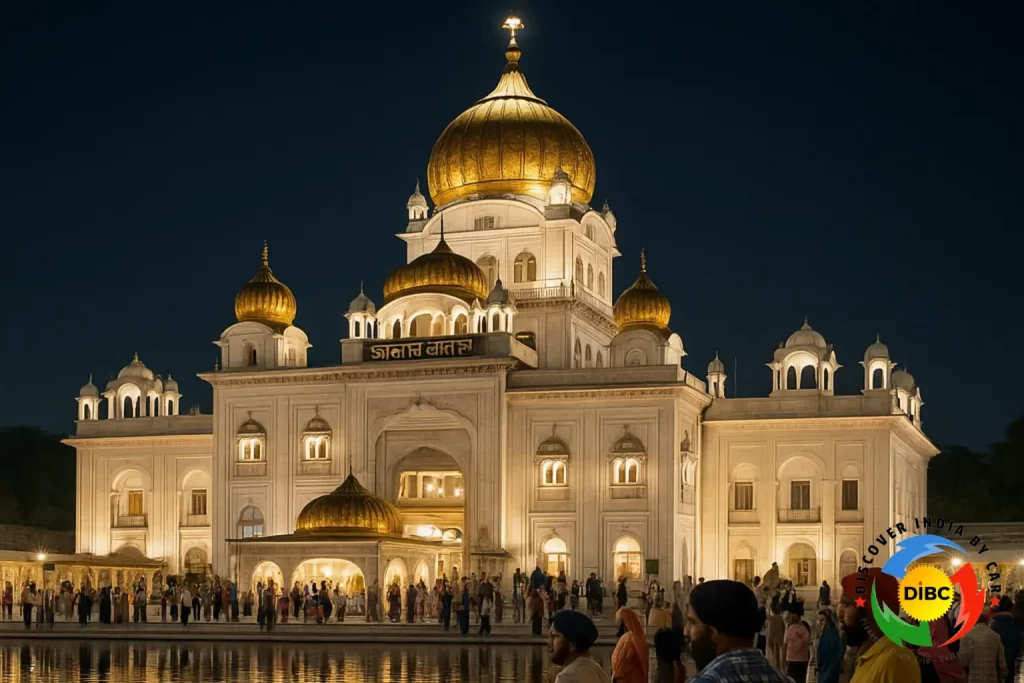
Look, this is more than just another religious building. The structure itself is phenomenal—the colossal, brilliantly shimmering golden dome instantly catches the sunlight, demanding your gaze and making a striking contrast to the spotless white marble façade below. This Gurdwara is universally acknowledged as one of Delhi’s most visited spiritual sites, but its real magnetic power comes from what it is: an enduring, highly accessible testament to the bedrock Sikh principles of equality (Langar), service (Seva), and unfettered welcome.
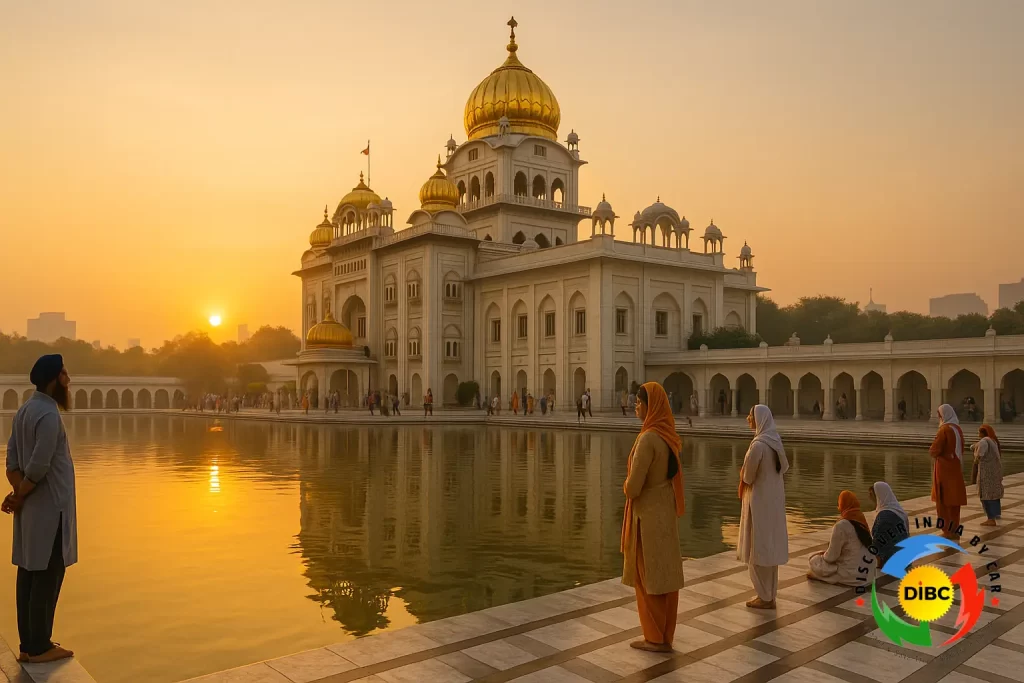
Stepping over the cold marble threshold, leaving the hot city street behind, the shift in energy is instantaneous. That is the first real experience of the Gurdwara Bangla Sahib—a dramatic, sudden change from metropolitan sensory overload to spiritual equilibrium. The calming melody of Kirtan (the gentle, ongoing devotional hymns) seems to wrap around you like an unexpected warm shawl, pulling you toward the reflection of the massive, central Sarovar. That body of holy water encourages not just stillness, but real reflection. This is the heart-touching part of your journey, whether you adhere to a spiritual faith or not.
I guarantee this feeling will last: “Whether you’re spiritual or not, a visit to Bangla Sahib leaves everyone with peace in their heart.” You can simply be an intrigued cultural traveller seeking authenticity, but this site will speak directly to your deepest sense of shared human goodness. So, prepare for the visit; we’ll cover everything from the divine origin story and practical travel tips, all the way to an essential plan for a glorious visit to one of Delhi’s grandest historical wonders located nearby.
The Sacred History of Gurdwara Bangla Sahib: An Epic of Compassion
To walk the clean white marble path of this sacred complex is to walk on hallowed ground, immortalising a young leader’s absolute devotion to humanity. The backstory here makes the sheer selflessness of the site all the more profound.
Origin Story: A Memory Built for Guru Har Krishan Sahib Ji
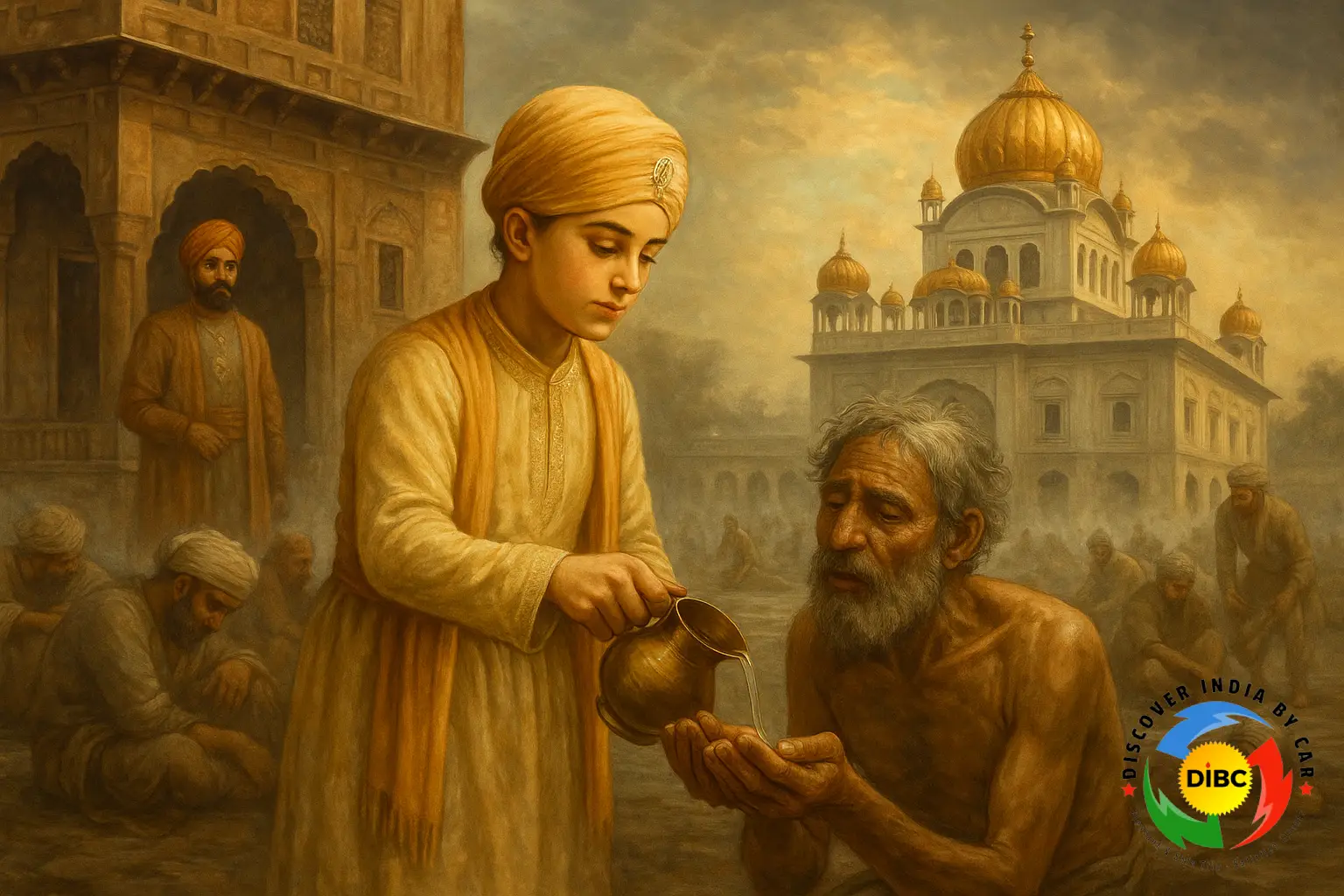
The entire Gurdwara exists primarily to commemorate the life and selfless sacrifice of the eighth Sikh Guru, the incredibly venerated Guru Har Krishan Sahib Ji. Here is a key point: this young man was truly unique, taking on the tremendous responsibility of the Guruship at the remarkably young age of just five years. The immense, lasting devotion to compassionate service, which this incredible, golden place of worship exudes today, springs directly from his courageous example.
Historical Background: The Haveli of a Powerful Raja
The piece of real estate, which sits in one of Central Delhi’s most strategic areas, was not initially a shrine at all. Before its sacred consecration, the entire parcel of land, including the grand house and surrounding compound, functioned as a huge ‘Bangla’ or haveli. Its original, 17th-century owner was the powerful Rajput King, Raja Jai Singh of Amber (today known as Jaipur). This wealthy nobleman played host to the Guru during his crucial visit to Delhi in the 1660s.
How the Guru Cured: Epidemic, Sacrifice, and the Holy Water
The turning point, the historical pivot from noble residence to sacred spiritual nucleus, arrived amid the profound suffering brought by a rampant smallpox and cholera epidemic that was ruthlessly savaging the population of Delhi at the time. With fearless disregard for his own health and well-being, the young Guru Har Krishan Sahib Ji—with unimaginable maturity—dedicated his every living moment to nursing, serving, and alleviating the misery of the sick in the city’s poorest wards. The powerful, healing relief he brought to the vast number of afflicted people was intrinsically linked to his distributing of water taken from the original well right inside the compound. Historical accounts strongly suggest that the water offered significant medicinal and spiritual aid, saving many, consecrating it eternally as a place of true refuge.
This noble sacrifice proved the true testament to the Sikh belief: by ministering to others, the Guru himself eventually succumbed to the illness he had been helping to alleviate. He passed away, leaving behind the newly consecrated ground. Recognizing the sheer spiritual weight of the Guru’s sacrifice and final resting place, Raja Jai Singh eventually made the building’s permanent existence as a place of worship inevitable. It stands now not just as architecture, but as a monumental memory of a profound historical and moral commitment.
Architecture & Serenity of Bangla Sahib Gurudwara: An Unmistakable Presence
The visual language of the Gurdwara is deliberate, highly successful, and, I assure you, truly magnificent. Its very structure dictates your approach: one of awe followed immediately by deep humility.
Golden Glory on a Base of Pristine White
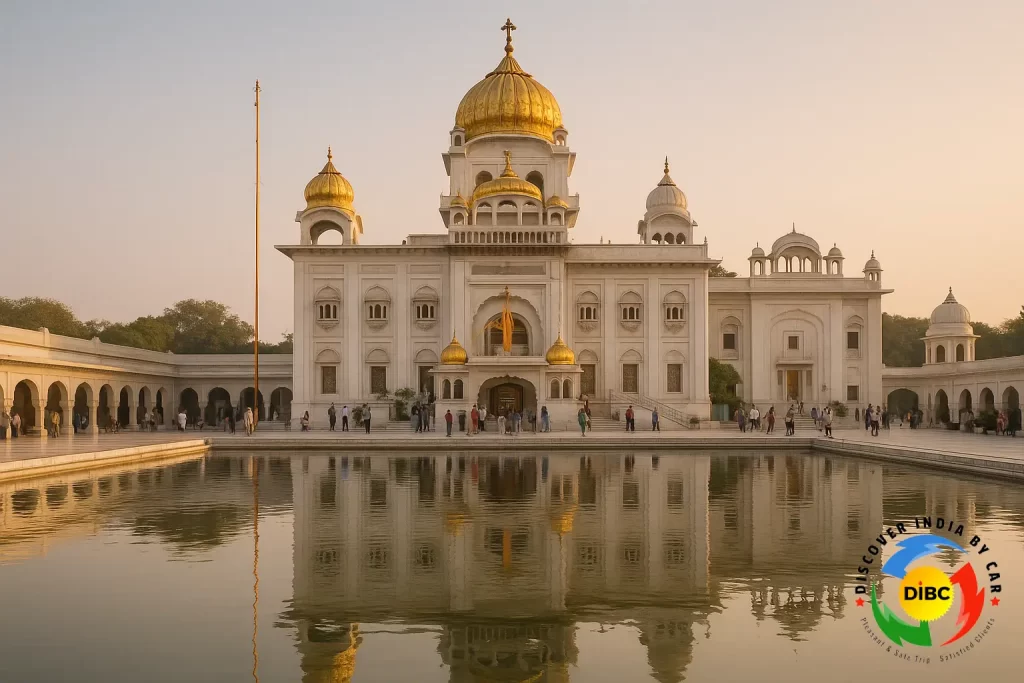
The structural impact is immediate: pure, stark, brilliant white marble structure for the entire edifice below, soaring up to the celestial heights capped by the unmissable, ribbed, massive golden dome. That contrast—the base representing the simplicity and purity required of faith, crowned by the unparalleled grandeur that shows devotion to the Divine—is the core message of its construction. The very scale of the grand entrance gate and the intricate design surrounding the central pool sets the stage perfectly for the sacred grounds.
The Sacred Sarovar and its Deep Significance
Everything revolves around the deep sacred Sarovar (holy pond) at the site’s heart. It acts as a massive reflecting pool and an architectural focal point, but it holds an importance far beyond just the aesthetics of a good photo opportunity. The Sarovar maintains profound spiritual significance, as this immense pool is perpetually fed by the sacred waters drawn from the site’s original well—the very same source used by Guru Har Krishan Sahib Ji to treat the sick during the epidemic. For many, simply walking the surrounding Parkarma (marble pathway) is a deep meditative act, seeking reflection, clarity, and peace.
The Inner Structure: Built for the Community
The compound has been masterfully engineered to incorporate both the devotional requirements and the immense demands of its continuous, world-class charitable work. Key elements inside the larger Bangla Sahib compound are:
- Main Prayer Hall (Darbar Sahib): The expansive, uncluttered, and most crucial interior space where the central religious functions occur and where you must sit to hear the powerful Kirtan.
- Langar Hall: A very simple but immense, functional structure dedicated exclusively to the preparation and free, continuous serving of the thousands of community meals.
- Yatri Niwas (Accommodation): Provides extremely accessible, simple guest accommodation for the legions of pilgrims and volunteers who travel here from all parts of India and overseas.
The blend of simplicity and grandeur that symbolises Sikh values is evident here; the luxury is applied to the Divine’s memory (the golden dome), while the daily operation of service is relentlessly simple, functional, and for everyone.
Photography Tip for Expert Snappers:
Timing is everything. Set your alarm and head here just before first light. Wait for the softest illumination as the sun rises slowly, then capture the reflection of the golden dome shimmering in the water. The result, a true study in light and devotion, will be breathtaking.
Spiritual Experience Inside the Gurdwara: Service as Worship
When the physical inspection of the architecture ends, the real work of feeling the Gurdwara Bangla Sahib begins. This experience moves instantly past mere sight to full emotional and community participation.
A Sanctuary of Sound: Peaceful Hymns and Community
Step into the Darbar Sahib (Prayer Hall) or walk the wide marble Parkarma. You are immediately enveloped by a constant sonic experience: the flowing, soft strains of the Kirtan or peaceful hymns (the singing of Gurbani). They are almost constantly played and broadcast softly throughout the complex for almost 24 hours a day, fostering an ever-present atmosphere of peace that is absolutely electric. Sitting here quietly for ten minutes—not doing anything, just being and listening to the devotional singing—is better than any formal meditation retreat.
Seva: The Role of the Volunteers (Sewadars)
Look around! That immense dedication you feel isn’t an accident. It comes from the selfless and cheerful labour of the sewadars—hundreds, maybe thousands, of everyday Delhi citizens. You will see grandmothers washing dishes, young students sweeping the polished floors with dignity, businessmen stirring colossal cauldrons, all with a cheerful humility and a palpable dedication to the cause. This incredible community service atmosphere demonstrates that for the faithful here, service is worship. The physical work and the prayer are two sides of the very same sacred coin.
Welcome Without Precedent
Here is a radical, profound, and simple truth that defines the place: visitors from every religion are welcomed wholeheartedly into Gurdwara Bangla Sahib. There is no special line, no special treatment; all are received equally. If you are here, you are their honoured guest. They embody the profound belief of universal religious equality and acceptance—making a potent political and spiritual statement simply through an open door policy. It quickly becomes evident, not just through the structure, but through the action of the community that, just as the locals say: “You don’t visit Bangla Sahib, you truly feel it.”
Gurdwara Bangla Sahib Timings and Best Time to Visit: An Always-Open Invitation
The ultimate demonstration of Gurdwara Bangla Sahib’s open commitment to serving the people is embedded directly in its unique hours of operation.
The Golden Rule: Open 24 Hours a Day
Yes, you read that correctly. For logistics, safety, and philosophical clarity, you must know that the Gurudwara, being a truly spiritual shelter, maintains opening and closing timings that are entirely open 24 hours a day. Literally, all year round. This astonishing feat of logistics means that if your Delhi schedule demands a midnight stop-off or a pre-dawn reflective walk, this is entirely permissible, welcoming, and beautifully safe.
Best Time: Optimizing for Crowds and Kirtan
While 24-hour access is a profound commitment, if you seek the richest and most complete spiritual experience, I have my recommendations for the best time to schedule your stop:
- Early Morning (4:30 AM to 6:00 AM): Why is this hour superior? The Kirtan at dawn, coinciding perfectly with sunrise, is profoundly moving—it carries a stillness and resonance not heard in the day. The vast, cool, reflective Sarovar water perfectly mirrors the complex with utter clarity and virtually fewer crowds. Take my expert advice: get up for this!
- Late Evening (After 8:30 PM): Alternatively, visiting after the close of most daily business. The crowds drop significantly, the summer heat vanishes, and the spectacular exterior lighting transforms the Golden Dome into something almost supernatural against the dark sky. The sense of soulful kirtan in the evening quiet is incomparable.
Weekend vs Weekday visits can also define your experience: on any weekday, you will find relative space and peace compared to the extremely busy weekends and festival holidays—which offer chaos, energy, and an absolute explosion of communal feeling.
Tip: I cannot emphasise this enough—you must time your arrival! Visit around sunrise for magical views that few other sites in the world can offer with such consistent, architectural perfection.
How to Reach Gurdwara Bangla Sahib: Locational Efficiency
Its position near Central Delhi’s most famous landmarks means navigating to Gurdwara Bangla Sahib is surprisingly efficient and well-catered to every travel mode, including Discovering India by Car.
The Heart of Delhi
The Location: you’ll find the Gurdwara proudly set on Baba Kharak Singh Marg, placing it immediately proximate to the entire massive Connaught Place central circular market hub. This ease of finding it, even from a long car journey, is invaluable.
The Best Metro Route: No Traffic, Pure Speed
For anyone avoiding the infamous New Delhi traffic jams, the city’s Metro network is your indispensable tool. The generally recognised access point is the Nearest Metro Station: Patel Chowk Metro Station, operating clearly on the Yellow Line. From the exit gate, it is just a clear, relatively short, 8 to 12-minute signed walk. While Rajiv Chowk Metro is another central interchange, stick to Patel Chowk for simplicity and the short distance to the Gurdwara entrance itself.
Parking Info, Accessibility, and Travel Tip
When you discover India by car, especially in this hyper-urban location, logistics are everything. Parking near CP can be notoriously competitive. There is a designated Gurdwara parking info section in the area (often free, managed by the trust), but capacity can be very challenging, filling rapidly, particularly during auspicious days. If you find parking difficult, use your vehicle to get near and take an auto-rickshaw the last short distance—it’s far easier than risking an ill-fated parking spot and inevitable towing.
Nearby landmarks for navigation (besides CP) are the historic Jantar Mantar observatory, India Gate a short distance away, and the majestic Rashtrapati Bhavan itself. You are completely integrated into Delhi’s high-value core sightseeing district.
One critical element to keep ready: remember that respectful, cultural imperative! Keep your head covered before entering – scarves are available at the gate, freely loaned, ensuring nobody is excluded for not owning one. Your entire cultural journey depends on this single, simple, immediate act of respect upon arrival.
Langar – The Heart of Bangla Sahib: Serving 35,000+ Meals Daily
This part of your trip must not be overlooked. The experience of Langar defines Sikhism and will fundamentally change the way you perceive organised charity.
Langar Defined: Equality, Plate by Plate
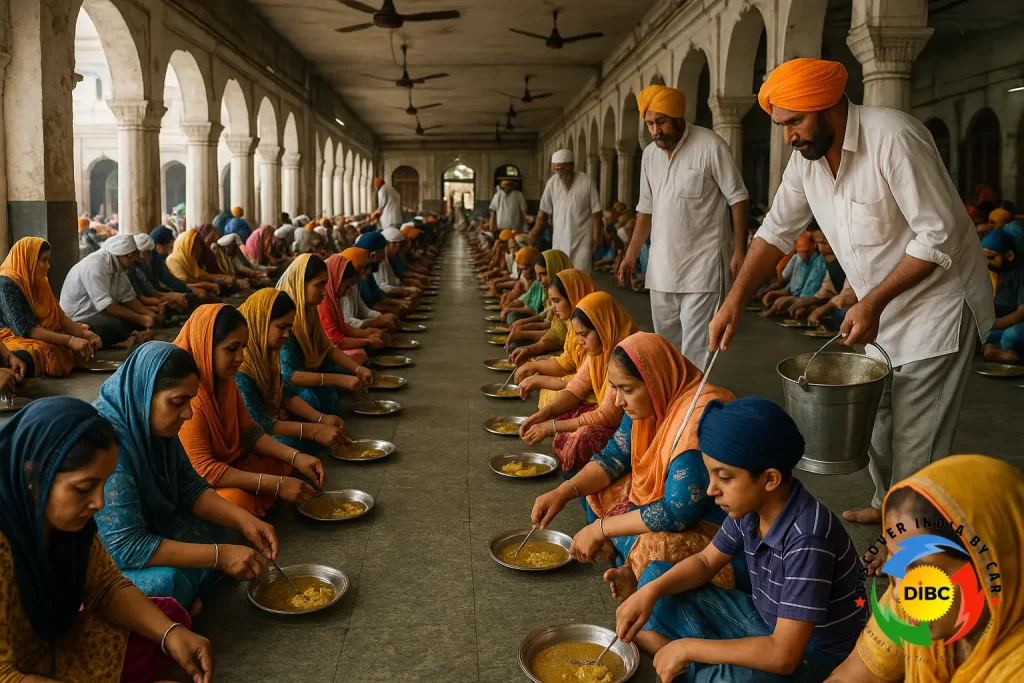
What is Langar? It is simple and it is radical. Langar is the physical engine of Gurdwara Bangla Sahib, the Community kitchen serving free meals to all, without any form of prejudice, query, or expectation of payment. No matter your faith, income, background, or social status—you eat the same, sit together, and are served as a beloved guest.
Experience of Sitting Together and Eating – A Core Lesson in Equality
In a country steeped in the deeply complex societal structures of history, this act is pure power. The experience of sitting together and eating humble vegetarian food while cross-legged on the floor—the millionaire sitting beside the daily labourer, the foreign tourist sitting next to the school child—is a direct, absolute rejection of hierarchy. It is a stunning, living lesson in universal equality being preached not in words, but in the immediate, communal act of service. It truly levels the spiritual field for a fleeting, pure moment of connection.
Behind the Scenes: An Engineering Feat of Humanity
The complexity here, often done entirely by manual labour and continuous, smiling volunteer rotation, is difficult to articulate in mere facts. To witness how hundreds of volunteers serve thousands daily in an unbreakable cycle of preparation, cooking, distribution, and washing, is beyond merely impressive. We are speaking of tens of thousands of individual portions and over twenty tons of atta (wheat flour) every single day. Look behind the serving line!
Must-See Spots Inside the Gurdwara Complex: Don’t Miss the Detail
Ensure you consciously incorporate these highly important secondary spots to elevate your experience past a mere prayer hall visit:
- Main Prayer Hall (Darbar Sahib): Listen intently. Stay at the centre of the devotional current to understand the peace the Kirtan offers.
- Sarovar (Holy Pond): Meditate, walk the full Parkarma (marble path), and appreciate the architectural unity with the gold dome reflection.
- Museum dedicated to Sikh history: Usually near the entrance, this small museum contains historical texts and relics explaining the deep, profound social context and history of the Sikh Gurus and the faith’s foundations—an essential resource for the intellectually curious visitor.
- Langar Hall & Preparation Zones: Do not simply eat and leave! Walk to the viewing points for the immense washing and roti-making machinery. Witness the industrial scale of this phenomenal Seva.
- Yatri Niwas (Guest House) / Administrative Areas: Note the presence of this structure, symbolising the Gurdwara’s enduring commitment to providing shelter and basic assistance to those who have journeyed far.
Travel Tips Before Visiting: A Code of Conduct for All Guests
Here is your essential, non-negotiable checklist for showing the appropriate cultural respect that the Gurdwara deserves from all its international guests:
- Dress Modestly and Cover Your Head: Non-negotiable cultural law. Please avoid short clothing. You must cover your head immediately after taking off your shoes. Head-scarves or bandanas are freely provided.
- No Footwear Inside the Premises: Footwear of any kind, including socks, is prohibited. They must be safely stored in the secure, free Jutti Ghar (Shoe House) service near the main gate. Clean your feet at the facility before entry.
- Photography is Allowed Only in Specific Areas: Feel free to photograph the dome and Sarovar—but strictly avoid it inside the Main Prayer Hall, inside the Langar, or of people directly without permission. Silence is golden.
- Carry your own water bottle: This ensures you stay well hydrated on the open, bright marble walkway, but crucially, it ensures you can leave zero litter within the immediate holy confines of the Gurdwara complex.
- Respect Silence Inside the Prayer Area: Do not talk. Do not talk on your mobile device. Respect silence and contemplation for the sheer devotion on display within the Darbar Sahib. Keep mobiles on silent/vibrate across the entire complex.
Nearby Attractions to Explore: Combining Culture and Mughal Splendour
The immense logistical advantage of visiting the highly accessible Gurdwara Bangla Sahib is the freedom it grants you to smoothly transition to Delhi’s next essential stop—including one of the grandest examples of Indian-Mughal architecture you could ever hope to encounter: Humayun Tomb.
This provides the ultimate one-day Delhi sightseeing plan, covering humility, service, power, and high art, making your exploration truly profound.
A Necessary Stop: UNESCO World Heritage Site – Humayun’s Tomb
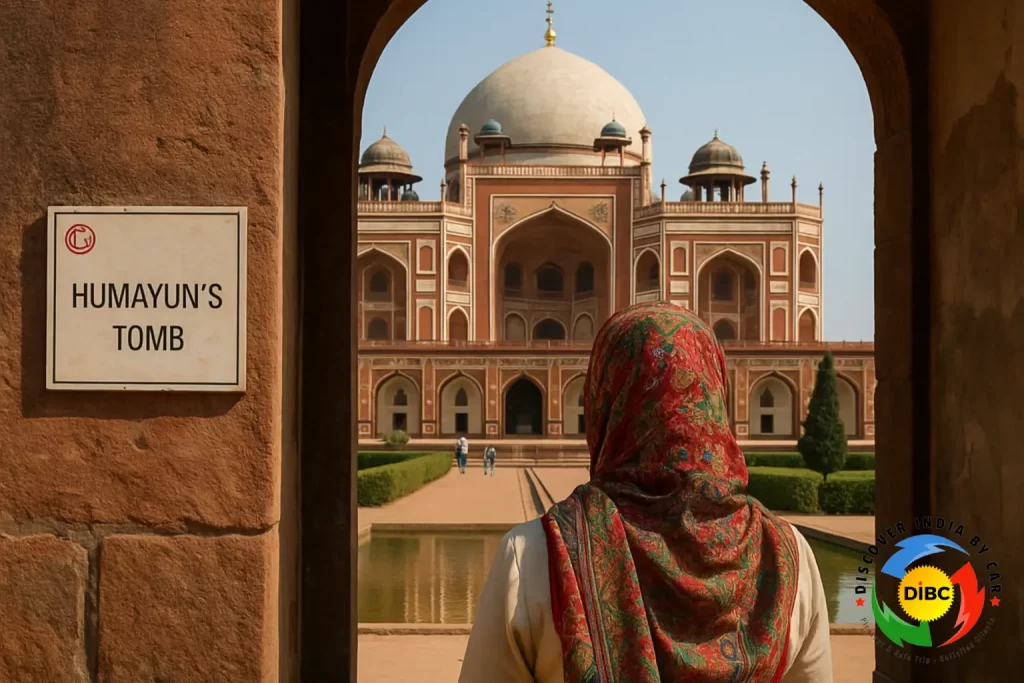
Recognised globally by UNESCO, the Humayun Tomb is the great tomb of the Mughal Emperor Humayun, serving as an architectural blueprint for all the monumental structures that came after it (most notably, the Taj Mahal itself). This complex of structures and its majestic Charbagh Garden cannot be missed.
- The Humayun Tomb History and Architectural Weight: Commissioned by Humayun’s chief wife, Haji Begum (Bega Begum), construction commenced in 1565. This profound Humayun Tomb history sets it as a radical watershed moment in Indo-Islamic architecture, with its perfect symmetry and vast scale of red sandstone and white marble Chatris. It houses over 150 graves of the Mughal Royal family across the massive grounds.
- The Key Details: Humayun Tomb Timing: Excellent news for your itinerary: the monument is very visitor-friendly, being open daily from sunrise to sunset, with published official Humayun Tomb timing often quoting from 6:00 AM right through to 6:00 PM. Occasionally, there are night openings during the cool winter season, but verify these locally before banking on it.
- The Cost Factor: Humayun Tomb Ticket Price and Booking: This is crucial—always budget for and understand the necessary entry fee structure before arrival. Tourists are generally advised to purchase an Humayun Tomb online ticket via the official Archaeological Survey of India (ASI) website, as it is paperless and more efficient than standing in long lines.
- The Humayun Tomb ticket price for Indian nationals (and citizens from most SAARC/BIMSTEC countries) is highly concessional, generally priced at a nominal fee, roughly ₹40 to ₹60.
- For Foreign Tourists, the Humayun Tomb ticket price sits in a significantly different, higher bracket, typically ranging from ₹550 to ₹650, reflecting global standards for major UNESCO sites. Children under 15 years old are thankfully given entirely free entry across all visitor groups.
- The Best Route: Humayun Tomb Nearest Metro: To avoid extreme traffic congestion entirely, use the Violet Line! The optimal access point is usually considered to be the Jawaharlal Nehru Stadium Metro (JLN Stadium), from where the final two-kilometre journey is efficiently completed by taxi or auto-rickshaw. Another Yellow Line alternative, Jor Bagh, is further and slightly less efficient for tourists unfamiliar with the city layout.
Further Central Delhi Delights:
- Jantar Mantar: An intriguing historical observatory you simply drive past on the way from Bangla Sahib toward CP.
- Connaught Place Market: Great spot for afternoon Chai and browsing international brands or high-end dining near your starting point.
- Agrasen ki Baoli: Visit this highly mysterious ancient stepwell, tucked suddenly and strangely away from a busy main road; perfect for photos.
- India Gate (for an evening drive past) & Hanuman Mandir for pure spiritual energy.
Conclusion – Where Faith Meets Humanity: The Legacy Continues
We have completed the essential guide, moving through historical account, spiritual core, and necessary travel logistics. What remains is the singular, lasting message.
The Gurdwara Bangla Sahib offers you more than the spectacle of the golden dome—it offers a truly fundamental lesson. This monument is significantly more than just a place of worship; it functions relentlessly as a global, living exemplar for humanity itself, dedicated wholly to equality, tireless work, and an uninterrupted flow of communal service (Seva). Its history of compassion is written anew every day on the face of every happy volunteer and the vast numbers of the served in the Langar Hall.
Let the memory of Guru Har Krishan Sahib Ji‘s immense service, the stillness of the holy Sarovar water, and the immense volume of food cooked for the hungry serve as your compass and spiritual fuel. That incredible sense of shared belonging you’ll find there is the profound experience worth seeking.
Do not allow any Delhi sightseeing plan to bypass this indispensable experience. The next time your road-tripping map guides you to Delhi, heed this expert advice: “Next time you’re in Delhi, make sure to spend an hour at Bangla Sahib — it might just be the calm you’ve been searching for.” Make a commitment to truly experience the Langar and ensure your itinerary follows on to the magnificent imperial Humayun Tomb complex. These two vastly different but equally profound landmarks are an unmissable core of India’s enduring capital.
FAQs About Gurdwara Bangla Sahib
Q1. What is Gurdwara Bangla Sahib famous for?
A. The Gurdwara Bangla Sahibis internationally famous primarily for its unparalleled contribution to the city’s spiritual and charitable landscape. Key famous elements include its incredible architecture (the immense golden dome on white marble), its sacred Sarovar (water consecrated by Guru Har Krishan Sahib Ji‘s selfless service during the 17th-century epidemic), and the utterly massive scale of its Langar operation, serving continuous, completely free, universal meals to all visitors.
Q2. Is entry free for everyone?
A. Yes, without any question. Entry to the entire Gurdwara Bangla Sahibcomplex and grounds is entirely free for everyone, irrespective of their personal faith or background. The open-door policy reflects the profound, core Sikh philosophy of universal religious acceptance, ensuring that its spiritual calm is accessible 24 hours a day.
Q3. What are the timings of Bangla Sahib Gurudwara?
A. The Gurdwara follows an unwavering, absolute rule: the timings of Bangla Sahib Gurudwaraare open 24 hours a day, 7 days a week, 365 days a year, as a standing spiritual refuge for all. While you can visit at any time, for a deeply authentic experience, I suggest the Early Morning hours (before sunrise) to listen to the beginning Kirtan or a Late Evening visit (after 9:00 PM) for cool illumination.
Q4. What is the nearest metro station to Gurdwara Bangla Sahib?
A. The best and most highly recommended nearest metro stationto the Gurdwara is the Patel Chowk Metro Station, which operates directly on the Yellow Line of the Delhi Metro network. The station allows for a convenient, short, and relatively traffic-free walking access to the Gurdwara’s entrance, roughly a ten-minute walk.
Q5. Can tourists participate in Langar at Gurdwara Bangla Sahib?
A. Not only can tourists participate in the Langar, but they are strongly encouraged to do so, for free! It’s seen as a powerful act of faith, shared culture, and ultimate community experience. You will be seated, served the simple, free vegetarian meal, and expected to eat communally alongside thousands of other people—a memorable lesson in humility and true equality that completes the visit.


