- Private car and driver in Delhi / India
- +91-8447445445
- info@discoverindiabycar.com sugar.ankit@yahoo.com
 +91-9818434712
- Follow us:




Humayun’s Tomb Delhi: History, Timings, Tickets & Metro Guide (2026)
The Red Revolution: Unlocking Delhi’s True Architectural Masterpiece, Humayun Tomb
The Timeless Beauty of Humayun’s Tomb
We often chase after the legends, but sometimes, the true, foundational stories—the moments of radical innovation that fundamentally reshaped an empire—get a little less fanfare. That is the injustice sometimes served to Humayun’s Tomb. Here, on a colossal scale never before seen, is the quiet epicenter of Mughal ambition. Think about this for a second: before the luminous marble shell of the Taj Mahal even had a whisper of an existence, the great second Emperor’s stately final resting place, Humayun’s Tomb — the quintessential first grand garden-tomb of India — had already been built and perfected in Delhi, setting a monumental precedent that would dominate Asian architecture for centuries to follow.
The monument isn’t just placed anywhere; it is deeply entrenched in the historically rich Nizamuddin East, Delhi, deliberately established in an area known for its piety and ancient significance near a powerful Sufi shrine. This chosen geography, I’d argue, gives the massive complex an air of unparalleled, deliberate solemnity.
Why do expert travellers, including myself, keep coming back, making sure new visitors don’t miss this landmark? Simply put, this magnificent edifice represents the finest, first, and purest architectural collision: it successfully marries the disciplined symmetry of Persian design with India’s immense sandstone and artistry, a unique achievement that secured its vital position as a UNESCO World Heritage Site. You just have to be here to appreciate the scale.
Honestly, stepping through the huge arched gates is immediately, profoundly peaceful. The precise, expansive symmetry of the central charbagh (the symbolic four-part garden) is truly overwhelming, forcing the hustle of the outside city to recede instantly. If you’re planning a car-led or Metro-aided trip to Delhi, focusing on meaningful heritage, then trust my experience: this single, powerful historical gem absolutely must be on your bucket list! In the forthcoming sections, I’m giving you the expert blueprint—from the personal, emotional depth of the humayun tomb history to the logistical nuts-and-bolts of checking the humayun tomb timing, comparing the latest humayun tomb ticket price, and charting the fastest route using the humayun tomb nearest metro station.
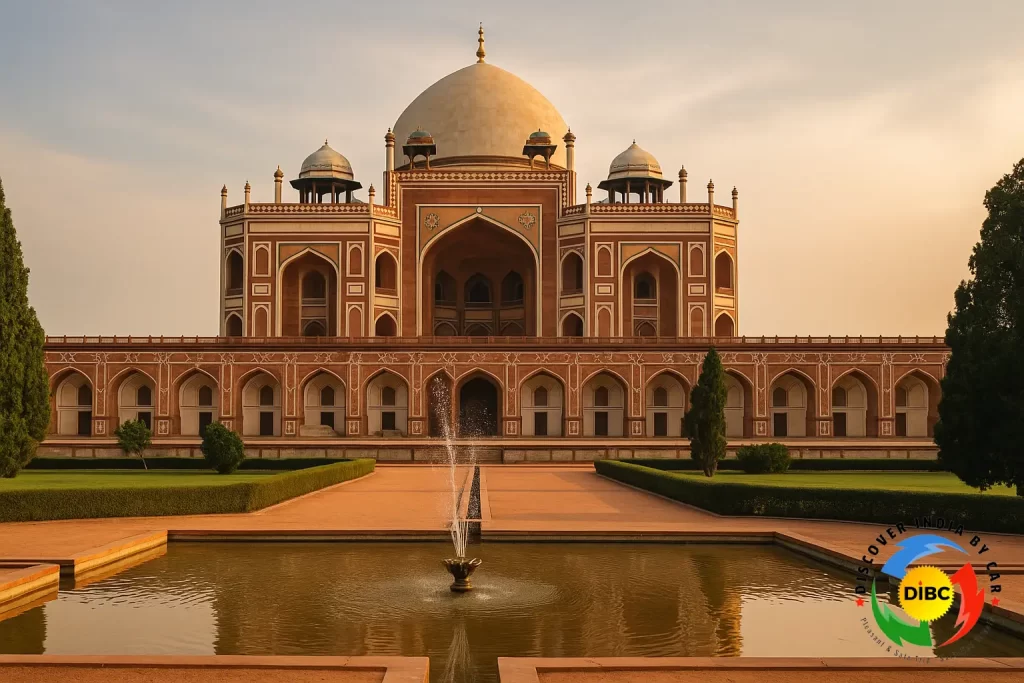
History of Humayun’s Tomb: Digging into the Dynastic Past (humayun tomb history)
A simple truth about great monuments: you cannot separate the stones from the heart of the person who paid for them. That heart belonged to a formidable woman, and it defines the incredible humayun tomb history from start to finish.
The Commission: A Woman’s Unflinching Memorial
Emperor Humayun’s accidental death (falling down a library staircase—the irony!) occurred in 1556. However, construction didn’t immediately start; the actual project, enormous in scope, only officially commenced some nine years later, around 1565 CE. It wasn’t financed by his heir, Akbar. Instead, the initiative, the funding, and the continuous oversight were driven by his chief consort, Empress Bega Begum (Haji Begum). She dedicated eight arduous years, sometimes personally staying on-site, supervising the finest details until the main mausoleum was ready circa 1572 CE.
Empress Begum, herself of refined Persian descent, brought a clear, specific vision to the Delhi terrain: the Persian blueprint. This required hiring Mirak Mirza Ghiyas, the Iranian architect credited with seamlessly embedding the massive scale of the Persianate charbagh and the distinct structural challenge of the soaring double-dome—elements that previously lacked successful, widespread implementation on the Indian soil.
An Unavoidable Architectural Link
The monument’s position in global architectural literature is not up for debate. This specific fusion—that very marriage of design ideologies and material choices executed by Ghiyas’s team—provided the comprehensive, perfected architectural blueprint that Shah Jahan and his master builders utilized, later to stunning effect, in Agra. Therefore, its significance as the direct precursor to the Taj Mahal’s design is, quite simply, unparalleled and permanently cemented.
An Intriguing Time-Lag
Here’s an absolutely fascinating point, which gives you pause: The magnificent enterprise only broke ground 9 years after Humayun’s death. It was a conscious, patient decision by his Empress, and she waited until her vision, financing, and architect selection were absolutely perfected. It’s a testament to patience, long-term love, and political stability!
Architecture & Design Highlights: Mastering Volume and Detail
The genius of Humayun’s Tomb is found less in one grand feature, and more in the holistic, massive symmetry you encounter the moment you enter. It is pure, elegant, 16th-century architectural rhetoric.
Material Dominance and The Scarlet Statement
Walk up to the vast building and you see an argument between colour and weight. The powerful Red sandstone forms the overwhelming mass, giving the multi-tiered structure its profound visual heft, permanence, and imposing authority. But the architect strategically used bands and geometric patterns of pure, gleaming white marble contrast, applying them especially to outline the numerous arched entrances, the geometric inlays, and, most visibly, to cap the giant central dome itself, offering an intentional, elegant highlight to the solemnity of the red base.
Engineering Genius: Dome, Charbagh, and the Plan
Standing 42.5 meters tall, the large white dome is not just a dome—it’s a structurally brilliant double dome structure, a concept borrowed from Timurid-Persian builders. This engineering trick achieves two aims at once: external scale and a proportional, intimate height for the inner burial chamber ceiling. And its foundation is arguably just as critical: the entire massive edifice is the culmination of a vast charbagh garden layout (the classic Persian four-part garden, symbolic of paradise). This precise symmetry dictates your entire viewing experience, framing the tomb in perfect geometrical lines defined by intersecting walkways and water channels.
The Photographic Details
Notice how every entrance is framed by towering arches and symmetry—each repeated arch is an iwan that draws the eye toward the center. Within the eight surrounding sub-chambers (the hasht bihisht plan), light filters gently through delicate stone latticework, or jalis, bathing the internal space in a beautiful, ethereal gloom. For lovers of precision, there is literally no visual escape from the relentless geometric perfection. This intricate interiors, tomb chambers structure means the experience truly is perfect for photography lovers & history buffs! Bring an early morning telephoto lens.
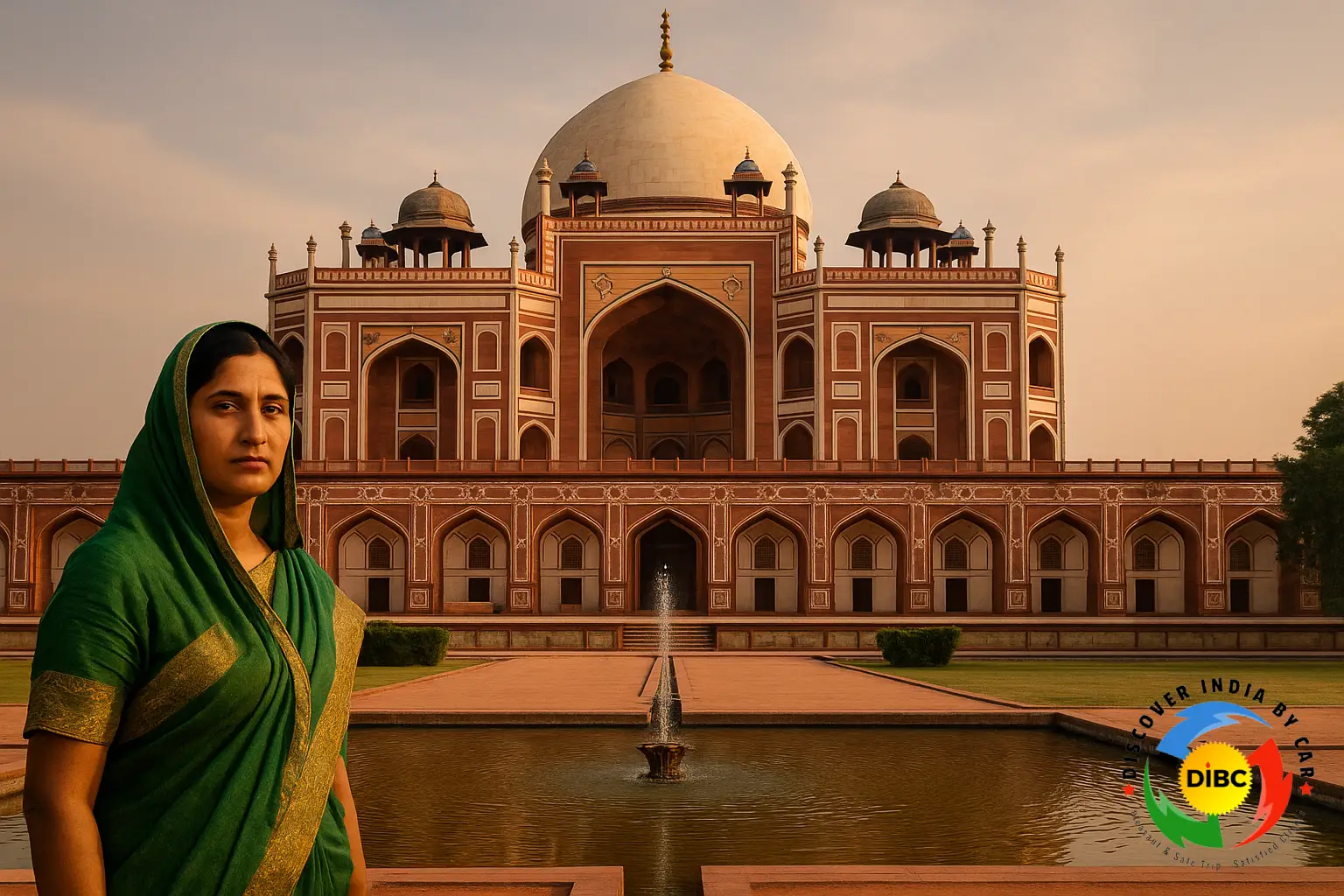
Timings and Best Time to Visit (humayun tomb timing)
Let’s discuss logistics. Getting the humayun tomb timing details right ensures you hit the site during peak comfort and the best photographic light—not the tourist rush and sweltering noon sun!
Reliable Hours of Operation
This is an easy one: the complex remains mercifully open Daily. I’ve often seen newer visitors confused, looking for a mandatory closure day—it simply doesn’t exist here!
- Standard Opening/Closing: The primary operational hours, which define the humayun tomb timing, generally span from 6:00 AM to 6:00 PM, or remain accessible until exactly one hour before the designated sunset time for the day. This provides ample exploration time.
The Photographer’s Best Time
As an experienced guide, let me implore you: use the sunrise window. The time is precious:
- Morning Golden Light (6:00 AM – 8:30 AM): This slot offers maximum comfort (lowest crowds and cool air), alongside minimum glare and the perfect side-lighting, beautifully accentuating the stone’s texture and creating spectacular arch shadows. This is absolutely my top recommendation for photos!
- Avoid the Mid-day Trap: In simple terms, especially when traveling in hot conditions, my cardinal rule is: Avoid afternoon heat, especially in summer months! The energy you expend just battling the solar glare off the plinth is time and focus wasted. Prioritise an early arrival.
Humayun Tomb Ticket Price & Entry Details (humayun tomb ticket / humayun tomb ticket price)
Money and convenience matter when planning. Let’s clearly define the humayun tomb ticket price so you can plan the financial logistics perfectly.
The Entry Pricing Breakdown
The cost structure for a Humayun Tomb ticket follows the common three-tier system seen across all national monuments in India:
Visitor Category | Typical Humayun Tomb Ticket Price (INR) | Key Point |
Indian Citizens (Adults) | Approximately ₹40 – ₹50 | Very affordable for domestic travelers |
Foreign Citizens (All others) | Approximately ₹600 | The full foreign national rate |
SAARC / BIMSTEC Tourists | Approximately ₹40 – ₹50 | They receive the domestic rate benefit |
Children (Below 15 Years Old) | Free Entry | Excellent for families! |
Logistics and Fast Entry Tips
Your method of buying the humayun tomb ticket will dictate your wait time. Do yourself a massive favour and go digital. Tickets are best procured Online ticket booking info (ASI or official website link). You buy online, get the QR code sent immediately, and walk past the long manual queue straight to the automated scanner. Regarding cameras: typical tourism cameras and phones require no specific charges, thankfully. Only high-grade, commercial photography units are liable for an extra fee.
The Golden Insider Tip: Don’t stand in line in the morning sun waiting! The advice is firm, fast, and simple: Book online to skip long queues. You just saved yourself 20 minutes and ensured a calm start to your heritage morning.
How to Reach Humayun’s Tomb: Locating the Humayun Tomb Nearest Metro
For those using the excellent Delhi Metro system to reach this monumental landmark—having perhaps safely parked their rental or private vehicle near a major transit hub—you need the clear-cut directions from the train to the gate.
The Two Easiest Metro Stops (Violet Line)
Both major options for the humayun tomb nearest metro route are situated conveniently on the Violet Line:
- JLN Stadium Metro Station (Jawaharlal Nehru Stadium):
- Distance to Gate: Roughly 2.0 km.
- Last-Mile Advice: Look for auto-rickshaws immediately outside the station; they’re generally your quickest way forward. The entire journey from exiting the Metro to entering the tomb complex should take you no more than 15-20 minutes, including the ride.
- Jangpura Metro Station:
- Distance to Gate: Approx. 2.5 – 3.0 km—a tiny bit further.
- Last-Mile Advice: Very similar to the JLN approach: grab a taxi, cab, or an auto for a speedy finish. The surrounding area can be slightly more chaotic near Jangpura, so firm fare negotiation is always key!
Transport Beyond the Rails
If using the Metro is too complex or your travel group is large, both local cabs and app-based services (Uber/Ola) are universally available in this major part of Delhi and can drop you directly at the gates without fuss.
Short Travel Tip for First-Time Visitors: Be aware: once you exit the train, the local ride can often cost ₹40–₹70 INR. Budget for this final leg and insist that the auto-driver adhere strictly to the metered fare rules, or use an app. It’s an absolute must for an authentic, un-scammed Indian city travel experience!
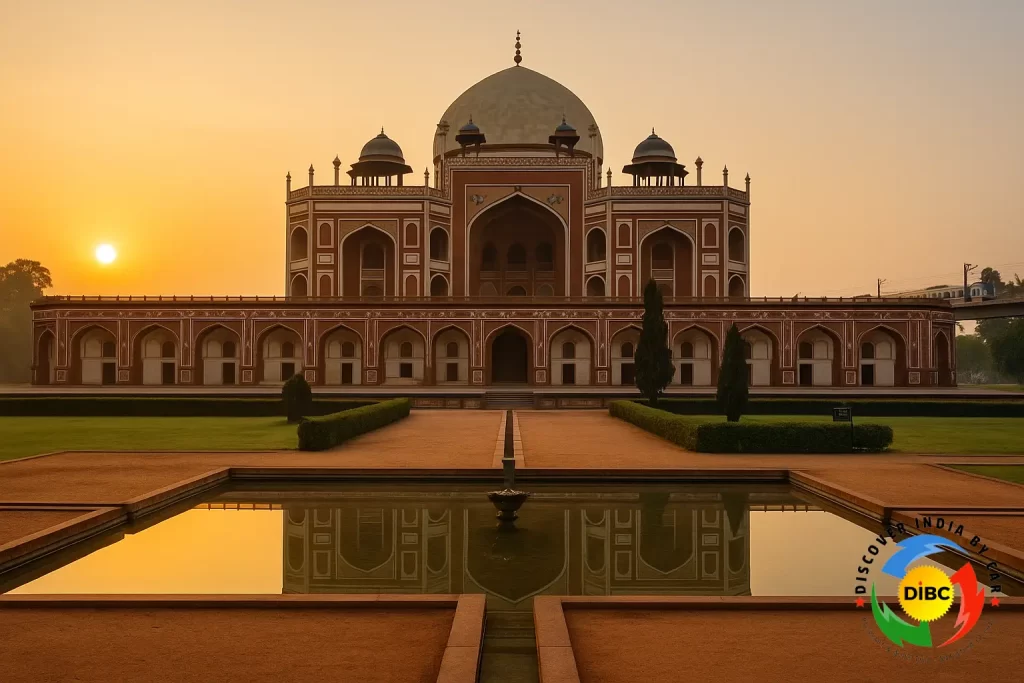
Nearby Attractions You Can Explore: Creating Your Historical Trifecta
The geographical setting of Humayun’s Tomb makes it a cornerstone of a massive heritage day. Plan your stops like a professional tour guide!
- Isa Khan’s Tomb: Start here, before the main gate, just inside the boundary complex! This important octagonal structure, being the resting place of an Afghan Sur noble, predates the main Mughal mausoleum. Use its structure as a benchmark to appreciate the immediate leap in architectural ambition when Humayun’s mausoleum was completed.
- Nizamuddin Dargah: Just a stone’s throw away. This Sufi shrine of Nizamuddin Auliya offers a vivid, vibrant contrast to the silent, immense solemnity of the tomb. Visiting here, especially on Thursdays for the intense Qawwali, offers an unforgettable deep dive into India’s devotional cultural landscape.
- Lodhi Garden: Easily reachable by cab within minutes. These serene, beautiful, large gardens host tombs from earlier Lodi and Sayyid dynasties. It’s a fantastic spot for a quiet reflection or light picnic after heavy monument gazing.
- India Gate: Finish your imperial and dynastic journey here! The major, well-known India Gate (War Memorial) is approximately 6 km away and transitions your day seamlessly from 16th-century burial sites to 20th-century national commemoration.
The incredible density of historical landmarks here means that a trip is Perfect for: Half-day heritage walk in Delhi, maximizing historical input for minimal travel output.
Travel Tips Before Visiting: A Hard-Learned Checklist
Final preparations will smooth out the day—ignore these details at your peril! A smooth visit is always the best visit.
- Rules & Security: Entry rules (prohibited items, photography guidelines) are strict. Security guards will routinely check bags for things like large packets of outside food, commercial smoking items, and sometimes even books. Leave anything heavy or restricted in your vehicle! Follow the official ASI photography guidelines for any sensitive areas (of which there are few).
- Mobility Considerations: The tomb complex is absolutely massive, and vast areas are not smoothly paved. Be forewarned: while a dedicated gate or route might exist, true, independent Wheelchair accessibility is hampered by extensive historical gravel pathways and numerous required risers and staircases on the monument plinth itself. Assistance is vital.
- Logistical Must-Haves: Carry adequate drinking Water, especially if it’s hot; you will be walking long distances. Find the designated restrooms right after you pass through security, as they are not immediately accessible within the main charbagh. Don’t rely on local snack spots near the gates for a full meal.
- Essential Footwear: If I could put flashing lights on one item of advice, it’s this. Your Ideal clothing / footwear suggestion should scream comfort and stability. You’re traversing ancient paths and a huge stone plinth: opt for durable sneakers or tough, low-profile sandals. Leave the fashionable heels back in your car or hotel.
Fun Facts About Humayun’s Tomb
- The Inaugural Architect: Its chief honor lies in the fact that it is recorded as the First garden-tomb in India, marking the actual inception point of the grand Indo-Persian tomb tradition.
- The Dynasty’s Necropolis: The site’s historical function rapidly expanded: the main mausoleum and the grounds surrounding it hold the remains of well over Housed more than 150 Mughal family graves, acting as the true burial epicenter of the empire.
- The Original Blueprint: Though sometimes visually overshadowed, every art and architecture expert confirms it is the non-negotiable Taj Mahal’s architectural predecessor, setting every key technical (double dome) and aesthetic (charbagh, white marble trim) rule for Shah Jahan.
- A Star on Screen: The striking silhouette and symmetrical scale of the monument are often deemed photogenic, leading to its repeated inclusion: it has been Featured in several Bollywood & international films and used as an important visual icon for Mughal history in global documentaries.
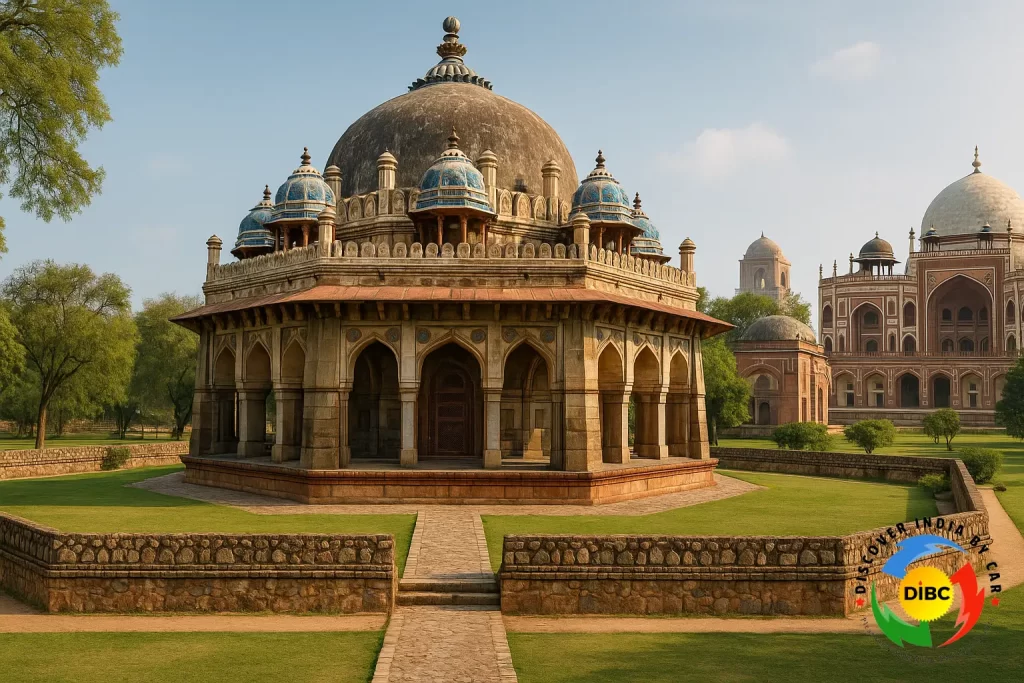
Conclusion – A Journey Through Time
What you ultimately experience at Humayun’s Tomb is not simply a structure—it is an architectural and cultural argument executed in perfect geometry. You are absorbing the first, foundational statements of the grand Mughal era. We’ve laid out your complete guide, leaving no question unaddressed: from understanding the passion behind the humayun tomb history and nailing your visit with the precise humayun tomb timing, to making entry simple by utilizing the online humayun tomb ticket price and finding the most logical access point using the humayun tomb nearest metro.
Take a moment as you look at the perfect symmetry: this feels exactly like Walking through Humayun’s Tomb feels like walking through a revered page of history—a profoundly calm, geometric space where centuries-old architecture and an unmistakable sense of enduring imperial peace powerfully meet. It’s an irreplaceable experience.
This landmark defines Delhi. Don’t pass up this opportunity! Use this definitive guide to inform your next steps. Plan your next trip to Humayun’s Tomb now, explore every section of that vast charbagh, and definitively discover the enduring Mughal architectural legacy that forever shaped the magnificent narrative of India’s golden historical age.
FAQs About Humayun’s Tomb
Q1. What is the story of Humayun tomb?
A. The core narrative surrounding the Humayun Tomb is driven by Empress Bega Begum, who commissioned it after the death of her husband, Emperor Humayun, with construction commencing around 1565. Its story is highly significant because, using a Persian architect, it established the grand structural norms for Mughal architecture on the Indian subcontinent—such as the massive charbagh garden and the soaring double dome—setting the benchmark for the construction of subsequent iconic imperial mausoleums like the Taj Mahal.
Q2. On which day is Humayun Tomb closed?
A. Humayun Tomb maintains a universally consistent schedule and is fortunately not closed on any day of the week, running a continuous schedule that welcomes visitors every single day of the year. Tourists should only adhere strictly to the established humayun tomb timing, which usually runs daily from an early 6:00 AM until an hour before sunset, or around 6:00 PM.
Q3. Is there any ticket for Humayun Tomb?
A. Yes, all visitors above the age of 15 require an entrance humayun tomb ticket to access the monument complex. The actual humayun tomb ticket price adheres to standard national monument pricing, meaning it is significantly cheaper for Indian citizens (and SAARC/BIMSTEC visitors) than it is for international foreign nationals. The recommended and simplest route for securing this ticket is always to purchase it online via the official ASI booking channel beforehand.
Q4. What is the reason behind the death of Humayun?
A. The cause of Emperor Humayun’s passing in January 1556 was tragic and surprisingly mundane: he died due to injuries sustained from an entirely accidental fall. Humayun tripped and tumbled down the narrow, steep stone steps of his personal library building, the Sher Mandal (located inside Purana Qila). This severe head injury resulted in his unfortunate death a few days later, clearing the path for his eventual succession by Akbar.
Q5. Whose body is in Humayun tomb?
A. The most important body is interred beneath the grand central dome: the mortal remains of Emperor Humayun. However, the vast funerary complex rapidly grew, containing secondary chambers and hundreds of graves throughout the compound, effectively serving as the chief burial ground for subsequent Mughal generations. Historical sources suggest that the site houses well over 150 Mughal family members, including the woman who commissioned the entire project, Empress Bega Begum.


