- Private car and driver in Delhi / India
- +91-8447445445
- info@discoverindiabycar.com sugar.ankit@yahoo.com
 +91-9818434712
- Follow us:


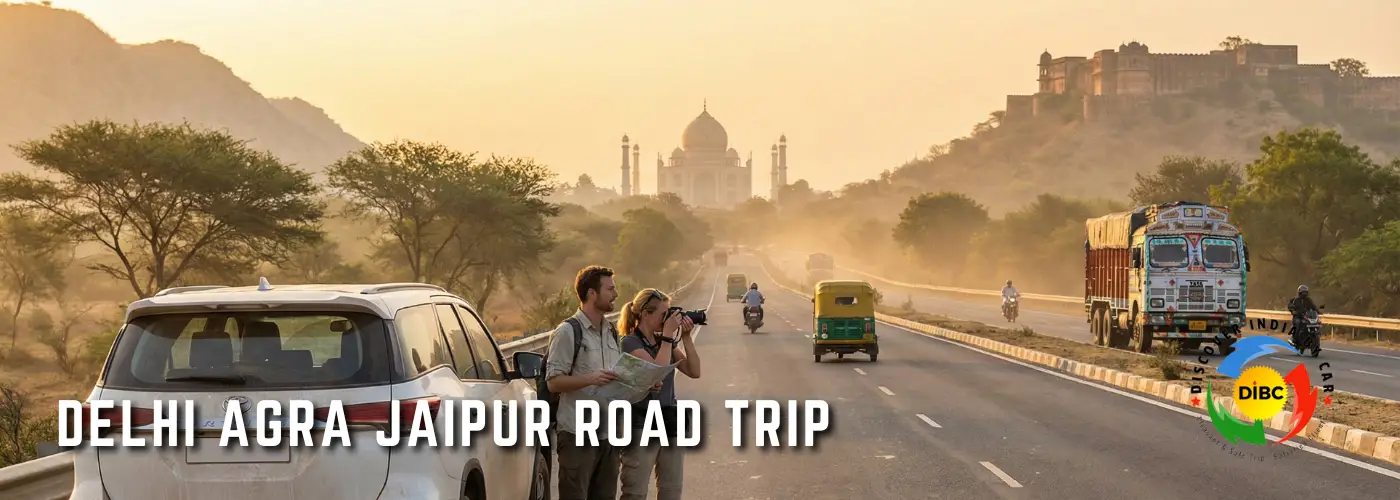
Delhi Agra Jaipur Road Trip – 7 Day Golden Triangle Guide for Foreigners
Driving in India changes you. I don’t mean that metaphorically.
It changes your reflexes, your patience, and your definition of “personal space.” Most travelers see the Golden Triangle from the window of a generic Volvo tour bus. They sleep through the highways and wake up at the monuments.
But if you are reading this on discoverindiabycar.com, you want something else. You want the agency to stop for roadside kulhad chai. You want to see the sunflower fields on the Haryana border that tour guides ignore. You want to say you navigated one of the most chaotic, colorful, and intense road networks on Earth—and loved it.
I have driven this loop countless times. It is the best Golden Triangle road trip India for foreigners because it balances modern expressways with the raw, “real India” chaos you see in documentaries.
This isn’t a Wikipedia summary of monuments. This is a practical, rubber-meets-the-road Delhi Agra Jaipur road trip itinerary designed to keep you safe, sane, and on the right side of the road.
QUICK GUIDE: The Delhi Agra Jaipur Road Trip
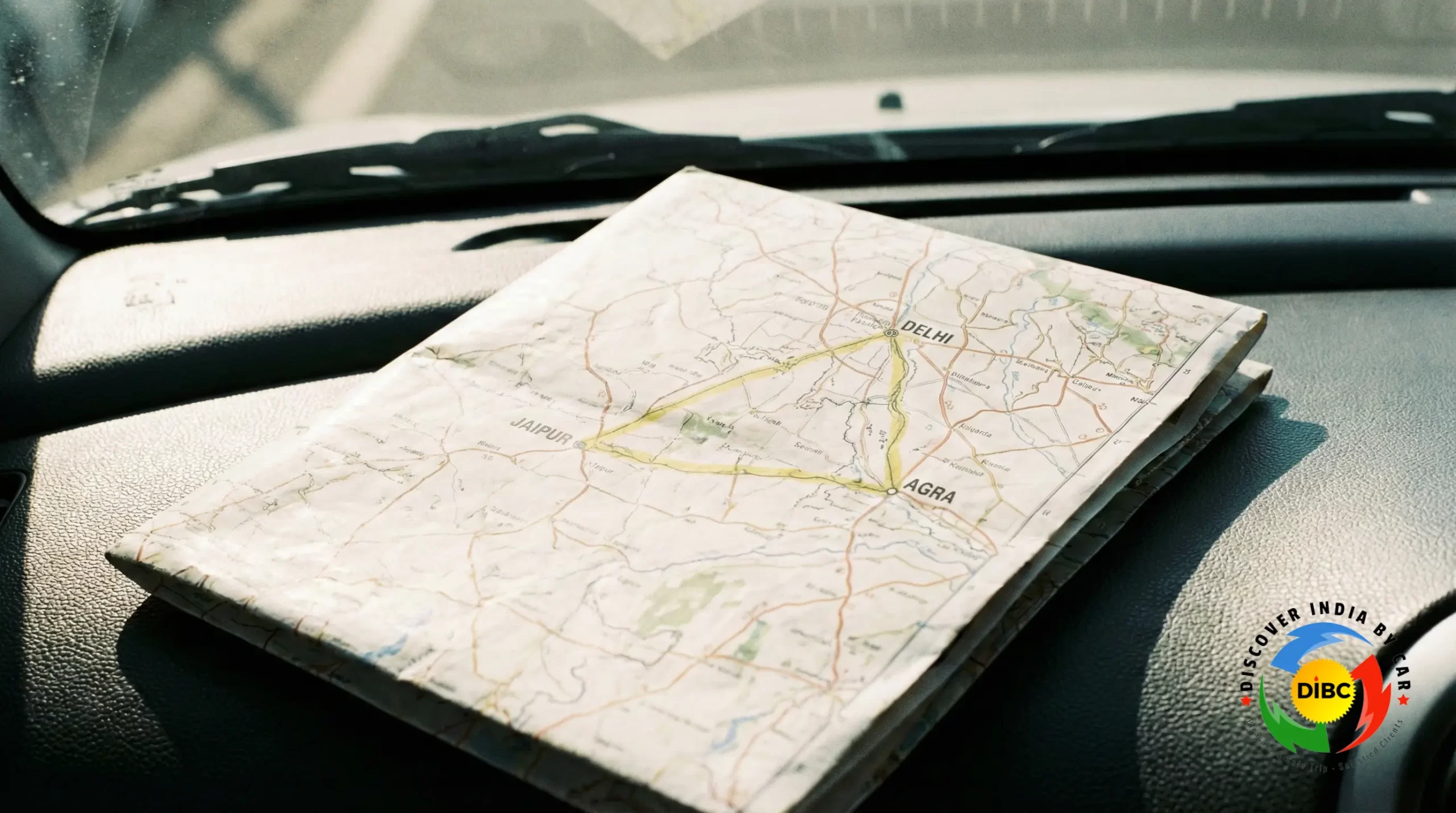
The Delhi Agra Jaipur road trip (Golden Triangle) is a 720-kilometer circular loop connecting India’s capital, the Taj Mahal, and the Pink City. It takes approximately 6–7 days to complete comfortably. This route is considered the safest and most infrastructure-rich India road trip for foreigners, suitable for first-time visitors using either a self-drive rental or a car with a dedicated driver.
KEY SUMMARY (For the Skimmers)
The Route: Delhi → Agra → Jaipur → Delhi.
Distance: ~720 km / 450 miles total loop.
Road Conditions: 70% modern multi-lane highway, 30% intense city traffic.
Best For: Adventurous couples, photographers, and travelers tired of group tours.
Verdict: Safe for foreigners? Yes, this route follows the most patrolled and developed tourist highways in the country. Self-drive or Driver? Hire a car with a driver if it’s your first time in Asia.
Quick Facts: The Logistics
- Vehicle of Choice: Don’t rent a small hatchback. You need an SUV (like a Toyota Innova, Creta, or Mahindra XUV) for ground clearance. Indian speed bumps are mountains.
- Navigation: Google Maps is 95% accurate, but “shortest route” often means “dirt road.” Stick to main highways (NH).
- Fuel: Stations are everywhere. Stick to “IndianOil” or “Shell” for clean fuel.
- Tolls: All highways are electronic now. Ensure your rental car has a pre-loaded FASTag sticker on the windshield, or you will pay double cash penalties at every toll booth.
Self-Drive vs. Chauffeur: The “Real Talk” Decision
I need to be brutally honest here.
- The Self-Drive Option
I love self-driving. It’s ultimate freedom. But driving in India is basically a video game on ‘Expert’ mode. Cows sit in fast lanes. Trucks drive the wrong way to save fuel. Indicators are rarely used.
- Choose this if: You have driven in places like Southern Italy, Vietnam, or Morocco. You have defensive reflexes and patience.
- The Chauffeur Option (Highly Recommended)
In India, “car rental” usually includes the driver. This is not a luxury reserved for the rich here; it’s standard.
- Why I recommend it for first-timers: You still get the “road trip” vibe. You choose the playlist, the stops, and the route. But you don’t have to stress about a motorbike clipping your mirror in Jaipur traffic. It removes the stress layer so you can actually enjoy the view.
7-Day Golden Triangle Road Trip Itinerary
Most blogs cram this into 4 days. Do not do that. 4 days on Indian roads is exhausting. A 7 day Golden Triangle road trip allows you to breathe.
Day 1: Land in Delhi & Escape the Trap
The Goal: Touch down and get to the periphery.
- Where to Stay: Do not drive into Old Delhi or Connaught Place on your first day. Stay in Aerocity (near the airport) or Vasant Kunj. These areas have wide roads and secure hotel parking. This fits well into a larger North India road trip, allowing you to bypass city congestion if you plan to head north later.
- The Adjustment: Traffic in Delhi looks terrifying from the outside, but it has a rhythm. It’s assertive, not aggressive. If someone honks, they aren’t angry; they’re just checking “I’m here.”
- Evening: Take a short test drive to Qutub Minar. The parking complex there is organized, and it’s a gentle introduction to driving on the left.
Day 2: Delhi – The Smart Way
The Goal: See the giants without melting in traffic.
- The Reality: Driving a personal car to the Red Fort is a nightmare. Parking is scarce and touts are everywhere.
- Strategy: Park your car at your hotel. Use Uber or the Metro for Old Delhi.
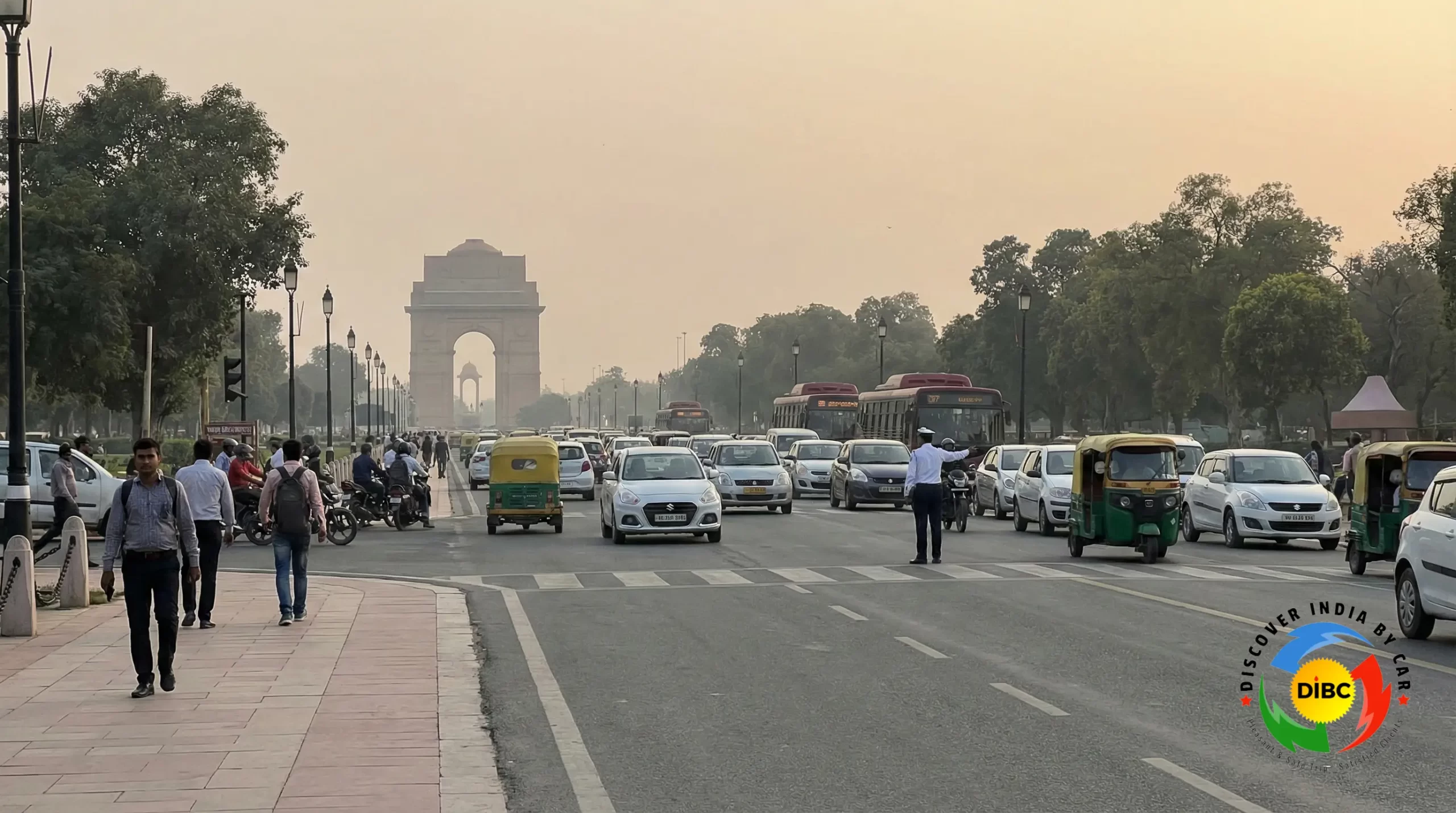
- Car Excursion: In the afternoon, drive down the Lutyens’ Zone (Kartavya Path). These are wide, European-style boulevards. You can actually drive peacefully here. Stop at India Gate (drive-by only, no stopping allowed on the main road) and head to Humayun’s Tomb (has a designated parking lot).
Day 3: Delhi to Agra (The Expressway)
Route: Yamuna Expressway (NE-3).
Time: 3.5 – 4 Hours.
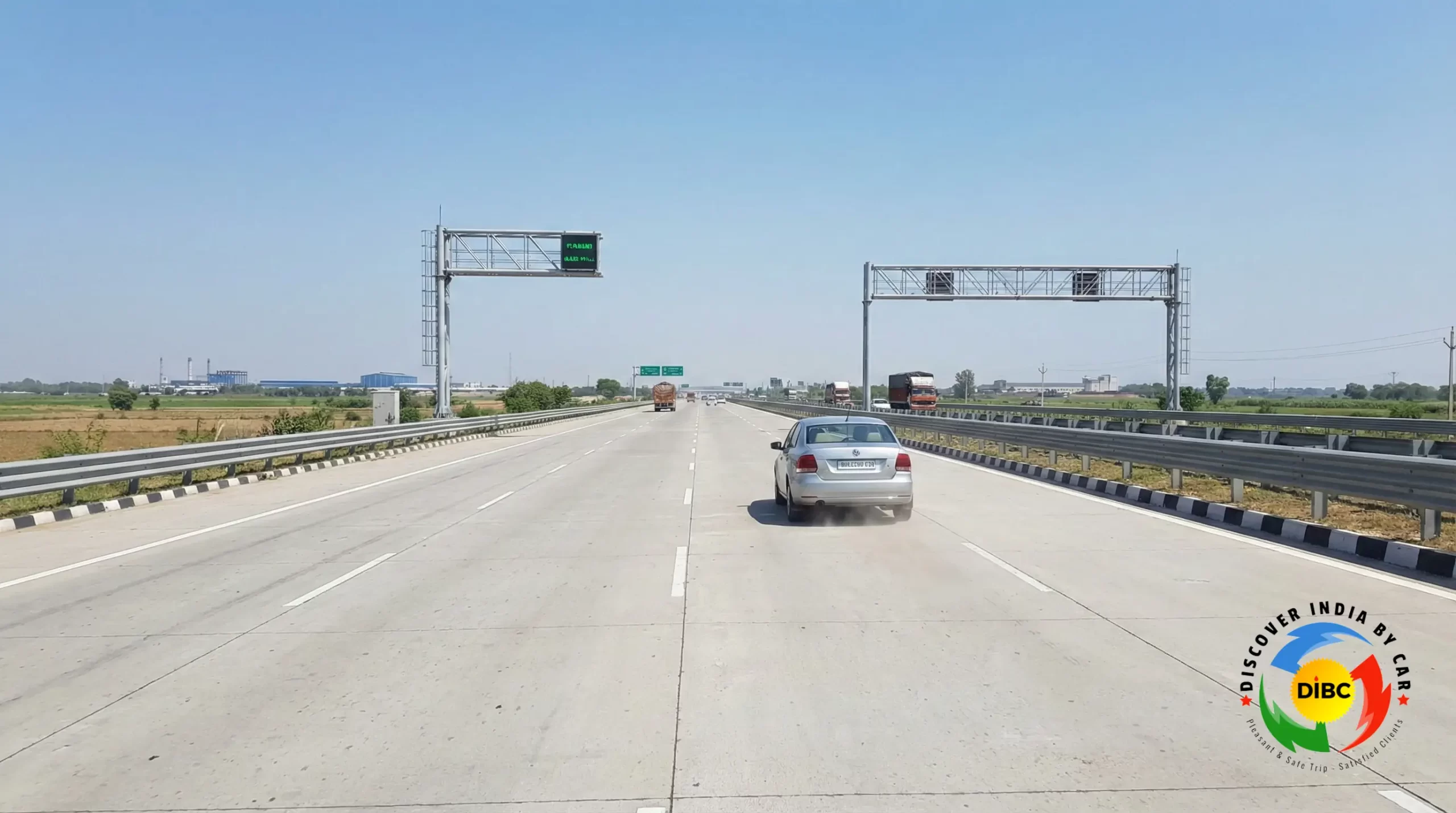
- The Drive: You will exit Delhi via Noida. Once you hit the Yamuna Expressway, it’s a shock—a massive, concrete 6-lane road that feels like an Autobahn.
- Speed Limits: 100 km/h. Cameras are active. Do not speed.
- Critical Stop: About halfway, there are clear “Public Convenience” rest stops. They are clean and have brands you know (Costa Coffee, Subway).
- The “gotcha”: The road is concrete. It gets loud and heats up tires. Highway hypnosis is real here because the road is dead straight for 160km. Keep the music loud.
Arrival in Agra: The exit from the expressway dumps you back into reality. Agra traffic is chaotic. Expect cows, cycle rickshaws, and potholes. Head straight to Taj Ganj (the hotel area near the Taj).
Day 4: Agra to Wildlife SOS
The Goal: Taj Mahal at sunrise + Ethical Travel.
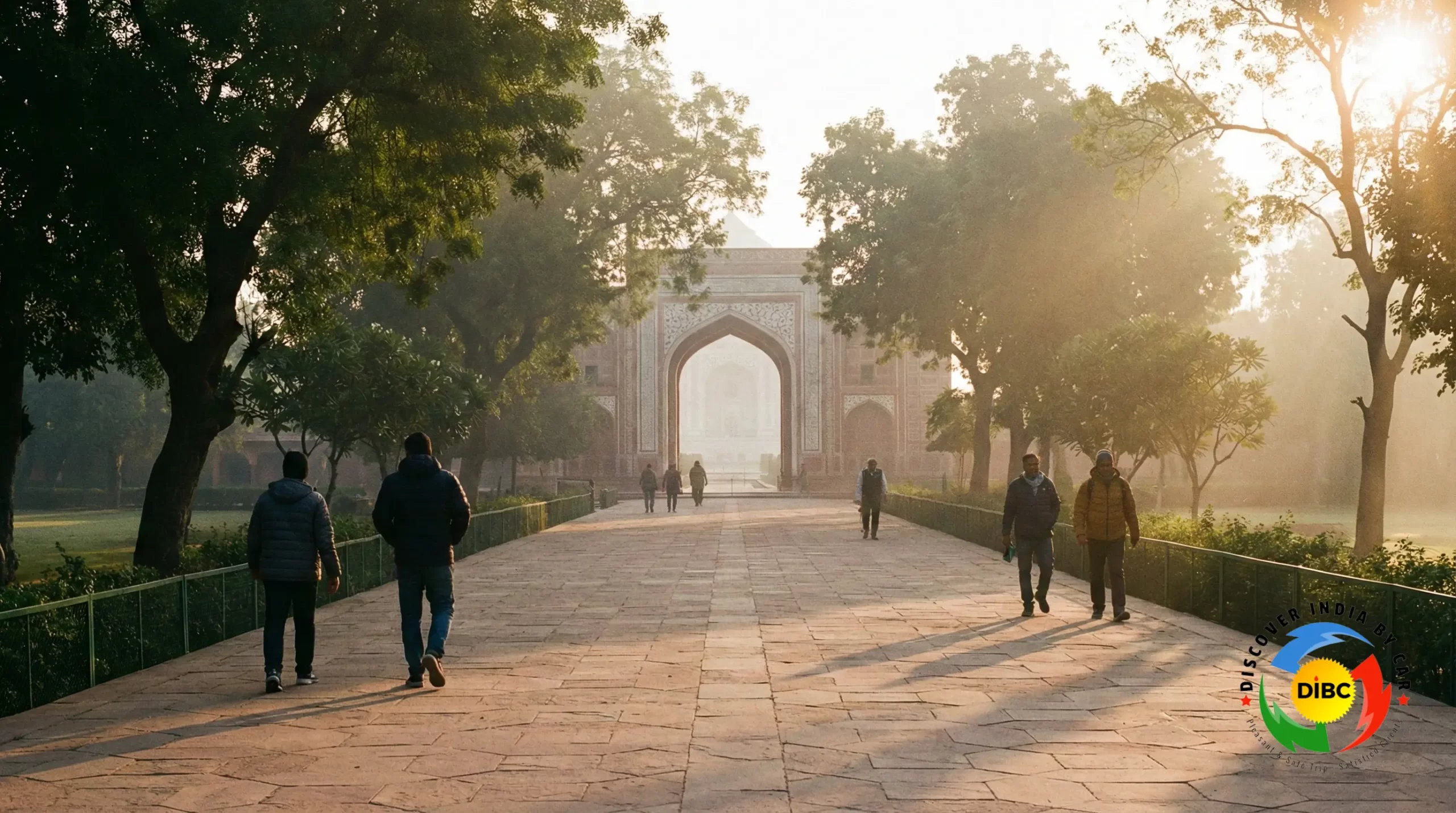
- Morning: Leave your car at the hotel. Cars aren’t allowed within 500 meters of the Taj Mahal due to pollution controls. You have to walk or take a golf cart. Go at sunrise (06:00 AM) to beat the crowds.
- Afternoon: This is what most itineraries miss. Drive 40 minutes out of Agra on the NH-19 to Wildlife SOS (Bear Rescue Facility). It’s an incredible sanctuary for dancing bears that have been rescued.
- Why drive here? The road takes you through real UP (Uttar Pradesh) countryside. You’ll see brick kilns, buffalo in ponds, and rural life up close. It’s perfectly safe and a welcome break from monuments.
Day 5: Agra to Jaipur (The Ghost City Route)
Route: Agra-Bikaner Highway (NH-21).
Time: 5 – 6 Hours (including stops).
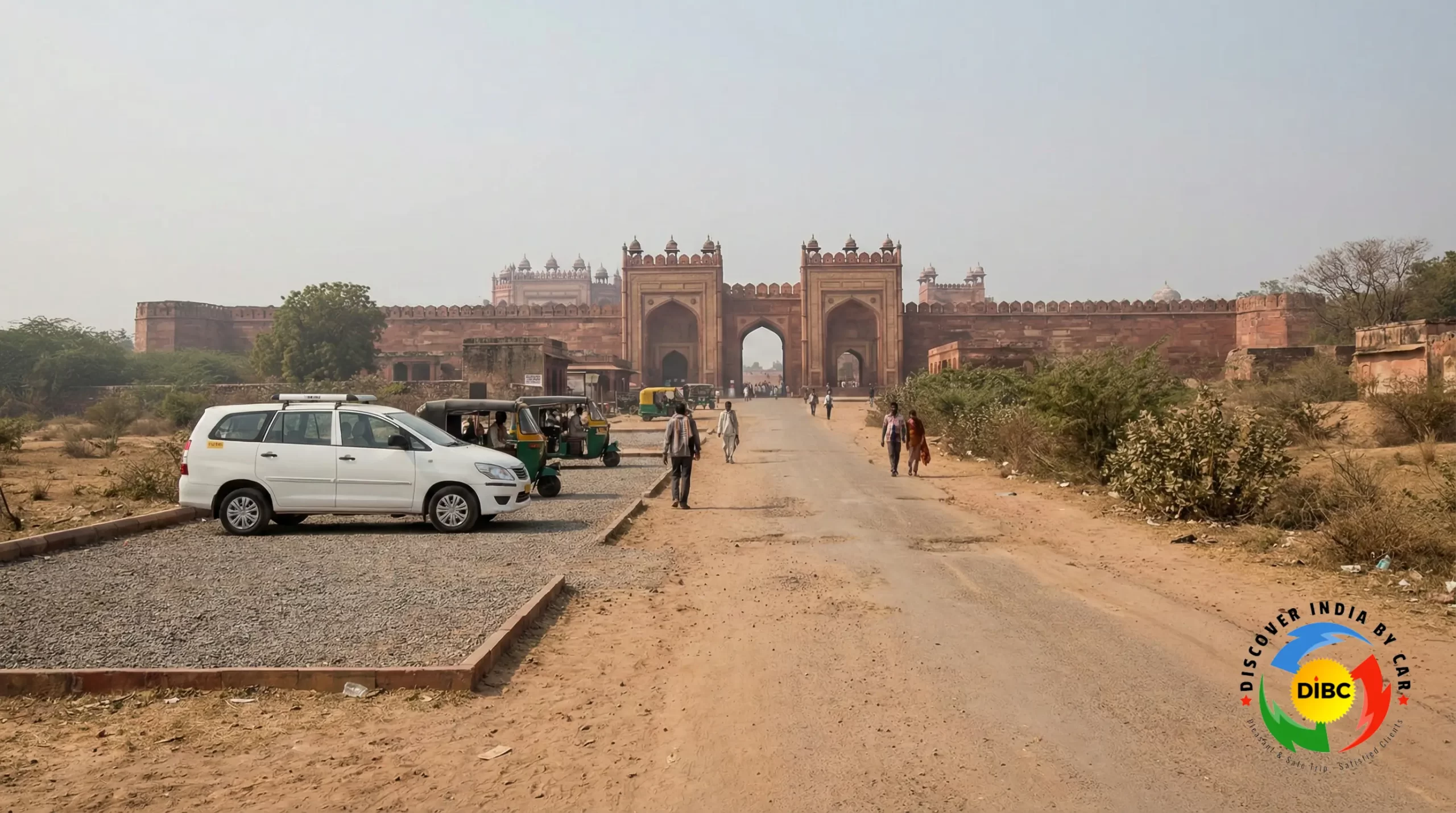
- Stop 1: Fatehpur Sikri. Located 1 hour from Agra.
- Parking Tip: Don’t listen to the guys waving flags on the road 1km before the monument claiming to be “Official Parking.” They are not. Drive until you see the actual ticketed UP Tourism parking lot at the base of the hill.
- The Drive: The road from Fatehpur Sikri to Jaipur is quintessential India. It narrows down. You will get stuck behind trucks loaded with hay that is twice the width of the truck. This is the best road trip in North India for photos—it’s dusty, raw, and vibrant.
- Snack Stop: Look for “Midway” resorts or “Highway King” dhabas. They cater to tourists with clean bathrooms.
- Jaipur Entry: Entering Jaipur happens through a tunnel in the Aravalli hills. It’s a dramatic entrance. The traffic suddenly shifts from trucks to motorcycles—thousands of them.
Day 6: Jaipur – Forts and Walled City
The Goal: Navigating the Pink City.
- Driving Experience: Jaipur has “The Pink City” (Old Walled City) and the new city.
- The Warning: Do not drive a wide SUV into the Walled City (Hawa Mahal area) between 10 AM and 7 PM unless you have nerves of steel. The lanes are packed.
- The Hack: Drive to Amer Fort early (8 AM). You can drive your car up the back service road all the way to the moon gate if you want to skip the main crowded entrance (Google Map: “Amer Fort Backside Parking”).
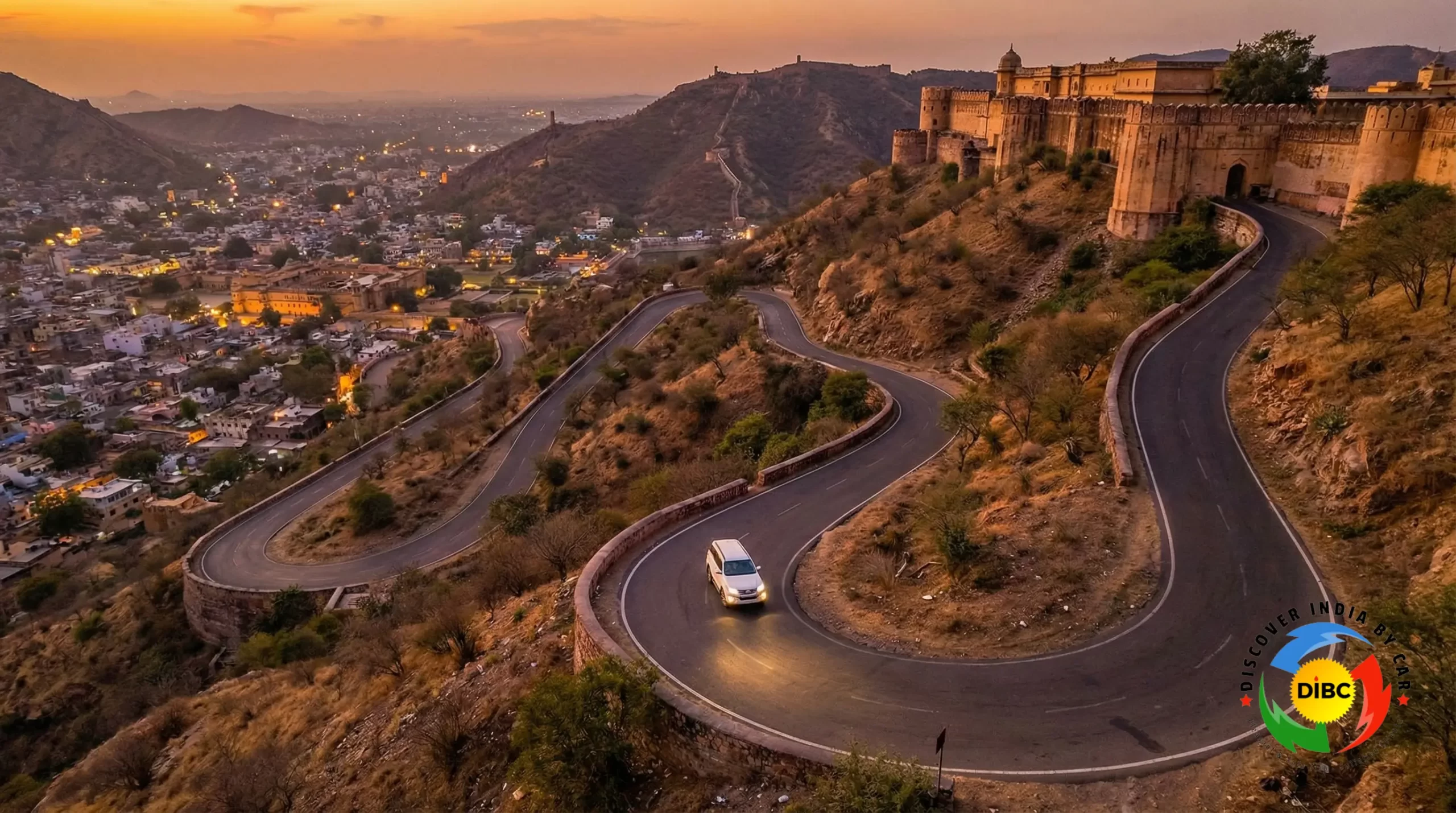
- Sunset Drive: Drive up to Nahargarh Fort. The winding road up the hill is fantastic for drivers—lots of hairpins—and offers the best sunset view over Jaipur. This is often a highlight for those planning extensive Rajasthan self-drive routes.
Day 7: Jaipur to Delhi (The Heavy Haul)
Route: NH-48.
Time: 5 – 6 Hours.
- The Drive: This is the return leg. It is one of the busiest cargo corridors in India.
- The Condition: Heavy truck traffic. You will spend a lot of time overtaking.
- Fatigue Check: Stop at Neemrana Fort for lunch. It’s a 15th-century fort turned hotel, right off the highway roughly halfway back. It breaks the chaotic drive into two manageable 2.5-hour chunks.
- Arrival: Plan to hit Delhi border before 5:00 PM. If you hit Gurugram (Gurgaon) at 6 PM, you will sit in traffic for two hours.
3 Things Nobody Tells You About Driving Here
- The “Right of Way” Hierarchy is Size-Based
In the West, signs dictate who moves. In India, Physics dictates it. The Bus beats the SUV. The SUV beats the Sedan. The Sedan beats the Motorbike. The Cow beats everyone.
If a truck is merging into your lane, do not honk and hold your ground. He assumes you will brake. Just brake. - Highway “Hotels” (Dhabas)
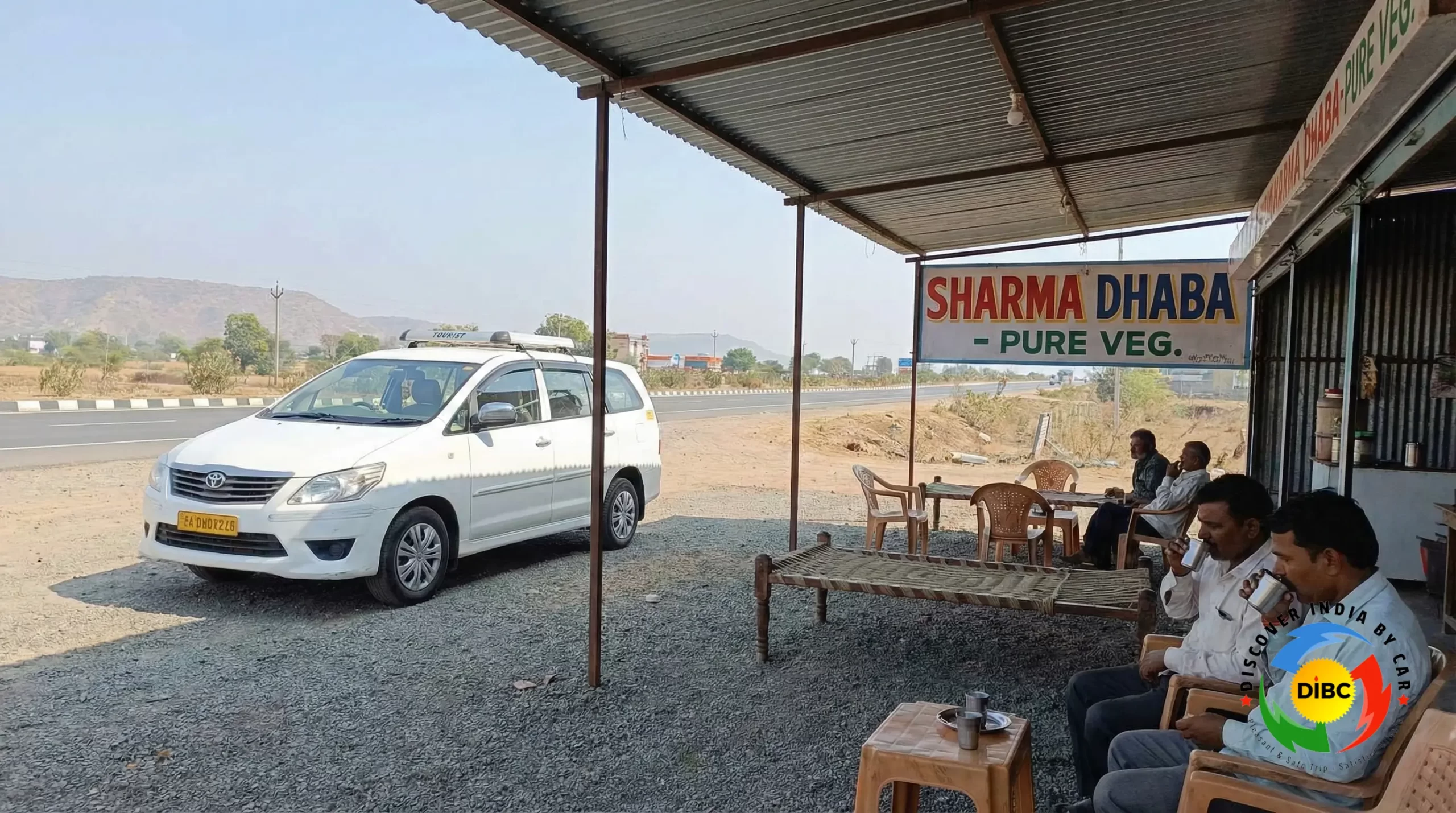
You’ll see places called “Hotel Yadav” or “Rajput Hotel” on the highway side. These aren’t places to sleep; “Hotel” basically means “Restaurant” in Indian highway slang. They have the freshest food (dal tadka, roti), but if you need a Western toilet, stick to the modern plazas. - Police Checkpoints
You might get waved down.
- If you have a foreign face: They usually just want to check your International Driving Permit (IDP) and car papers (RC). Smile, show the papers on your phone or paper, and 99% of the time they will wave you off.
- Do not bribe unless explicitly asked (rare these days with body cams). Being polite gets you out of trouble faster than anger.
Common Mistakes to Avoid
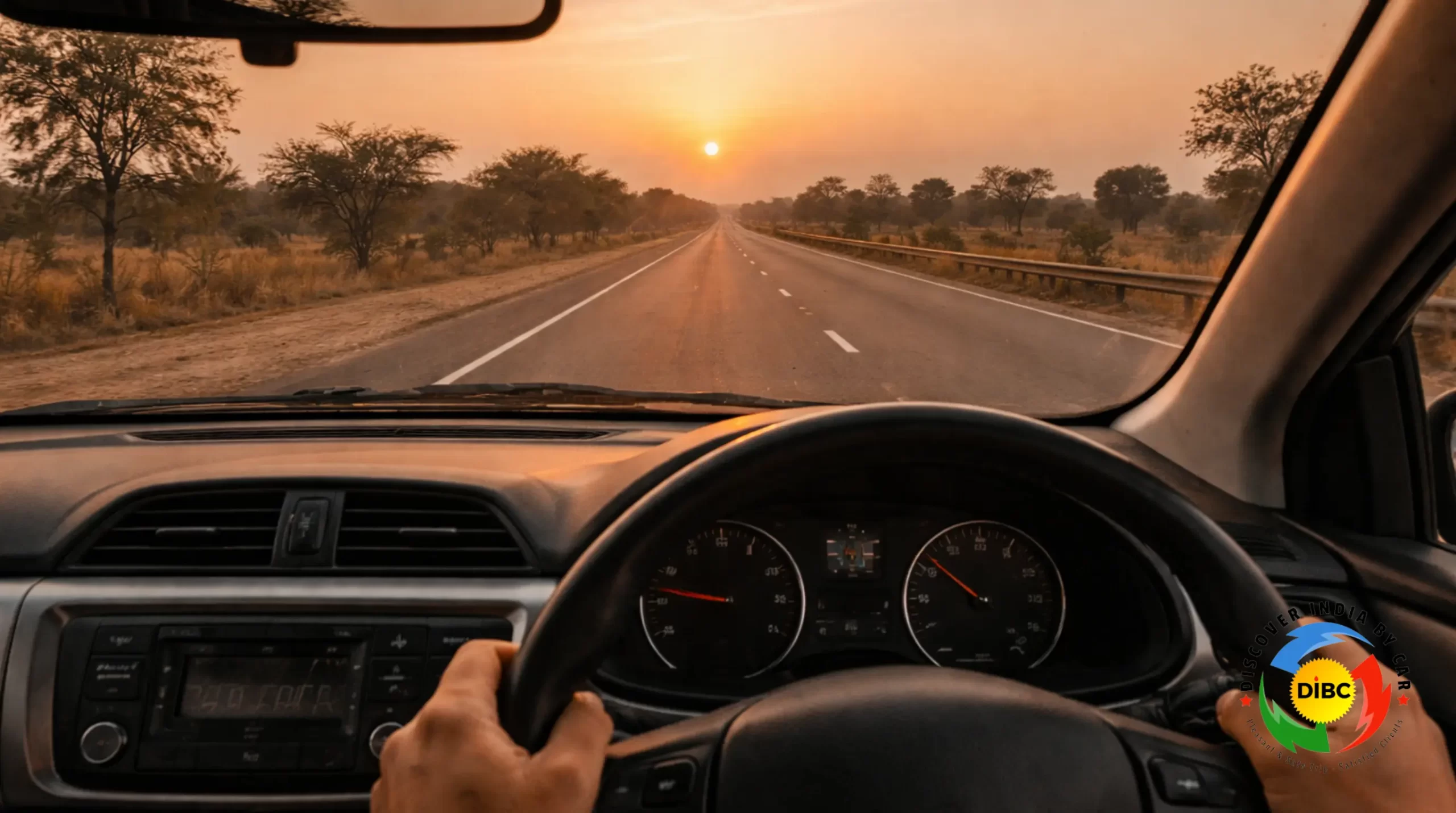
- Driving at Night: Just don’t. Seriously. Roads in India are lit by headlights, not streetlights. Tractors often drive with no lights. A buffalo looks exactly like the color of asphalt in the dark. Park the car by sunset.
- Trusting the “Flash”: In Europe, if someone flashes their headlights, it means “go ahead.” In India, a headlight flash means “Get out of the way, I am not stopping.“
- Parking Under Trees: In Agra and Jaipur, monkeys hang out in trees. They love ripping off rubber windshield wipers. Park in the open.
Cost Reality: 7-Day Road Trip Budget (Estimates)
Don’t let people tell you “India is dirt cheap.” Quality costs money. Below is a realistic budget for a comfortable, mid-range trip (per couple).
- Vehicle (Self-Drive SUV): $50 – $60 USD per day
- Includes: Rental fee and basic insurance.
- Vehicle (Car with Driver): $65 – $80 USD per day
- Includes: Driver’s allowance for food/sleep (Tip extra ~$7-10/day).
- Fuel: $140 – $160 USD total
- Basis: Diesel/Petrol is approx $1.15 USD/liter.
- Highway Tolls: $20 – $25 USD total
- Basis: Delhi to Agra to Jaipur full loop taxes.
- Monuments: $150 USD per person
- Basis: Foreigner entry fees (Taj Mahal alone is ~$14).
Total Estimated Cost (Couple): ~$1,500 – $1,800 USD (Including 4-star hotels, vehicle, and meals).
FAQ: Golden Triangle Road Trip
Q1. Is the Golden Triangle road trip safe for foreigners?
A: Yes. The route connecting Delhi, Agra, and Jaipur (NH-48, NH-19, NE-3) is one of the most traveled and policied tourist corridors in India. Infrastructure, including food plazas and repair shops, is excellent.
Q2. Can foreigners legally drive in India?
A: Yes. You can drive legally if you possess a valid International Driving Permit (IDP) alongside your original home country license. Rental agencies will mandatorily check this before handing over the keys.
Q3. Is it safe to drive at night in India?
A: No, it is generally advised against for foreigners. Highways are often unlit, and hazards like stray cattle, unlit tractors, or pedestrians can be difficult to spot after dark. Plan to end your drive by 6:00 PM.
Q4. Are road signs in English?
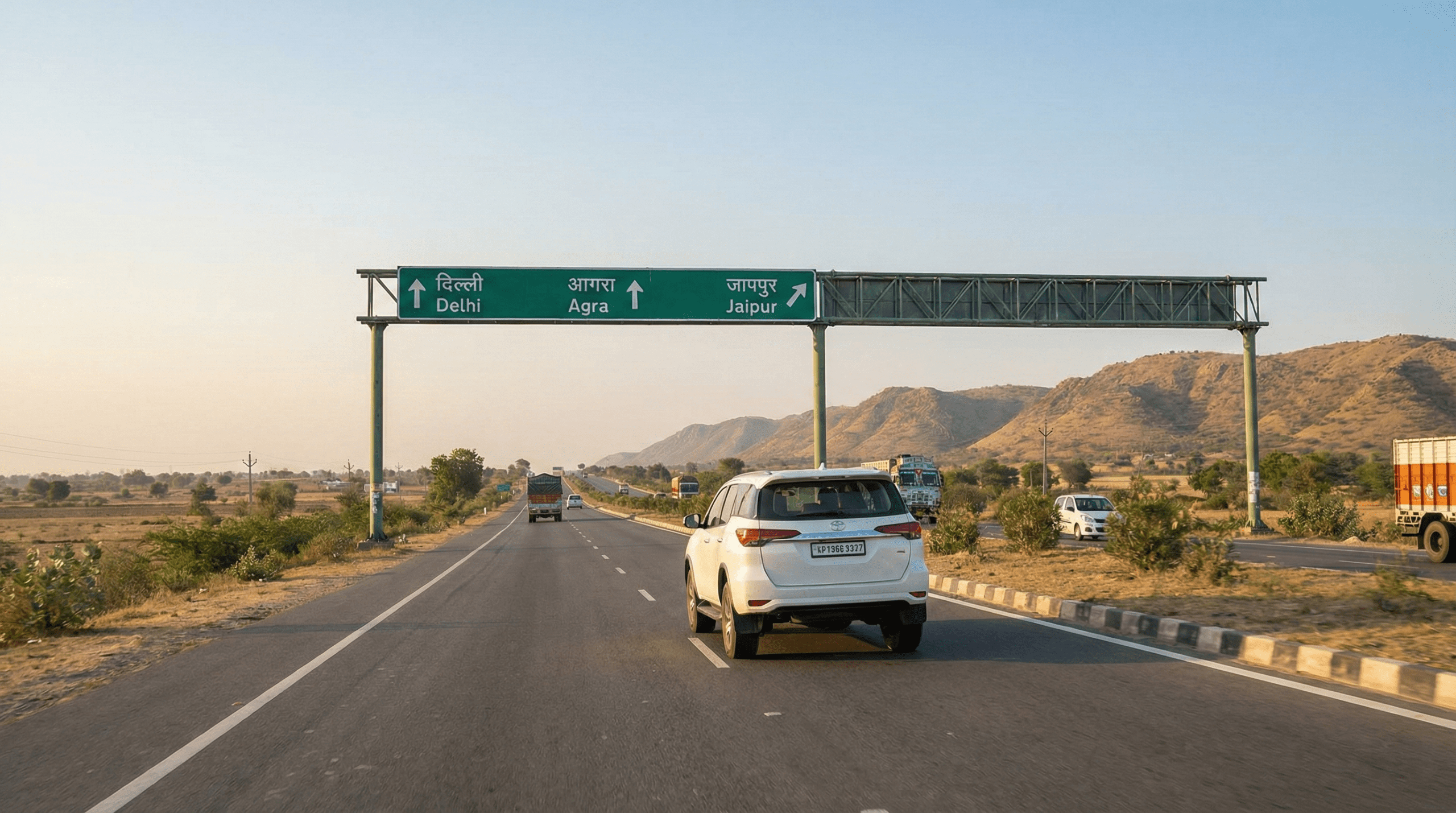
A: Yes. On this specific Golden Triangle route, 95% of overhead directional signs are in both Hindi and English, making navigation relatively easy.
Q5. Is the road trip suitable for first-time visitors?
A: Yes. This is the ideal starter route. Unlike the Himalayas or remote south, help is always nearby, phone reception is 100%, and tourism services are abundant.
Q6. Do I need a 4×4 vehicle?
A: No. The entire Golden Triangle loop is paved. A standard SUV or Sedan with decent ground clearance (for speed bumps) is sufficient.
Q7. Can solo foreign travelers do this road trip safely?
A: Yes, especially with a hired driver. This route is heavily tourist-oriented, well-policed, and has reliable mobile coverage throughout.
Final Verdict: Should You Do It?
Driving from Delhi to Agra to Jaipur isn’t a vacation where you switch your brain off. It’s high-stimulation travel.
If you want a trip where everything goes perfectly to plan, take the train. But if you want a trip where you learn to navigate the beautiful, organized chaos of India, share laughs with toll booth operators, and feel the dust on your face?
Grab the keys. The road is open. This remains the safest and most balanced self-drive experience for your first visit to India.
(Got questions about rental agencies? Drop a comment below—I’ve used them all, and I know which ones refund your deposit and which ones don’t.)


