- Private car and driver in Delhi / India
- +91-8447445445
- info@discoverindiabycar.com sugar.ankit@yahoo.com
 +91-9818434712
- Follow us:



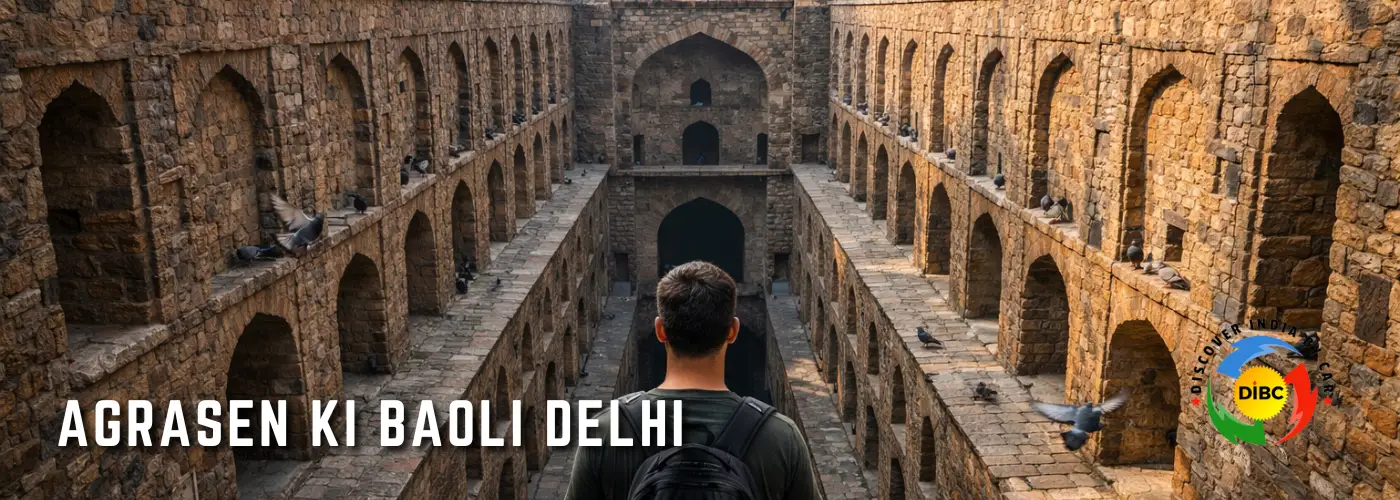
Agrasen Ki Baoli Delhi – Metro Route, Best Time & Tips
Agrasen Ki Baoli Is Not Just a Monument – Why It Feels So Different When You Visit
Imagine standing in the heart of New Delhi. You are surrounded by the deafening noise of traffic, towering skyscrapers, and the endless rush of Connaught Place. You take a turn onto a quiet, narrow lane called Hailey Road, walk a few hundred meters, and suddenly—everything stops.
You have arrived at Agrasen Ki Baoli.
The moment you step through the small arched entrance, the modern world vanishes. It doesn’t just get quiet; the silence here has a weight to it. For first-time visitors, this transition is almost shocking. Unlike the grand, open forts of Delhi, this monument pulls you in and down.
This is not just another historical site; it is an atmospheric experience that changes as you descend its ancient steps. While many guidebooks will give you dates and dynasties, this Agrasen Ki Baoli visitor guide is designed to tell you what the place actually feels like, how to plan your trip perfectly, and why this hidden gem has become a magnet for photographers, travelers, and curiosity seekers alike.
What Is Agrasen Ki Baoli?
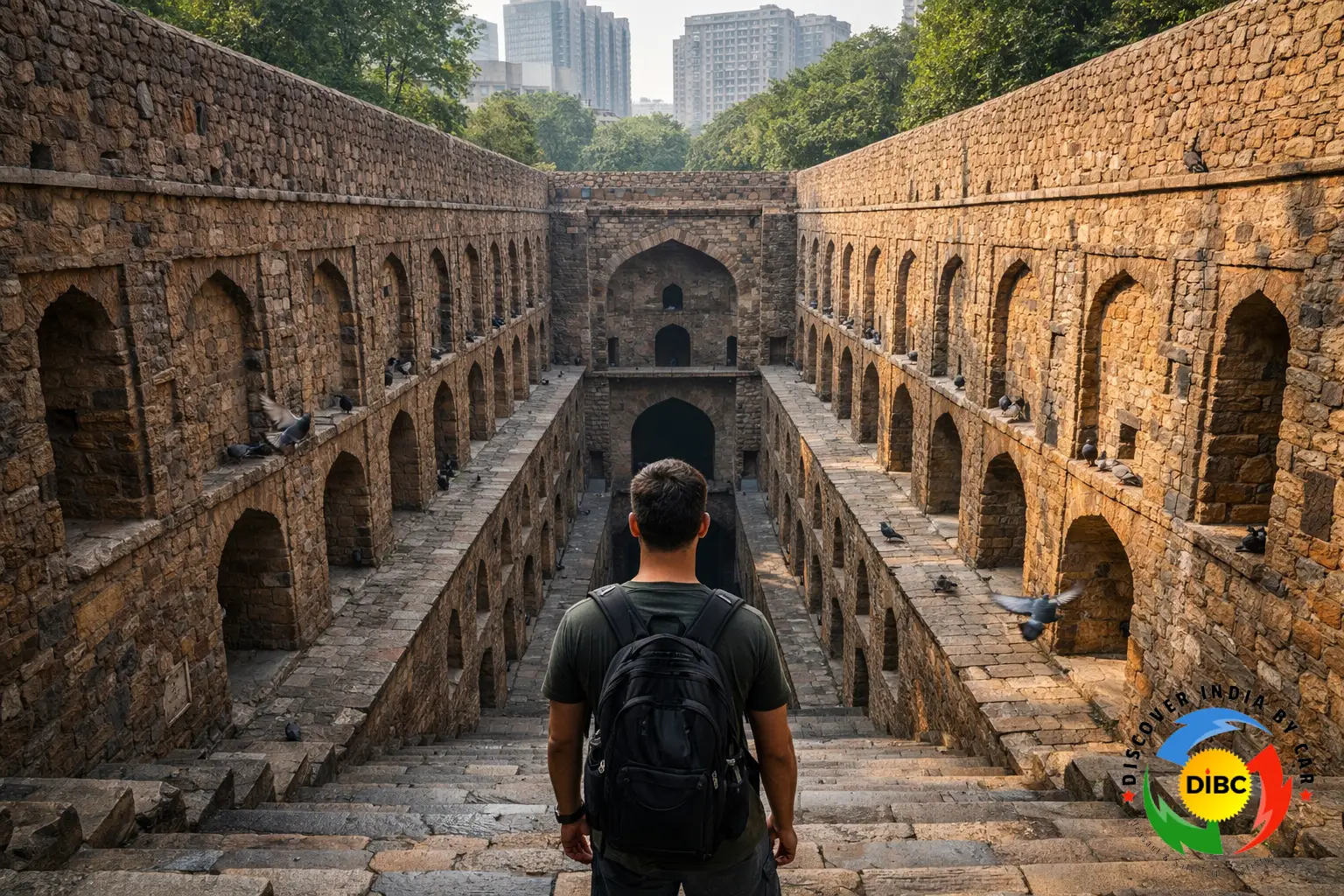
To put it simply, Agrasen Ki Baoli is a historic stepwell. In Hindi, a ‘Baoli’ refers to a deep well accessed by steps.
Centuries ago, before modern plumbing, these structures were crucial for water harvesting in India’s arid climate. They weren’t just wells; they were community gathering spots where locals would escape the scorching summer heat.
While Delhi has many baolis, Agrasen Ki Baoli stepwell stands out because of its incredible preservation and sheer scale. It is 60 meters long and 15 meters wide, slicing into the earth with architectural precision. Today, it remains a protected monument under the Archaeological Survey of India (ASI), serving as a window into the past right in the middle of the capital’s most expensive real estate.
Why Agrasen Ki Baoli Feels Different From Other Delhi Monuments
Most monuments in Delhi, like the Red Fort or Humayun’s Tomb, are about looking up at grandeur. Agrasen Ki Baoli is about looking down into the earth. This fundamental difference creates a unique psychological impact on visitors.
- The Symmetry and Depth
The architecture is mesmerizingly symmetrical. As you stand at the top, three levels of arched niches (alcoves) flank the staircase on both sides, creating a vanishing point that draws your eye deep into the well. This is what makes Agrasen Ki Baoli unique—it looks like a gateway to another world.
- The Temperature Drop
It is a known fact among locals that as you descend the 108 steps, the temperature drops noticeably. The ancient stonework retains coolness, and the depth protects the bottom levels from direct sunlight. This makes the Agrasen Ki Baoli experience distinct, almost as if nature and architecture are working together to shield you from the city heat.
- The Sudden Silence
The deeper you go, the fainter the city sounds become. By the time you reach the water level (or the dry bed, depending on the season), the honking of cars is replaced by the cooing of hundreds of pigeons that nest in the stone walls. It is this haunting silence that makes people ask: why Agrasen Ki Baoli feels different?
The Story Behind Agrasen Ki Baoli (History, Without Boring You)
The origins of this stepwell are shrouded in mystery, which adds to its allure.
The Legendary Origins
Legend says that the original structure was built by the legendary Maharaja Agrasen during the Mahabharata era. This connects Agrasen Ki Baoli history to ancient mythology, though there is no concrete archaeological proof to date the original foundation back that far.
The Medieval Rebuild
The structure you see today—with its distinct Islamic architectural arches and dressed stones—was likely rebuilt during the 14th century, possibly during the Tughlaq or Lodi period of the Delhi Sultanate. The mix of history suggests that while the concept may be ancient, the stones tell a medieval story.
This lack of definitive records is actually a good thing for visitors; it allows you to stand there and imagine the centuries of people who walked those same steps to fetch water, unrelated to a specific textbook date.
Architecture Explained in Simple Words (For Non-Historians)
You don’t need to be an architect to appreciate the brilliance here. When visiting Agrasen Ki Baoli, look out for these details:
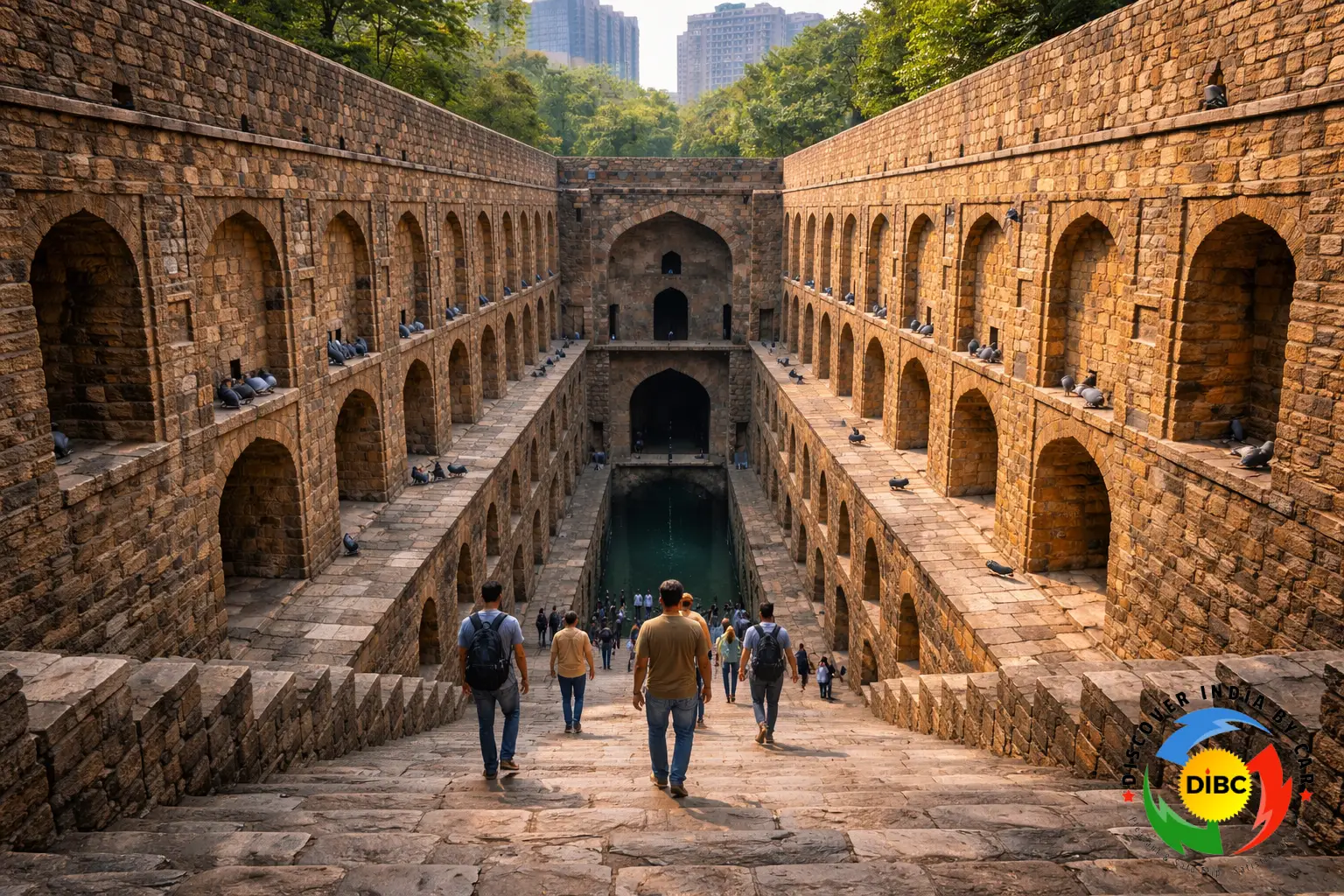
- Three Visible Levels: While the Baoli is deep, three distinct levels are visible, each lined with arched niches. In the past, these niches would have provided shade for people resting.
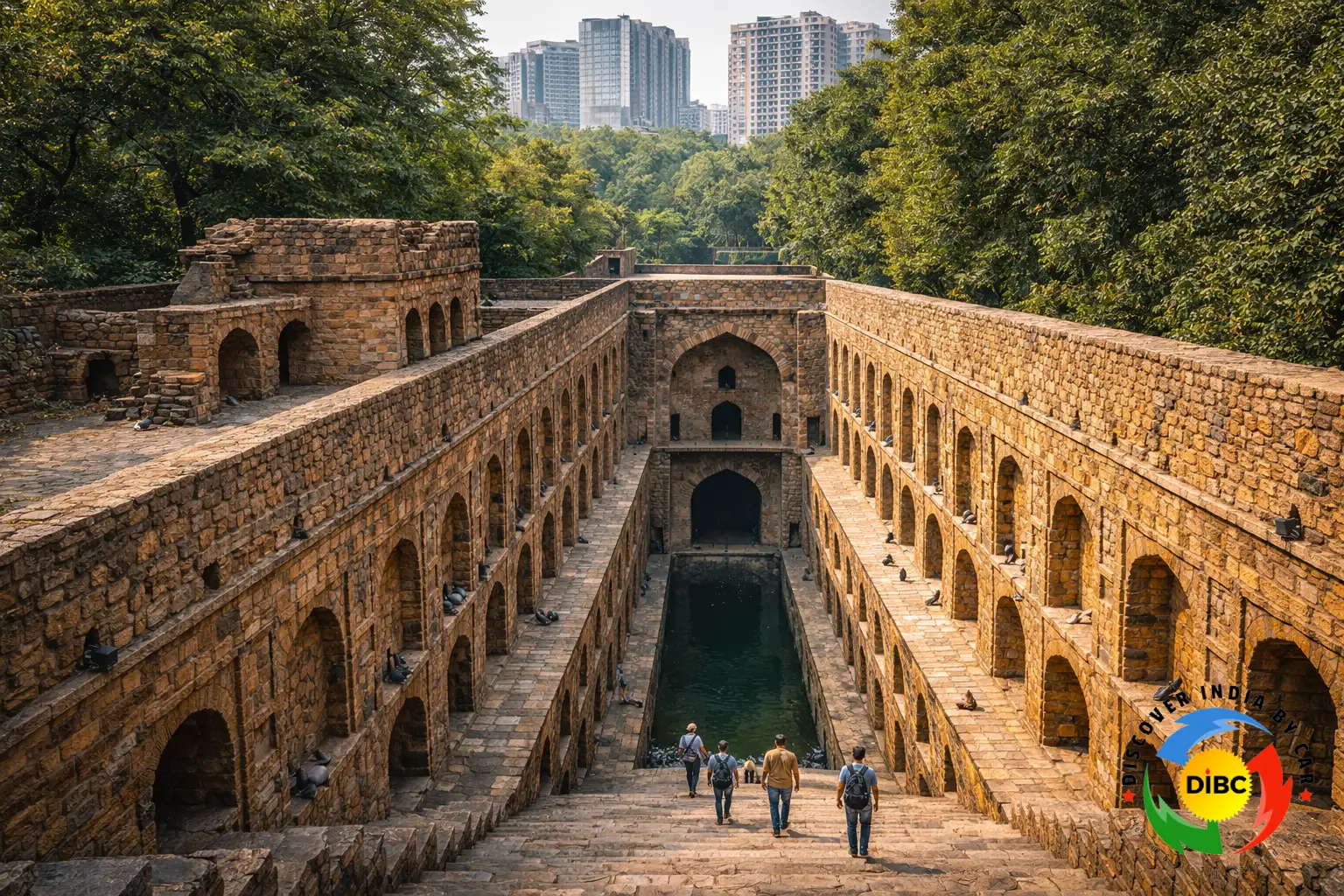
- The Northern End: At the northern end of the Baoli, there is a raised platform which was likely part of a mosque roof. The structure is broken, but the intent is visible.
- Rough vs. Dressed Stone: Unlike the smooth marble of the Taj Mahal, this is built from red sandstone and rubble masonry, giving it a raw, texture-heavy look that is perfect for Agrasen Ki Baoli photography.
Exact Location & Surroundings
Finding this place can be tricky if you trust Google Maps blindly, as the entrance is easy to miss.
Agrasen Ki Baoli location is officially on Hailey Road, near Kasturba Gandhi Marg. It is technically in the Connaught Place (CP) area, but tucked away in a residential/cultural zone. The neighborhood is starkly different from the commercial chaos of CP. It is lined with high-end residential apartments and cultural centers, making the walk towards the Baoli quite pleasant.
If you are planning a trip, realize that you are just minutes away from the busy circles of CP, yet the Baoli feels secluded. This is Agrasen Ki Baoli near Connaught Place at its best—accessible yet hidden.
How to Reach Agrasen Ki Baoli
This is the most critical part for your trip. Getting lost in Delhi is easy; here is exactly how to reach Agrasen Ki Baoli.
Nearest Metro Station & Exit
The most reliable way is the Delhi Metro.
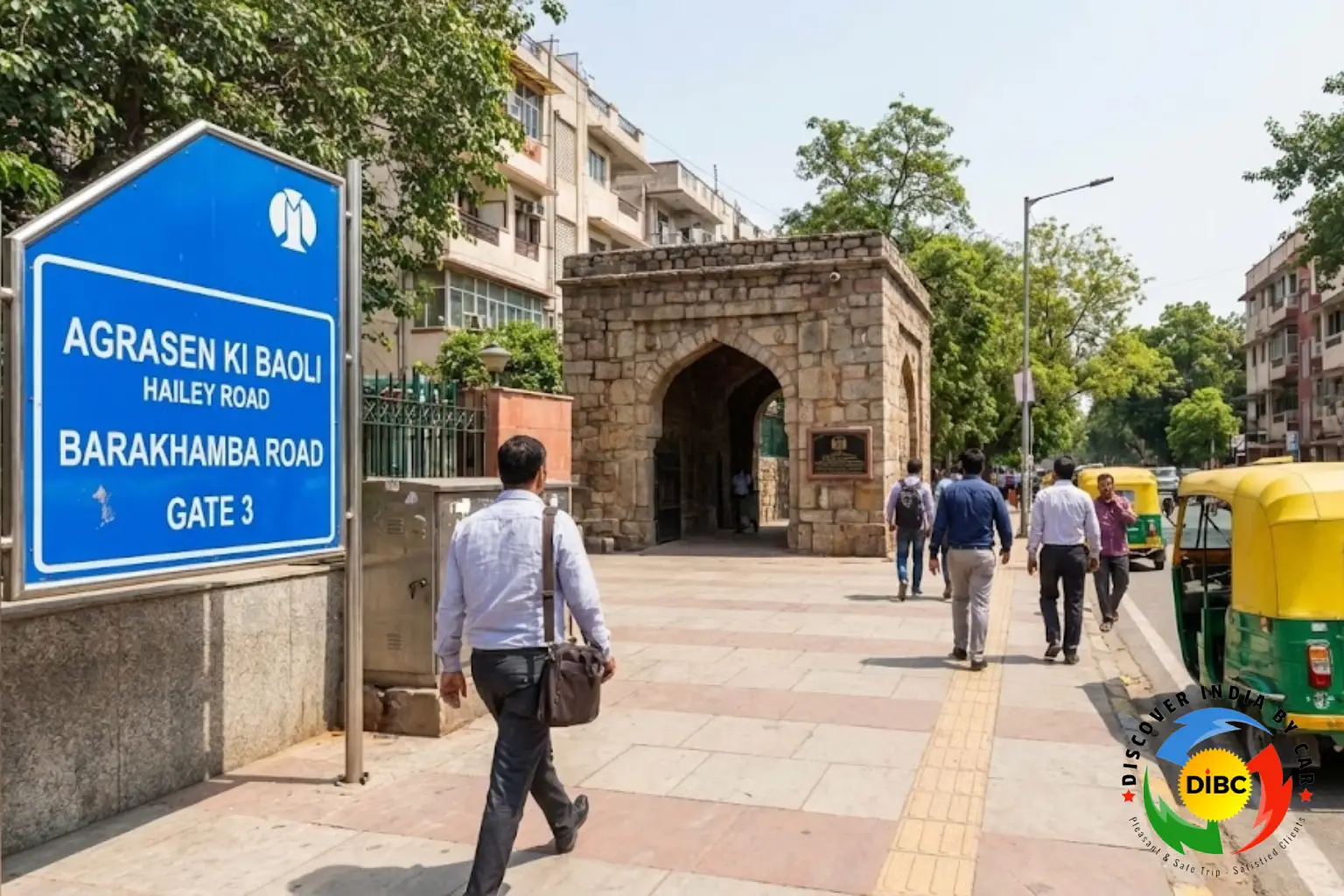
- Agrasen Ki Baoli nearest metro station: Barakhamba Road Metro Station (Blue Line).
- Exit Guide: Take Gate Number 3.
- Walking Route: From Gate 3, it is a 10-12 minute walk (approx. 800 meters). You will walk towards KG Marg, turn right onto Hailey Road. Look for the narrow entrance with an ASI plaque.
Alternative: You can also come from Janpath Metro Station (Violet Line), but the walk is slightly longer (15 minutes).
Reaching by Car or Cab
If you are typing “Agrasen Ki Baoli from Connaught Place” into Uber or Ola, set the destination specifically to “Agrasen Ki Baoli, Hailey Road”.
- Parking Warning: There is strictly no parking inside the premises and finding parking on Hailey Road is a nightmare. It is highly recommended to park your car at a CP parking lot (like the inner circle parking) and take an auto or walk.
From Connaught Place (On Foot)
If you are already in CP for shopping, you don’t need a vehicle. Just walk towards the Outer Circle near the K.G. Marg exit. It is a roughly 15-minute straight walk. This is a popular Agrasen Ki Baoli metro route alternative for young explorers.
Best Time to Visit Agrasen Ki Baoli
Is Agrasen Ki Baoli worth visiting at 2 PM in June? Absolutely not. You will roast.
The Ideal Time
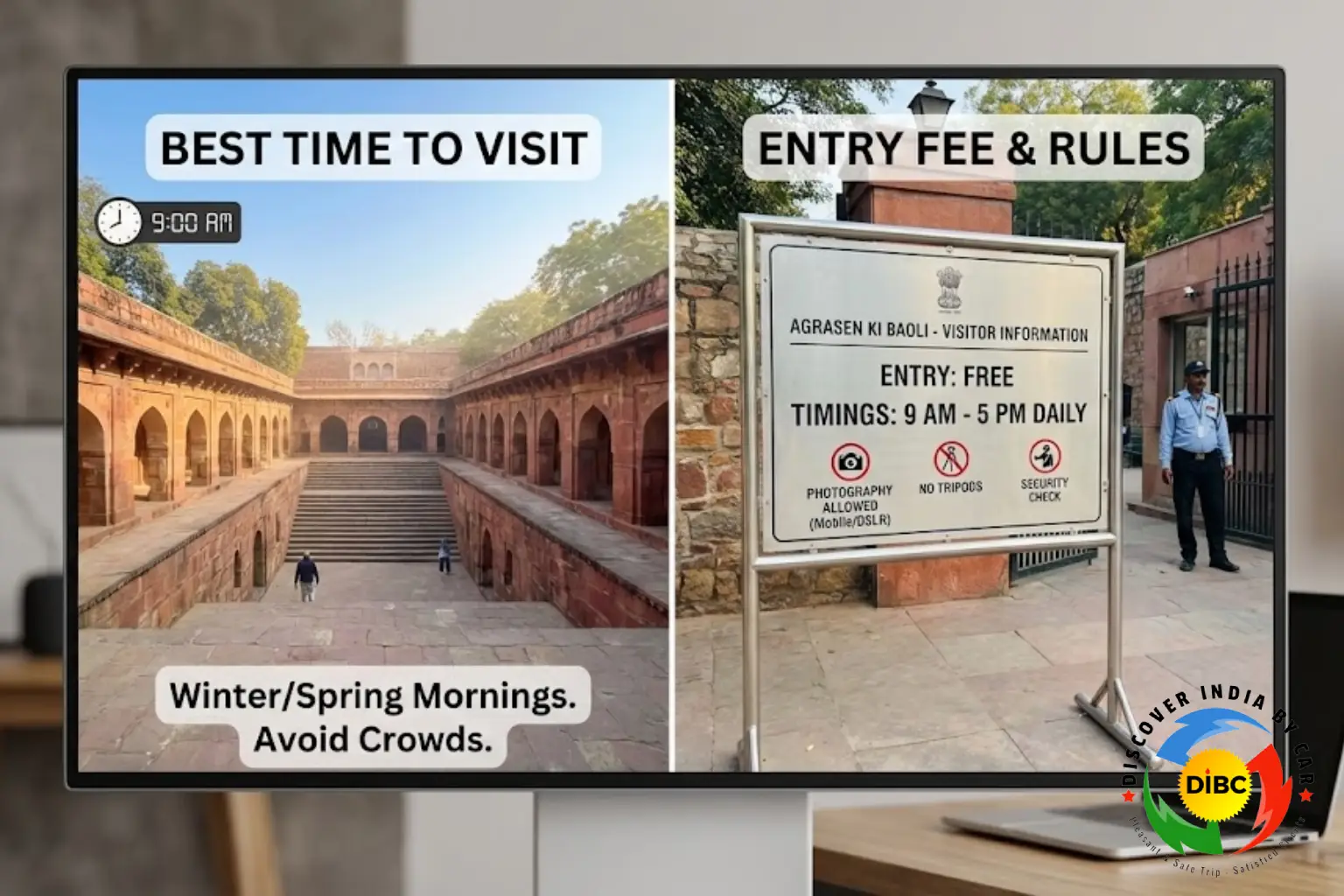
- Best Time of Year: October to March (Winter/Spring). The weather is pleasant for walking the steps.
- Best Time of Day: The best time to visit Agrasen Ki Baoli is early morning, right when it opens at 9:00 AM.
- Why Early? By 11:00 AM, the college crowds and Instagram reel-makers arrive. If you want silence and clean photos, be the first one there.
Monsoon Magic
Visiting during the monsoon (July-August) is visually stunning. The red stones turn dark and moody, and the bottom of the well might actually hold some water. However, the steps become very slippery, so be cautious.
Entry Fee, Timings & Visitor Rules
Here is the logistics check for visiting Agrasen Ki Baoli:
- Agrasen Ki Baoli entry fee: Incredible news—it is Free. There is no ticket for Indians or foreigners.
- Agrasen Ki Baoli timings: Open daily from 9:00 AM to 5:00 PM.
- Security: There is a guard at the gate. Large bags may be checked.
- Photography Rules: DSLR and mobile photography are allowed. However, professional video shoots often require prior ASI permission. Tripods are generally not allowed as they obstruct the narrow steps.
Photography & Reel-Making Guide
This monument is a social media superstar. If you are looking for Agrasen Ki Baoli Instagram reels ideas or the best photography spots in Agrasen Ki Baoli, here is your cheat sheet:
- The Symmetry Shot
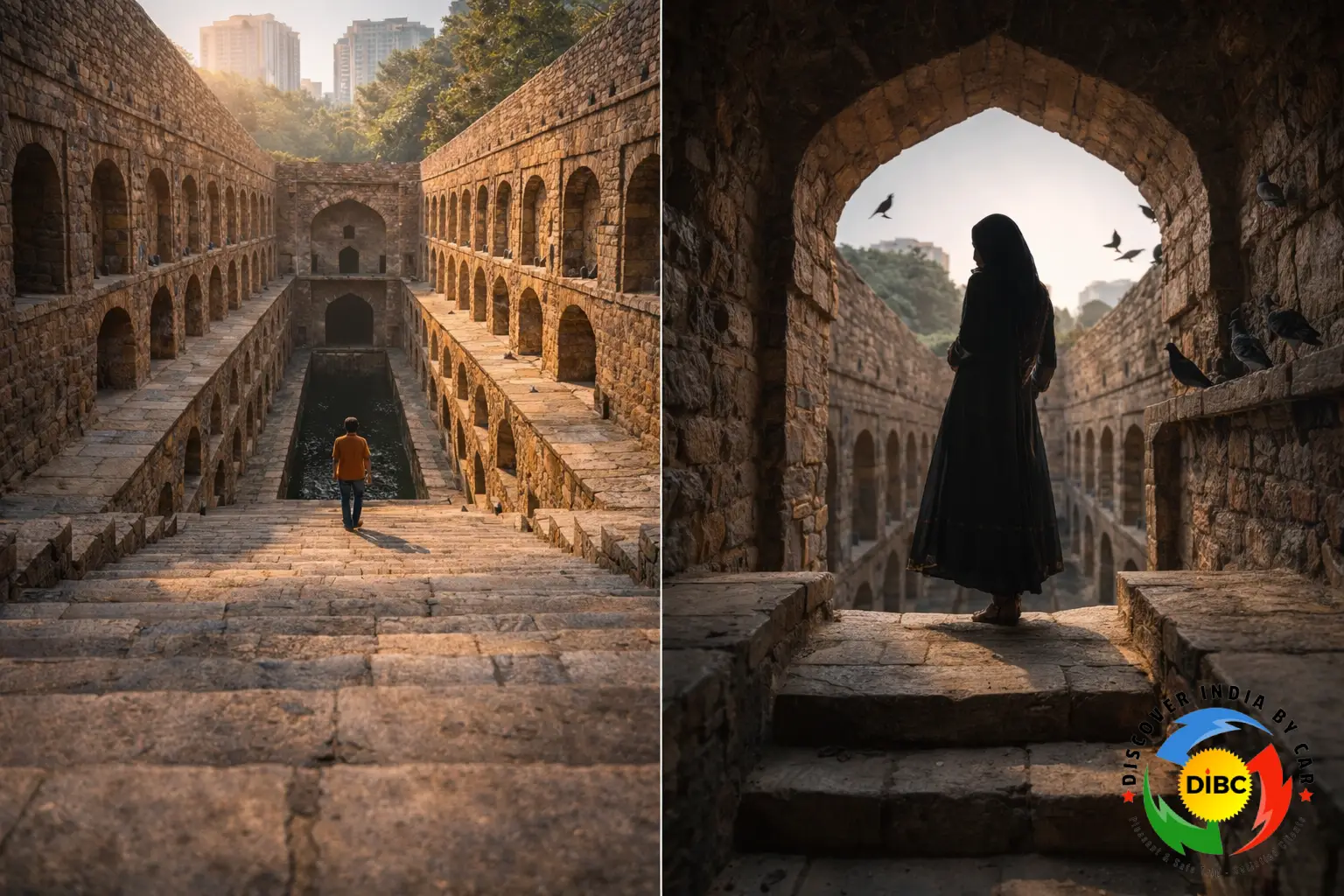
Stand at the very first step at the top. Center your camera perfectly. The leading lines of the walls create a perfect “V” shape going down. This is the classic shot.
- The “Tiny Human” Perspective
Have your friend stand 3-4 levels down while you shoot from the top. The massive walls make the person look tiny, emphasizing the scale of the Agrasen Ki Baoli monument.
- The Silhouette Frame
Go down to the lower levels and look up. Place your subject in one of the arched niches against the light coming from the open sky. This creates a dramatic silhouette.
- Reel Ideas
Walk down the stairs slowly with the camera following you (POV style). The transition from the bright top to the shadowy bottom creates a natural “mood shift” effect that works great for Agrasen Ki Baoli photography.
Haunted Stories & Myths – Fact vs Reality
It is impossible to discuss this place without asking: is Agrasen Ki Baoli haunted?
Search engines are full of Agrasen Ki Baoli haunted stories. The most common myth is about the “Black Water.” Legend says that centuries ago, the well was filled with mystical black water that lured people to jump in and commit suicide. It is said the water had a hypnotic effect.
The Reality
Agrasen Ki Baoli myths and facts are often blurred. Today, the well is mostly dry or contains dirty rainwater. There is no hypnotic black water.
However, the vibe can be spooky. The acoustics of the Baoli amplify sounds—a pigeon fluttering its wings can sound like footsteps behind you. The sheer silence in the middle of a noisy city unsettles the mind, leading to these stories. Is it unsafe? No. Is it eerie? Yes, especially near closing time.
Things to Do Near Agrasen Ki Baoli
Since the Baoli takes only about 45 minutes to explore, you should combine it with places near Agrasen Ki Baoli:
- Connaught Place (CP): Walk back to CP for lunch at iconic cafes like Wenger’s or United Coffee House.
- Janpath Market: A 15-minute walk away. Great for cheap clothes and handicrafts.
- Dhobi Ghat: Just behind the Baoli is a traditional laundry yard (Dhobi Ghat), which is a photographer’s delight.
- India Gate: A short auto-rickshaw ride away.
These Agrasen Ki Baoli nearby attractions make for a perfect half-day South Delhi itinerary.
Important Tips for First-Time Visitors
To ensure your Agrasen Ki Baoli experience is smooth, keep these tips in mind:
- Wear Grip Shoes: The stones are old and worn out. High heels are a dangerous choice here. Wear sneakers.
- Bring Water: There are no shops inside the monument boundary.
- Respect the Architecture: Don’t scribble your name on the walls (unfortunately, many have).
- Network Issues: As you go deep into the stepwell, your mobile signal might drop. It’s a great excuse to disconnect!
- Bat Warning: If you are scared of bats or pigeons, avoid the very bottom chamber, as thousands roost there.
Interesting Facts About Agrasen Ki Baoli
- It is one of the best-preserved stepwells in Delhi but has no historical record of who exactly commissioned the current structure.
- The Baoli became nationally famous after being featured in the Bollywood blockbuster movie PK (starring Aamir Khan). Since then, it is often called the “PK Baoli” by locals.
- It has 108 steps (a sacred number in Hinduism), though the count varies depending on sediment levels at the bottom.
- It serves as a massive drainage basin; during heavy rains, water flows into it from the surrounding elevated ground.

FAQs About Agrasen Ki Baoli
Q1: Is Agrasen Ki Baoli safe to visit?
Yes, it is very safe. It sits in a high-security zone near police headquarters. However, avoid leaning over the edges of the walls as there are no railings.
Q2: How much time is required for Agrasen Ki Baoli?
You need about 45 minutes to 1 hour. This gives you enough time to walk down, sit for a while to soak in the silence, and take photos.
Q3: Is photography allowed at Agrasen Ki Baoli?
Yes, Agrasen Ki Baoli photos are allowed for personal use. Commercial shoots need permission. Drone usage is strictly prohibited.
Q4: Is Agrasen Ki Baoli open every day?
Yes, it is open from Monday to Sunday, 9 AM to 5 PM.
Q5: Why is Agrasen Ki Baoli famous?
Why is Agrasen Ki Baoli famous? It is famous for its architectural beauty, its claim of being haunted, and its stark contrast to the modern city surrounding it.
Q6: Is there an entry ticket?
No, entry is completely free.
Conclusion
Agrasen Ki Baoli is a reminder that in a city obsessed with the future, the past is still quietly waiting underground. Whether you are a photographer chasing light and shadow, a traveler looking for a quiet corner, or someone fascinated by Agrasen Ki Baoli haunted stories, this stepwell delivers an experience unmatched by any other monument in Delhi.
If you are visiting Agrasen Ki Baoli, don’t just click a photo and leave. Walk down, sit on a stone step, and listen to the silence. In a city like Delhi, that silence is the biggest luxury of all.