- Private car and driver in Delhi / India
- +91-8447445445
- info@discoverindiabycar.com sugar.ankit@yahoo.com
 +91-9818434712
- Follow us:



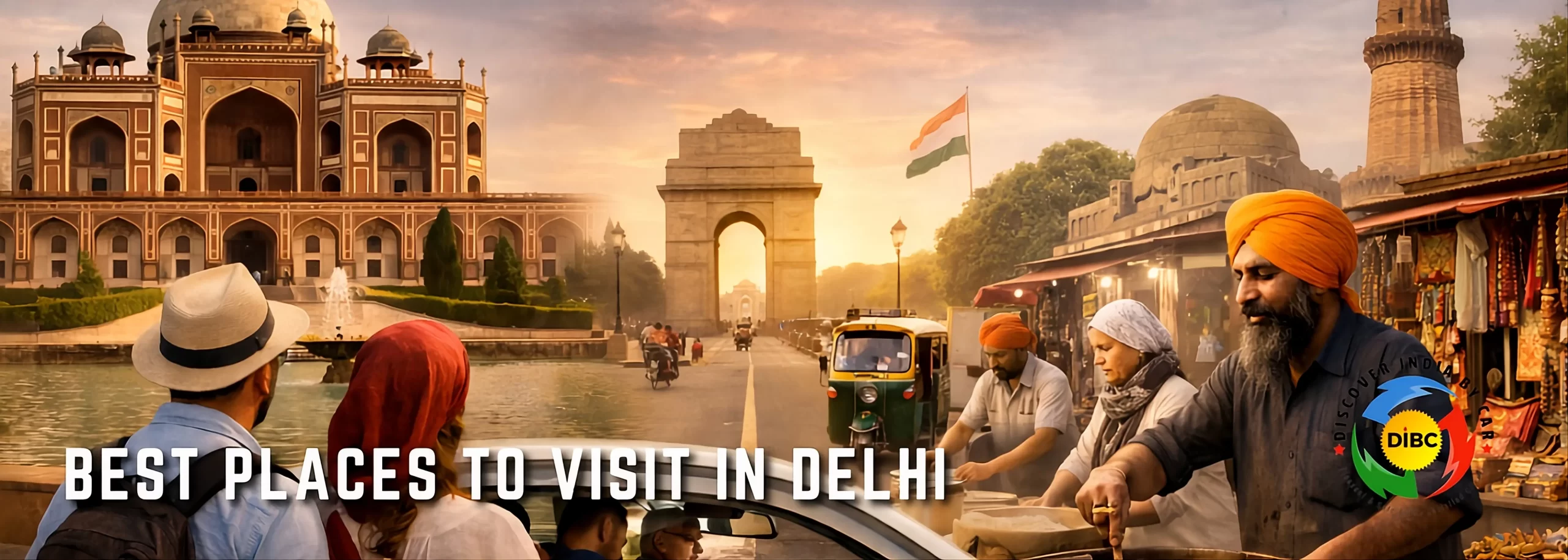
Best Places to Visit in Delhi for First-Time Foreign Travelers
Best Places to Visit in Delhi for First-Time Foreign Travelers: An Insider’s Survival Guide
You are probably reading this because you’ve heard the stories.
Everyone who has been to India has a “Delhi story.” Some are about getting scammed by a taxi driver within five minutes of leaving the airport. Others are about the “Delhi Belly” that knocked them out for three days. But then, there are the stories about the light hitting the red sandstone of Humayun’s Tomb at sunset, or the unbelievable taste of butter chicken that ruins all other curry for you forever.
Here is the truth: Delhi is aggressive. It is loud, dusty, and absolutely relentless. If you try to fight it, you will lose.
But if you know how to move through it—if you know which battles to pick and which streets to avoid—it is one of the most rewarding cities on earth.
This isn’t a generic list of “Top 10 Attractions.” You can find that on TripAdvisor. This is a strategic Delhi travel guide for foreigners designed for your first 48 to 72 hours in India. This is how you land, survive, and actually fall in love with the chaos without letting it crush you.
Written for discoverindiabycar.com—because the best way to see India is on the road, on your own terms.
Is Delhi Suitable for First-Time Foreign Travelers?
Delhi is an intense but essential gateway to India for foreigners. While culture shock is high due to density and noise, the city offers world-class history and cuisine. A 2-to-3 day trip is ideal for first-timers, acting as the perfect starting point for the Golden Triangle circuit before heading to Agra or Jaipur. It focuses on calm, spacious heritage sites like Humayun’s Tomb rather than crowded bazaars. It is generally safe for tourists regarding violent crime, though vigilance against scams is necessary.
🇮🇳 At a Glance: Delhi Travel Essentials
(First-Time Visitor Snapshot)
Metric | The Reality |
Ideal Stay | 2–3 Days (Prevent sensory overload before your road trip to Agra/Rajasthan) |
Is Delhi Safe? | Yes, but scams are common. Physical safety is high; wallet safety requires street smarts. |
Best Areas to Stay | South Delhi / Central Delhi (Sundar Nagar, Jor Bagh). Avoid Paharganj on a first trip. |
Transport | Uber / BluSmart inside the city. Hired Private Car for leaving the city. |
Top Advice | Do not walk long distances. Heat and lack of sidewalks make it exhausting. |
How to Mental-Game Delhi (Travel Guide for Foreigners)
Most travel blogs sell you a fantasy. They tell you to dive into the “vibrant bazaars” immediately.
If you do that on Day 1, you will hate Delhi.
I have seen dozens of travelers ruin their India trip because they tried to do too much, too fast. Your brain needs time to process the input delay of India. The smells are stronger, the noise is louder (constant honking is a language here), and the personal space bubble doesn’t exist.
My advice for your first 24 hours:
Treat yourself like you are recovering from a minor surgery. Go slow. Pick one monument. Eat a safe, slightly overpriced lunch at a clean restaurant. Go back to your hotel for a nap. Remember, Delhi is just the warmup lap for the incredible drives awaiting you in Rajasthan and the Himalayas.
The “Old Delhi” Trap
Every guidebook screams “Go to Chandni Chowk!” It is the historic heart of Delhi. It is also a gridlocked maze of thousands of people, carts, cables, and motorcycles. It is sensory overload. Do not go there on your first day. Save it for the end, or skip it until your next trip. There is plenty of history elsewhere that doesn’t involve dodging heavy loads in 40-degree heat.
Cheat Sheet: What to Visit vs. What to Skip
Category | ✅ VISIT (Calm & Iconic) | ❌ SKIP (Chaotic/Complex) | WHY? |
Monuments | Humayun’s Tomb | Red Fort | Red Fort is often crowded/under repair; Humayun’s is peaceful. |
Markets | Dilli Haat / Khan Market | Chandni Chowk | Chandni Chowk is sensory overload for Day 1. |
Temples | Gurudwara Bangla Sahib | Akshardham | Akshardham bans all phones/electronics (logistical nightmare). |
Transport | Uber / Metro (Ladies Coach) | Cycle Rickshaws | Rickshaws are fun but rife with price haggling stress. |
A. The “Soft Landing” Landmarks
Start with these. For first-time visitors, these are the most comfortable places to visit in Delhi for tourists who want history without overwhelming crowds. They give you the history and the grandeur without the claustrophobia.
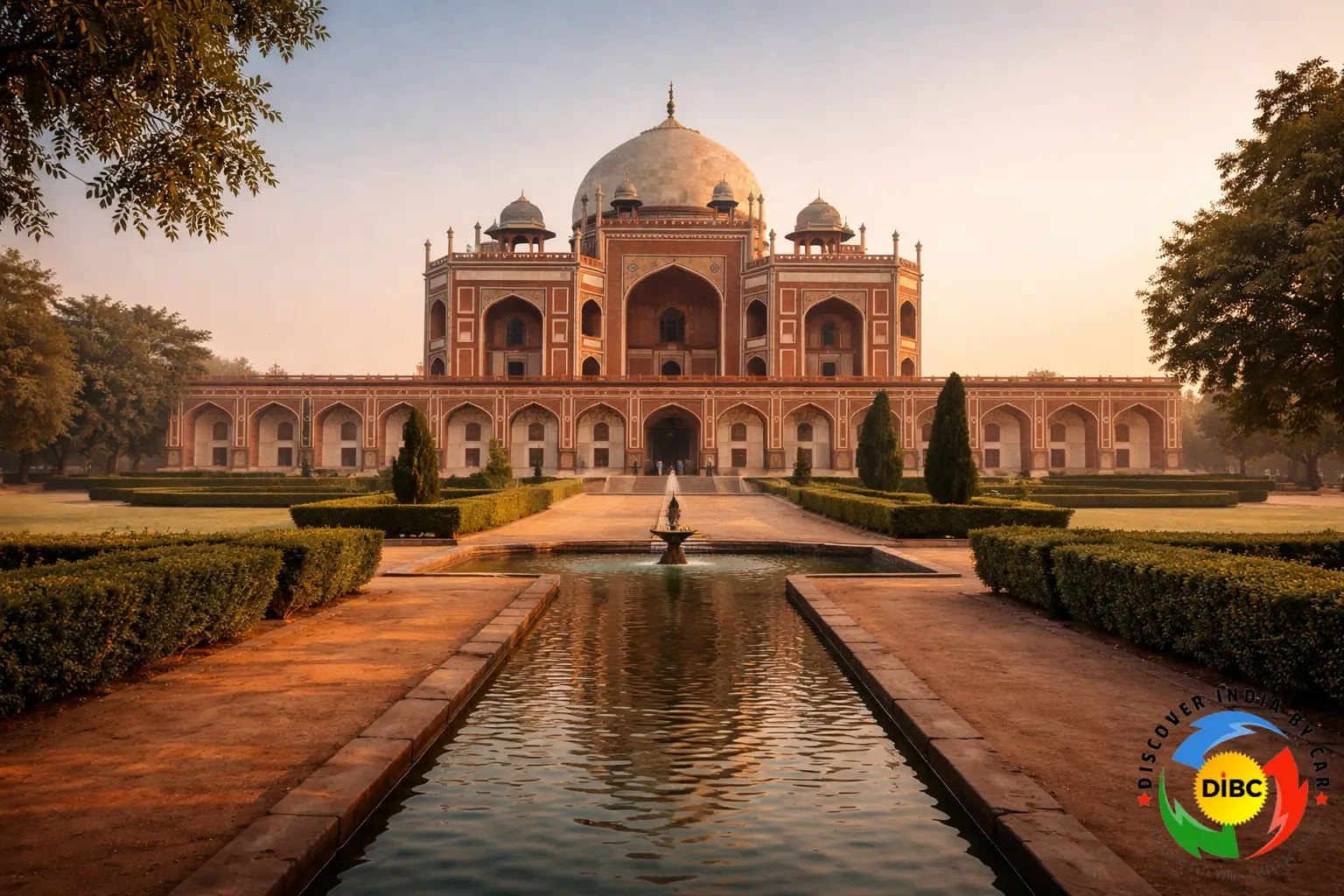
Humayun’s Tomb (The Better Taj)
If you are driving to Agra later to see the Taj Mahal, this is the perfect prequel. Built decades earlier, it was the architectural template for the Taj.
- The Experience: It is set in 30 acres of restored Mughal gardens. You can actually hear yourself think here. The crowds are dispersed, and the red sandstone contrasting with the white marble dome is photographers’ gold.
- Why it works for you: You don’t have to fight to see it. It’s peaceful. It’s the best place in Delhi to just sit on a bench and realize, “Okay, I’m really in India.”
- Pro Tip: Go at 4:30 PM. The security guards start blowing whistles at sunset to clear people out, but that last hour offers the best light.
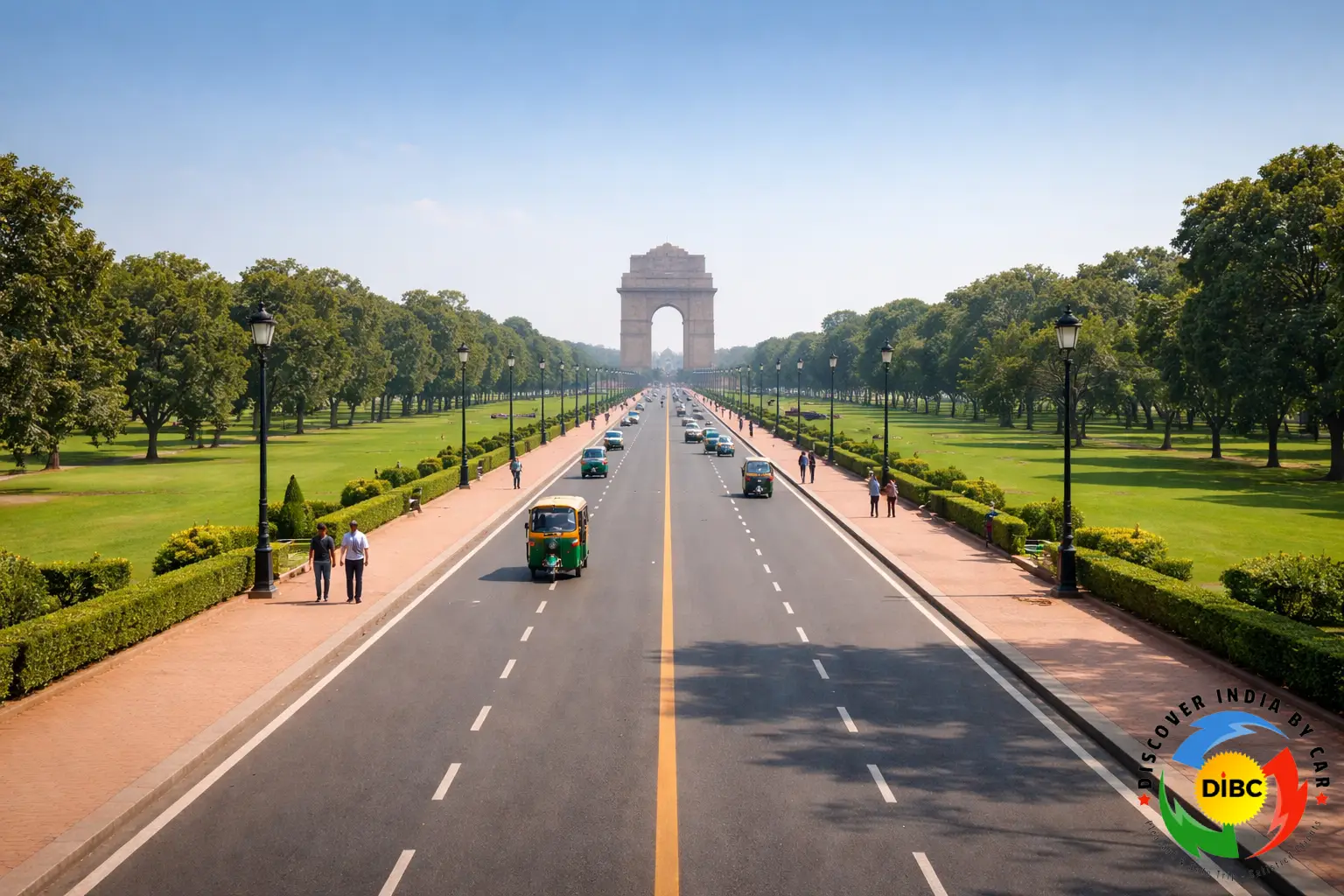
Lutyens’ Delhi (The Drive-Through)
This is the part of Delhi built by the British. It looks nothing like the rest of India. Massive boulevards, huge trees, and colonial bungalows.
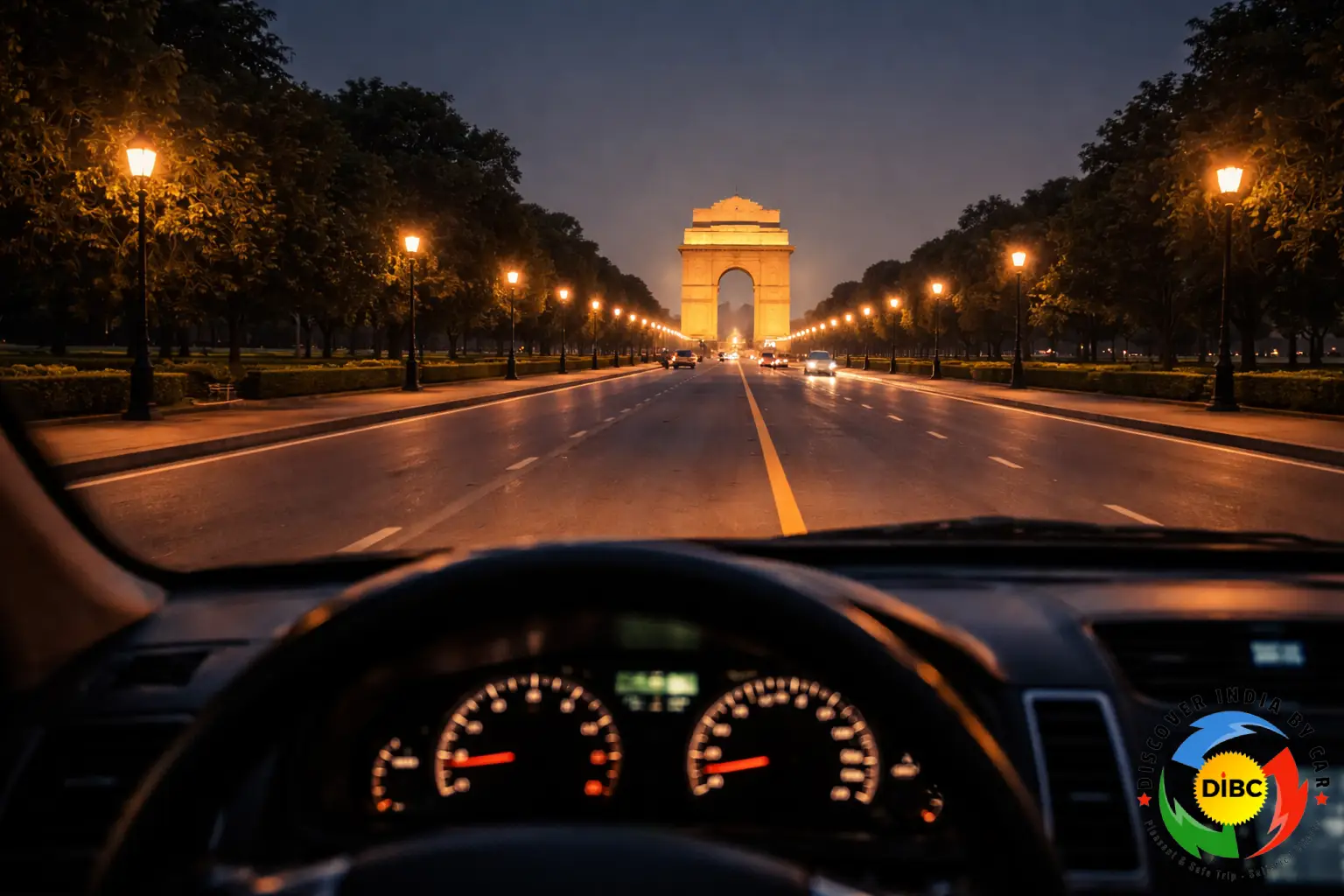
- The Plan: You don’t “visit” this so much as drive through it. This is a great time to test out the comfort of your car rental or driver before embarking on longer intercity trips. Tell your driver to take you down Kartavya Path (formerly Rajpath).
- What you’ll see: India Gate (stop for a quick photo, but beware the aggressive toy sellers), the President’s House (Rashtrapati Bhavan), and Parliament.
- The Vibe: It feels imperial and imposing. It helps you understand that Delhi is a seat of massive political power.
B. Cultural Spots That Don’t Stress You Out
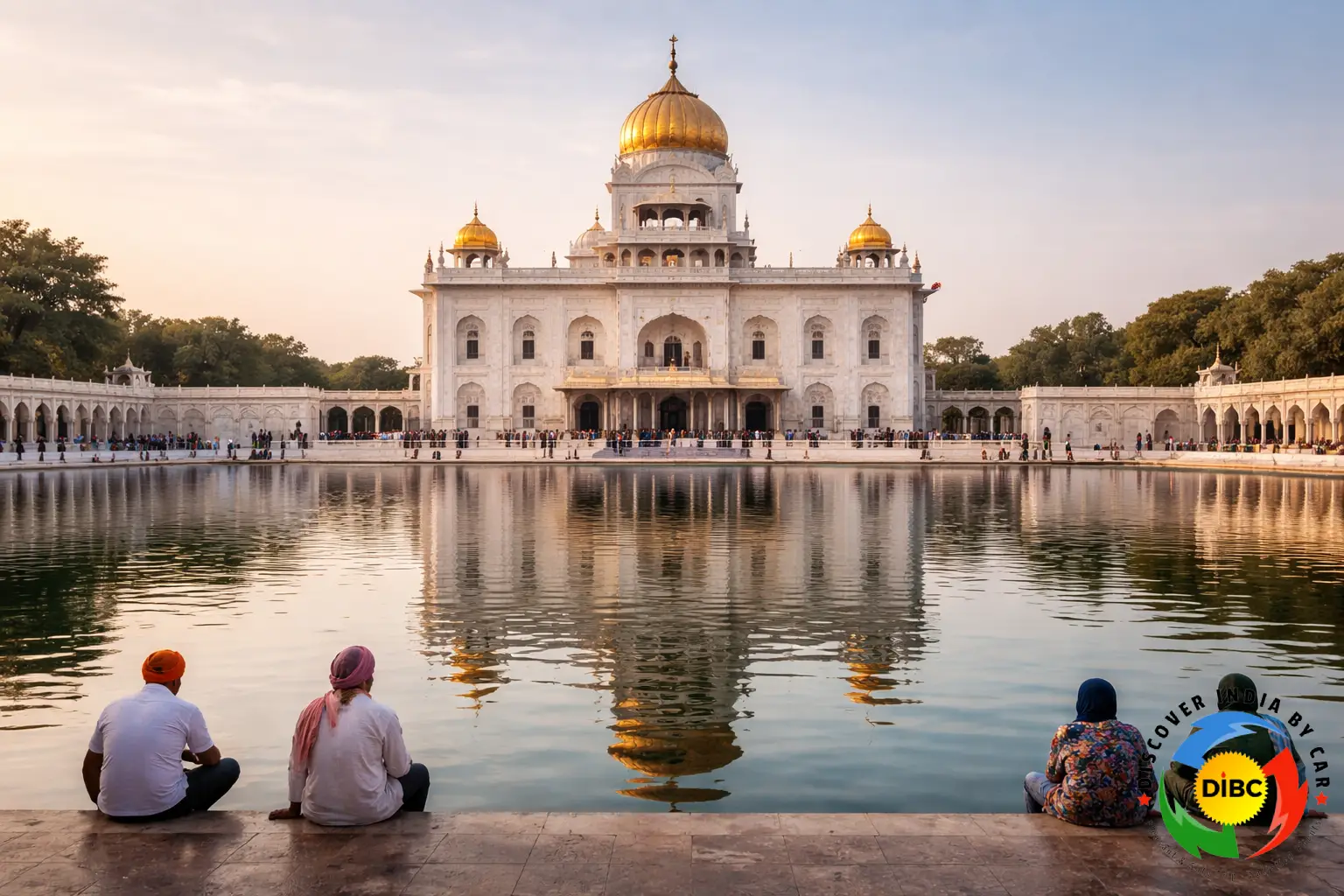
Gurudwara Bangla Sahib (The Soul of the City)
I always take foreign friends here. It is a Sikh temple, and it completely shatters the stereotype of India being “dirty” or “chaotic.”
- The Experience: It is spotless. You remove your shoes and socks (there’s a tourist counter), cover your head with a provided scarf, and walk through a foot-bath.
- The Magic: The inside is cool, echoing with live music (Shabad Kirtan). But the real highlight is the kitchen.
- Why go: Walk to the back to see the community kitchen. They feed 10,000+ people a day for free, regardless of religion or caste. It is a massive, coordinated operation of volunteering. You can even roll some bread (roti) if you ask nicely. It’s the most humbling thing you’ll see in the city.
Qutub Minar (The History Lesson)
A 12th-century victory tower that is miraculously well-preserved, standing tall as a contrast to the forts you will see later in Jaipur and Jodhpur.
- Why it’s beginner-friendly: The audio guides are legit. The complex is clean. There are actual toilets (rare in public spots).
- The catch: It’s far south. It takes 45-60 minutes to get there from the city center. Combine it with a meal in the Mehrauli district (which has incredible restaurants overlooking the forest) to make the drive worth it.
Shopping That Isn’t a Scam
If you walk into a random shop in Connaught Place or near a monument, you will pay 4x the price. Period. For a first-timer, you want fixed prices and no hassle.
Dilli Haat (INA Market)
Think of this as an open-air craft mall run by the tourism board. It’s a great spot to pick up travel essentials for your upcoming road trip, like lightweight shawls or comfortable cotton shirts.
- The Vibe: Artisans from different Indian states rotate stalls every few weeks. You buy Pashminas from Kashmir, wood carvings from Saharanpur, and paintings from Madhubani.
- The Safety: There is a small entry fee (about 100 INR for foreigners). This keeps the beggars and touts out. You can browse without someone shoving a necklace in your face.
- Eat here: The food court has stalls from every state. Try “Momos” (dumplings) from the Sikkim stall.
Khan Market (The Expat Bubble)
Need good coffee? Need a bathroom that has toilet paper? Need to buy a book? Go to Khan Market.
- What it is: The most expensive real estate in Delhi. It’s a U-shaped double-story market full of high-end brands.
- Why visit: Sometimes, you just need a break. You can get a quiet salad at Café Turtle or a beer at Perch. It’s where you go to reset your sanity meter.
Sample Delhi Itinerary for Foreigners (No-Burnout)
This Delhi itinerary for foreigners focuses on calm, accessible landmarks rather than chaotic sightseeing, helping first-time visitors adjust without sensory overload.
This plan assumes you want to enjoy yourself, not check boxes. It positions you perfectly for a morning departure on Day 3 towards Agra.
Day 1: Ease In
- 10:00 AM: Late breakfast at your hotel.
- 12:00 PM: Humayun’s Tomb. Take your time.
- 02:00 PM: Lunch at Lodi Garden Restaurant (right inside the park, very scenic).
- 03:30 PM: Walk it off in Lodi Garden among the joggers and ruins.
- 05:30 PM: Khan Market for coffee and browsing.
- 07:30 PM: Dinner and sleep.
Day 2: Culture
- 09:00 AM: Qutub Minar (Go early before the sun gets angry).
- 01:00 PM: Lunch at Dilli Haat. Buy your souvenirs here.
- 04:00 PM: Gurudwara Bangla Sahib. Sit by the holy water (Sarovar) and watch the sunset.
- 06:30 PM: Drive through Lutyens’ Delhi to see India Gate lit up.
- Evening: Confirm your pickup time for the next day’s drive to Agra or Jaipur.
The “Friendly Guy” Scam: A Warning
I need to highlight this because 90% of tourists fall for it.
You are walking in Connaught Place (the central circle). A decently dressed guy walks up to you.
“Hello friend! Which country? Ah, UK! My sister lives in Leeds.”
He chats for 30 seconds. Then he asks:
“Where are you going? Oh, that place is closed today. Strike. Festival. Road blocked.”
He will then sweetly offer to take you to the “Official Government Tourist Office” for a map.
This is the scam.
The office is fake. It is a private travel agency. They will tell you all trains/flights are booked and try to sell you a private car package for $800 USD.
Rule: Nothing is “closed” unless Google Maps says it is. No stranger in Delhi wants to “just practice English” with you on the street. Be rude if you have to. Keep walking.
Logistics: Transport & Survival Checklist
Getting Around:
- Uber works perfectly. Link your credit card so you don’t have to fiddle with cash.
- Metro: It’s great, but avoid “Rajiv Chowk” station at 5 PM. You will be crushed. If you use the Metro, buy a “Tourist Card” at the station so you don’t have to line up for tokens every time.
- Autos (Tuk-Tuks): Fun for short rides, but never get in without agreeing on the price first. They do not use meters for foreigners. Whatever they quote you, offer half. If they laugh, walk away. They will call you back.
- Intercity Travel: While Uber is great inside Delhi, for your Delhi to Agra or Jaipur road trip, always book a verified outstation car with a vetted driver.
The “Delhi Belly” Situation:
It’s real.
- Eat only freshly cooked, hot food. Heat kills bacteria.
- Avoid chutney (green sauce) that hasn’t been cooked.
- Fruit? Only if you can peel it yourself (Bananas, Oranges). No pre-cut watermelon.
- Brush your teeth with bottled water. Yes, really.
Delhi Survival Checklist for First-Time Foreign Travelers
Download Apps: Uber & Google Maps (Save offline maps).
Water: Only buy sealed bottles (Bisleri/Kinley). No tap water, ever.
Dress Code: Cover shoulders and knees (Men & Women) to reduce staring.
SIM Card: Get one at the airport (Airtel or Jio) before leaving the terminal.
Sanitizer: Carry a small bottle and tissues (toilet paper is rare in public restrooms).
Frequently Asked Questions (Delhi for First-Time Foreigners)
Q1. Is Delhi safe for first-time foreign travelers?
A: Yes. Violent crime against tourists is rare. Most issues involve scams or overcharging, which can be avoided with Uber and basic awareness.
Q2. How many days are enough in Delhi for first-time visitors?
A: 2–3 days are ideal. More than that often leads to sensory fatigue on a first India trip.
Q3. Is Delhi overwhelming for tourists?
A: It can be, which is why structured sightseeing and calm areas work best.
Q4. Can foreigners travel alone in Delhi?
A: Yes, especially in South and Central Delhi using Uber and daytime travel.
Q5. Should first-time visitors go to Old Delhi?
A: Not on Day 1. It’s better saved for later or skipped entirely on a short trip.
For many first-time visitors, Delhi serves as the orientation city before continuing the Golden Triangle journey by road to Agra and Jaipur.
Final Advice from the Road
Delhi is best viewed through the window of a comfortable car, hopping out for specific, curated places to visit in Delhi for tourists.
This Delhi travel guide for foreigners is designed to help you settle confidently before continuing onward to Agra, Jaipur, or other Indian road trips.
It is a city of extreme contrast. You will see a Bentley parked next to a bullock cart. You will see incredible beauty right next to piles of trash.
Don’t let the trash blind you to the beauty.
Take it slow. Don’t try to understand the city—just witness it. Think of Delhi as the “Orientation Day” for your Indian adventure. Once you have navigated these few days, you are ready to get in the car, hit the Yamuna Expressway, and experience the freedom of the Golden Triangle road trip.
Welcome to India. You’re going to be fine.