- Private car and driver in Delhi / India
- +91-8447445445
- info@discoverindiabycar.com sugar.ankit@yahoo.com
 +91-9818434712
- Follow us:


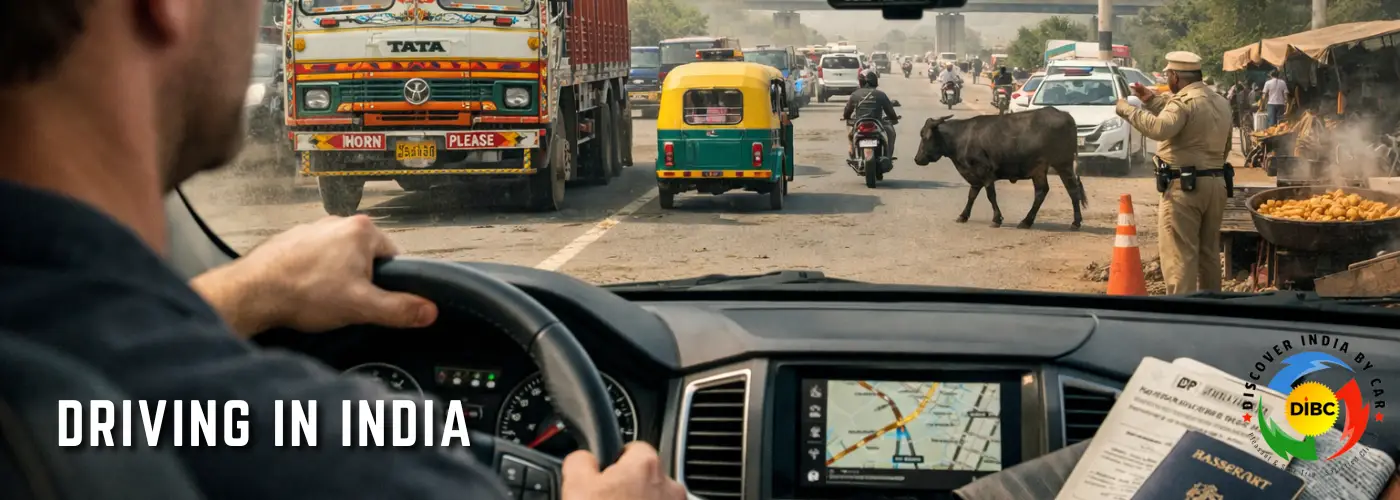
Driving in India: Is It Safe for Foreigners
Is It Safe to Travel India by Car as a Foreigner?
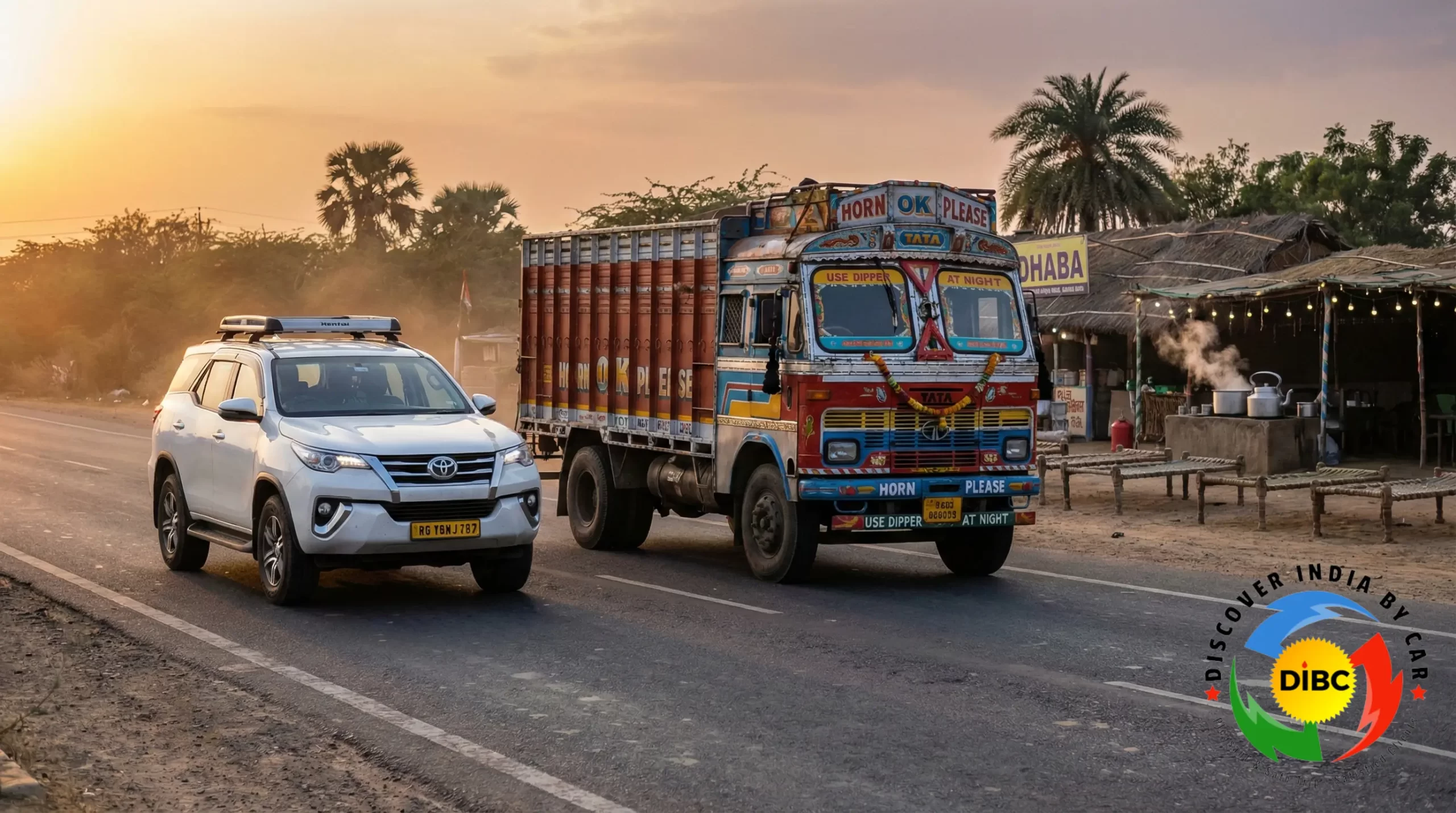
The smell of an Indian highway is distinct. It’s a mixture of burning clutch plates, frying samosas from roadside dhabas, diesel exhaust, and damp earth. But it’s the sound that stays with you long after the engine is off. For many tourists, driving in India is not just transport, it’s an adventure.
In Europe or America, a car horn is a protest—a sharp rebuke for a broken rule. In India, the horn is oxygen. It is a continuous, chaotic, yet surprisingly rhythmic language that says everything from “I am overtaking you” to “Please don’t open your door, I am two inches from your bumper.”
For a foreigner standing at a rental counter in New Delhi, clutching an International Driving Permit and looking out at the swirling maelstrom of traffic, the question isn’t just logistical. It is primal.
Is this safe? Am I out of my mind?
I have driven across 16 states in India—from the precipitous, gravel-strewn cliffs of Spiti Valley in the Himalayas to the saline flatness of the Rann of Kutch. I have changed tires while surrounded by curious water buffaloes in Madhya Pradesh and argued with cops about “entry taxes” in languages I don’t speak.
Here is the truth that generic travel blogs—afraid of liability or nuance—won’t tell you.
Is India safe for foreign tourists driving themselves? Yes. But “safety” in India does not mean the absence of danger. It means the active management of chaos.
This guide is designed to prepare you, not scare you. If you respect the unwritten rules of the subcontinent, driving here will be the most visceral travel experience of your life.
Part 1: The Verdict
Is Driving in India Safe for Foreigners?
The Short Answer:
Yes, driving in India is generally safe for foreign tourists, provided strictly specific conditions are met. While India reports high road accident statistics, the risk for a tourist driving a modern SUV on toll Expressways during daylight hours is manageable and comparable to driving in parts of Southern Europe or Southeast Asia.
Is India Safe for Foreign Tourists?
Based on recent infrastructure improvements, self-driving is moderately safe for experienced international travelers. The key safety factor is behavior modification: abandoning defensive driving for “territorial” driving, using larger SUV-class vehicles, and strictly avoiding night travel. While traffic density is high, violent crime targeting drivers is statistically rare compared to parts of the Americas.
The 5 Non-Negotiable Safety Conditions:
- Daylight Only: You must never drive on highways between 7:00 PM and 6:00 AM.
- Vehicle Class: You must rent a High Ground Clearance vehicle (SUV); sedans are unsafe for unpredictable topography.
- Infrastructure: Stick to National Highways (NH) and the new access-controlled Expressways.
- Licensing: You must hold a valid 1949 Convention International Driving Permit (IDP) alongside your domestic license.
- Defensive Mindset: You must abandon “Right of Way” expectations and adopt “Gap Negotiation” tactics.
Driving in India Is Safe For You If:
- You have at least 3 years of driving experience in your home country.
- You remain calm when other drivers cut you off or do not signal.
- You view honking as communication rather than aggression.
- You are comfortable deviating from the GPS when locals suggest a better route.
- You prioritize reaching your destination safely over reaching it quickly.
In Summary: Is India Safe for Foreign Tourists Driving?
Verdict: CAUTIOUSLY YES.
For experienced drivers, a self-drive trip in India is safe if approached with preparation. The risk profile is Moderate, primarily due to erratic traffic behavior rather than violent crime.
- Biggest Risks: Night driving, livestock on highways, and fatigue.
- Lowest Risks: Carjacking, violent robbery, and vehicle theft.
- Recommendation: Rent a modern SUV with 5-star safety rating, avoid night travel entirely, and carry a dashcam for legal protection.
Quick Risk Assessment
Risk Factor | Rating | Reality |
Physical Road Quality | High (Good) | 2026 Expressways rival the US/EU. |
Traffic Predictability | Very Low | Expect cows, wrong-way drivers, and sudden stops. |
Personal Security | High (Safe) | Carjackings/violent crime against tourists are rare. |
Emergency Support | Medium | ‘112’ works, but rural ambulance response is slow. |
Part 2: Is India Safe Overall Compared to Other Countries?
To understand India road trip safety, we must look at context. Foreigners often lump “Developing World” driving into one bucket, but India is distinct.
How Safe Is India Compared to the US or Europe for Tourists?
It is a mistake to compare them purely on statistics. The nature of the threat is different.
Compared to the US/Europe:
- Cognitive Load: In the US, you can zone out on an Interstate. In India, if you lose concentration for three seconds, you might hit an unlit median or a stray dog. The cognitive load is significantly higher here.
- Violent Crime: India is drastically safer regarding carjacking or highway robbery compared to parts of the US or Southern Italy. You are safer from humans in India, but more at risk from physics.
Compared to Southeast Asia (Vietnam/Thailand):
- Vehicle Safety: India is statistically safer for one specific reason: The Car. In Thailand or Vietnam, most tourists rent scooters. One slip on gravel results in serious injury. In India, you are renting a steel cage with airbags and crumple zones. You are protected from the environment.
Part 3: Self-Drive vs. Hiring a Driver
This is the most common dilemma. Labor is affordable in India (approx. $40–$60 USD per day including fuel & driver allowance). Why drive yourself?
Safety & Experience Breakdown
Feature | Self-Drive (Rental) | Hiring a Driver + Car |
Safety Control | High. You decide the speed and risk tolerance. | Low. Hired drivers often speed or drive aggressively to save time. |
Liability Risk | Moderate. If you crash, you deal with it. | Zero. The driver handles police, scratches, and disputes. |
Stress Level | High. 100% focus required. | Low. You can sleep, work, or read. |
Privacy | Total. Just you and your passengers. | None. The driver hears every conversation. |
Cultural Depth | Immersive. You interact with the real India. | Bubbled. You are a passenger in a bubble. |
The Strategist’s Choice:
- Hire a Driver If: Your itinerary includes chaotic heritage cities (Varanasi, Old Delhi, Kolkata) or you have high anxiety about navigation.
- Self-Drive If: You are sticking to the Golden Triangle Road Trip, Rajasthan Self-Drive Guide, or Ladakh, and value the freedom to stop at a sunflower field without explaining why to a confused chauffeur.
Part 4: Do Foreigners Get Targeted on Indian Roads?
A common myth is that foreigners are targets for crime on the highway.
The Truth: Foreigners are targets for curiosity and commerce, not crime.
- The “Rich Tourist” Perception:
Police at checkpoints target rental cars (black plates with yellow text) because they assume a wealthy tourist is inside who might not have an International Driving Permit (IDP). If your papers are in order, they usually salute and let you pass.- Real World Tip: Keep your sunglasses on during police stops. It establishes a subtle hierarchy that discourages frivolous bribe requests.
- Road Rage:
Indian road rage is theatrical. It involves shouting and hand gestures, but physical violence against foreigners is exceptionally rare. The cultural concept of Atithi Devo Bhava (The Guest is God) still offers a layer of protection. If you make a mistake, fold your hands in a Namaste, smile apologetically, and the anger usually evaporates. - The “Scam” Risk:
The only “targeting” you will likely face is at toll booths (if you pay cash) or fuel pumps. Use Fastag and watch the fuel meter, and you are immune.
Part 5: The 5 Biggest Mistakes Foreign Drivers Make in India
Even experienced drivers fail in India because they apply Western logic to Eastern chaos. Avoid these errors to stay safe.
- Trusting the “Right Indicator” Signal:
- Mistake: Assuming a flashing right indicator on a truck means “I am turning.”
- Correction: It often means “You can pass.” Treat it as a hint, not a fact. Always verify the road is clear yourself.
- Leaving a “Defensive” Gap:
- Mistake: Leaving two car lengths of braking distance in city traffic.
- Correction: In India, space is an invitation. Close the gap to discourage rickshaws from cutting you off, but stay alert.
- Skipping Zero-Depreciation Insurance:
- Mistake: Buying standard liability only.
- Correction: Indian traffic guarantees minor scratches. Zero-Dep ensures you pay nothing for dents that weren’t your fault.
- Blind Faith in Google Maps Estimates:
- Mistake: Thinking a 200km drive will take 3 hours.
- Correction: Maps optimize for distance, not reality. Always add 25-30% buffer time for cows, weddings, or congestion.
- Driving After Sunset:
- Mistake: Thinking “I’ll just push on for another hour.”
- Correction: Night driving is the #1 cause of fatal accidents for tourists. Park by dusk. No exceptions.
Part 6: The Psychology of “The Flow”
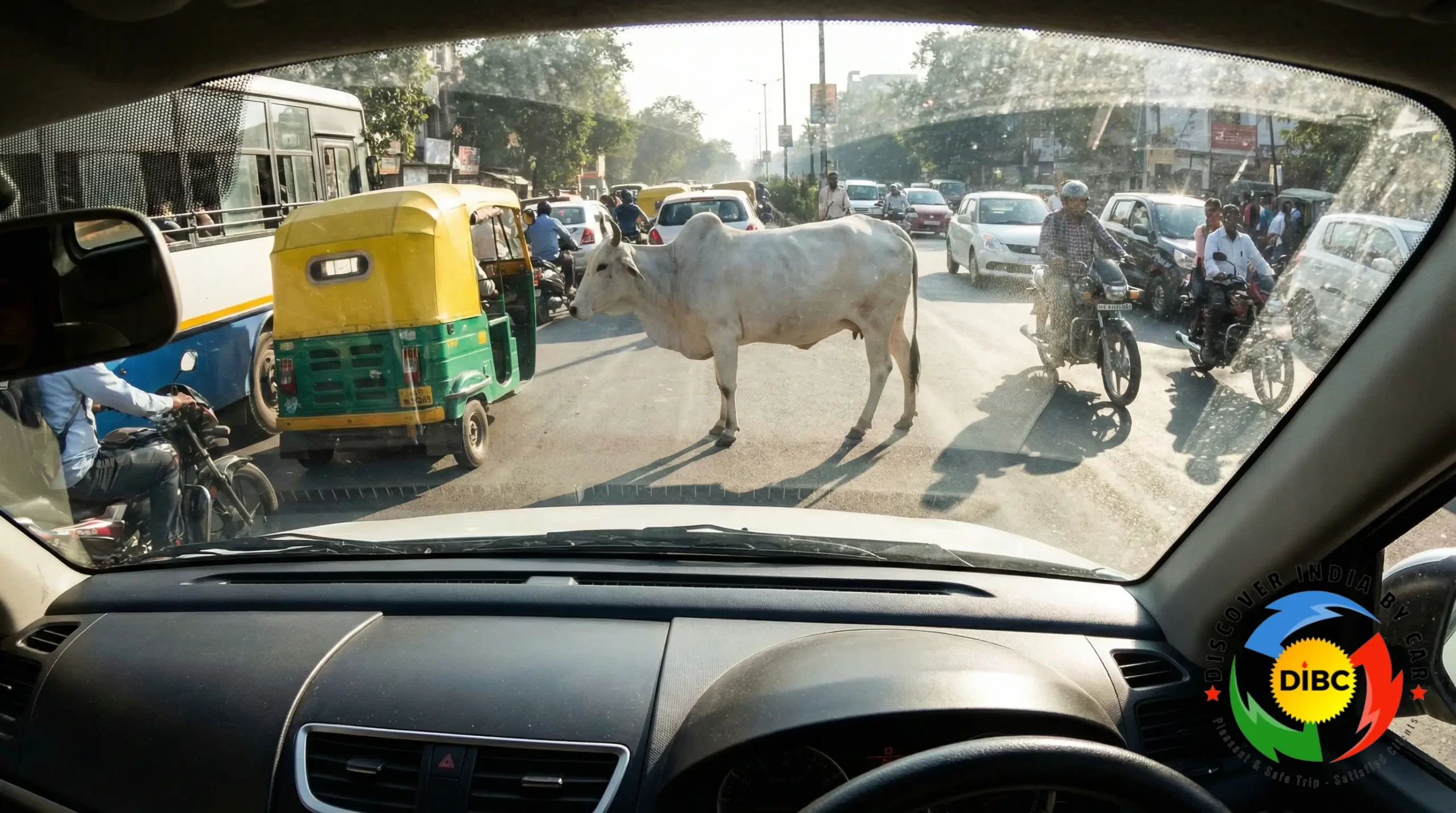
To rank for safety in India for foreign tourists, we must address the mental game. You cannot drive in India using Western rules. You must use Indian physics.
Gap Economics
In the West, leaving two car lengths of space is “safety.” In India, that space is a vacuum that nature must fill. If you leave a gap, an auto-rickshaw will wedge into it.
- My Mistake: Early in my driving days near Jaipur, I waited politely at a roundabout for a “safe” gap. I waited for 3 minutes. The drivers behind me started honking furiously.
- The Lesson: Do not drive aggressively, but drive territorially. Nose your car into the flow slowly. Establish your presence. If you hesitate, you are a hazard.
Horns as Sonar
Horns are not aggression; they are location services. A short beep-beep simply means: “I am in your blind spot.”
When overtaking, give two short taps on the horn. It is professional protocol here.
Part 7: What Happens in a Medical Emergency on an Indian Road Trip?
It is the scenario no one wants to think about, but you must. Here is the reality of medical support on Indian highways.
- The Emergency Number: Dial 112. It is the unified helpline (Police, Fire, Ambulance). Operators in major states speak English.
- Ambulance Response:
- Urban/Expressways: Generally good (15-25 mins). New expressways have stationed ambulances every 50km.
- Rural: Unpredictable. It is often faster to drive the patient to the nearest private hospital yourself if possible.
- Hospital Choice: Always choose a Private Hospital over a Government Hospital for faster, cleaner, and English-speaking trauma care. Google Maps is highly accurate for finding “Private Hospital Near Me.”
- Preparation: Keep a basic First Aid Kit in the glovebox. Most importantly, ensure you have Travel Insurance that includes medical evacuation.
Part 8: Insurance & Legal Protection
If the worst happens, you need to know where you stand legally.
Zero-Depreciation Insurance (Mandatory)
Standard rental insurance covers Third Party Liability (damage to others). It rarely covers the scratches and dents your car will get.
- Action: When booking with agencies like Zoomcar or Revv, select “Zero-Dep” (Zero Depreciation) or “Maximum Protection.” This ensures you walk away from a dented bumper without a bill.
The Dashcam Defense
In any dispute between a local and a foreigner, the crowd will naturally side with the local.
- Action: Bring a suction-mount dashcam. Or, simply mount your phone on the dash recording video.
- Why: In the event of a collision, video evidence is the ultimate silencer. If you show police the footage of a biker swerving into you, the “foreigner is at fault” narrative collapses instantly.
The FIR Process
For major accidents involving injury, an FIR (First Information Report) must be filed at the police station to claim insurance.
- Reality: This is a bureaucratic nightmare.
- Strategy: For minor damage (scrapes, broken mirrors) involving another vehicle, settle for cash on the spot. It is faster, cheaper, and safer than involving the legal system.
Part 9: Current Infrastructure
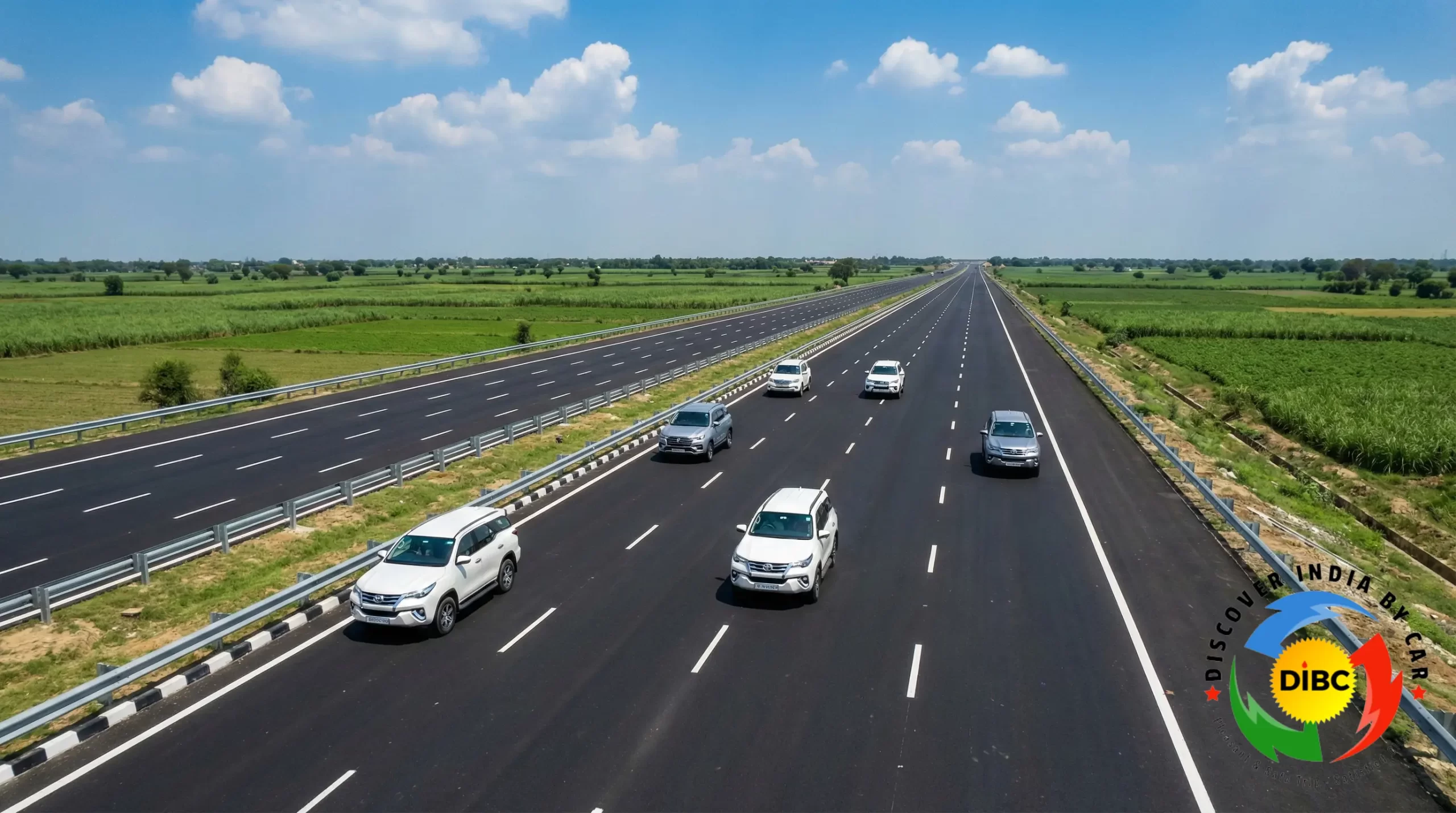
The “bad roads” stereotype is outdated. According to the Ministry of Road Transport and Highways, India has constructed over 50,000 km of National Highways in the last five years, dramatically improving long-distance connectivity.
- The Super-Highways:
Routes like the Delhi-Mumbai Expressway and Samruddhi Mahamarg are world-class, 8-lane tarmac ribbons.- The Risk: It’s not potholes—it’s Hypnosis. The roads are so straight and smooth that drivers lose focus. Speed limits (120 km/h) are enforced by AI cameras.
- Experience: On the Trans-Haryana Expressway, the surface was perfect, but I saw a tractor driving against traffic in the slow lane. Even on “perfect” roads, expect the unexpected.
- The Digital Tolls:
Toll booths are 98% automated via FASTag (RFID stickers). Ensure your rental car has a funded tag. Without it, you pay double cash penalties.
Part 10: Specific Hazard Management
Driving at Night (The “Red Zone”)
Risk: Critical (10/10).
Why: Unlit tractor-trolleys carrying steel rods, black cows sleeping on warm asphalt, and trucks with no tail lights.
Rule: Park the car by sunset. Enjoy your hotel. Do not risk this.
Livestock Avoidance
Cows: They are statues. They stand on the median or the fast lane and do not move. You drive around them.
Dogs/Goats: They are chaotic. They chase wheels. Slow down immediately if you see them.
Police Checks & State Borders
Police target rentals at state borders to check for “State Entry Tax” receipts.
- The Fix: Modern rentals have All-India Permits. Point to the sticker. If they ask for papers, show them digitally via DigiLocker or photos on your phone.
- Strategy: If a fine is demanded, ask for an “e-Challan” (digital receipt). Police cannot pocket digital fines, so they often let you go if you insist on one.
Part 11: Who Should NOT Drive in India?
Be honest with your self-assessment.
- New Drivers: If you have had your license for less than 3 years.
- The “Lane Huggers”: If you get anxiety when a car enters your lane without signalling.
- RHT Purists: If you have never driven on the LEFT side of the road before. India is not the place to learn; the muscle memory confusion is dangerous.
- The Hot-Tempered: If you have road rage in your home country, you will have a stroke here. You need a “water off a duck’s back” attitude.
Part 12: India Road Trip Safety Rating Breakdown
For a clear decision, here is the granular safety score:
Environment | Safety Rating (1-10) | Primary Threat |
Expressways (Day) | 8/10 | Over speeding, Tyre bursts. |
Expressways (Night) | 2/10 | Unlit obstacles. |
Golden Triangle | 7/10 | Heavy traffic density. |
Himalayas (Ladakh) | 4/10 | Cliffs, weather, narrow roads. |
City Traffic (Delhi/Mumbai) | 6/10 | Minor dents/scratches (Low injury risk). |
Rural Villages | 5/10 | GPS failures, livestock. |
Part 13: Expanded FAQ
Q1. Is it safe for a woman to travel alone in India by car?
A: Yes, but strict protocols apply. Solo female drivers should stick to major highways, avoid night driving entirely, and keep doors locked in city traffic. Tinted windows (while legally restricted) are common on rentals and offer privacy. When asking for directions, ask families or shopkeepers rather than groups of men.
Q2. Can I drive in India without an International Driving Permit (IDP)?
A: Legally, no. India is a signatory to the 1949 Convention. While some rental agencies might hand you a key with just your home license, if you are in an accident, your insurance is void without an IDP. Police specifically check for this document at borders.
Q3. What documents should I carry while driving in India?
A: Always carry the physical copy of your International Driving Permit (IDP), your original home-country driving license, and the rental car’s registration card (RC), insurance certificate, and PUC (pollution certificate). It is also helpful to keep digital copies of your passport and visa on your phone as backups.
Q4. Are expressways safer than state highways in India?
A: Generally, yes. National Expressways (like the Delhi-Mumbai or Yamuna Expressway) are safer because they are access-controlled, meaning fewer tractors, livestock, and pedestrians. State highways, while picturesque, pass directly through villages and are prone to unexpected congestion and hazards like speed breakers.
A5. Is car travel safer than trains in India?
A: Statistically, trains are safer regarding accident fatalities. However, from a health and hygiene perspective (post-pandemic context) and personal safety perspective (avoiding crowds/pickpockets), a private car offers a controlled environment that many foreigners prefer.
Q6. What should I do if I hit a cow?
A: This is a sensitive cultural and safety situation.
- Stop safely (do not hit-and-run if witnessed).
- Stay inside the vehicle if a crowd gathers and the mood feels hostile.
- Call 112 immediately.
- Do not engage in arguments on the street; wait for police.
- Note: Cows are often owned by local farmers, and compensation may be demanded. Let the police mediate this.
Q7. Is there a “road rage” danger for foreigners?
A: Indian road rage is high-volume but low-violence. It is usually theatrical—shouting, gesturing, and horn usage. Physical violence against foreigners is rare. If you engage in an altercation, simply apologize (even if not at fault), smile, and de-escalate.
Q8. Which maps should I use?
A: Google Maps is the gold standard, but it is “optimistic” about travel times. If it says 4 hours, budget for 5.5 hours to account for tea breaks, congestion, and livestock. Download Offline Maps for your route, as 5G spots are spotty in Ladakh Road Safety Guide zones and the Himalayas.
Q9. Are Indian highways safe at night?
A: No. The consensus among experts is universal: Do not drive on Indian highways at night. The risk of hitting an unlit truck, tractor, or animal increases exponentially after sunset.
Final Verdict
Driving in India is an assault on the senses. It is loud, vibrant, and relentlessly intense.
The India of trains and planes is a series of departure lounges and destination points. The India of the road is the connective tissue. It is stopping for chai in a clay cup at 6 AM in the fog of the Punjab plains. It is navigating the Kerala Coastal Drive with the windows down and the scent of the ocean filling the car.
The Decision Checklist:
- SAFE IF: You stick to daylight hours, rent an SUV, and hold a valid IDP.
- RISKY IF: You insist on driving at night or driving small hatchbacks on mountain passes.
- AVOID IF: You are easily stressed by honking or aggressive traffic flow.
Buy the insurance. Rent the SUV. Get the dashcam.
And when that first rickshaw cuts you off—don’t scream. Just honk, find your gap, and flow.
Looking to plan your route? Check our guides on the Golden Triangle Road Trip Itinerary for 2026.