- Private car and driver in Delhi / India
- +91-8447445445
- info@discoverindiabycar.com sugar.ankit@yahoo.com
 +91-9818434712
- Follow us:



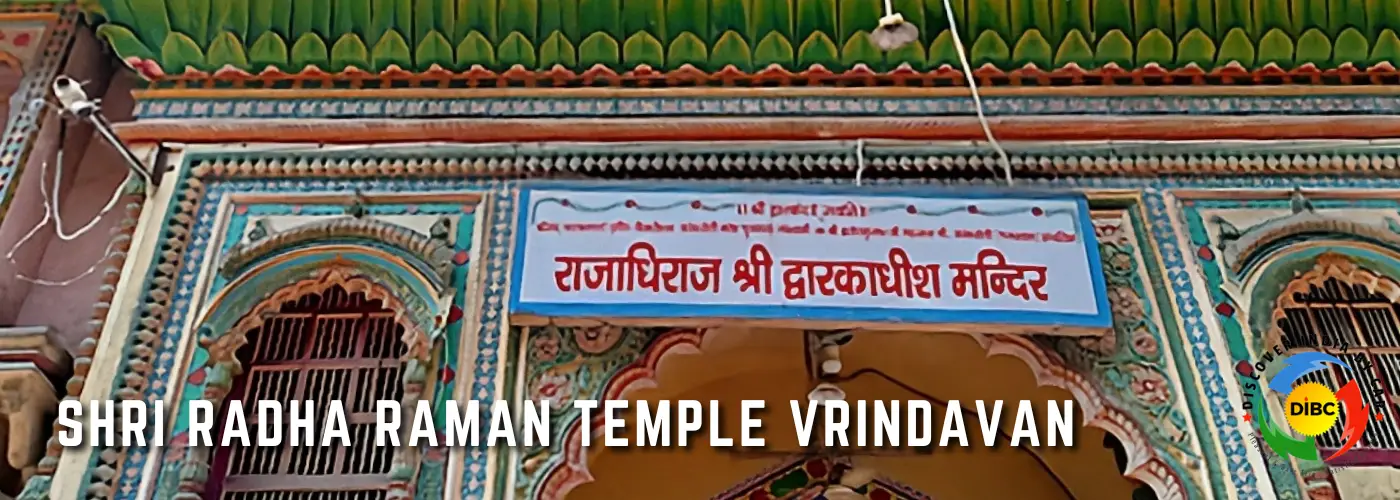
Dwarkadhish Temple Mathura (2026): Timings, Aarti & Rules
Quick Snapshot: What You Actually Need to Know Before Going
- When to go: Stick to October through March. Mathura’s narrow alleys get unbearably suffocating in the summer heat, so winter is your best bet for a comfortable darshan.
- Which Aarti to catch: The 6:30 AM Mangala Aarti. Yes, it means waking up before dawn, but the raw, loud energy of this specific morning ritual is something you just can’t skip.
- Tickets & VIP Darshan: Entry is completely free. Don’t fall for any “pandas” or guides outside promising a VIP shortcut—there are no paid lines here. Everyone waits together.
- The Phone Policy: Keep your phone deep in your pocket. Security is extremely strict about photography in the main courtyard, and they will make you delete pictures on the spot if they catch you holding it up.
Getting there: Get down at Mathura Junction (roughly 4 km away). From the station, just grab a standard e-rickshaw; it takes about 15 minutes to reach the temple lanes.
The Dwarkadhish Temple opens daily from 6:30 AM to 10:30 AM and 4:00 PM to 7:00 PM. Entry costs absolutely nothing. Dress modestly. The legendary Mangala Aarti kicks off exactly at 6:30 AM. Arrive early. Beat the massive crowds. Secure your front-row darshan of the King.
About Dwarkadhish Temple Mathura
The Dwarkadhish Temple is dedicated to Lord Krishna, worshipped here as the King of Dwarka. Located in Mathura near Vishram Ghat, this temple is known for its beautiful architecture, detailed rituals, and vibrant aarti ceremonies.
The Heart of Braj Bhoomi: Why Shree Dwarkadhish Temple Matters
Mathura is known for its deeply spiritual and vibrant atmosphere, especially during temple hours. The city operates on pure, unfiltered devotion. It is loud. It is chaotic. The city is filled with the aroma of earthy rain, roasting street food, and sandalwood incense. Right in the middle of this beautiful mess sits the Shree Dwarkadhish Temple.
Most tourists get this wrong. They flock to the Shri Krishna Janmabhoomi. They want to see where the baby Krishna was born. That makes sense. But this majestic temple offers a completely different psychological experience. You are not visiting a playful cowherd here. You are stepping into the court of a supreme monarch.
Krishna is the King of Dwarka. He rules.
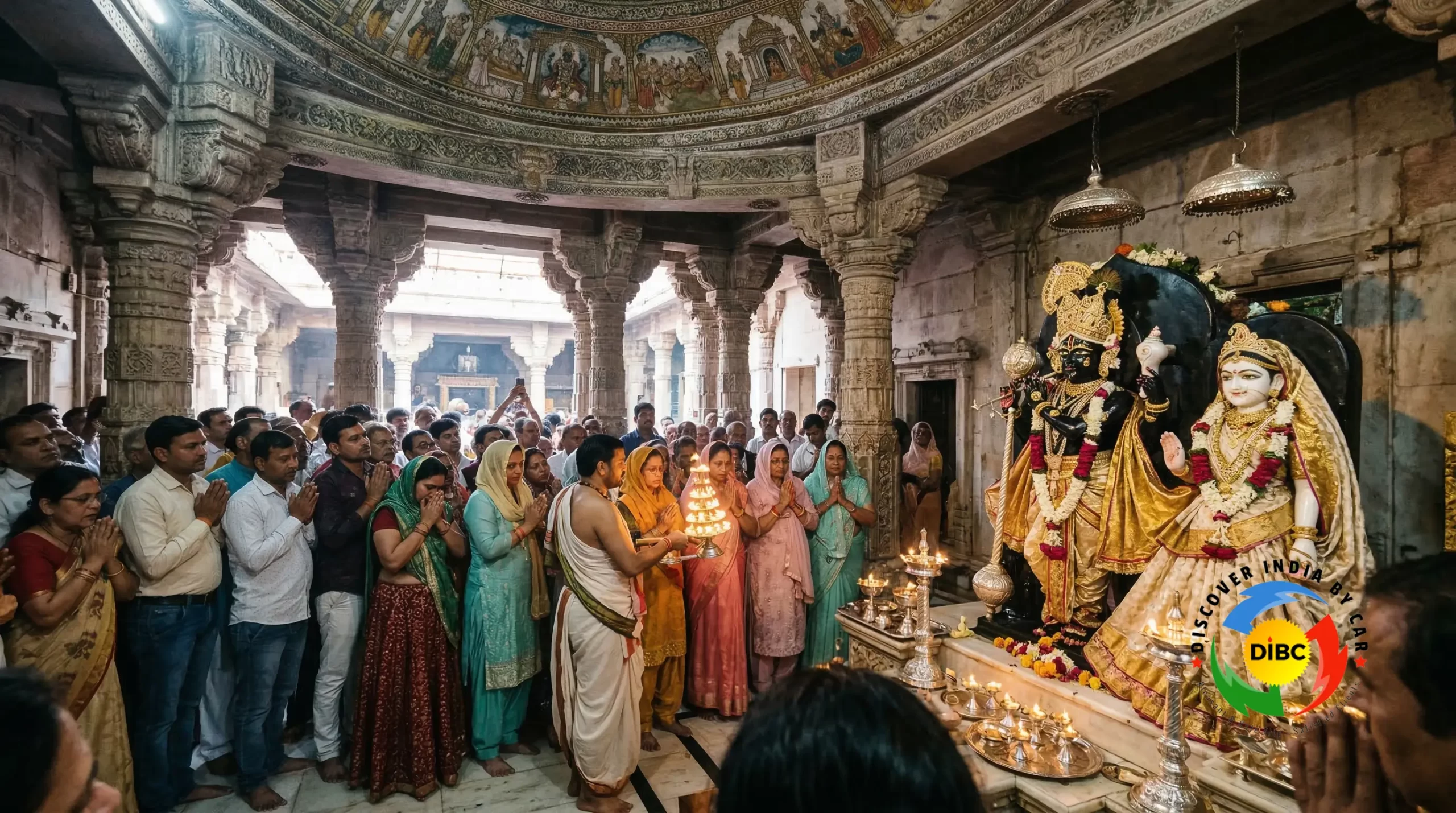
That subtle shift dictates everything inside these walls. The rituals are heavy. The decorations are lavish. The primary idol is a stunning, two-and-a-half-foot tall masterpiece carved out of pure black marble. Four arms. Holding a mace. A chakra. A conch. A lotus. Next to him sits Goddess Radha, glowing in flawless white marble. The visual contrast alone stops you in your tracks.
You feel the weight of centuries of belief the second you cross the threshold. Chanting bounces off the stone walls. Devotees push. They shove. They weep openly. This is not a sanitized museum. This is raw Hindu faith in its most concentrated form.
My Personal Advice: Do not stare straight ahead like everyone else. Look up. The ceiling features incredibly detailed, hand-painted frescoes mapping out Krishna’s life. Ninety percent of visitors miss this entirely because they are too busy guarding their wallets from the pushing crowds.
Complete Dwarkadhish Temple Timings 2026
If you show up at 1:00 PM, you will find the main doors locked. Temples in this region do not operate on a 9-to-5 tourist schedule. They operate on the deity’s schedule.
The Dwarkadhish Temple opening and closing time revolves entirely around the comfort of the Lord. He wakes. He holds court. He takes an afternoon nap. You must plan your entire day around his sleep cycle. The administration adjusts these hours twice a year to handle the brutal North Indian climate.
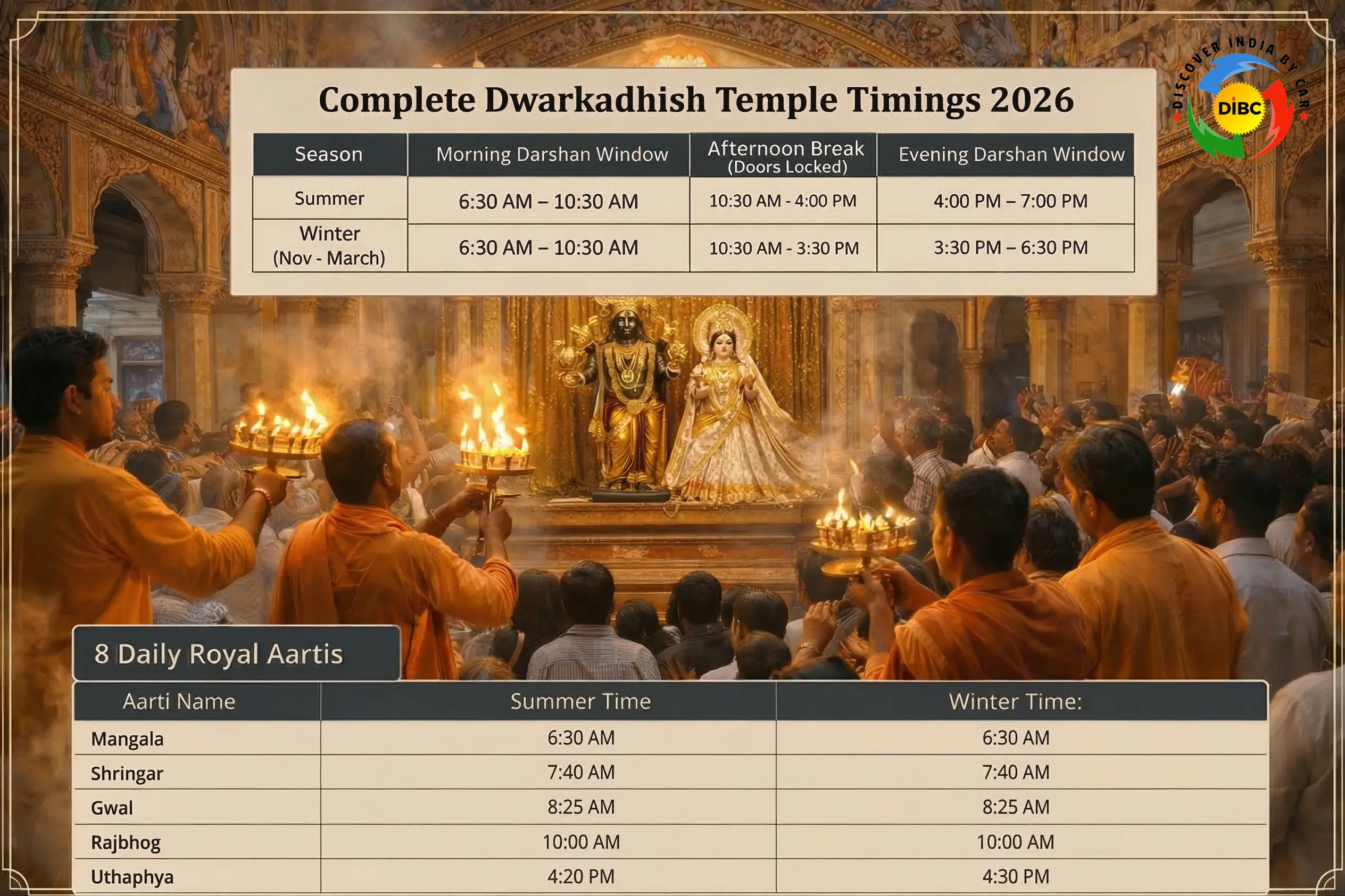
Here is the exact Dwarkadhish Temple timings breakdown for 2026. Screenshot this.
Season | Morning Darshan Window | Afternoon Break (Doors Locked) | Evening Darshan Window |
Summer (April – Oct) | 6:30 AM – 10:30 AM | 10:30 AM – 4:00 PM | 4:00 PM – 7:00 PM |
Winter (Nov – March) | 6:30 AM – 10:30 AM | 10:30 AM – 3:30 PM | 3:30 PM – 6:30 PM |
This afternoon rest period is strictly respected. The doors will not open for anyone during this time. Do not bribe the guards. The doors stay shut. If you are planning your visit today, simply check your watch, note the current month, and align yourself with the schedule above.
The Mechanics of Devotion: Dwarkadhish Temple Aarti Timings
If you want real Information Gain, pay attention to the Pushtimarg tradition.
The Dwarkadhish Temple aarti timings are the heartbeat of this complex. Founded by Vallabhacharya, the Pushtimarg sect treats the idol not as stone, but as a living, breathing entity. They practice Seva. Pure, unadulterated service.
They wake him up. They bathe him. They dress him in ridiculous amounts of gold and silk. They feed him massive royal feasts. The aartis represent the public’s chance to witness these private moments. The Dwarkadhish Temple mathura aarti time schedule gives you eight distinct windows.
The 8 Daily Royal Aartis
Aarti Name | Summer Time | Winter Time | What Actually Happens |
Mangala | 6:30 AM | 6:30 AM | The wake-up call. The priest shows the Lord his face in a mirror. Unbelievably crowded. |
Shringar | 7:40 AM | 7:40 AM | The King is dressed. You will see heavy jewelry, fresh flower garlands, and silk robes. |
Gwal | 8:25 AM | 8:25 AM | Preparing to take the cows out. A very short, intense darshan. |
Rajbhog | 10:00 AM | 10:00 AM | The main feast. Massive plates of food are offered. Doors lock immediately after. |
Utthapan | 4:00 PM | 3:30 PM | The Lord wakes from his afternoon nap. The crowds flood back in. |
Bhog | 4:45 PM | 4:20 PM | A light evening snack. Usually sweets and fresh fruit. |
Sandhya | 5:20 PM | 6:00 PM | The twilight prayer. Heavy drum beats. Screaming devotees. Electric atmosphere. |
Shayan | 6:30 PM | 6:30 PM | Bedtime. The final viewing. Lullabies are sung. The temple goes dark. |
You need to hit the Mangala or the Rajbhog. Those are the heavy hitters. The physical energy during Sandhya Aarti will make your hair stand on end. Hundreds of people screaming “Jai Shri Krishna” in unison inside an enclosed stone courtyard. It vibrates in your teeth.
My Personal Advice: Smart travelers know the ultimate morning hack. The Vishram Ghat is just steps away. Go there at 6:00 AM for the stunning Yamuna Aarti right on the water. When it finishes at 6:20 AM, walk fast up the alley. You will walk right into the Dwarkadhish Temple darshan timings for the 6:30 AM Mangala Aarti. Two massive spiritual hits before breakfast.
The Untold Dwarkadhish Temple History & Architecture
Forget the copy-paste generic history lessons. The Dwarkadhish Temple history is a story of extreme wealth meeting absolute surrender.
This isn’t an ancient, mythical ruin. It was built in 1814. Seth Gokuldas Parikh was the treasurer for the Scindia rulers of Gwalior. The man controlled staggering amounts of money. But he was deeply, relentlessly obsessed with Lord Krishna. He wanted to build a house for his God that matched the royal palaces of the kings he served.
He bought prime real estate right near the Yamuna. He died before seeing the final brick laid. But his vision survived.
Architecture That Speaks
Look at the building. It screams 19th-century Northern Indian wealth. The architectural blend is heavy Rajasthani with distinct Mughal arches.
The main building is five stories high. It rests entirely on 72 massive, intricately carved stone pillars. The central courtyard is wide open. Why? Because the architects knew what Holi and Janmashtami would bring. They built it to hold thousands of packed, sweating bodies without collapsing.
In 1930, the entire operation officially shifted. The temple administration fell under the Kankroli offshoot of the Pushtimarg sect. Girdharlal Acharya took control. That is the exact moment the daily rituals shifted from standard prayers to the extreme, hyper-detailed royal Seva you witness today. Every flower. Every piece of fabric. Every drop of water. It all follows centuries-old Pushtimarg protocols.
Dwarkadhish Temple Entry Rules, Dress Code & Travel Logistics
Be a mindful and respectful traveler. The guards here do not care who you are. The entry rules are strictly enforced to maintain the sanctity of the space.
There is no VIP line. There is no entry fee. You cannot buy your way to the front. You sweat it out with everyone else.
The Hard Rules
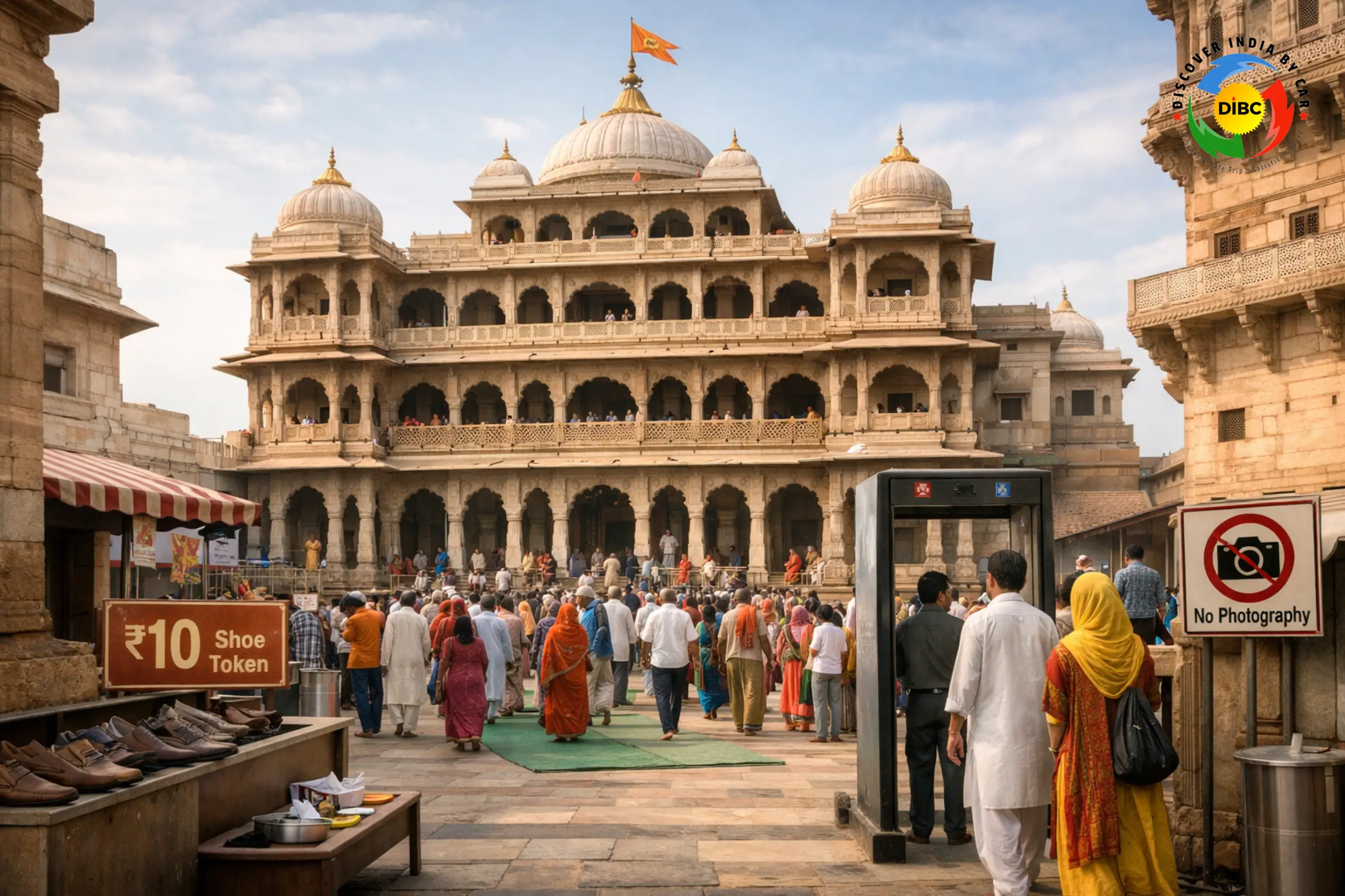
- Keep Your Phone Away: No photography. None. The second you pull your iPhone out in the inner courtyard, Guards will immediately intervene and force you to delete the files. They will watch you delete the image from your camera roll. Keep it in your pocket.
- Lose The Shoes: You walk barefoot. Pay the ₹10 token fee. Do not leave your shoes randomly in the alley, as they might get misplaced or lost in the massive crowds.
- No Bags: Backpacks and heavy luggage get rejected at the metal detectors. Leave them in your hotel room. Carry only your wallet, phone, and a water bottle.
How to Dress
The dress code is an unwritten law enforced by heavy cultural side-eyes. Cover up.
- Men: Trousers. Full shirts. Kurta-pajamas. Do not wear gym shorts or sleeveless tank tops. They will turn you around at the gate.
- Women: Sarees, long skirts, or salwar-kameez suits. It is highly advised to carry a dupatta to cover your head when approaching the main idol. It shows deep, localized respect. No tight jeans. No crop tops.
My Personal Advice: The weather dictates your floor experience. The marble gets scorchingly hot in May and June, making it difficult to walk barefoot. Walk entirely on the green mats laid out by the staff. In late December, the stone turns to ice. Wear thick, dark socks. You can keep socks on inside.
Special Advice for International Tourists
For international visitors exploring the Braj region, this temple offers an unfiltered look into deep-rooted local faith. However, it can be an intense cultural shift. Expect zero English signage inside the core complex. The crowds are extremely vocal and physically push forward during main aartis, which can feel overwhelming compared to sanitized historical monuments.
Actionable tip for foreign travelers: Keep a low profile, wear modest traditional Indian clothing (like a Kurta or modest scarf) to blend in seamlessly, and consider hiring a verified local guide outside the main gate if you want the deep historical context explained in English without getting lost in the alleyways.
Dwarkadhish Temple Mathura Travel Guide
Getting to the Dwarkadhish Temple location requires grit. Mathura traffic is legendary. It is an organized riot of cars, bikes, cows, e-rickshaws, and pedestrians.
The temple sits tight inside Pathak Gali. The streets surrounding it are barely wide enough for two motorcycles to pass each other.
The Arrival Logistics
- Flights: Delhi (DEL) is your best bet. It sits about 160 km north. Hire a private cab straight from the airport. It takes about 2.5 hours via the Yamuna Expressway.
- Trains: Mathura Junction (MTJ) is a massive hub. Shatabdi and Rajdhani expresses stop here. The station is only 4 km from the temple.
- Road: The highways are butter-smooth. But the moment you exit the highway and enter Mathura city limits, the chaos begins.
Parking and Rickshaws
Do not drive your personal vehicle to the temple. I repeat. Do not try to drive to the temple.
You will get wedged in an alleyway, scratch your paint, and cause a massive traffic jam. Park your car at the Holi Gate public parking area or near the Vishram Ghat drop-off zones.
From there, grab a local e-rickshaw. The drivers are ruthless negotiators. They will spot an outsider immediately. A fair price from the station to the temple is around ₹50 to ₹80. If they ask for ₹250, walk away. Another one will pull up in three seconds.
Walkable route from Holi Gate Parking to the temple alleyways.
Dwarkadhish Temple Vrindavan Distance
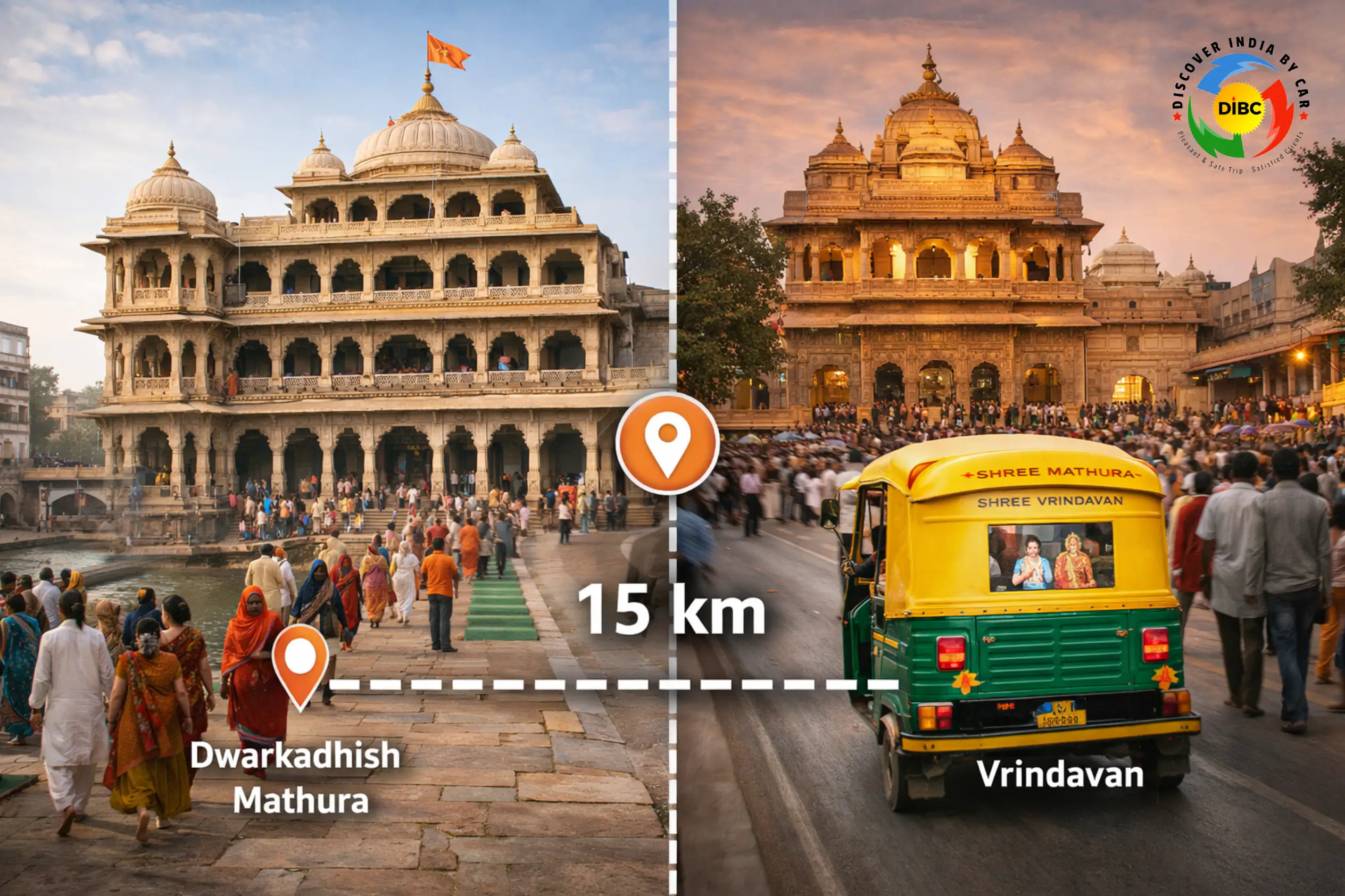
You are doing the Braj Yatra. You want to see both cities. The distance from Dwarkadhish Temple to Vrindavan is roughly 15 kilometers.
Depending on the time of day, that drive takes between 30 and 50 minutes. The connecting road gets heavily congested around 5:00 PM. Do Mathura in the morning. Hit Dwarkadhish. Walk over to Janmabhoomi. Eat lunch. Then grab an auto and head up to Vrindavan to catch the evening aarti at Banke Bihari. That is the most efficient loop. For a complete spiritual journey, explore our Mathura Vrindavan travel guide and visit Banke Bihari Temple Vrindavan.
Surviving the Rush: Dwarkadhish Temple Mathura Crowd Timing
If you are claustrophobic, this temple will test you. Knowing the Dwarkadhish Temple Mathura crowd timing is a survival skill.
The Daily Flow
- The Red Zone (Maximum Chaos): 6:30 AM to 8:00 AM. 5:00 PM to 6:30 PM. The locals flood in for Mangala and Sandhya aartis. You will be pushed. Expect heavy pushing and very tight spaces near the barricades. Keep your elbows in. Watch your pockets.
- The Yellow Zone (Manageable): 9:00 AM to 10:00 AM. Families. Slower pace. The intense morning devotees have left for work.
- The Green Zone (Peaceful): 4:00 PM to 4:45 PM. The absolute sweet spot. The doors just unlocked. The sun is lowering. The massive evening crowds haven’t finished their tea yet. You can actually stand in front of the King and breathe.
The Best Time to Visit Dwarkadhish Temple Mathura
October to March. The North Indian winter is sharp but highly manageable. You can walk the alleys without sweating through your shirt.
If you come during August for Janmashtami or March for Holi, you are entering a different reality. The city’s population triples. The temple courtyard turns into a localized earthquake of devotion. During Holi, the priests stand on the balconies and blast the crowds with Tesu (colored water) from massive silver syringes. It stains your clothes, your skin, and your soul. It is magnificent. But it is not for the weak.
My Personal Advice: Ignore the “Pandas.” These are the aggressive local guides hovering near the shoe racks. They will promise you VIP darshan. They will promise special blessings for your family. It is a cash grab. Keep your head down, say “No thank you,” and walk inside. You do not need a broker to talk to the King.
The Final Takeaway
The Shree Dwarkadhish Temple does not cater to you. You cater to it.
That is the beauty of this place. It runs on a centuries-old script. The heavy black marble. The ringing brass bells. The scent of crushed marigolds on the wet stone floors. It is an overwhelming, full-body experience that forces you to be entirely present in the moment.
Figure out the aarti schedule. Dress appropriately. Leave your worldly worries and your camera at the door. Walk into the courtyard and let the sheer, crushing weight of Mathura’s devotion wash over you. It is entirely unforgettable.
About This Guide
This Dwarkadhish Temple guide is created based on real travel research, temple visit patterns, and verified timing schedules to provide accurate and practical information for visitors.
How to Plan Your Visit to Dwarkadhish Temple (Step-by-Step)
- Reach temple before 6:15 AM for Mangala Aarti
- Keep your belongings minimal
- Use e-rickshaw from Holi Gate parking
- Visit Vishram Ghat before temple for Yamuna Aarti
- Plan Vrindavan visit in evening
Frequently Asked Questions (FAQ)
Q1. How much time do I actually need to visit the Dwarkadhish Temple?
A: Plan for 60 to 90 minutes. You need time to dump your shoes, fight through the narrow entry lanes, stand in the actual darshan queue, and hopefully catch one of the heavy aartis. Add an hour if you go during a major festival.
Q2. Can I take my phone inside the Dwarkadhish Temple?
A: Yes, but it stays in your pocket. Pulling it out to snap a quick photo of the idol will result in guards screaming at you and forcing you to delete the files immediately. Keep it hidden.
Q3. Does the Dwarkadhish Temple close in the middle of the day?
A: Absolutely. The doors lock tight from 10:30 AM to 4:00 PM in the summer, and 10:30 AM to 3:30 PM in the winter. The deity sleeps. You cannot get in during this window.
Q4. How far is the Dwarkadhish Temple from Shri Krishna Janmabhoomi?
A: It is only about 2.5 kilometers away. You can grab a quick e-rickshaw outside the temple lanes. The ride through the crowded city streets takes about 15 minutes.
Q5. What is the absolute nearest railway station?
A: Mathura Junction (MTJ). It handles all the massive express trains coming from Delhi and Mumbai. It is a straight 4-kilometer shot from the station to the old city where the temple sits.
Q6. Why Dwarkadhish Temple is Famous
A: Dwarkadhish Temple is famous for its royal style of worship, unique Pushtimarg rituals, and grand aarti celebrations. It is one of the most visited Krishna temples in Mathura.
Q7. Dwarkadhish Temple Mathura Timings Today
A: The Dwarkadhish Temple Mathura timings are 6:30 AM to 10:30 AM in the morning and 4:00 PM to 7:00 PM in the evening (summer). In winter, evening darshan closes earlier at 6:30 PM.