- Private car and driver in Delhi / India
- +91-8447445445
- info@discoverindiabycar.com sugar.ankit@yahoo.com
 +91-9818434712
- Follow us:



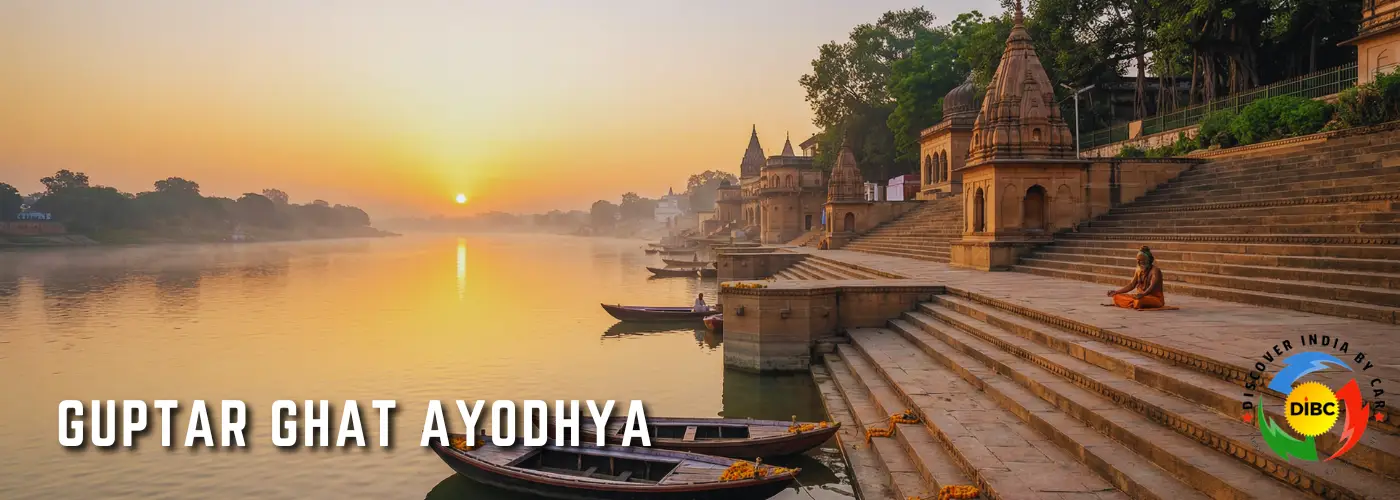
Guptar Ghat Secrets: The Sacred Place Where Lord Rama Disappeared
Guptar Ghat Ayodhya: Complete Travel Guide, Story & Road Trip Route
Guptar Ghat in Ayodhya is the exact sacred spot on the Sarayu river banks where Lord Rama took Jal Samadhi. Pilgrims visit this deeply peaceful site to bathe in its holy waters, seeking spiritual liberation and a quiet escape from the city’s crowded main temples.
Guptar Ghat at a Glance (Quick Facts for Travelers):
- Location: Ayodhya Cantonment Area (8-9 km from Ram Janmabhoomi)
- Best Time to Visit: 5:00 AM to 7:00 AM (Sunrise) or 6:30 PM (Evening Aarti)
- Entry Fee: Free (No tickets required)
- Time Required: 1 to 2 hours
- Significance: The exact location of Lord Rama’s Jal Samadhi.
What is Guptar Ghat? The Silence Beyond the City
Ayodhya is loud. I mean that in the best way possible. The city vibrates with millions of footsteps, endless temple bells, and the chanting of priests. It is a city celebrating the birth of a king.
But if you drive away from the Ram Janmabhoomi, past the crowded markets, and slip into the military cantonment area, the noise just… stops. You hear the wind. You hear the gentle sloshing of water against ancient stones. You have found Guptar Ghat.
Let’s get one thing straight right away. You do not come here looking for massive, gold-plated temple structures. You come here for the atmosphere. This is the exact spot where the Ramayana ends. It is the location where Lord Rama, having completed his earthly duties, walked into the river and left his human body behind.
For spiritual travelers, this place feels heavy. But it is a good heavy. While the rest of Ayodhya is a festival, Guptar Ghat is a meditation. The water of the Sarayu River runs deep and slow right at this bend. You can sit on the sandstone steps for hours, completely undisturbed, just watching wooden boats drift by. It is raw, uncommercialized, and incredibly powerful.
Expert Pro-Tip: Skip the rushed group tours that only give you 15 minutes here. Tell your driver to park the car, find a dry step near the water, and just sit. The real magic of this place only reveals itself when you stop checking your watch.
Guptar Ghat Ayodhya History: Stones That Saw Gods Walk
The physical steps you walk on today were not built during the Treta Yuga. The current architectural marvel—with its sweeping staircases and small adjoining shrines—was commissioned in the early 19th century.
Raja Darshan Singh, a prominent ruler of the region, took it upon himself to revive this sacred site. River erosion and centuries of neglect had turned the original banks into mud. He brought in massive blocks of sandstone, carving out a proper bathing ghat so pilgrims could safely enter the water.
But the historical footprint of this specific riverbend goes back way further than 1800.
Ancient texts confirm that kings of the Suryavansha (the Solar Dynasty) favored this exact spot for royal rituals. When the British took over India, they recognized the strategic placement of the river and built a massive military cantonment right around it. This colonial decision actually saved Guptar Ghat from modern, ugly commercialization. Because the army strictly regulates the surrounding land today, nobody can build massive shopping malls or noisy hotels near the water.
Here is a quick breakdown of how this site evolved over time:
Historical Era | Condition of the Ghat | Key Developments & Changes |
Treta Yuga (Ancient) | Natural riverbank and mud plains. | Site of Lord Rama’s Jal Samadhi; strictly used by sages for deep penance. |
19th Century (1800s) | Rebuilt with solid sandstone masonry. | Raja Darshan Singh constructs the modern steps and adjoining Sita-Ram temples. |
British Colonial Era | Heavily restricted and militarized. | Cantonment established; Company Gardens built nearby for British officers. |
Modern Day (Present) | Well-maintained, clean, and accessible. | Guarded by local authorities; remains the cleanest and quietest ghat in Ayodhya. |
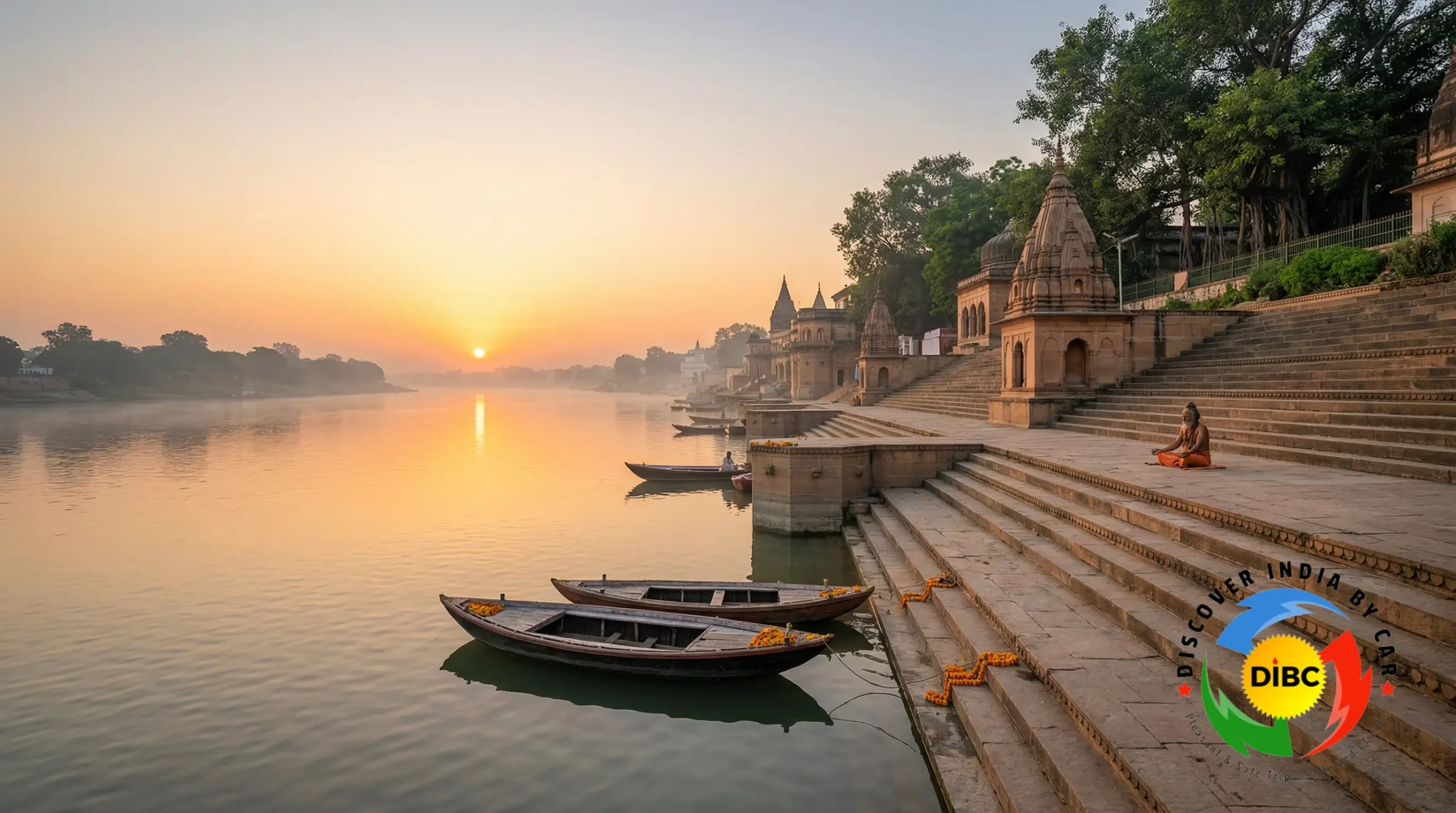
The Story of Lord Rama’s Jal Samadhi: The Heaviest Goodbye
You cannot truly understand this place without knowing the guptar ghat ram story. It breaks your heart, but it also makes perfect sense.
The Uttara Kanda of the Ramayana details the final days of Ram Rajya. Ayodhya was experiencing an era of absolute perfection. No poverty, no disease, no crime. But Rama was not just a king. He was an incarnation of Lord Vishnu. And his time on earth had an expiration date.
The chain of events unfolded like a tragic countdown:
- The Messenger of Time: Kala (Time/Death) arrived disguised as a sage, informing Lord Rama that his earthly tenure was over. They needed to speak in absolute privacy.
- The Fatal Order: Rama ordered Lakshmana to guard the door, declaring a strict death penalty for anyone who interrupted.
- The Angry Sage: Sage Durvasa suddenly appeared, demanding an immediate audience. When asked to wait, he threatened to burn all of Ayodhya to ashes with a curse.
- The Impossible Choice: Forced to choose between his city and his own life, Lakshmana interrupted the meeting to save Ayodhya.
- The Sacrifice: Unable to execute his beloved brother, yet bound by his own royal decree, Rama was devastated. Lakshmana solved this by walking to the Sarayu River and giving up his earthly body, returning to his cosmic form of Shesha Naga.
Without Lakshmana, Rama had no desire to stay on earth for another second.
The next morning, he left the palace. But he didn’t go alone. The citizens of Ayodhya refused to live in a world without him. Families, soldiers, animals—the entire city followed him down the dusty paths to this exact spot.
Where did Lord Rama take Jal Samadhi? Right here. He stepped into the freezing waters of the Sarayu. He waded deeper and deeper. The texts say his human form simply dissolved into pure, blinding light, and he merged back into Lord Mahavishnu.
The word “Gupt” literally means “hidden” or “vanished.” This is the ghat where God vanished from human eyes.
The Deep Spiritual Significance of Guptar Ghat
So, why do people fly in from the USA, the UK, and Nepal just to touch this water?
It boils down to the concept of Moksha. In Hindu philosophy, water is the ultimate purifier. But the water at Guptar Ghat is different. Because a divine entity consciously chose this spot to exit the mortal world, the soil itself is believed to vibrate with liberating energy.
Taking a dip here is not about washing off sweat. It is a spiritual hard reset.
Pilgrims believe that bathing in the Sarayu at this specific location destroys the karmic baggage of a thousand past lives. You will see sadhus (holy men) sitting on the steps, eyes shut tight, ignoring the tourists. They aren’t praying for a new car or a promotion. They are praying for release from the cycle of birth and death. When you do Guptar Ghat darshan, you are standing on the edge of eternity.
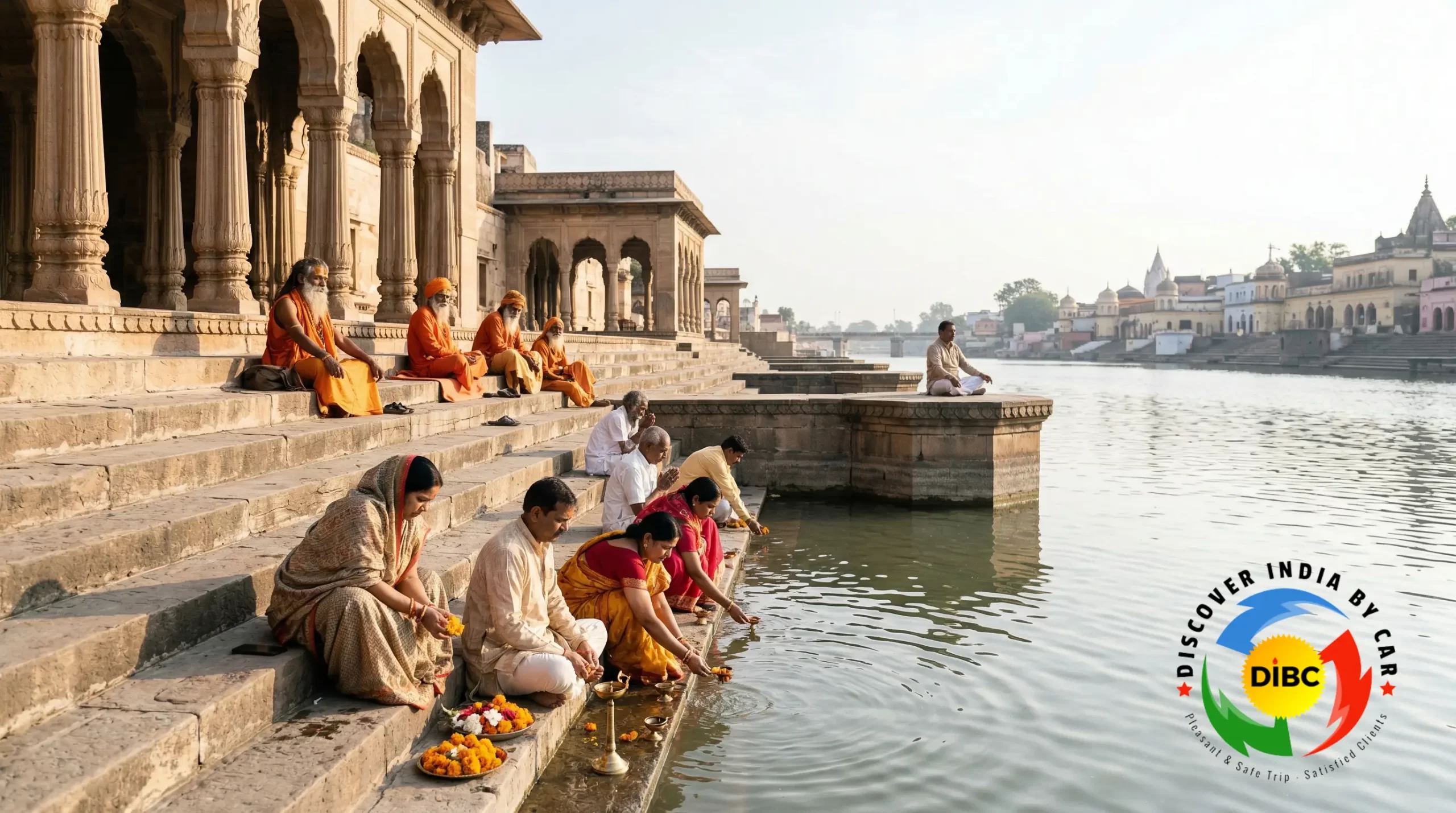
Guptar Ghat Timings: Planning Your Visit by the Clock
You can technically walk down to the river at any time, but the experience changes wildly depending on the hour. If you want the best possible experience, you need to time your visit correctly.
Here is exactly what you can expect throughout the day:
Time of Day | Atmosphere & Crowd Level | Best Activities to Do |
4:00 AM – 6:30 AM | Pitch black turning to dawn. Very few people. Cold. | Meditating, taking a quiet holy dip, watching the sunrise over the water. |
8:00 AM – 4:00 PM | Bright, warm, and somewhat busy with local families. | Temple visits, photography, hiring a wooden boat for a river tour. |
6:30 PM – 8:00 PM | Dark, visually stunning. Moderate crowds gathering. | Attending the evening Aarti, floating clay lamps (diyas) on the river. |
Keep in mind: The ancient temples located right on the steps usually lock their main doors between noon and 4:00 PM so the deities can “rest”. Plan your temple run for the morning.
The Best Time to Visit: Sunrise Chants vs. Evening Peace
Ayodhya weather does not play around. Your comfort heavily depends on the calendar.
Winter (November to February): This is the absolute sweet spot. Yes, the water is freezing, but the atmosphere is incredible. Thick fog rolls off the river in the early mornings. You can grab a hot cup of chai from a local vendor, sit on the steps, and watch the sun burn through the mist. It feels otherworldly.
Summer (April to June): I am going to be brutally honest. Do not come here in the middle of a May afternoon. Temperatures hit 45°C. The sandstone steps literally bake in the sun. If you walk on them barefoot, you will get blisters. If you must visit in summer, only come before 7:00 AM or after sunset.
Monsoon (July to September): The Sarayu becomes an absolute beast. The water level rises dramatically, swallowing the lower steps entirely. It is beautiful to look at, but local police will put up safety barricades to stop people from drowning in the fast currents. You can look, but you cannot swim.
Expert Pro-Tip: If you want the perfect photograph without tourists ruining your shot, arrive at exactly 5:30 AM in November. The soft morning light hitting the ancient brickwork is a photographer’s dream.
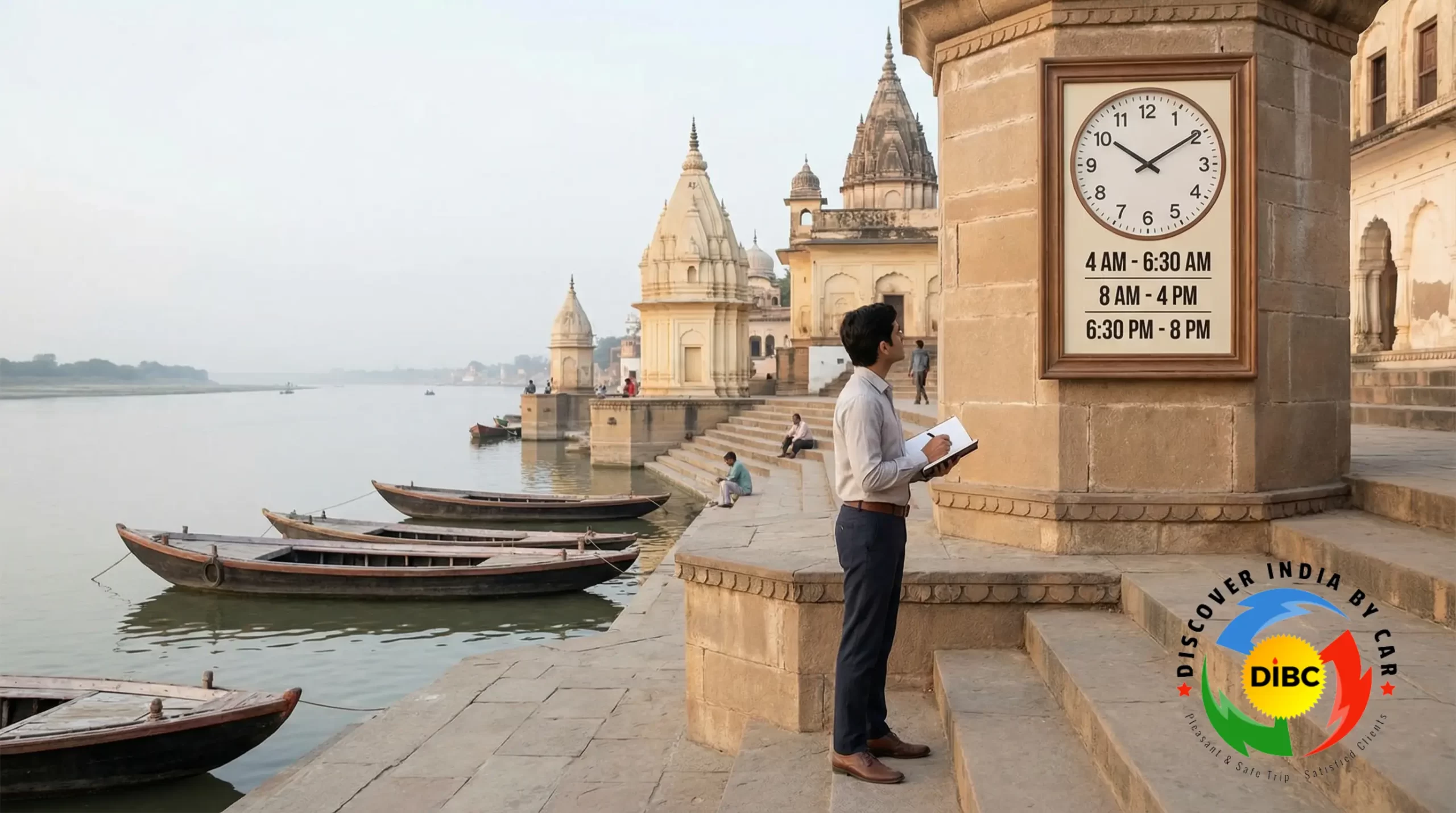
Is Guptar Ghat Worth Visiting? Our Experience
Is Guptar Ghat worth visiting? Ask anyone who actually lives in Ayodhya, and they will look at you like you are crazy for even questioning it.
Most tourists make a massive mistake. They fly in, stand in a suffocating line for five hours at the Ram Janmabhoomi, get pushed around at Hanuman Garhi, eat a quick meal, and leave. They go home exhausted, thinking Ayodhya is just chaos.
They missed the point of the city.
Guptar Ghat is the antidote to that chaos. It ranks at the very top of the peaceful places in Ayodhya. There are no aggressive shopkeepers yelling at you to buy flowers. Nobody is pushing you to move faster. You hear the rhythmic splash of oars hitting the water. You see massive, ancient Banyan trees that have been dropping their roots into the earth for centuries. It forces you to slow down.
How to Reach Guptar Ghat: A Direct Road Travel Guide
If you are planning an Ayodhya road trip with Discover India By Car, driving here is an absolute pleasure. The infrastructure around Ayodhya has received massive upgrades recently.
Guptar Ghat sits about 8 to 9 kilometers away from the busy center of town.
Driving In (Our Route Experience): When we drove down from Lucknow last month, we took the NH27. The highway is buttery smooth, and the toll will cost you roughly ₹130 to ₹160 one way. The drive takes just under three hours. As you approach Ayodhya, our biggest advice is to avoid the main city bottlenecks. Instead, follow the signboards directing you toward the “Ayodhya Cantonment” (Cantt).
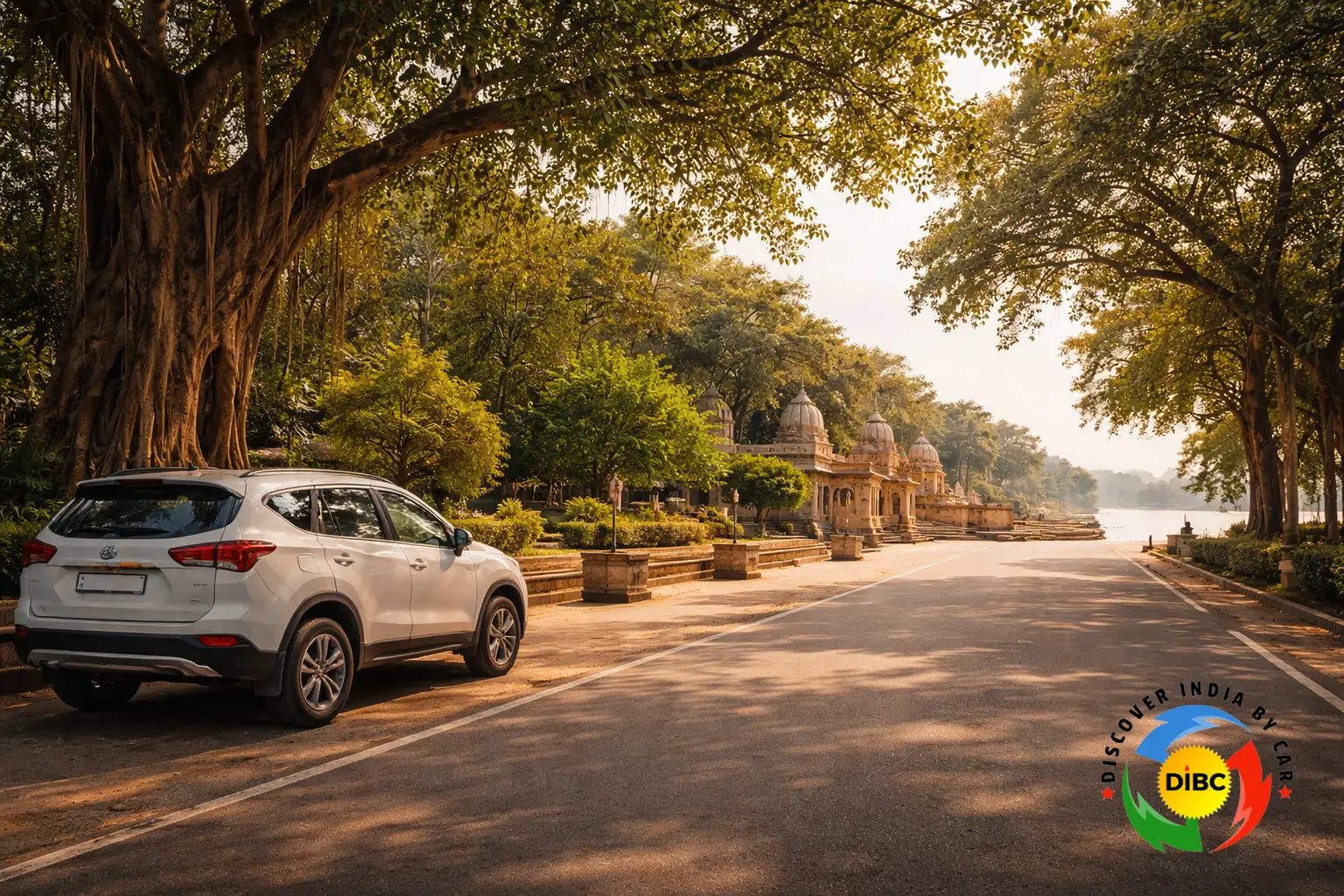
Once we entered the military zone, the driving experience completely changed. The roads are wide, spotless, and heavily shaded by massive trees. Even if you are driving a large SUV, navigating these roads is a breeze compared to the narrow lanes of the main city.
Parking Details: Keep following the straight road through the Cantt, and it dead-ends right at the ghat. There is a designated, open parking space right near the steps. It is generally free, but during peak festival seasons, local attendants might charge a nominal ₹50 fee. You park your car, walk for 60 seconds, and you are touching the river.
By Flight: Maharishi Valmiki International Airport is fully operational. It sits about 15 kilometers from the ghat. Grab a prepaid taxi from the terminal and tell the driver you want to bypass the city center and head straight to the Cantt riverfront.
By Train: Ayodhya Dham Junction is stunning now. From outside the station, skip the big SUVs and hire a simple auto-rickshaw. It will cost you a few hundred rupees, and they can navigate the smaller roads much faster.
Travel Tips for Foreign Tourists & First-Timers
While traveling safely in UP is generally easy due to massive highway upgrades, remember that Ayodhya is not a typical tourist town. It is a highly orthodox, deeply religious center. If you are flying in from the USA, Europe, or even neighboring Mauritius, you need to adjust your behavior to match the local culture.
- Fix Your Wardrobe: Keep the shorts and tank tops in your suitcase. Both men and women need to cover their shoulders and knees. Buy a local cotton kurta. It keeps you cool and shows respect for the locals.
- The Footwear Rule: You cannot wear shoes on the ghats or in the temples. Wear slip-on sandals. You will be taking them off and putting them back on constantly. Leave your expensive sneakers at the hotel.
- Monkey Business: Macaques run this town. They are smart, fast, and completely unafraid of humans. Do not walk around with a packet of chips in your hand. Take your sunglasses off your head and put them in your bag. If a monkey grabs your phone, do not fight it.
- Guide Scams: You will be approached by men offering to tell you the “secret history” of the site for a fee. Politely say no. The history is exactly what you just read in this article. Just walk past them.
- Photography Etiquette: Taking pictures of the river and the architecture is totally fine. Sticking your camera in the face of a half-naked sadhu who is trying to meditate is not. Use common sense.
Hidden Gems: Nearby Attractions in Ayodhya
Do not just turn around and leave once you finish your bath. If you are looking for peaceful places to visit near Ayodhya Cantt, the immediate area holds a few more secrets.
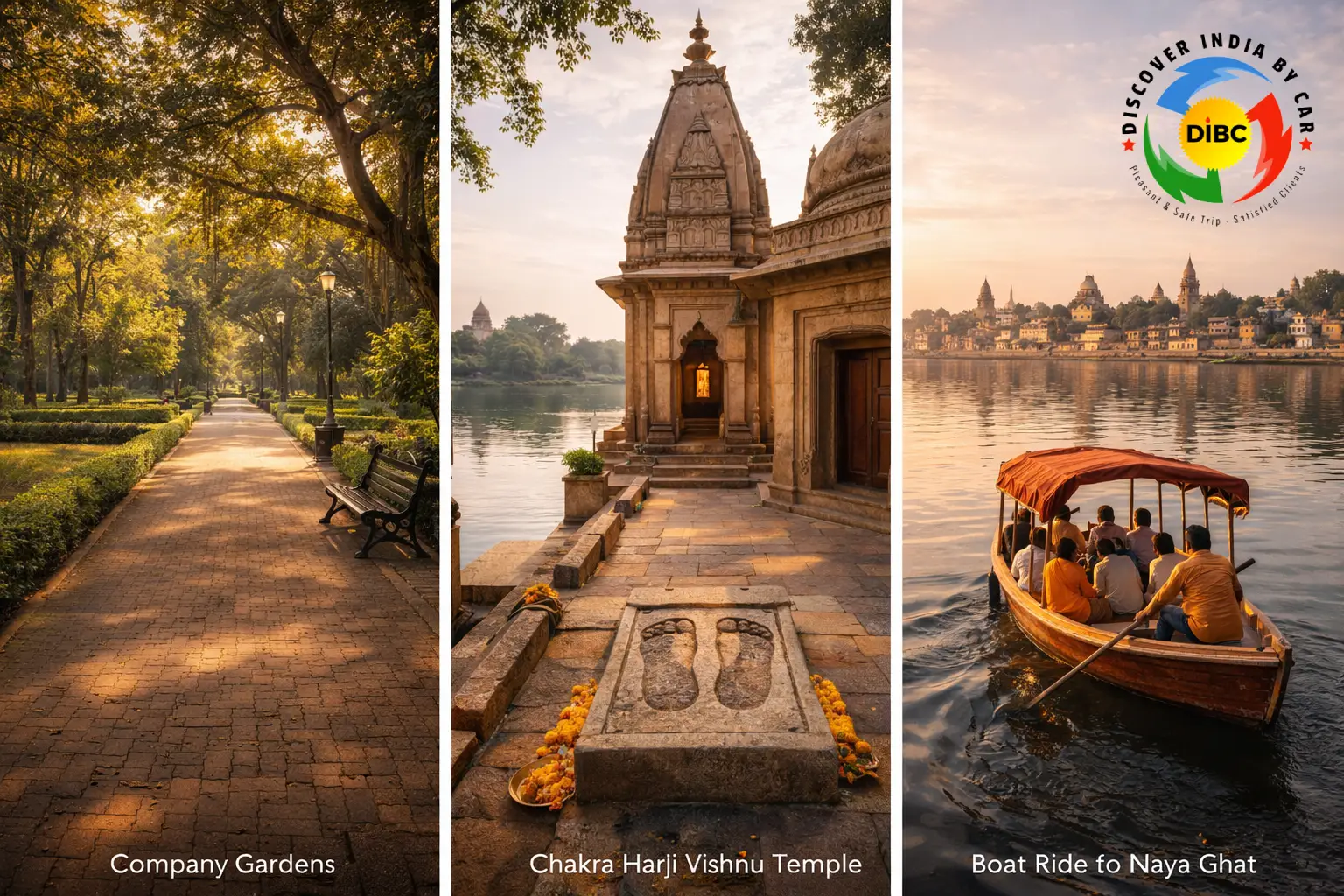
Company Gardens: Right adjacent to the ghat steps, you will find a massive botanical garden. The British planted this in the 1800s. It is filled with exotic trees, manicured walking paths, and absolute silence. It is a great place to sit down and read a book.
Chakra Harji Vishnu Temple: This temple sits right by the water. Inside, there is a stone slab that allegedly bears the exact footprint of Lord Rama, left behind just before he stepped into the river. The energy inside this small room is incredibly intense.
The Boat Ride to Naya Ghat: Instead of taking a taxi back to the city center, negotiate with a boatman at Guptar Ghat. Pay him to row you down the river all the way to Naya Ghat. It takes about 45 minutes. Seeing the entire skyline of Ayodhya from the middle of the Sarayu River is an experience you cannot put a price tag on.
Guptar Ghat: The Perfect End to Your Ayodhya Road Trip
Ayodhya is currently undergoing a massive transformation. New airports, massive corridors, and sprawling hotels are changing the skyline every single day. Millions of new visitors will flood the streets in the coming years.
But Guptar Ghat refuses to change.
It remains anchored in the past, entirely indifferent to the modern chaos. It doesn’t need grand laser shows or massive crowds to prove its worth. It just sits quietly by the water, offering exactly what Lord Rama sought when he walked down these very banks thousands of years ago: absolute, unbroken peace. If you are planning a trip to Ayodhya, make sure your journey ends where his did.
Frequently Asked Questions About Guptar Ghat (FAQs)
Q1. What exactly is Jal Samadhi in Hindu culture?
A: Jal Samadhi is the highly sacred act of consciously giving up one’s physical body by walking into a body of water. Unlike suicide, which is driven by despair, a Samadhi is viewed as a divine, enlightened transition out of the mortal world once a soul has completed its earthly duties.
Q2. Is the water at Guptar Ghat clean enough for bathing?
A: Yes. Compared to the ghats closer to the city center, the water here is significantly cleaner because it is located upstream and shielded by the military cantonment zone. However, the current can be deceptive, so always stay near the safety chains.
Q3. How far is Guptar Ghat from the main Ram Mandir?
A: It is roughly 8 to 9 kilometers away. Because you have to drive out of the main city and into the military cantonment, a taxi or auto-rickshaw ride will usually take about 25 to 30 minutes depending on the city traffic.
Q4. Are there entry fees or strict dress codes for the Ghat?
A: There are no entry fees to visit the riverbank or the adjoining ancient temples. While there is no official “police-enforced” dress code, visitors are strictly expected to dress modestly—covering shoulders and knees out of respect for the deeply religious nature of the site.
Q5. Can we hire boats at Guptar Ghat?
A: Yes, local boatmen operate small wooden rowboats and motorboats directly from the steps. A quick 15-minute shared ride usually costs around ₹50 to ₹100 per person, while booking a private boat for a longer journey to Naya Ghat can cost anywhere between ₹500 to ₹800, depending on your negotiation skills. Always agree on the price before stepping into the boat.