- Private car and driver in Delhi / India
- +91-8447445445
- info@discoverindiabycar.com sugar.ankit@yahoo.com
 +91-9818434712
- Follow us:



India Budget Travel Guide 2026: Travel Cheap Without Missing Anything
✍️ Written by Ankit Sugar | North India Travel Expert & Founder, Discover India By Car
Having spent 14 years helping thousands of foreign travellers navigate the chaotic maze of Indian travel logistics — from calculating realistic daily budgets to decoding the confusing fares of long-distance transport — I created this ground-reality guide to save you from the most common spending blunders. I haven’t just researched India’s budget routes from a laptop; I deal with the real-world operational math every single day. From rescuing backpackers stranded at confusing transit hubs to successfully structuring smart, cost-effective private car routes for pairs and small groups looking to beat the train-plus-taxi hassle across the Golden Triangle, everything in this guide is born from my own lived experience solving transport nightmares and ensuring you get maximum value for every single rupee you spend.
India can cost you ₹2,000 a day or ₹20,000 a day — here’s how to control which one.
That’s not an exaggeration to grab your attention. It’s the literal range I’ve watched play out over 14 years of working with travellers here. I’ve had backpackers cross the entire country for less than the price of three nights in a European city, and I’ve had families spend more on a single hotel suite than a local family earns in half a year. Same country. Same monuments. Wildly different bills.
The thing nobody tells you about budgeting for India is that the country isn’t expensive or cheap — your choices are. Where you sleep, how you move between cities, where you eat, and what you say yes to. Get those four things right and India becomes one of the best-value destinations on earth. Get them wrong and you’ll wonder where your money went.
This guide is the honest, number-driven breakdown I give my own guests. Real costs in 2026 rupees, no vague hand-waving, and a frank look at where it’s worth spending a little more — including the one decision (transport) where “cheapest” and “smartest” are often not the same thing.
India Daily Budget Breakdown: Backpacker vs Mid-Range vs Comfort
Let’s start with the number you actually came here for. How much does India trip cost per day? It depends entirely on which traveller you are. Here’s the honest spread for 2026.
| Daily Spend (Per Person) | Backpacker | Mid-Range | Comfort |
|---|---|---|---|
| Accommodation | ₹400–900 (dorm/basic room) | ₹2,000–4,000 (good hotel) | ₹7,000–15,000+ |
| Food | ₹300–600 | ₹800–1,500 | ₹2,000–4,000 |
| Local transport | ₹150–400 | ₹500–1,200 | ₹1,500–3,000 |
| Sightseeing/entry | ₹300–700 | ₹500–900 | ₹700–1,200 |
| Misc / SIM / extras | ₹150–400 | ₹400–800 | ₹1,000+ |
| Rough daily total | ₹1,500–2,800 | ₹4,500–8,000 | ₹13,000–24,000+ |
| In USD (≈₹84/$) | $18–$33 | $54–$95 | $155–$285+ |
A few honest things about these tiers.
The backpacker number is real but it assumes you’re genuinely roughing it — dorm beds, public buses, street food, and the patience to haggle. Solo travellers on a long gap-year trip routinely live on ₹1,800–2,200 a day. It’s completely doable. It’s also tiring in a way that catches some people off guard around week three.
The mid-range tier is where most first-time visitors land once they’re honest with themselves. A clean private room with reliable hot water, the occasional taxi instead of a sweaty rickshaw, restaurant meals when you want them. This is the sweet spot for the india daily budget traveler who wants comfort without waste.
The comfort tier isn’t the focus of this guide, but I include it so you can see the full picture. The gap between mid-range and comfort in India is enormous — you’re often paying 3x for an experience that’s maybe 30% nicer.
One more thing the table can’t show: India gets cheaper the longer you stay and the more you understand it. Your week-one spending will be your highest. By week three you’ll know what things actually cost, you’ll stop overpaying rickshaw drivers, and your daily average will quietly drop.
Cheapest Transport Options in India (with Real 2026 Costs)
Transport is where budgets are won or lost, and where the most confusion lives. Let me lay out the real india transport budget options from cheapest up — and then, later, I’ll make the honest case for the one option that isn’t the cheapest but is often the smartest.
Local buses — ₹10–60 for city and short routes. Dirt cheap, frequently crowded, rarely comfortable, and a genuine cultural experience if you’re up for it.
Metro systems — Delhi, Mumbai, Bengaluru, Kolkata, and others have clean, air-conditioned, ridiculously cheap metro networks. Delhi Metro fares run ₹20–60 for most journeys. If you’re in a metro city, this is the single best transport value in the country.
Auto-rickshaws — ₹50–200 for short city hops. Always agree the fare before you get in, or insist on the meter. Apps like Uber and Ola now book autos at fixed fares in most cities, which removes the haggling entirely — use them.
Ride-hailing (Uber/Ola) — ₹150–500 for typical city rides. Comfortable, metered, no arguments. For short-to-medium city distances, this is the easy budget choice.
Trains (the backbone of cheap travel India) — this is how the country actually moves, and it’s an experience in itself. The classes matter:
- Sleeper class (SL): ₹300–600 for an overnight long-distance journey. The classic backpacker choice — basic, non-AC, social, atmospheric.
- 3AC (third-tier air-conditioned): ₹1,000–2,000 for the same route. The comfort-to-cost sweet spot for most travellers.
- 2AC: ₹1,500–3,000. More privacy, more space.
Book trains in advance through the official IRCTC system — popular routes sell out weeks ahead in peak season, and tickets get markedly more expensive (or vanish) at the last minute.
Domestic flights — ₹3,000–8,000 for typical routes if booked ahead. For long hops (say Delhi to Kerala, or anywhere to the far south), flying often costs less than the time you’d lose on a 30-hour train. Book early; prices climb steeply close to departure.
Private car with driver — ₹2,500–4,500 per day for a sedan including fuel and driver. On paper this looks like the expensive option, and for a solo traveller it usually is. But the math changes completely when you’re travelling as a pair or a small group, and when your route involves multiple cities with stops in between — which I’ll break down properly in its own section, because it’s the most misunderstood number in Indian travel budgeting. If you want to skip the math and look at fleet options directly, you can explore hiring a private car and driver in Delhi to map your custom route.
Budget Accommodation Guide: Hostels, Guesthouses & Cheap Hotels
India’s accommodation scene has transformed in the last decade. The choice for budget travellers is genuinely excellent now, and india budget accommodation no longer means choosing between grim and pricey.
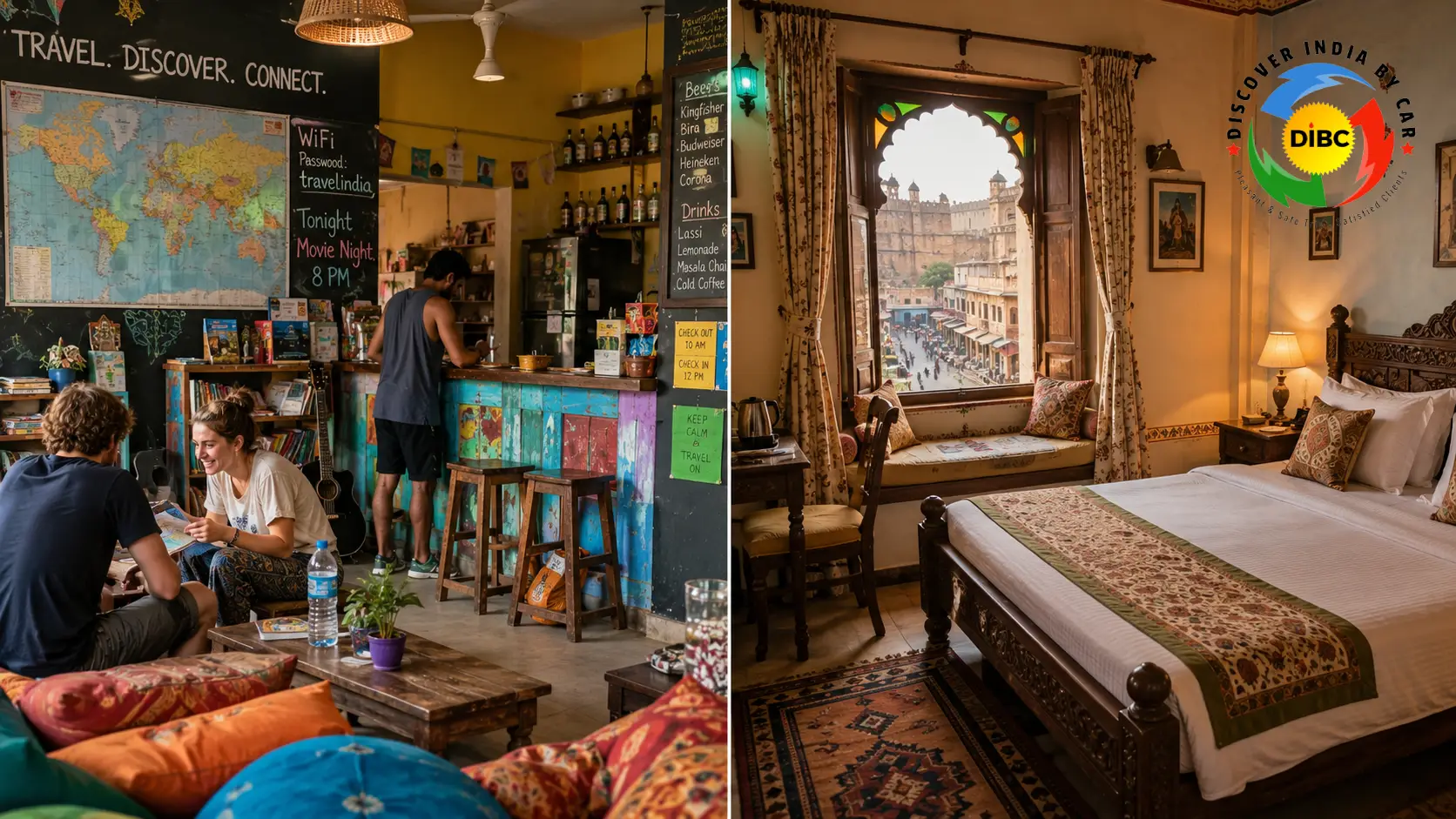
Hostels are the backpacker default and they’ve come a long way. A dorm bed runs ₹400–900 a night in most cities, and the modern Indian hostel chains (you’ll find them in every major tourist city) offer clean dorms, decent Wi-Fi, common areas, café, and — crucially — a ready-made community of fellow travellers. For solo travellers, hostels solve the loneliness problem and the budget problem at once. Many also offer cheap private rooms (₹1,200–2,000) if you want privacy on a hostel budget.
Guesthouses and homestays are my personal favourite for value. A family-run guesthouse gives you a clean private room, often home-cooked breakfast, and local knowledge you simply can’t get from a booking app — for ₹800–1,800 a night. In smaller towns and the mountains, this is where the real character lives.
Budget hotels fill the ₹1,500–3,500 range. Reliable, private, usually with AC and hot water. The big online travel platforms list thousands; read recent reviews carefully, because photos lie and standards vary enormously.
A practical tip that saves real money: don’t always pre-book everything. In most Indian towns outside peak season, walking in and negotiating a room rate in person gets you a better price than the app rate — sometimes 20–30% lower. Pre-book your first two nights (you’ll be tired and don’t want to hunt), then stay flexible.
And a word on location over luxury: in a city like Delhi or Jaipur, a basic room in a central, walkable area beats a fancier room stuck in a distant suburb every time. You’ll save the difference in taxi fares alone.
How to Eat Well in India for Under ₹500/Day
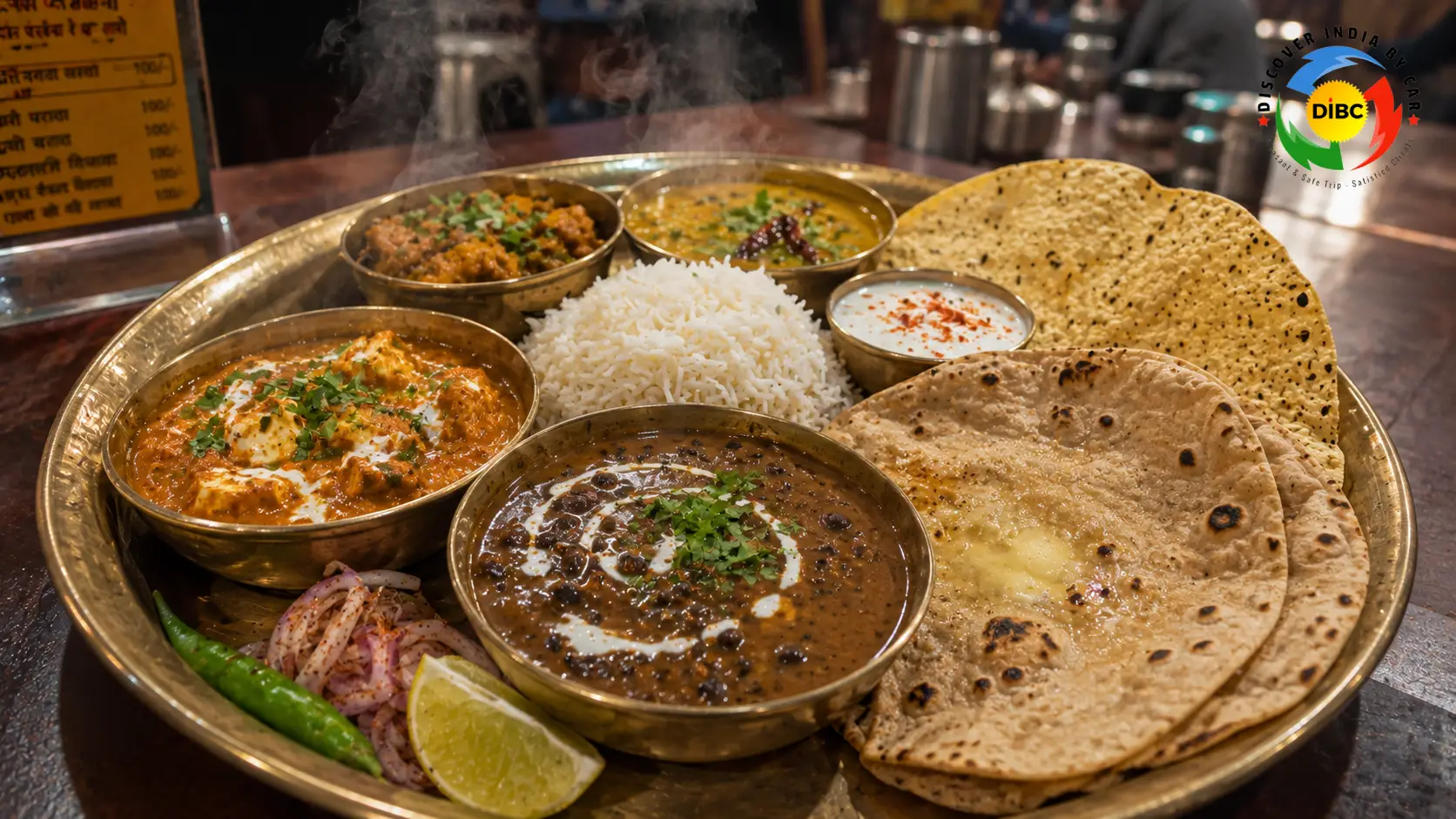
Here’s the best news in this entire guide. Food is where India is almost embarrassingly good value, and eating cheap food india tourist style doesn’t mean eating badly — it often means eating better.
The hierarchy of value, roughly:
Street food — ₹40–150 for a genuinely satisfying portion. A plate of chaat, a dosa, a kathi roll, samosas, fresh fruit. The street food in India is one of the great food cultures of the world, and a busy roadside stall frequently serves a better version of a dish than a mid-range restaurant charging ten times more. The key word is busy — high turnover means fresh food.
Local dhabas and thali joints — ₹100–250 for a full meal. A thali (a platter of dal, vegetables, rice, bread, and pickle, often unlimited refills) is the single best-value meal in India. You walk out full for the price of a coffee back home. Order the thali. Always order the thali.
Mid-range restaurants — ₹400–800 per meal. When you want air conditioning, a menu, and a sit-down break. Perfectly affordable as an occasional treat even on a tight budget.
So how do you eat well for under ₹500 a day? Easily: street food or fruit for breakfast (₹50–100), a thali for lunch (₹150), and a modest dinner (₹150–250). You’ll eat better than ₹500 suggests, and you’ll eat what locals actually eat.
The street-food safety question — because everyone asks. Yes, you can eat street food in India. Be sensible: choose busy stalls with high turnover, eat food that’s cooked fresh and hot in front of you, skip raw salads and pre-cut fruit from carts, and drink only sealed bottled or properly filtered water. Build up gradually in your first few days. Most travellers who get sick do so from water and ice, not from cooked street food.
On water: never drink tap water. Bottled water costs ₹20 a litre, or better, carry a refillable bottle with a built-in filter or use purification tablets — cheaper, and far kinder to the mountain of plastic India already struggles with.
Free & Cheap Things to Do in India’s Top Tourist Cities
A surprising amount of what makes India unforgettable costs nothing or next to nothing. The big-ticket monuments charge foreigner-rate entry fees (the Taj Mahal is around ₹1,100 plus ₹200 for the main mausoleum; most ASI monuments run ₹500–600 for foreigners) — but between those headline sites, the country is full of free wonder.
In Delhi: Wandering Old Delhi’s lanes and the Chandni Chowk bazaar costs nothing. Many of the city’s most atmospheric experiences — the Lodhi Gardens, the spice markets, the riverside ghats, browsing Dilli Haat — are free or a handful of rupees. The Akshardham temple complex is free to enter.
In Jaipur: Climbing to Nahargarh Fort for the sunset view over the Pink City, walking the old city bazaars, watching the street life around Hawa Mahal from the outside — all free. You pay only for the monuments you choose to enter.
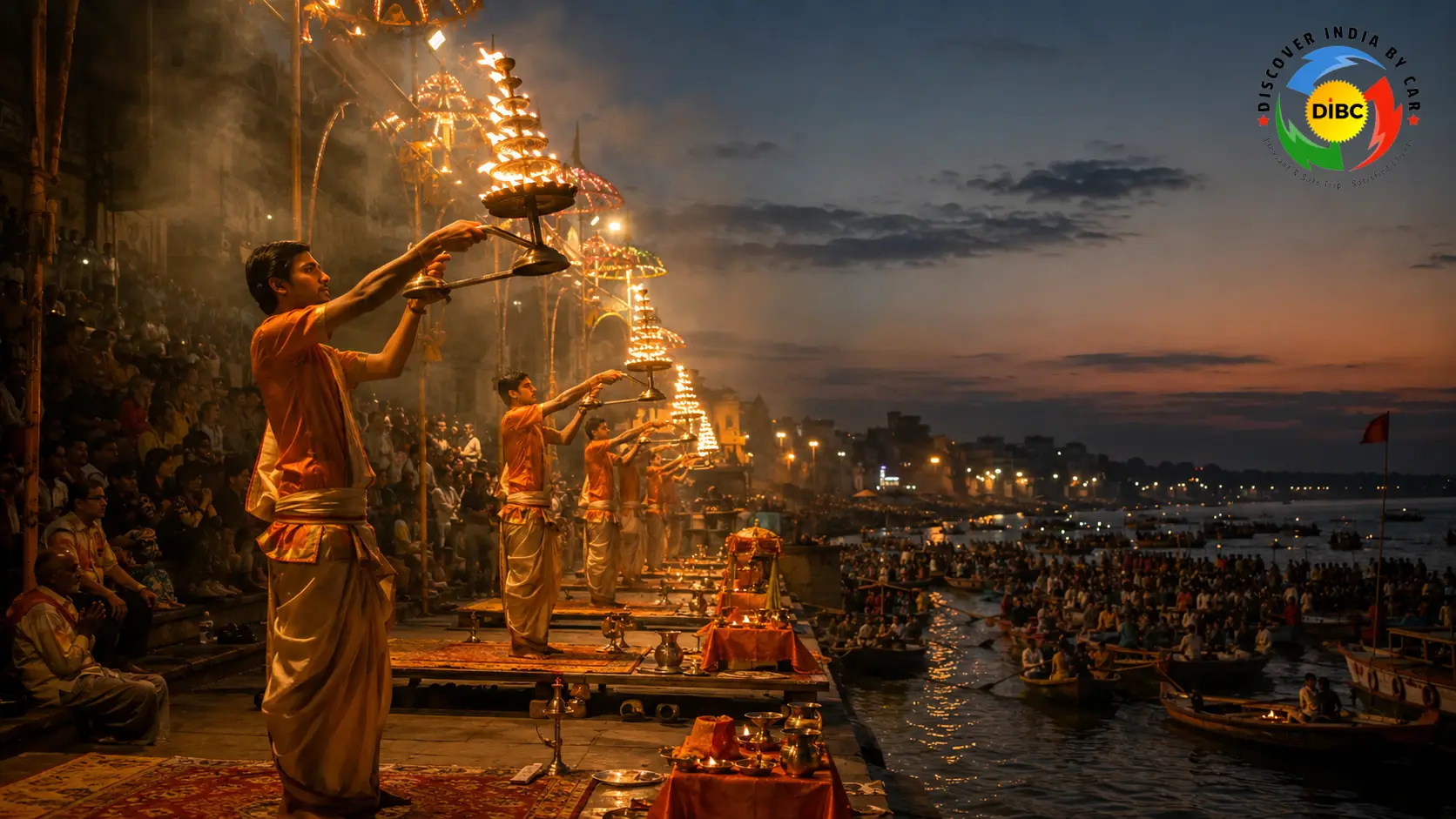
In Varanasi: The single most powerful experience in the city — the evening Ganga Aarti ceremony at the ghats — is completely free. Walking the ghats at dawn costs nothing. The atmosphere of the old city is free and priceless.
Everywhere: Temples are almost always free to enter. Markets are free to wander. Sunsets, street life, festivals, the simple act of sitting in a chai stall watching India go by — these are the things travellers actually remember, and they cost almost nothing.
A genuine money-saving insight: you don’t need to pay to enter every monument. Pick the two or three that matter most to you in each city, pay the foreigner fee gladly for those, and experience the rest of the city for free. Monument fatigue is real, and your wallet will thank you.
Is a Private Car Worth It on a Budget? (An Honest Breakdown)
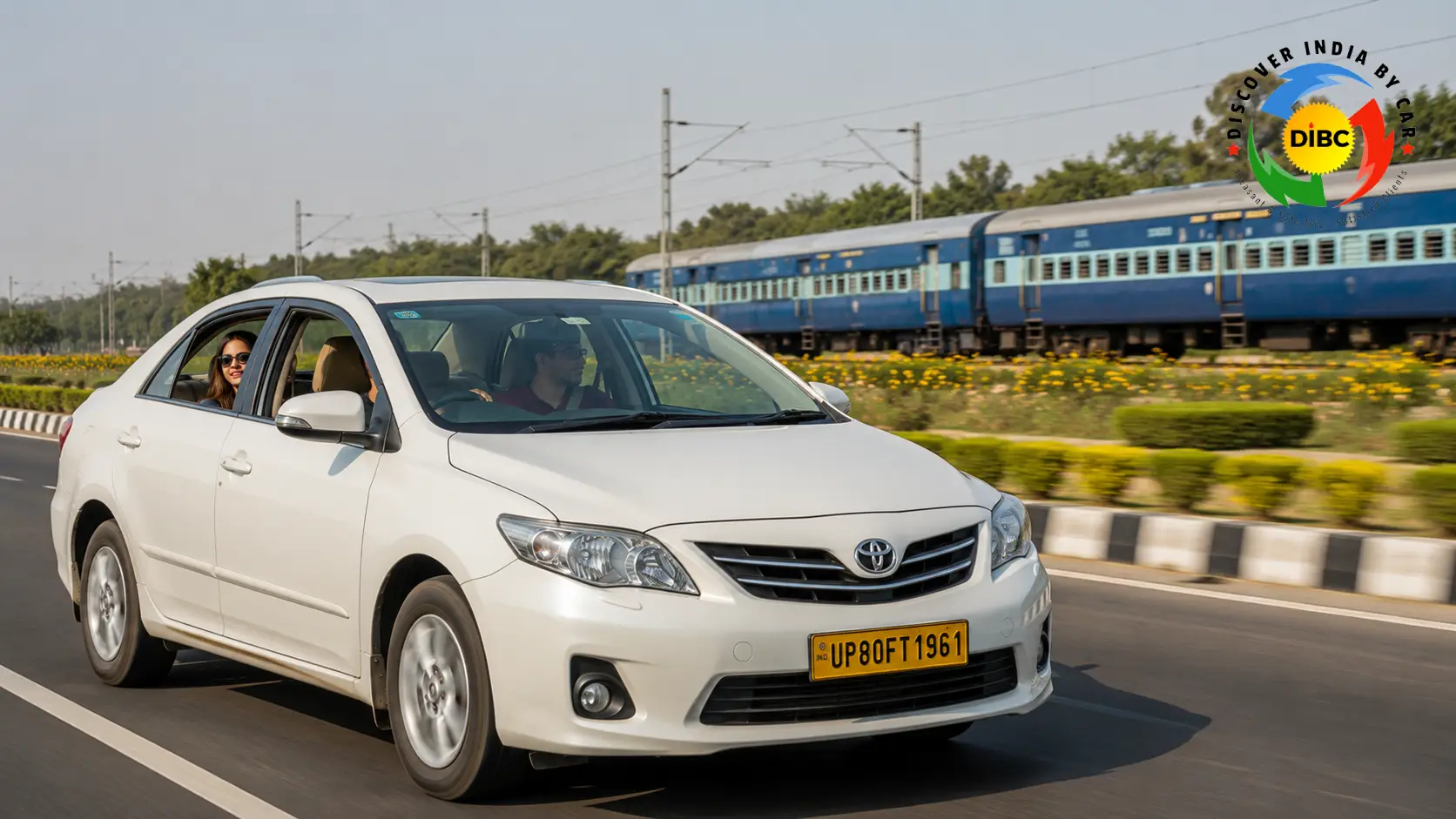
Now the section I promised — and I’m going to be straight with you, including the parts that don’t help my business, because a guide that only tells you what’s convenient for me isn’t worth reading.
For a solo backpacker, a private car is usually not the budget choice. If you’re travelling alone and counting every rupee, trains and buses will almost always be cheaper. I won’t pretend otherwise. Sleeper-class trains exist for a reason and they’re brilliant value.
But here’s where the conventional “private cars are expensive” wisdom breaks down — and where most budget guides get the math wrong.
The real question isn’t “car vs train” as a single ticket. It’s the total cost of moving a small group through a multi-city route with stops in between. Let’s do the actual numbers for a classic north india budget trip — the Golden Triangle, Delhi to Agra to Jaipur and back, over about 5–6 days.
The piecemeal way (train + taxi), for 3 people:
- Train tickets across the legs (3AC, 3 people): roughly ₹6,000–9,000 total
- Local taxis and autos at each city, every day: ₹800–1,500/day × ~5 days = ₹4,000–7,500
- The sites between cities — Fatehpur Sikri, the Chand Baori stepwell — are essentially unreachable by train, so either you skip them or hire a half-day taxi anyway
- Plus the hours lost to fixed train schedules, station transfers, luggage handling, and re-negotiating transport in every new city
The private car way, for the same 3 people:
- A sedan with driver and fuel for the full route: roughly ₹13,000–17,000 total for 5–6 days
- Split three ways: about ₹4,500–5,700 each for the entire transport portion of the trip
- Door-to-door pickup, every roadside site included, no schedules, no luggage stress, air conditioning in 40°C heat
When you run it honestly, a private car shared between two or three people often costs about the same as trains-plus-taxis for a multi-city route — sometimes less — while saving you hours every single day and unlocking sites you literally cannot reach otherwise. That’s why I tell budget-conscious couples and small groups to at least do the math before assuming a car is a luxury. For the right traveller, private car India affordable isn’t a contradiction — it’s just arithmetic that the cheap-at-all-costs crowd never bothers to check.
The honest rule of thumb:
- Solo and pinching pennies? Trains and buses. A car isn’t worth it.
- Travelling as 2–3 people on a multi-city route? Price a private car. The per-person number will surprise you.
- Got remote stops between cities, or limited time? A car often pays for itself in saved hassle and unlocked sights. You can check our transparent, flat-rate pricing to rent a car with driver in Delhi for Rajasthan tour or short expressway hops.
🗺️ How We Fit In (Transparent Note)
I’ll be upfront: this is my business, so weigh it accordingly. Our team at Discover India by Car has run private car-and-driver tours across North India for 14 years — managing seamless travel through the Golden Triangle, Rajasthan, Varanasi, and the Himalayan foothills. We exist precisely for the traveller in that middle scenario: a small group on a multi-city northern route where a shared car quietly beats the piecemeal alternative on both cost and sanity.
- What we do: Door-to-door private car with an experienced local driver — airport pickups, inter-city legs, and the roadside heritage stops the trains skip.
- Why it’s budget-relevant: Split between 2–3 travellers, the per-person cost is genuinely competitive with trains + daily taxis, with far less wasted time.
- No pressure: If you’re solo and on a backpacker budget, we’ll honestly tell you the train is your better bet.
- Reach us: 📧 info@discoverindiabycar.com | 📞 +91-9818434712 / +91-8447445445
Sample 2-Week India Budget Itinerary with Full Cost
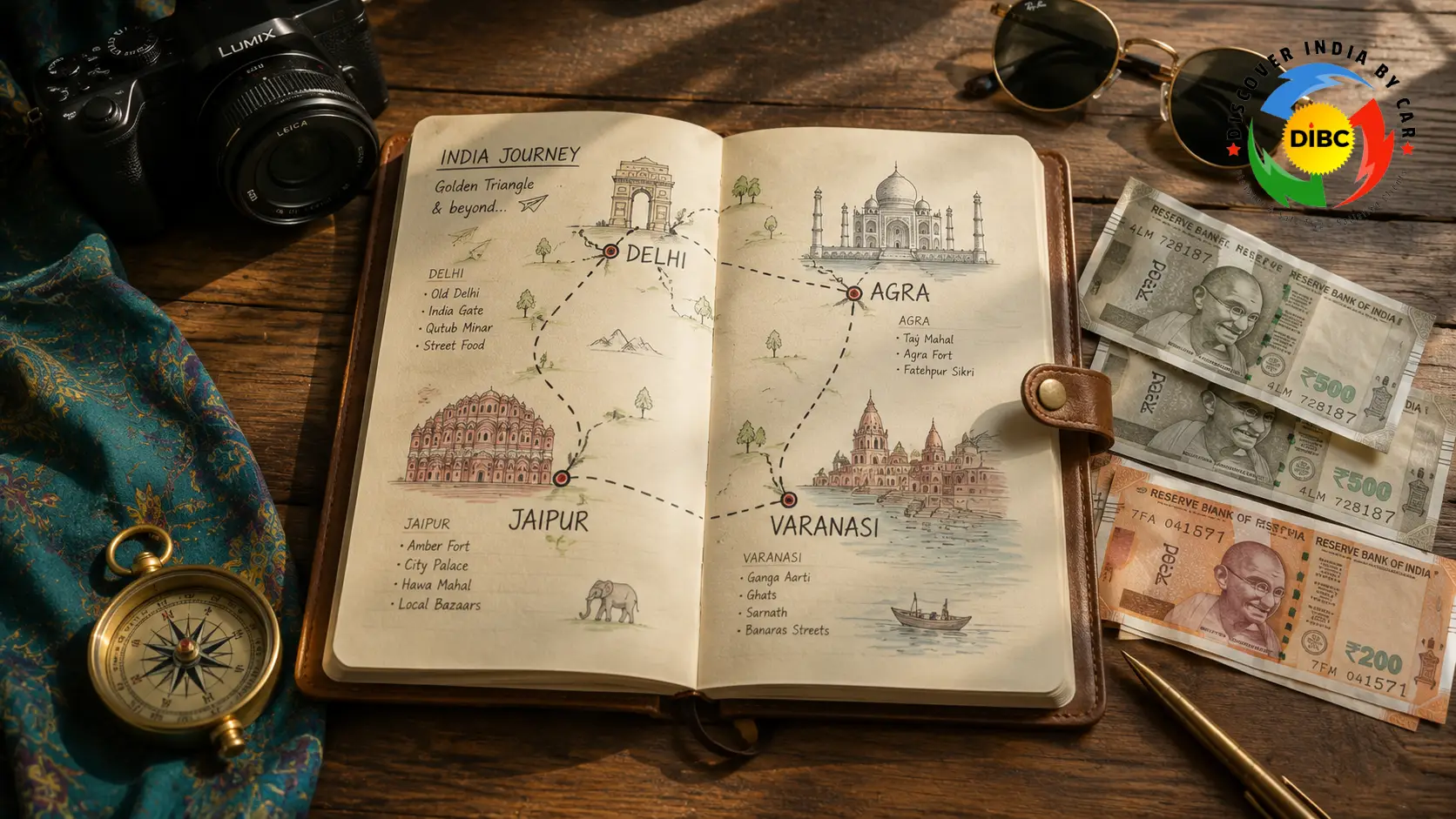
Here’s a complete, realistic india budget itinerary for 14 days across North India, costed at the mid-range/backpacker boundary — comfortable but careful. Numbers are per person, assuming you’re travelling as a pair. This route is perfectly tailored for those planning a classic Golden Triangle tour with Udaipur or Varanasi extensions.
| Days | Route & Highlights | Est. Cost (Per Person) |
|---|---|---|
| 1–3 | Delhi — Old Delhi, Red Fort, Humayun's Tomb, markets | Accommodation ₹2,400 + Food ₹1,500 + Transport/Sites ₹2,000 = ₹5,900 |
| 4–5 | Agra — Taj Mahal at sunrise, Agra Fort, Fatehpur Sikri | Stay ₹1,600 + Food ₹1,000 + Entry/Transport ₹2,800 = ₹5,400 |
| 6–8 | Jaipur — Amer Fort, City Palace, Pink City bazaars | Stay ₹2,400 + Food ₹1,500 + Transport/Sites ₹2,500 = ₹6,400 |
| 9–10 | Varanasi (flight from Jaipur via Delhi) — ghats, Ganga Aarti, Sarnath | Flight ₹5,000 + Stay ₹1,600 + Food/Sites ₹1,800 = ₹8,400 |
| 11–13 | Pushkar or Ranthambore (Optional Extension) | Transport ₹3,000 + Stay ₹2,400 + Activities ₹3,000 = ₹8,400 |
| 14 | Return to Delhi — Last shopping, departure | Transport ₹1,500 + Misc ₹1,000 = ₹2,500 |
Rough 14-day total per person (mid-budget, as a pair): around ₹37,000–42,000 (~$440–500), excluding international flights.
Strip it down to true backpacker mode — dorms, sleeper trains instead of that Varanasi flight, all street food — and the same two weeks drops closer to ₹22,000–28,000 ($260–330) per person. Add comfort hotels and private transport throughout and it climbs past ₹90,000. Same route, same monuments. Your choices, your bill.
Money-Saving Tips: 20 Ways to Cut India Trip Costs
The accumulated wisdom of 14 years, in no particular order — these are the things that actually move the needle.
- Travel October to March in the north — better weather, but book ahead as it’s peak season; the shoulder months of October and March offer the best price-to-comfort balance.
- Eat where locals eat. Empty tourist restaurant vs packed local dhaba? Always the dhaba. Cheaper and better.
- Always order the thali for lunch. Unbeatable value.
- Use Uber/Ola for autos and taxis to skip the haggling and the tourist markup.
- Take the metro in every city that has one. Cheapest, fastest, coolest.
- Book trains early on IRCTC — last-minute means expensive or sold out.
- Carry a filtered water bottle instead of buying bottled water all day.
- Negotiate room rates in person for walk-ins outside peak season.
- Don’t pay to enter every monument — pick your top two or three per city.
- Get a local SIM (₹500–800 for a month with generous data) instead of roaming. Buy it at the airport or an official store with your passport.
- Withdraw cash from bank ATMs in larger amounts to minimise foreign-transaction fees; carry cash for small shops and rickshaws.
- Learn to bargain politely in markets — start at half, settle around 60–70% of the asking price, and keep it friendly.
- Travel overnight on sleeper trains to save a night’s accommodation and a day of transit.
- Share transport. Splitting a car or taxi between 2–3 people transforms the per-person cost (see the private car section).
- Avoid hotel restaurants and airport food — both carry heavy markups.
- Buy handicrafts at government emporiums (Dilli Haat, state emporiums) for fixed fair prices and zero bargaining stress.
- Skip the bottled drinks at sit-down restaurants; they mark up soft drinks heavily.
- Tip fairly but don’t over-tip — ₹20–50 for small services, ₹200–300/day for a driver is genuinely appreciated and appropriate.
- Use free walking tours offered in Delhi, Jaipur, and other cities (tip-based — excellent value and local insight).
- Stay flexible. The traveller locked into a rigid pre-paid plan pays more than the one who adapts. Some of the best value comes from saying yes to a recommendation you hadn’t planned.
Traveling as 2 or 3 People? Do the Math Before Booking Trains.
As broken down in this 2026 guide, splitting a private car between a pair or small group often costs the same as piecemeal 3AC train tickets plus daily city rickshaws. Don't waste hours handling luggage, fighting railway waiting lists, or missing remote heritage wonders along the expressway corridor. Secure a flat-rate, comfortable private car to bridge your multi-city North India route seamlessly.
Unlock Remote Wonders — Stop directly at off-rail architectural masterpieces like Fatehpur Sikri and Chand Baori stepwell seamlessly.
Zero Haggling Stress — No arguments over city meters, station transfers, or luggage handling fees. Everything is pre-calculated.
Total Pacing Control — Your schedule remains yours. Stop for local street food or fresh chai whenever and wherever you want.
Frequently Asked Questions
Q1. How much money do I need per day in India?
For a comfortable mid-range trip, budget ₹4,500–8,000 ($54–95) per person per day. True backpackers can manage on ₹1,500–2,800 ($18–33). Comfort travellers spend ₹13,000+ ($155+). Your accommodation and transport choices drive the difference far more than the country itself does.
Q2. Is India cheap to travel?
Yes — India is one of the best-value major travel destinations in the world, especially for food and accommodation. It’s “cheap” in the sense that your money stretches remarkably far, but how cheap your trip actually is depends almost entirely on your own choices.
Q3. What’s the cheapest way to travel around India?
Trains (sleeper class) and local buses are the cheapest for solo travellers. For small groups travelling multi-city routes, a shared private car is often surprisingly competitive once you split the cost. Metros are the best value within cities.
Q4. How much does a 2-week India trip cost?
For a mid-budget traveller as part of a pair, roughly ₹37,000–42,000 ($440–500) per person excluding international flights. Backpacker style: ₹22,000–28,000. Comfort style: ₹90,000+. The route in this guide is costed in full above.
Q5. Can I eat street food safely in India?
Yes, with sensible precautions: choose busy stalls with high turnover, eat freshly cooked hot food, avoid raw salads and pre-cut fruit, and drink only sealed or filtered water. Most travel illness comes from water and ice, not cooked street food.
Q6. Is a private car worth it for budget travel?
For solo travellers, usually not — trains and buses are cheaper. For 2–3 people on a multi-city route with stops between cities, a shared private car often costs about the same as trains plus daily taxis while saving significant time. Always do the per-person math before deciding.
Discover India by Car has helped travellers of every budget explore India for 14 years — from backpackers to families — with honest advice on when a private car makes sense and when it doesn’t. Office: A98, 2nd Floor, Jain Park, Uttam Nagar, New Delhi – 110059 | info@discoverindiabycar.com | +91-9818434712 | +91-8447445445
Note: All prices are approximate 2026 figures in Indian Rupees and fluctuate with season, fuel costs, and exchange rates (calculated at roughly ₹84 to the US dollar). Confirm current costs when you book.