- Private car and driver in Delhi / India
- +91-8447445445
- info@discoverindiabycar.com sugar.ankit@yahoo.com
 +91-9818434712
- Follow us:



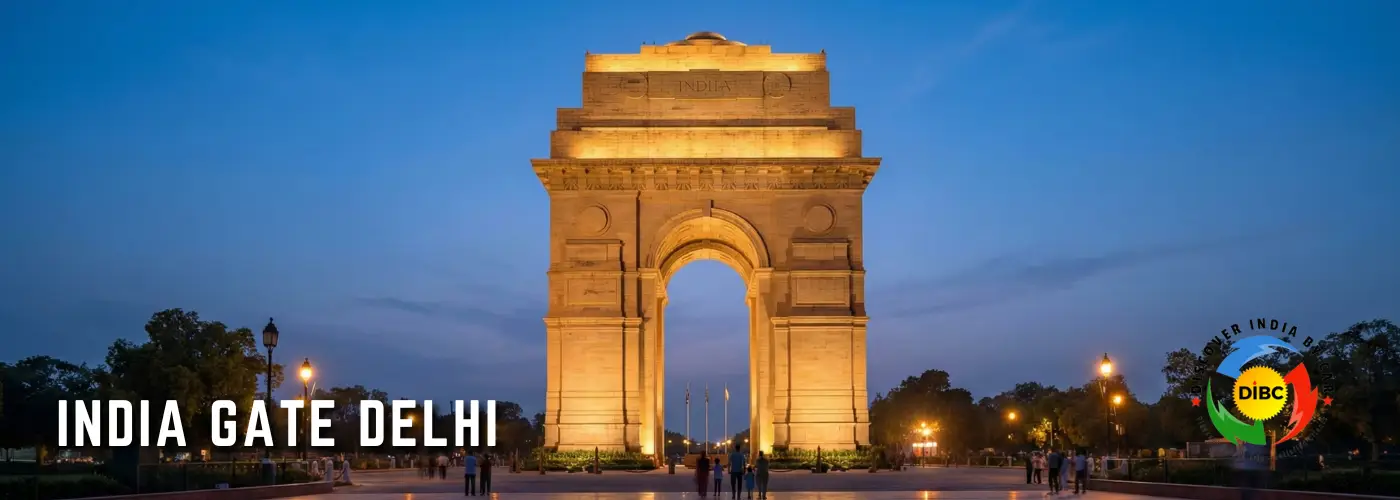
India Gate Delhi – Timings March 2026, Nearest Metro and Location

India Gate is not just a stone archway standing in the heart of New Delhi; it is the emotional center of the capital. If you drive through the city enough times, you realize all roads eventually seem to lead here. Whether you are a first-time tourist, a local looking for an evening walk, or a road-tripper exploring places near India Gate, this monument demands a visit.
Having driven around the massive C-Hexagon more times than I can count, and walked the newly renovated Kartavya Path (formerly Rajpath) extensively, I’m writing this guide to help you navigate the chaos, find the nearest metro station to India Gate, and enjoy the experience without the typical tourist stress.
Here is the real, on-ground reality of visiting India Gate New Delhi today.
Quick Summary for Travelers:
India Gate is a majestic 42-meter war memorial located at the eastern end of Kartavya Path in New Delhi, open 24 hours daily with free entry for all visitors. It is best visited in the evenings for the stunning lights and cool breeze, serving as a primary connector between Rashtrapati Bhavan and the National Stadium. For public transport users, the Central Secretariat metro station (Yellow & Violet Lines) is the most convenient access point.
What is India Gate? (A Quick Overview)

Standing at the heart of New Delhi, India Gate represents far more than a historical structure. While it was built as a tribute to soldiers of the British Indian Army who lost their lives during World War I and the Third Anglo-Afghan War, most visitors today experience it as a living public space—where history, memory, and everyday life intersect. The monument anchors Kartavya Path visually and emotionally, making it impossible to separate modern Delhi from this landmark.
While historically significant, it serves a dual purpose today: it is India’s most visited public monument and a massive gathering spot for families, friends, and solo travelers. Since the recent revamp of the Central Vista, the experience has shifted from a chaotic picnic spot to a structured, awe-inspiring walkway connecting India Gate to the Rashtrapati Bhavan.
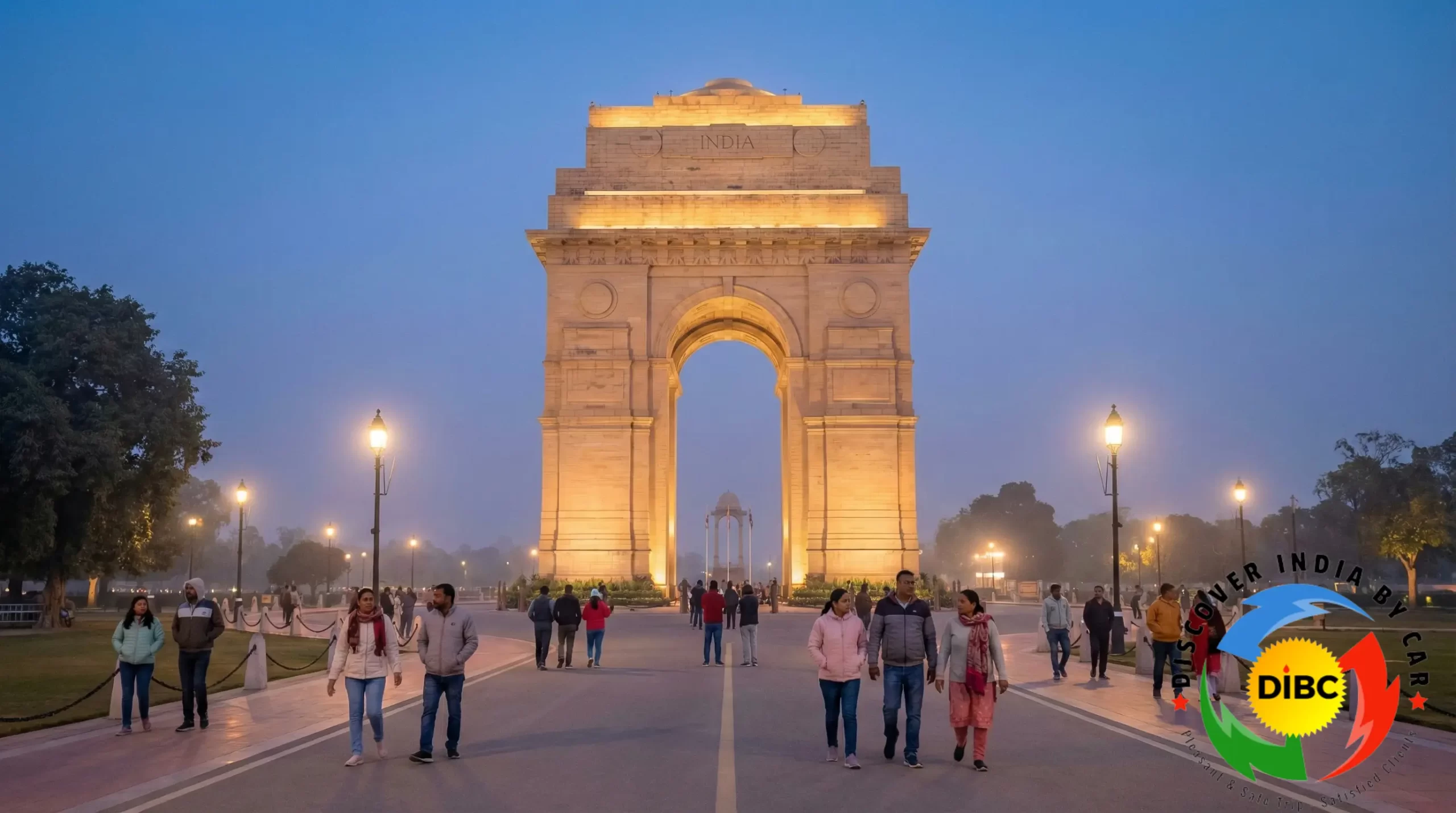
On my most recent visit in early 2026, the enhanced lighting along the canals made the evening stroll significantly more atmospheric than in previous years.
Unlike many gated monuments, India Gate feels like an open embrace—grand during the day and ethereal at night.
India Gate at a Glance (Quick Facts)
Scannable facts for quick reference.
Feature | Details |
Location | Kartavya Path, New Delhi, Delhi 110001 |
Architect | Sir Edwin Lutyens |
Built In | 1931 |
Height | 42 Meters |
India Gate Timings | Open 24 Hours (Best access: 7:00 AM – 10:00 PM) |
Entry Fee | Free for all |
Nearest Metro | Central Secretariat (Yellow/Violet Line) |
Best Time to Visit | Evenings (Sunset to 9:00 PM) |
Photography | Allowed (Tripods require permission/luck) |
India Gate Location & Address
The monument sits directly at the center of New Delhi. Its official location is Kartavya Path, India Gate, New Delhi, Delhi 110001. It forms the centerpiece of the C-Hexagon roundabout and anchors the eastern end of the Central Vista axis.
History & Significance: Why It Matters
When you stand under the arch (though access directly under it is restricted now), you are looking at history carved in stone. Designed by Sir Edwin Lutyens, the monument is often compared to the Arc de Triomphe in Paris, but the sentiment here is distinctly Indian.
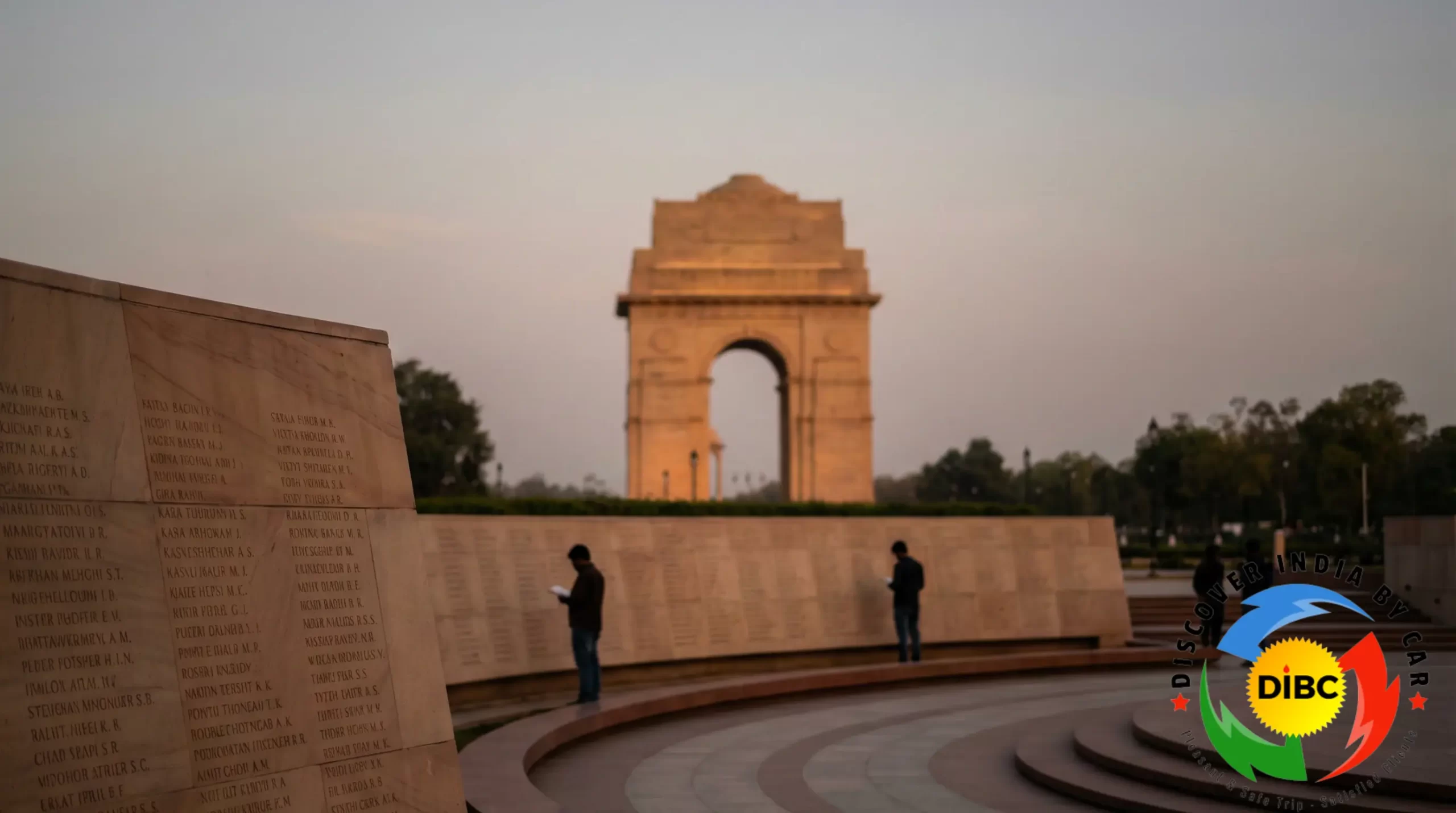
You will see the names of over 13,000 soldiers inscribed on the walls. For decades, the Amar Jawan Jyoti (Flame of the Immortal Soldier) burned under the arch to honor soldiers lost in the 1971 war.
Important Update for Visitors:
Many returning visitors look for the Amar Jawan Jyoti beneath the India Gate arch. Please note that in January 2022, the flame was merged with the flame at the National War Memorial, which is located just a few hundred meters behind India Gate.
When you visit today, you aren’t just seeing a WWI memorial; you are standing adjacent to the modern National War Memorial, creating a powerful timeline of India’s military history. It’s a place of silence amidst the city’s noise.
India Gate Timings & Crowd Insights
There is often confusion regarding India Gate timings. Let me clarify this from a practical standpoint.
- Official Timings: The monument area is technically open 24 hours a day, 7 days a week.
- The Reality: While you can drive around the C-Hexagon at 2:00 AM to see the India Gate night view, access to the lawns and the Kartavya Path walkway is usually restricted by security after 10:00 PM or 11:00 PM, depending on the crowd and VVIP movement.
When is the Crowd manageable?
- Weekdays (Mon-Thu): Late afternoons (4:00 PM to 6:00 PM) are best for a peaceful walk.
- Weekends (Sat-Sun): Expect a festival-like crowd. It gets packed. If you dislike crowds, avoid Sunday evenings.
- National Holidays: On Republic Day (Jan 26) or Independence Day (Aug 15), the area is usually barricaded for security days in advance. Always check news updates before planning a drive here during these weeks.
Pro Tip: The best balance of crowd and view is 7:30 PM on a Tuesday or Wednesday. The lights are on, the air is cooler, and you have space to breathe.
India Gate Nearest Metro & How to Reach
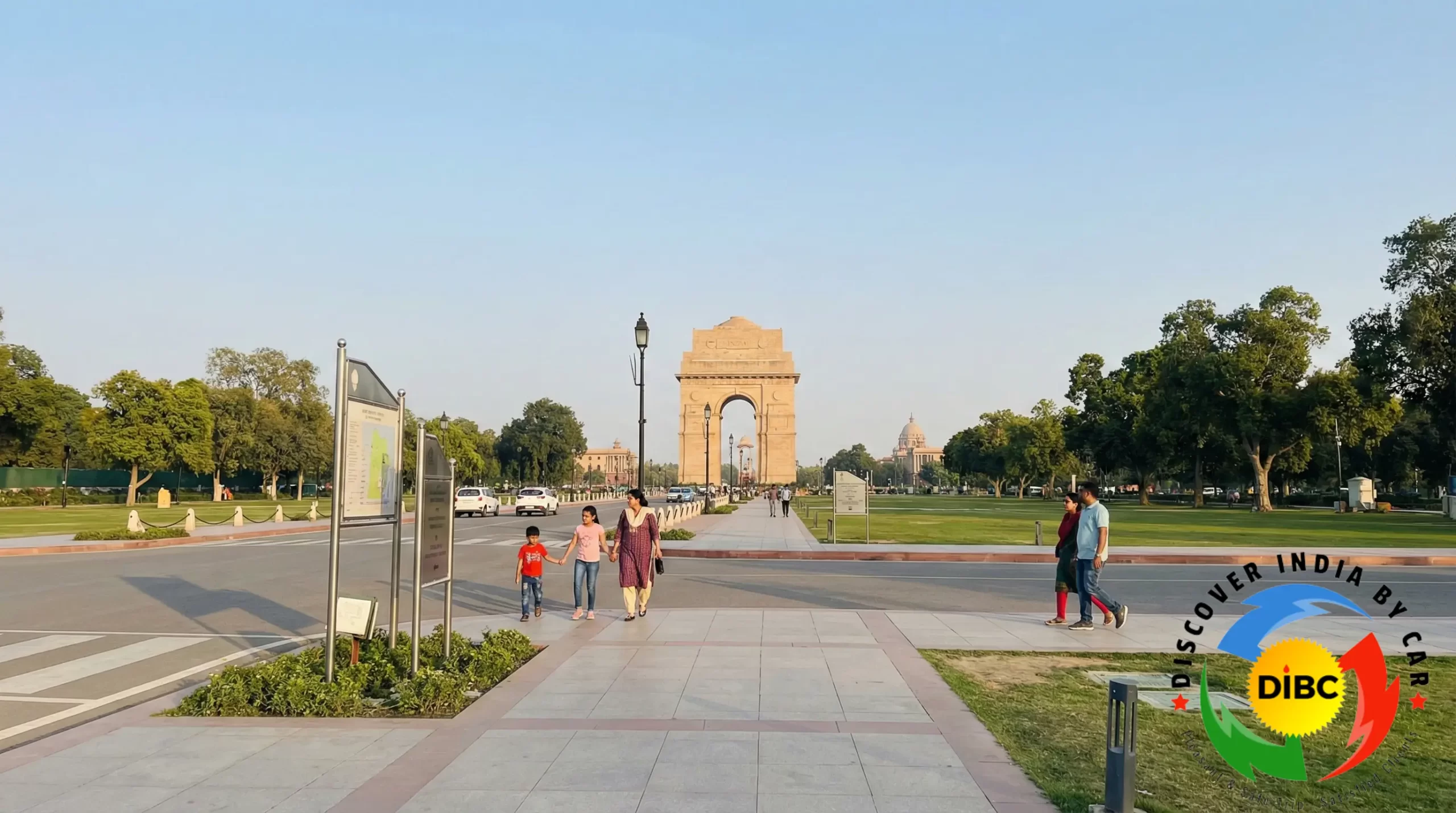
For a website like discoverindiabycar.com, I usually recommend driving. However, I have to be honest: parking near India Gate is a nightmare. Unless you have a driver to drop you off, the Metro is often the smarter choice.
India Gate Nearest Metro Station
The most popular and convenient station is Central Secretariat.
- Lines: Yellow Line & Violet Line.
- The Route: Exit from Gate No. 3 or 4. From there, you can take a shared auto or enjoy a 15–20 minute walk along Kartavya Path towards the gate.
Alternative Stations:
- Khan Market (Violet Line): Good if you want to grab lunch first, but it’s a longer walk.
- Mandi House (Blue/Violet Line): Closest if you are coming from East Delhi/Noida side.
- Supreme Court (Blue Line): formerly Pragati Maidan station, decent access for walking.
Reaching by Car (The Road Traveler’s Guide)
If you are driving:
- Route: You need to get onto the C-Hexagon, the massive roundabout that circles India Gate. If you’re exploring Delhi by car, this iconic circle is unavoidable, but remember it acts as a major traffic artery.
- Parking: DO NOT stop your car on the C-Hexagon to take photos; traffic police are swift and strict. There are designated parking lots near the National Stadium or near Bhairon Marg. Be prepared to walk about 1 km from the parking spot to the monument.
By Bus/Auto
Uber and Ola drivers will drop you slightly away from the main security checkpoints. Public buses (DTC) have stops all around the hexagon.
Entry Fee, Security & Visitor Rules
One of the best things about this monument is accessibility.
- Entry Fee: Zero. It is free for everyone—Indians and foreigners alike.
- Security Checks: Since the redevelopment, security has tightened significantly. You will pass through metal detectors to enter the lawn area. Compared to the looser restrictions before 2020, the entry process is now much more organized but takes a few extra minutes.
Recent Rules & Restrictions:
- No Eatables on Lawns: You cannot have full picnics on the immaculate manicured lawns near the War Memorial like in the 90s. Eating is restricted to designated vending zones behind the lawns.
- No Drones: Flying drones is strictly prohibited and is a punishable offense due to proximity to the President’s House.
- Respectful Attire: While there is no dress code, remember it is a memorial.
- Bags: Try to carry small bags. Large backpacks delay you at security checks.
Things to Do at India Gate
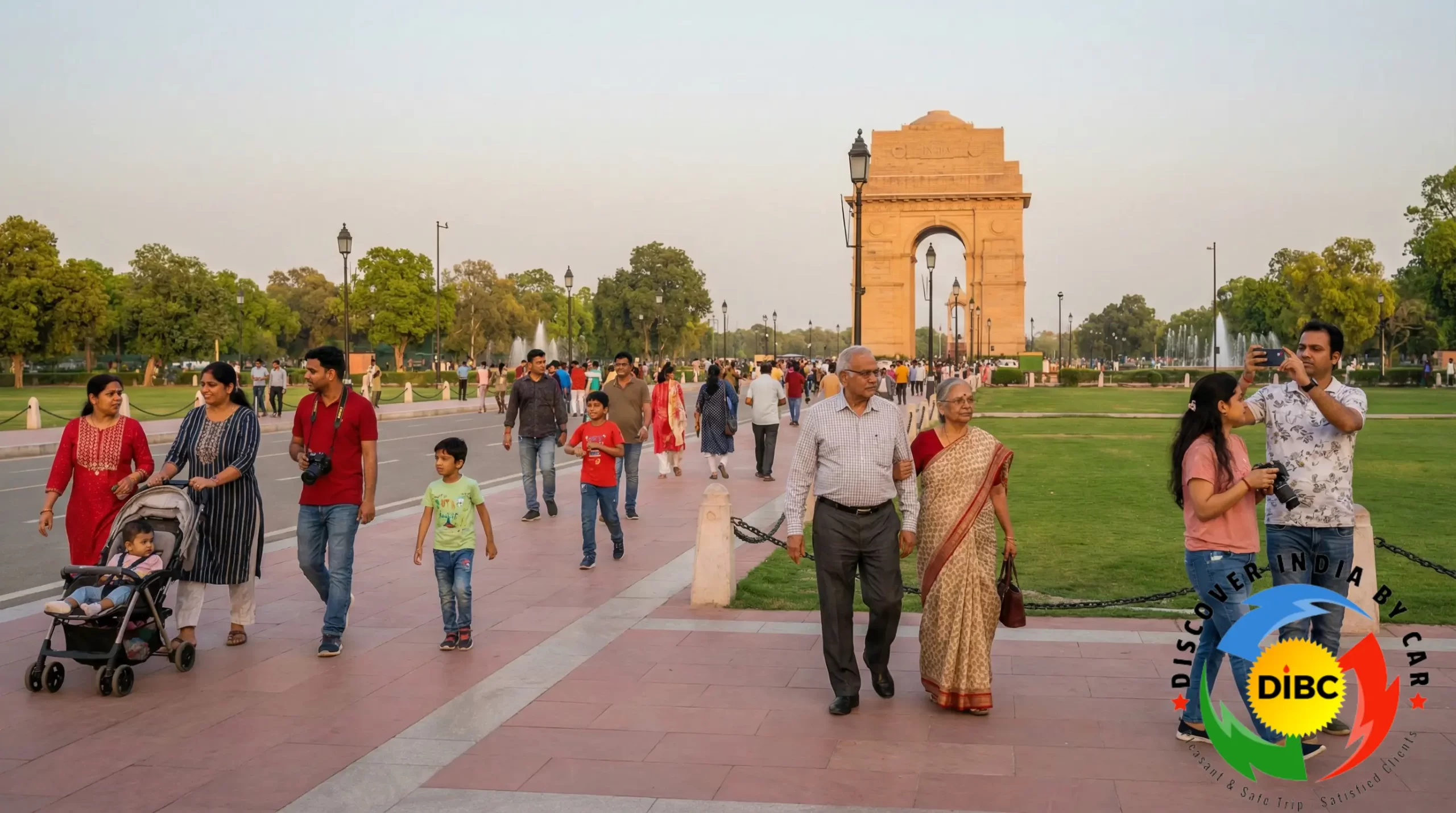
While the structure is the main attraction, the experience is about the environment.
Walk the Kartavya Path
The stretch from the canopy to India Gate is beautiful. The red sandstone walkways, the fountains (often lit up in colors), and the view of the Rashtrapati Bhavan in the distance make for a world-class stroll.
Visit the National War Memorial
You cannot come here and miss this. Located centrally, it’s an architectural marvel comprising four concentric circles (Amar Chakra, Veerta Chakra, Tyag Chakra, Rakshak Chakra). It’s incredibly moving to see the bust of Param Vir Chakra awardees.
Late Night Ice Cream
A rite of passage for every Delhiite is driving to India Gate at night for ice cream. While carts are no longer allowed to cluster chaotically right at the gate, you will find specific zones and carts along Man Singh Road and near the Children’s Park area.
Boating (Status Check)
Boating was a major attraction at the boat club lawns. However, post-renovation, boating access is often paused or highly regulated. Do not promise the kids a boat ride until you see them on the water.
Best Time to Visit (Season-Wise Breakdown)
Delhi weather is extreme. Your visit experience depends entirely on the calendar.
- Winter (November – February):
- Verdict: The absolute best.
- Why: You can visit at 12:00 PM for a sunny walk or 8:00 PM for a chilly, cozy vibe. The Republic Day preparations in January add a patriotic buzz.
- Summer (April – June):
- Verdict: Avoid Daytime.
- Why: The heat reflecting off the stone is brutal. Visit only after sunset (7:30 PM onwards) when the heat subsides and the night breeze kicks in.
- Monsoon (July – September):
- Verdict: Dramatic but risky.
- Why: The lush green lawns look amazing, and the clouds make for dramatic photos. However, sudden downpours can leave you with no shelter.
Places to Visit Near India Gate
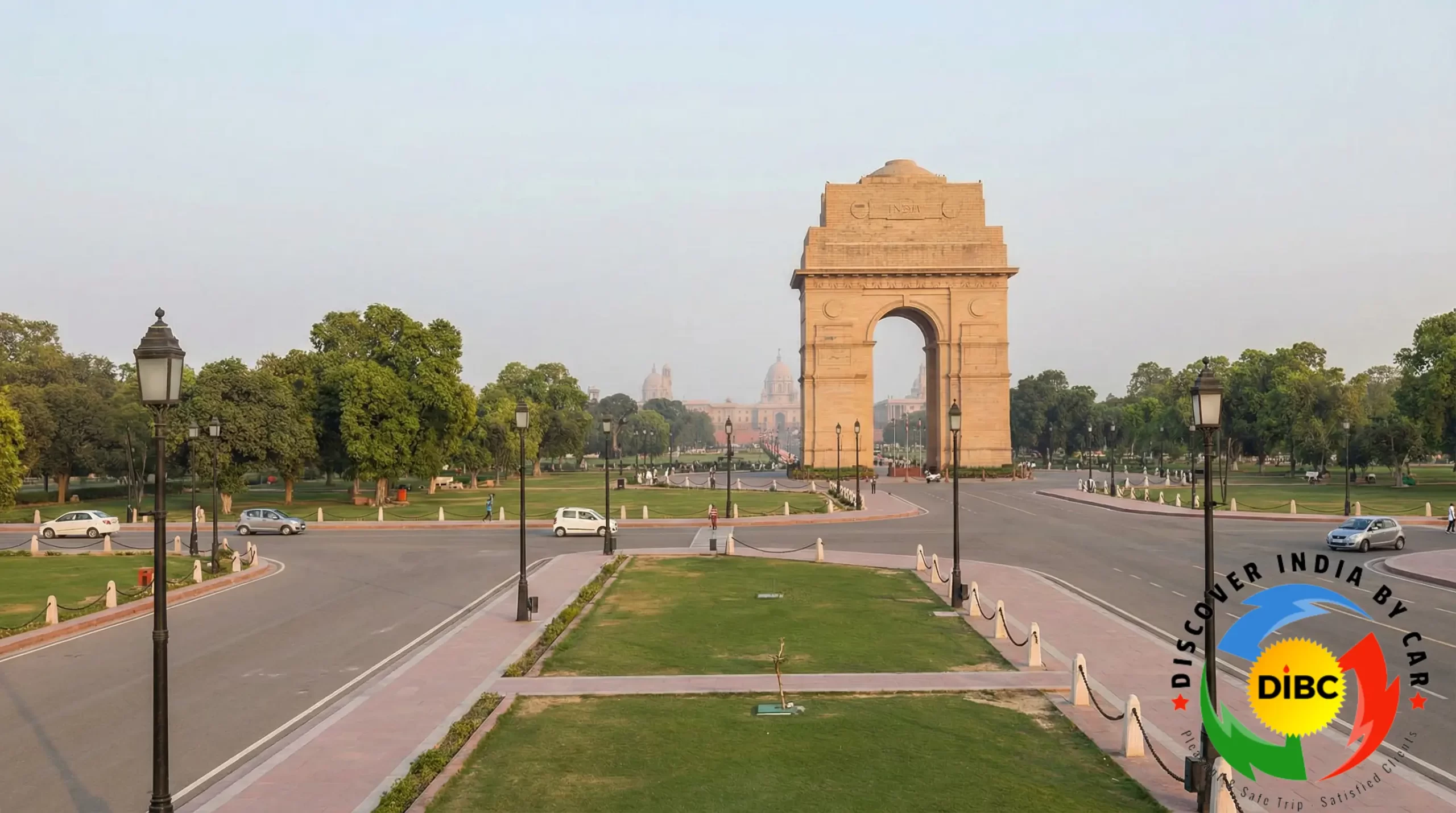
If you have a car or are willing to take short auto rides, combine your visit with these nearby gems:
Many road-trippers combine this stop with other Lutyens’ Delhi attractions to maximize the driving loop.
- National Gallery of Modern Art (NGMA): Located at the Jaipur House on the hexagon. fantastic art collection.
- Sunder Nursery: About 3km away. A heritage park that is perfect if India Gate feels too crowded.
- Rashtrapati Bhavan: You can view it from the outside, or book a paid tour inside (requires prior booking).
- Khan Market: For upscale dining and shopping after your walk.
- Purana Qila (Old Fort): One of the oldest forts in Delhi, offering a great sound and light show.
Photography Tips for India Gate
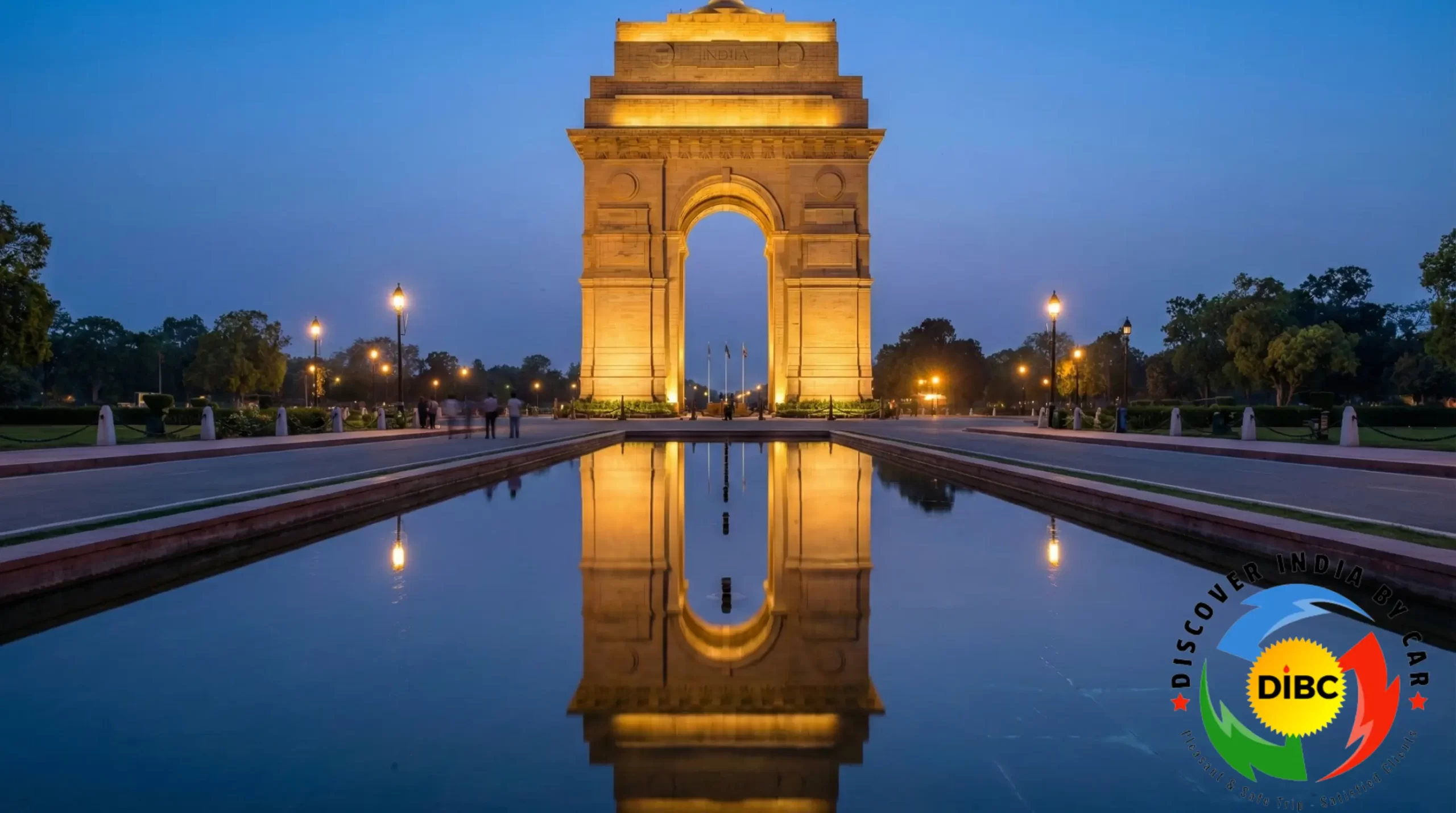
Everyone takes the same front-facing photo. Here is how to make yours stand out:
- The Reflection Shot: Look for the water channels along Kartavya Path. At night, or early morning, you can get a stunning reflection of the Gate.
- The “Canopy” Frame: Go to the Canopy (where the statue of George V used to stand, now Netaji Subhas Chandra Bose). Shoot through the Canopy arches to frame India Gate.
- Low Light/Night Mode: Turn off your flash. Let the monument’s yellow up-lights do the work. The contrast of the black sky and golden stone is iconic.
- Go Wide: If you are too close, the monument looks distorted. Step back towards the War Memorial area for a proportionate shot.
Real Visitor Experience: What It Feels Like Today
Most travel blogs give you facts. Here is the feeling.
The first thing I noticed on my recent drive to India Gate New Delhi was how much cleaner it feels. Having witnessed the transition through the Central Vista redevelopment, I found the order and geometry of the area strikingly better than the chaotic charm of the past. The chaotic swarm of hawkers selling blown-bubbles and cheap toys has been organized into zones.
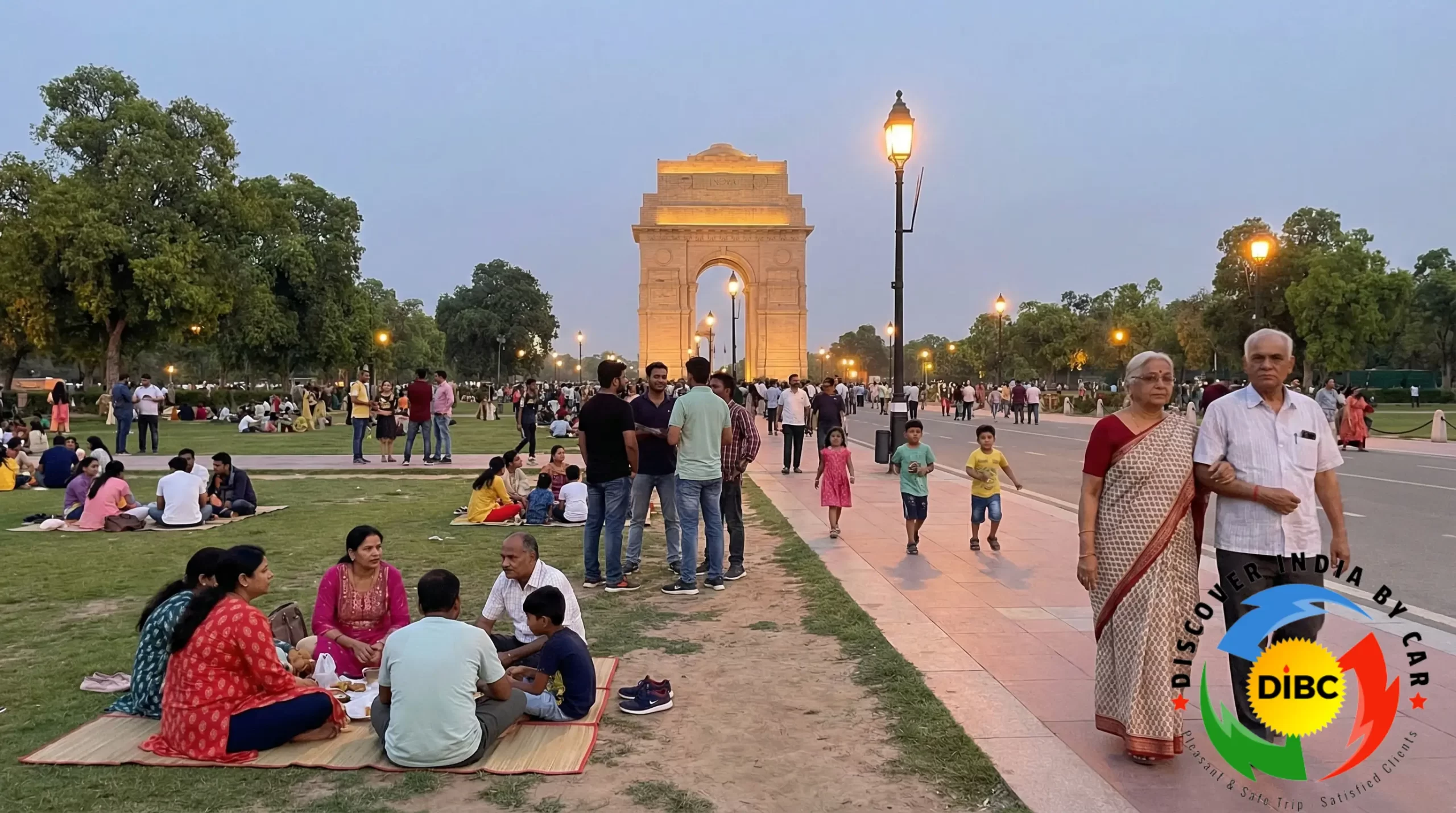
Parked near the National Stadium, I walked toward the hexagon. The traffic noise is constant—a reminder that this monument sits in the middle of a working city. But once you step onto the Kartavya Path lawns, the noise fades into a hum.
At night, the atmosphere changes. The air smells of cut grass and ozone. The lighting is spectacular—the fountains cycle through the Tricolor (Saffron, White, Green), and the Gate itself glows gold against the darkness.
What struck me most was the mix of people. A group of army veterans paying respects, teenagers making Instagram reels, curious foreign tourists, and families from rural India seeing their capital’s icon for the first time. It doesn’t feel like a tourist trap; it feels like the heart of the country beating.
A warning though: Walking distances are longer than they appear. India Gate looks close from the Metro exit, but it is a solid walk. Wear comfortable shoes. Do not wear heels.
Frequently Asked Questions (FAQs)
Q: Is India Gate open at night?
A: Yes, you can view the lit-up India Gate from the outside at any time of night. However, access to the inner lawns and walking plaza is restricted late at night (usually after 11 PM).
Q: What is the India Gate nearest metro station?
A: Central Secretariat (Yellow/Violet Line) is the closest and most popular choice. Mandi House and Khan Market are also nearby options.
Q: Is there an entry fee for India Gate?
A: No, entry to India Gate, the lawns, and the nearby National War Memorial is completely free.
Q: Can we eat at India Gate?
A: You cannot lay out picnic mats and eat on the main lawns near the War Memorial anymore. However, there are designated food zones and ice cream vendors nearby.
Q: How much time is needed to visit India Gate?
A: To walk around, take photos, and see the National War Memorial, you need about 1 to 1.5 hours.
Q: Is parking available at India Gate?
A: Parking is not allowed on the C-Hexagon road. You must park at designated lots (National Stadium or nearby lanes) and walk.
Q: Is India Gate open today?
A: Yes, India Gate is open every day of the week, 24/7. However, the immediate area may close days in advance for Republic Day (Jan 26) or Independence Day (Aug 15) security.
Q: Can we go inside India Gate?
A: No, you cannot walk underneath the archway or touch the walls anymore. The area directly under the arch is barricaded, but you can view it clearly from a few meters away.
Q: Which metro line goes to India Gate?
A: The Yellow Line (from Gurgaon/North Delhi) and the Violet Line (from Faridabad/Kashmere Gate) both connect to Central Secretariat, the nearest station.
Q: Is India Gate safe for families at night?
A: Yes, India Gate is generally safe for families in the evening and early night hours, especially between 6:00 PM and 9:30 PM. The area remains well-lit, patrolled by security personnel, and attracts a steady crowd of families, tourists, and walkers. However, very late at night, access to the inner lawns is restricted, so families with children are advised to visit during peak evening hours rather than late night.
Conclusion: Is It Still Worth the Hype?
In the era of hidden gems and offbeat travel, is the mainstream India Gate still worth it?
Absolutely. There is a reason it is the icon of New Delhi. It grounds you. Whether you are viewing it from a car window while circling the roundabout or standing in its shadow remembering the fallen, it carries a weight that few other places do.
This stop fits perfectly into a half-day Delhi drive without detouring you too far from other major sites.
If you are planning a trip to Delhi, check the India Gate timings, grab a Metro card, or fuel up your car, and get there just before sunset. Watch the lights come on. It’s a sight you won’t forget.
Have a safe trip and keep exploring India by road!
For more detailed driving guides and road trip itineraries, explore the rest of discoverindiabycar.com.