Jaisalmer Desert Safari Guide 2026: Camps, Rates & Honest Tips

Jaisalmer Desert Safari Guide 2026: Camps, Rates & Honest Tips

AS
Written By

Ankit Suga

Senior Heritage Content Strategist & Founder, Discover India By Car

I'm part of the team at Discover India by Car, a Delhi-based private car-and-driver tour service. For 14 years now we've been driving travellers across North India — Golden Triangle, the full Rajasthan circuit, and out to Jaisalmer more times than I can count. Most of what's below comes from actually putting guests in camps, sitting through the cultural evenings, and hearing what people loved and what quietly disappointed them.

Table of Contents

    Watching the sun sink behind the Thar Desert dunes from a camel’s back is the kind of moment people fly across the world for. And honestly, even after all these years, I still get a little quiet when it happens. The light goes from white to gold to this deep amber, the sand starts throwing long shadows, and for about twenty minutes the whole desert just glows. People stop talking. Even the loud ones.

    But here’s the thing nobody tells you before you book — a Jaisalmer desert safari can be one of two completely different experiences depending on choices you make weeks in advance. Where you go. What kind of camp you pick. Whether you ride a camel or take a jeep. Get it right and it’s a highlight of your whole India trip. Get it wrong and you’re stuck in a crowded tourist circus eating mediocre dinner while a generator hums in the background.

    So let me walk you through how it actually works in 2026, what things cost, and where the catch usually hides.

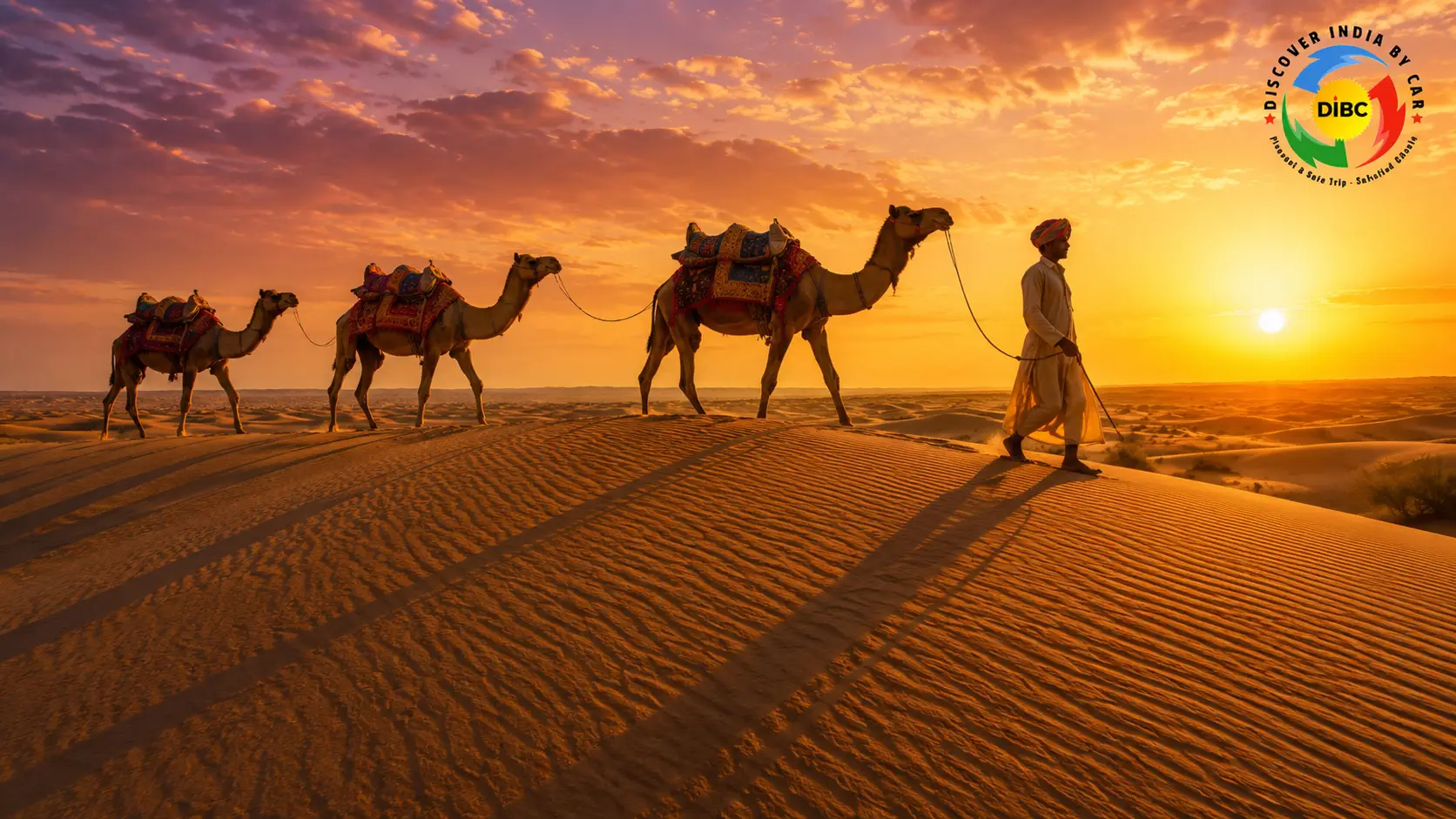
    A long-shot cinematic view of a camel safari on the golden sand dunes of Jaisalmer during a vibrant amber sunset.

    What a Jaisalmer Desert Safari Actually Involves

    Let’s clear up the basics first, because the phrase “desert safari” gets thrown around loosely and means slightly different things to different operators.

    At its core, a Jaisalmer safari is a half-day or overnight trip out to the sand dunes — most of them sit roughly 40 to 45 kilometres from the city — where you do some combination of a camel ride, a sunset, a folk music and dance evening, dinner, and (if you’re staying over) a night in a tent. That’s the standard package. The camps are clustered mainly around two areas, Sam and Khuri, and that single choice shapes everything, which is why I’ve given it its own section below.

    A typical overnight goes something like this. You leave Jaisalmer in the afternoon, reach your camp around 3 or 4 pm, get a welcome drink and a tikka, settle into your tent. Late afternoon you head out for the camel ride to a sunset point. After dark it’s tea and snacks by a fire (in winter), then a buffet dinner with Rajasthani folk performers — Kalbelia dancers, Manganiyar musicians, that whole thing. You sleep under the stars or in a tent, wake up to breakfast, and drive back. Simple structure, but the quality of each piece swings wildly between operators.

    If you only have a few hours and don’t want to stay over, a sunset-only safari works too — camel ride plus the evening show, then back to your hotel in the city. Couples and families short on time often go this route. You lose the starlit night, which is a genuine pity, but it still gives you the core flavour.

    One small thing worth knowing upfront: the camps are seasonal. Most of them properly operate from around September to March. Come in June, half of them are shut and the rest are roasting.

    Sam vs Khuri Dunes: The Honest Comparison

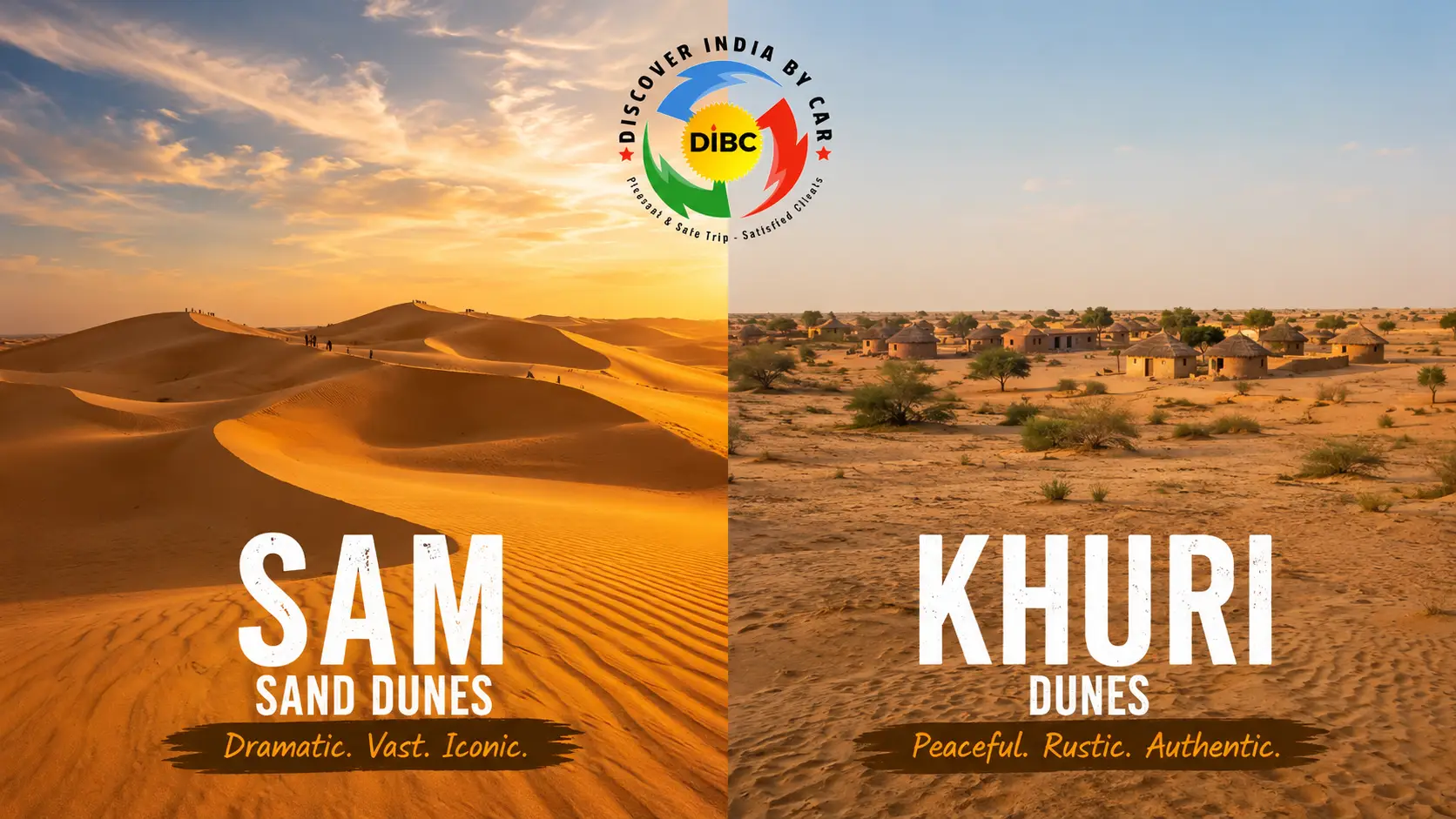
    Side-by-side comparison visual of the large, dramatic Sam Sand Dunes and the quiet, rustic Khuri village dunes in Jaisalmer.

    This is the question I get asked most, so I’ll be blunt about it.

    Sam Sand Dunes is the famous one. It’s about 40–42 km from Jaisalmer, it has the biggest, most photogenic stretch of dunes, and it is where the action is. It’s also, these days, genuinely commercial. On a peak-season evening you’ll find rows of camps, hundreds of camels lined up, touts working the crowd, quad bikes buzzing around, and a sort of carnival energy that some people absolutely love and others find exhausting. If you want the big-spectacle desert — camel after camel cresting a golden ridge, music everywhere, that classic Rajasthan postcard — Sam delivers. Just don’t expect solitude.

    Khuri is the quieter cousin, sitting a bit further out, around 45–50 km on the other side of the city. The dunes are smaller and the setup is more rustic, but that’s precisely the point. Fewer camps, fewer crowds, more of an actual village feel. You can hear the wind instead of a generator. For couples who came for romance, or travellers who want something that feels a little more real and less staged, Khuri usually wins. The trade-off is that facilities can be more basic and the “wow, look at these enormous dunes” factor is lower.

    I tell people it comes down to temperament. Want energy, the big dunes, easy access, lots of activity? Sam. Want calm, stars, a slower evening, and don’t mind smaller dunes? Khuri. There’s no universally correct answer — there’s just the one that matches what you’re actually looking for.

    Features Sam Sand Dunes Khuri Dunes
    Distance from Jaisalmer ~40–42 km ~45–50 km
    Crowd level High, very touristy Low, peaceful
    Dune size Large, dramatic Smaller, gentler
    Vibe Festive, commercial Rustic, village-like
    Best for First-timers, families, big-spectacle seekers Couples, peace-seekers, repeat visitors
    Facilities Wide range, budget to luxury More basic, fewer luxury options
    Camel/jeep touts Many Few

    If it’s your very first time in the Thar and you want the iconic version, I’d still send you to Sam — but to a camp set slightly away from the busiest cluster. If you’ve done a desert before, or you’re on a honeymoon, Khuri is the quieter gift.

    Desert Camp Types & Cost

    Right, money. This is where people get confused, because if you search “desert camp cost Jaisalmer” you’ll see prices from ₹800 to ₹15,000 and walk away none the wiser. The spread is real, and it maps directly onto what you’re actually getting.

    Broadly, camps fall into four tiers. Below are realistic 2026 per-person, per-night ranges for an overnight package that typically includes the camel ride, evening cultural show, dinner and breakfast. Prices climb in peak winter (roughly October to March) and around festival weekends, and dip in the shoulder months.

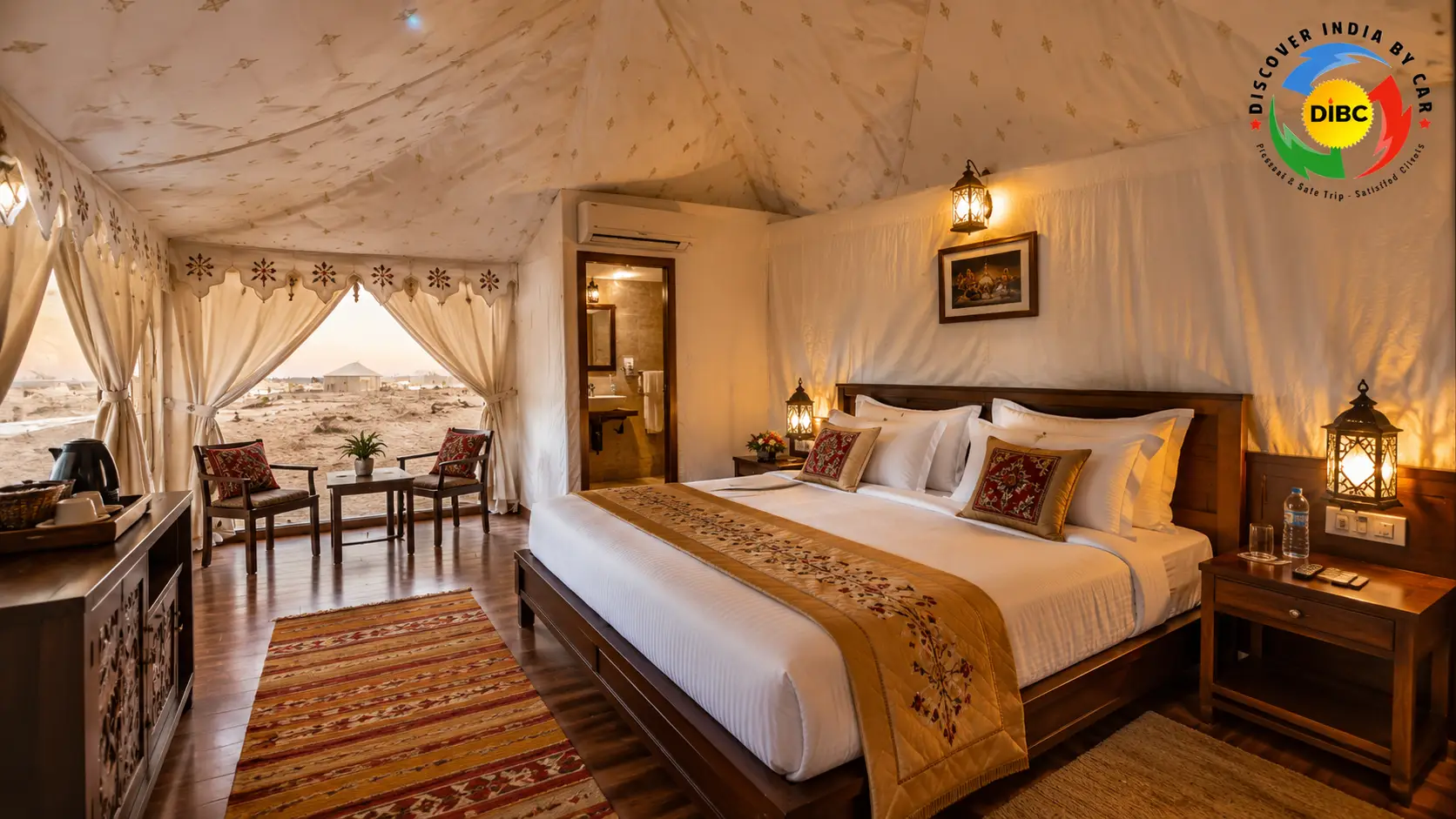
    Interior view of a premium luxury AC Swiss tent at a desert camp in Jaisalmer with traditional decor.
    Camp Type Per Person / Night (2026) What You Get
    Budget / Basic Tent ₹1,200 – ₹2,000 Shared or simple non-AC tent, basic meals, short camel ride, group cultural show. Functional, not special.
    Standard / Deluxe Swiss Tent ₹2,500 – ₹4,000 Private Swiss tent, attached bathroom, decent buffet, sunset camel ride, folk evening. The sweet spot for most travellers.
    Luxury Swiss Tent ₹4,000 – ₹7,500 AC/heated tent, comfortable beds, better food, attentive service, good location. Where couples usually land.
    Premium / Boutique ₹8,000 – ₹15,000+ Spacious suites, fine dining, private or semi-private dune access, elevated everything. Honeymoon and special-occasion territory.

    A couple of honest notes on this. For two people wanting a proper luxury AC Swiss tent with the full package, you’re realistically looking at somewhere around ₹6,000 to ₹12,000 for the pair, and frankly that’s reasonable for what’s included. The very cheap camps aren’t a scam exactly — they just deliver a rushed, crowded version where the camel ride is hurried, the food is forgettable, and the tent walls are thin. If saving every rupee is the priority, fine. But if this is a once-in-a-lifetime desert night, spending a little more is the difference between “we technically went camping” and “we’ll talk about that night for years.”

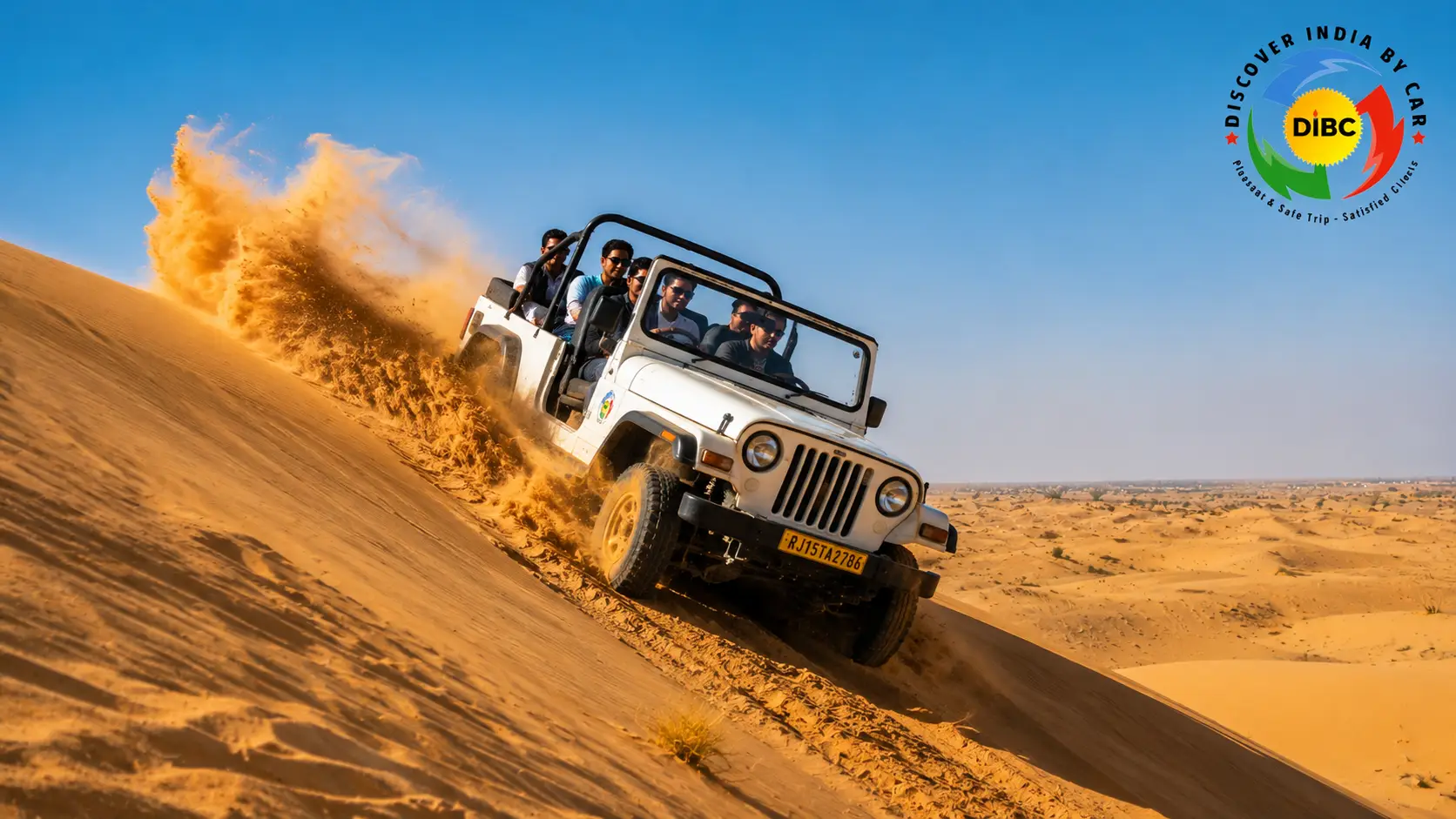
    Add-ons sit outside the base package. A jeep safari / dune bashing run usually costs around ₹1,450–2,000 per jeep (and a jeep seats up to six, so split between a group it’s cheap). A standalone camel safari ranges from roughly ₹500 for a short ride up to ₹2,000 for a longer sunset experience. A private dinner-on-the-dunes under the stars, candlelit, away from the main camp, is a popular romantic upgrade and runs extra.

    Camel Safari vs Jeep Safari

    Both are offered nearly everywhere, and a lot of guests do one of each. They’re genuinely different experiences, not just two versions of the same thing.

    The camel safari is the slow, traditional, romantic one. You sway along on a camel — they’re taller and lurchier than people expect, so the mounting and dismounting is its own little adventure — out toward a sunset point, usually with a local camel handler walking alongside chatting away. It’s unhurried and atmospheric. It’s also the version that gives you those iconic photographs. The downside: camels are not the comfiest ride if you’re up there for an hour, and if you have a bad back, take the shorter option.

    The jeep safari is the adrenaline version. A 4×4 takes you bombing across the dunes — “dune bashing” they call it — climbing and dropping over the sand at speed. It’s a thrill, it covers more ground, it gets you to dunes the camels don’t reach, and kids tend to love it. It’s just not remotely romantic and it’s noisier.

    Comparison Camel Safari Jeep Safari
    Pace Slow, traditional Fast, adventurous
    Best for Couples, photographers, the classic experience Adventure seekers, families with kids, dune bashing
    Comfort Bumpy after a while Bumpy in a different way
    Typical Cost (2026) ₹500 – ₹2,000 per person ₹1,450 – ₹2,000 per jeep (up to 6)
    The Vibe Romance & stillness Thrill & speed

    My usual advice: do a short camel ride for the sunset and the photos, and add a jeep run if you have the time and the budget and you’re travelling with people who want a bit of a rush. They complement each other nicely.

    Best Time for a Desert Safari

    The desert is not a year-round destination, full stop. If you take one thing from this article, take this.

    October to March is the window. The days are warm and pleasant, the nights are cool to genuinely cold, and the whole experience — sitting by a fire, sleeping under stars, riding out at sunset — actually works. December and January nights get properly chilly, so pack accordingly, but the daytime weather is gorgeous and the skies are clear.

    April to June is brutal. Daytime temperatures regularly cross 45°C, the sand is scorching, and most travellers find it genuinely unpleasant. Many camps close or run a skeleton operation. I steer guests away from a summer safari almost every time.

    July to September is the monsoon-ish shoulder. The desert sees little rain, so it’s not washed out, and prices are lower — but it’s still hot and humid, and the experience is muted. Some camps reopen toward September as it cools.

    One date worth circling if you love spectacle: the Jaisalmer Desert Festival (Maru Mahotsav), Rajasthan Tourism’s big annual cultural event held in the Hindu month of Magh, in February, three days before the full moon. The 2026 edition ran roughly 30 January to 1 February at Sam Sand Dunes, with camel races, the famous Mr Desert moustache contest, camel polo, folk music nights, and a grand finale under the moon on the dunes. It’s spectacular — and it’s also when everything books out fastest and prices peak. If you want to attend the festival, lock in your camp and transport two to three months ahead. If you want quiet, deliberately avoid that weekend.

    Booking Tips & What to Pack

    A few hard-won pointers before you commit.

    Book a camp, not just a name. Photos online are aspirational at best. Read recent reviews, check what’s actually included (camel ride duration, AC, meals, transfers — these vary a lot), and confirm the location, because “Sam Sand Dunes” on a listing sometimes means a camp sitting well before the actual dunes.

    Sort out your transfer in advance. This is the bit people underestimate. The camps are 40-plus kilometres out, often down rough desert tracks, and the roads near Khuri in particular aren’t great after dark. Wandering out there hoping to flag a ride is a bad plan. A pre-arranged private car removes the whole headache, and on a sedan you’re looking at roughly ₹1,700–2,000 each way, more for an SUV. (We’ll come back to this.)

    Don’t over-pay at the gate. Standalone camel and jeep rides bought on the spot at Sam can come with aggressive touts and inflated quotes. Booking through your camp or a trusted operator usually means a fairer, fixed price and less hassle.

    Manage expectations on the crowds at Sam. If peace matters to you, I’ve said it twice already — pick Khuri or a Sam camp set away from the main cluster.

    As for packing, the desert punishes the unprepared. Bring:

    1. Warm layers — a jacket, even a hat and gloves for December–January nights. People genuinely underestimate how cold the Thar gets after dark.
    2. Light, breathable daywear plus a scarf or shawl to keep sand and sun off.
    3. Sunscreen, sunglasses, and a refillable water bottle — the air is bone dry even in winter.
    4. Closed shoes for the camel and jeep, plus easy slip-ons for the camp.
    5. A power bank, because charging points can be limited.
    6. Cash, since ATMs and card machines are scarce once you’re out at the dunes.
    14 Years of Excellence

    Getting There Comfortably — and Where We Fit In

    Discover India by Car Premium Road Trip Rajasthan
    Comfortable premium vehicles driven by local fixers across North India circuit.

    Now the practical, commercial part, and I'll be straight about it because that's how we work.

    Jaisalmer is a long way from most places. It doesn't have major direct flight connectivity — the usual route is to Jodhpur and onward by road, or a train. And once you're in Jaisalmer, the camps are another 40–50 km out. So transfers matter more here than almost anywhere else in Rajasthan.

    This is exactly what Discover India by Car does. We run private car-and-driver service across North India, and Jaisalmer sits squarely on the Rajasthan circuits we drive all the time. We can handle the private car transfer from Jaisalmer city to your desert camp and back, with a driver who actually knows the desert tracks and won't leave you stranded after the cultural evening. More usefully for most of our guests, we fold Jaisalmer into a larger Rajasthan or Golden Triangle road trip — Delhi, Agra, Jaipur, Jodhpur, Udaipur, and out to the dunes — all in one comfortable private vehicle, at your own pace, with a driver who doubles as a local fixer.

    If that's the kind of trip you're planning, get in touch and we'll build the route around the desert night rather than treating it as an afterthought:


    FAQ: Jaisalmer Desert Camps

    Q1. How much does a Jaisalmer desert safari cost in 2026?

    An overnight desert camp package costs roughly ₹1,200–2,000 per person for a basic tent, ₹2,500–4,000 for a standard Swiss tent, and ₹4,000–7,500 for a luxury AC tent, including the camel ride, dinner, breakfast and a folk cultural evening. Premium boutique camps run ₹8,000–15,000+ per person.

    Q2. Which is better, Sam or Khuri dunes?

    Sam Sand Dunes is bigger, more dramatic and more commercial, ideal for first-timers wanting the classic spectacle. Khuri is quieter, more rustic and more peaceful, better suited to couples and travellers who prefer calm over crowds. Sam is ~40–42 km from Jaisalmer; Khuri is ~45–50 km.

    Q3. Is an overnight desert camp worth it?

    Yes. The overnight stay is where the experience peaks — the sunset camel ride, dinner under the stars, folk music by a fire, and waking up to a quiet dune at sunrise. A daytime-only sunset safari is fine if you’re short on time, but it skips the best part.

    Q4. How far are the desert camps from Jaisalmer?

    Most camps are 40–50 km from Jaisalmer city, taking about one to one-and-a-half hours by road. Sam camps are slightly closer; Khuri is a bit further. A private car transfer is the most reliable way to reach them, especially after dark.

    Q5. What is the cost of a camel safari in Jaisalmer?

    A camel safari ranges from about ₹500 for a short ride to ₹2,000 per person for a longer sunset experience. Multi-day camel safaris cost more. Booking through your camp or a trusted operator avoids inflated tout prices at the dunes.

    Q6. Camel safari or jeep safari — which should I pick?

    A camel safari is slower, traditional and romantic, perfect for sunset photos and couples. A jeep safari (dune bashing) is fast and thrilling, better for adventure seekers and families with kids. Many travellers do a short camel ride for sunset and add a jeep run for the rush.

    Q7. What is the best time to do a Jaisalmer desert safari?

    October to March is the best window, with pleasant days and cool nights. Avoid April to June, when daytime heat crosses 45°C and many camps close. The Jaisalmer Desert Festival in February adds spectacle but books out fast.

    Q8. Is Jaisalmer desert camping safe for couples and families?

    Yes. Jaisalmer is considered safe for couples, families and solo travellers, including at night. Reputable camps are well-run and welcome international guests. Booking a trusted camp and arranging a private transfer makes the trip smooth and worry-free.

    Q9. Do I need to book the desert camp in advance?

    During peak winter season and around the Desert Festival, yes — camps near the dunes sell out fast, so book two to three months ahead. In shoulder months you have more flexibility, but advance booking still gets you better rates and location.

    Related Articles

    Loading articles...
    5/5 - (22 votes)
    Translate »
    error: