- Private car and driver in Delhi / India
- +91-8447445445
- info@discoverindiabycar.com sugar.ankit@yahoo.com
 +91-9818434712
- Follow us:



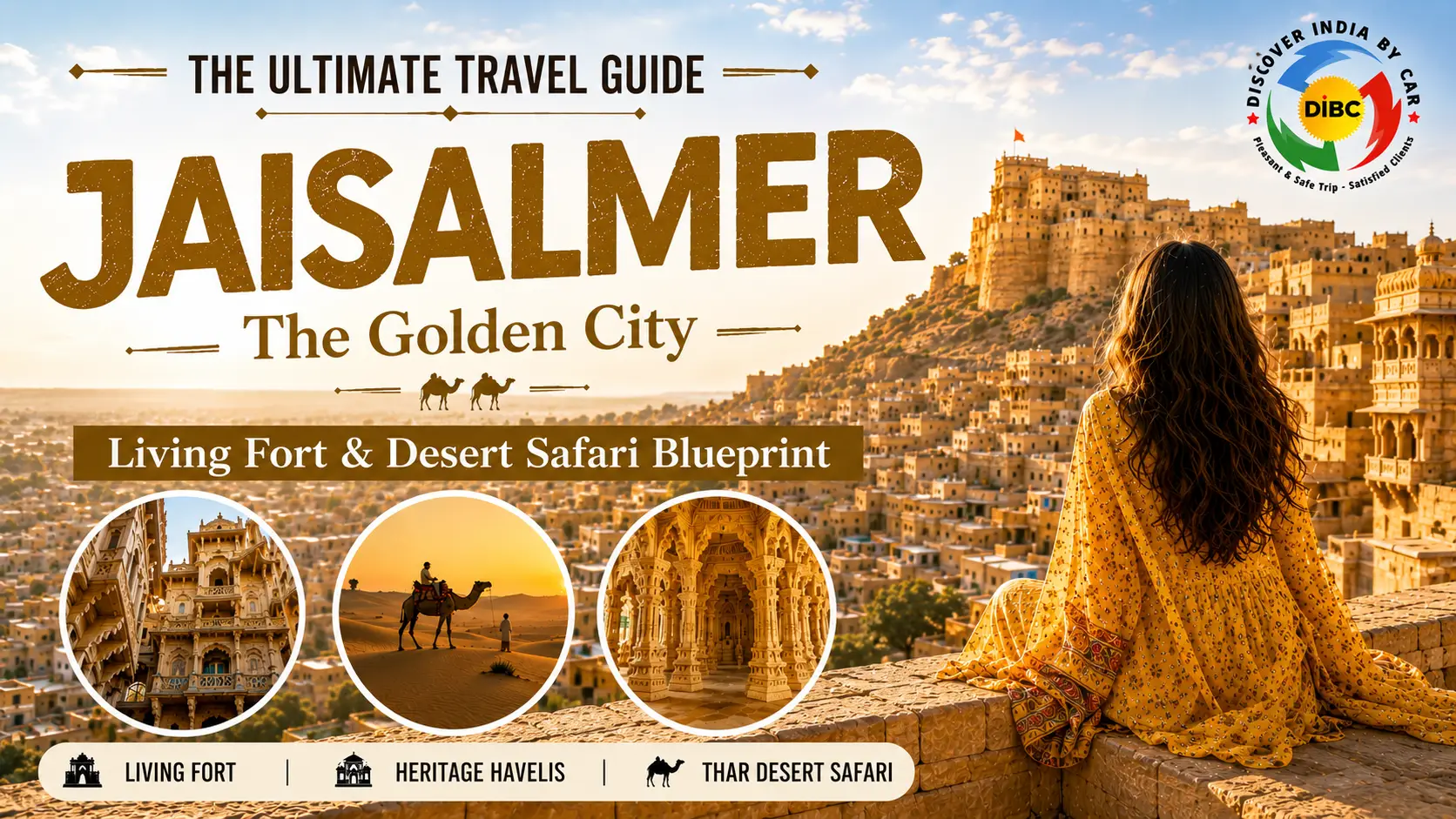
Jaisalmer Travel Guide: Living Fort & Desert Safari Blueprint
Ankit Sugar
North India Travel Expert & Founder, Discover India By Car
Having spent 14 years helping thousands of foreign travellers navigate the chaotic maze of Indian travel logistics — from calculating realistic daily budgets to decoding the confusing fares of long-distance transport — I created this ground-reality guide to save you from the most common spending blunders. I haven't just researched India's budget routes from a laptop; I deal with the real-world operational math every single day. From rescuing backpackers stranded at confusing transit hubs to successfully structuring smart, cost-effective private car routes across the Jodhpur-Jaisalmer NH11 desert corridor—ensuring pairs and small groups beat the heavy train-plus-rickshaw hassle—everything in this guide is born from my own lived experience solving transport nightmares and ensuring you get maximum value for every single rupee you spend out here on the Thar frontier.
Planning a trip to Jaisalmer means prepping for Rajasthan’s ultimate desert frontier. To explore the world’s last fully inhabited medieval fortress, tour ancient carved merchant mansions, or camp out on the sweeping sand dunes of the Thar, you need to head here between October and March when the scorching summer heat finally breaks. This definitive guide delivers actionable itineraries, precise local costs, transit blueprints, and expert desert safari strategies for first-time travelers.
If you keep driving west through the barren stretches of Rajasthan, the scrub vegetation slowly vanishes, the air turns dry enough to crack your lips, and out of nowhere, a massive yellow stone structure breaks the horizon line.
That first glimpse of Jaisalmer Fort makes you feel like you’ve stumbled onto something that shouldn’t exist in the modern world—a sprawling castle that seems to have grown organically right out of the desert sand.
But let’s skip the poetic travel brochure talk for a minute. If you are planning to travel here, you need to understand that modern Jaisalmer is a sharp, chaotic border town. It is incredibly beautiful, yes, but it is also a hyper-commercial tourist hub. If you show up unprepared, you will spend your entire trip dodging aggressive camel safari agents, sitting in noisy tent resorts surrounded by hundreds of selfie sticks, and missing the actual soul of the Thar Desert. Many travelers combine this desert frontier with the nearby Blue City; if you are plotting your route, you can follow our detailed blueprint on how to plan a Jodhpur to Jaisalmer road trip to avoid common transit delays.
To experience the quiet, atmospheric magic of this place and walk through medieval alleys where people actually live, you need a realistic, boots-on-the-ground blueprint. This guide is written from personal experience to give you exactly that.
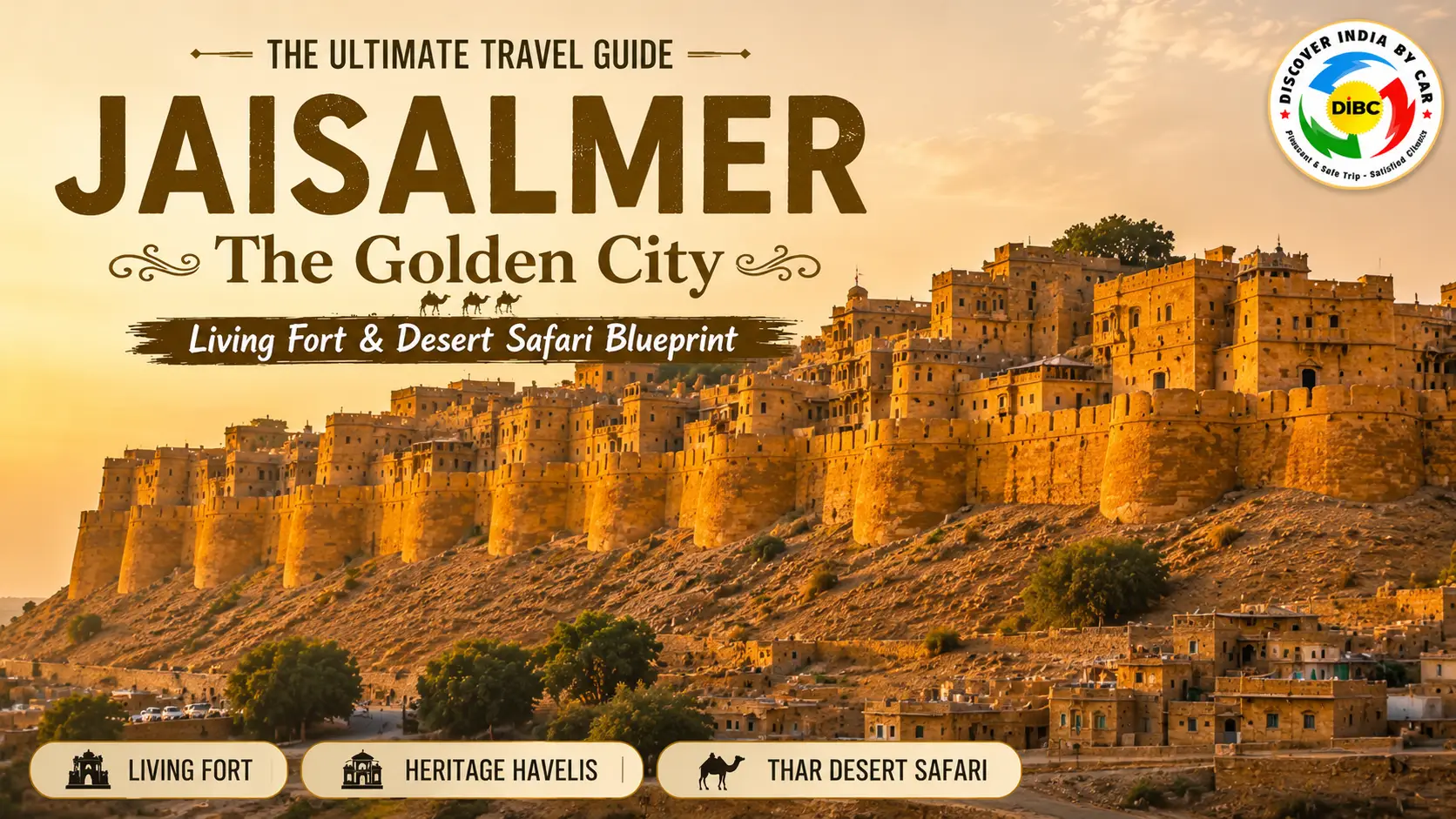
Why Jaisalmer is Called the Golden City
The reason Jaisalmer looks entirely different from cities like Jaipur or Udaipur comes down to its raw geography. Deep in the Thar Desert, timber was non-existent and standard river clay was impossible to find. What the early builders did have, however, was an endless supply of unique, yellow Jurassic-era sandstone dug from local quarries. Every single structure you see—from the massive defensive walls of the fort to the tiniest tea stall down a back alley—is built from this one material.
The Magic of Sandstone & Sunlight
The magic of this stone is how it reacts to changing sunlight. In the blinding, harsh glare of a midday desert sun, the entire city looks washed out, almost a flat, dusty beige color. But as the afternoon stretches out and the sun drops lower, the stone catches the soft light and shifts dramatically. Within twenty minutes, the entire city transforms from a pale amber to a deep, glowing honey-ochre. If you love photography, this short window just before twilight is the single best reason to make the long trip out here.
Historical Camouflage & The Silk Route
Historically, this natural camouflage was the kingdom's ultimate defense system. Founded in 1156 AD by the Rajput king Rawal Jaisal, the fortress was built on top of Trikuta Hill to command the ancient Silk Route caravans moving between mainland India, Persia, and Central Asia. The kings and merchants grew incredibly wealthy by taxing the massive shipments of silk, opium, and indigo. Because the fort walls were the exact same color as the surrounding desert floor, invading armies standing miles away across the horizon could not easily distinguish the man-made battlements from the natural sand dunes.
When the British later developed modern sea ports in Mumbai and Kolkata, the overland desert trade routes died out almost instantly. The city lost its commercial wealth, which accidentally froze its medieval architecture in time, saving it from the modern concrete and steel development that changed the rest of urban India.
Jaisalmer Fort — The Last Living Fort in India
When you visit famous historical forts like Mehrangarh in Jodhpur, you buy a ticket at a modern turnstile and walk through an empty, beautifully preserved museum. Jaisalmer Fort—known locally as Sonar Quila—does not work that way at all.
This is the only major “living fort” remaining in India. Inside these massive yellow sandstone bastions lives an active, permanent community of roughly four thousand people. They are the direct descendants of the old royal court musicians, stone artisans, infantry soldiers, and Brahmin priests who were granted land inside the fort walls centuries ago in exchange for defending the king during times of war.
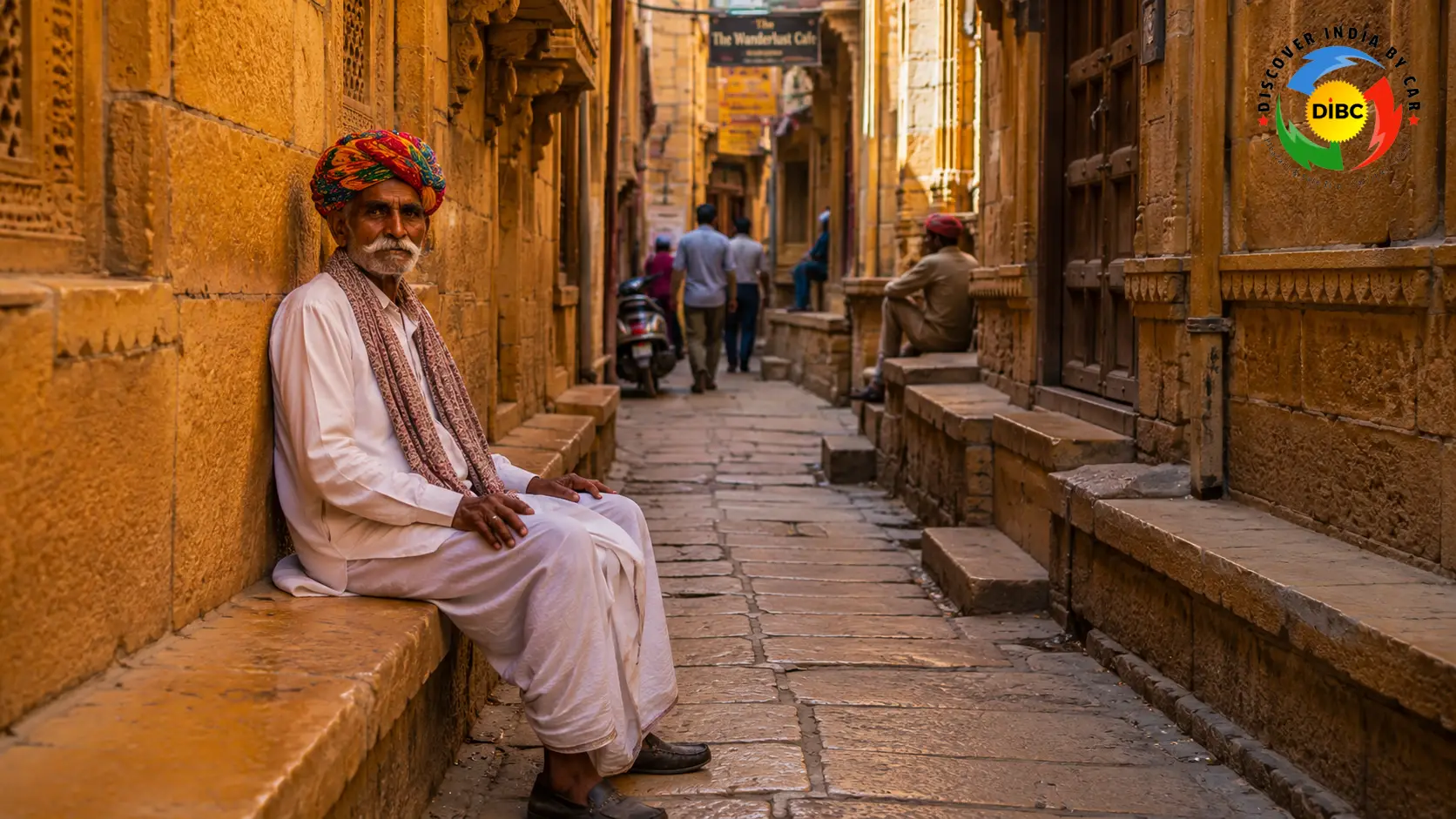
When you walk through the Akhai Pol, the first of four massive stone entry gates, you are entering an active residential neighborhood, not a tourist attraction. The alleys are incredibly narrow, paved with smooth flagstones that have been worn down and polished by generations of human feet. Motorized vehicles can barely squeeze through, so the ambient sound is completely human: the rhythmic tapping of a mason repairing an ancient balcony, children running to school, cows navigating the tight corners, and the acoustic strains of a kamancha being played by a local musician on a street corner.
Crucial Insider Tips for the Fort Interior
You do not need a ticket to enter the fort itself; it is a public, open neighborhood. You can walk the ramparts at midnight to look at the stars if you choose. However, the specific historical attractions inside have strict schedules:
- The Raj Mahal (Royal Palace Museum): Sits right on the main central courtyard of the fort. It is open daily from 9:00 AM to 5:00 PM. Admission is roughly INR 50 for Indian citizens and INR 250 for international travelers. The main reason to pay for entry is to access the highest rooftops, which give you a completely unobstructed, birds-eye view of the old city sprawling out down below.
- The Seven Interconnected Jain Temples: An absolute architectural masterpiece built between the 12th and 16th centuries. The stone carving here is so impossibly detailed that columns look like turned wood, and the ceiling domes look like delicate lace rather than heavy rock. You must remember the timing rule: these temples are only open to tourists from 8:00 AM until exactly 12:00 PM. After noon, they close to foreigners so the priests can conduct quiet, active religious rituals. Also, remember that no leather items of any kind (belts, wallets, watch straps, shoes) are allowed inside.
The Environmental Dilemma
There is an important ethical reality that commercial travel agencies often avoid talking about: the fort is in serious structural danger. Because it is built on a foundation of soft sedimentary rock and shale, the structure historically relied on a dry desert climate to remain solid.
With the introduction of modern plumbing, running water, and thousands of tourists staying in converted fort homestays—taking long showers and running heavy drainage lines—water has begun seeping deep into the dry foundations. Over the last few decades, several massive stone bastions have collapsed because the wet soil underneath simply gave way. To practice sustainable travel, it is highly recommended to book your accommodation outside the fort walls in the lower old city. Walk into the fort to spend your money, eat, and explore, but sleep outside to reduce the heavy water pressure on this fragile living monument.
Top Things to Do: Havelis and Old City Spots
Once you step down from the fort gates, the lower old city opens up into a maze of traditional market lanes and residential quarters. The primary highlights here are the havelis, which are grand, multi-story mansions built by the ultra-wealthy merchants of the 19th century.
Patwon Ki Haveli
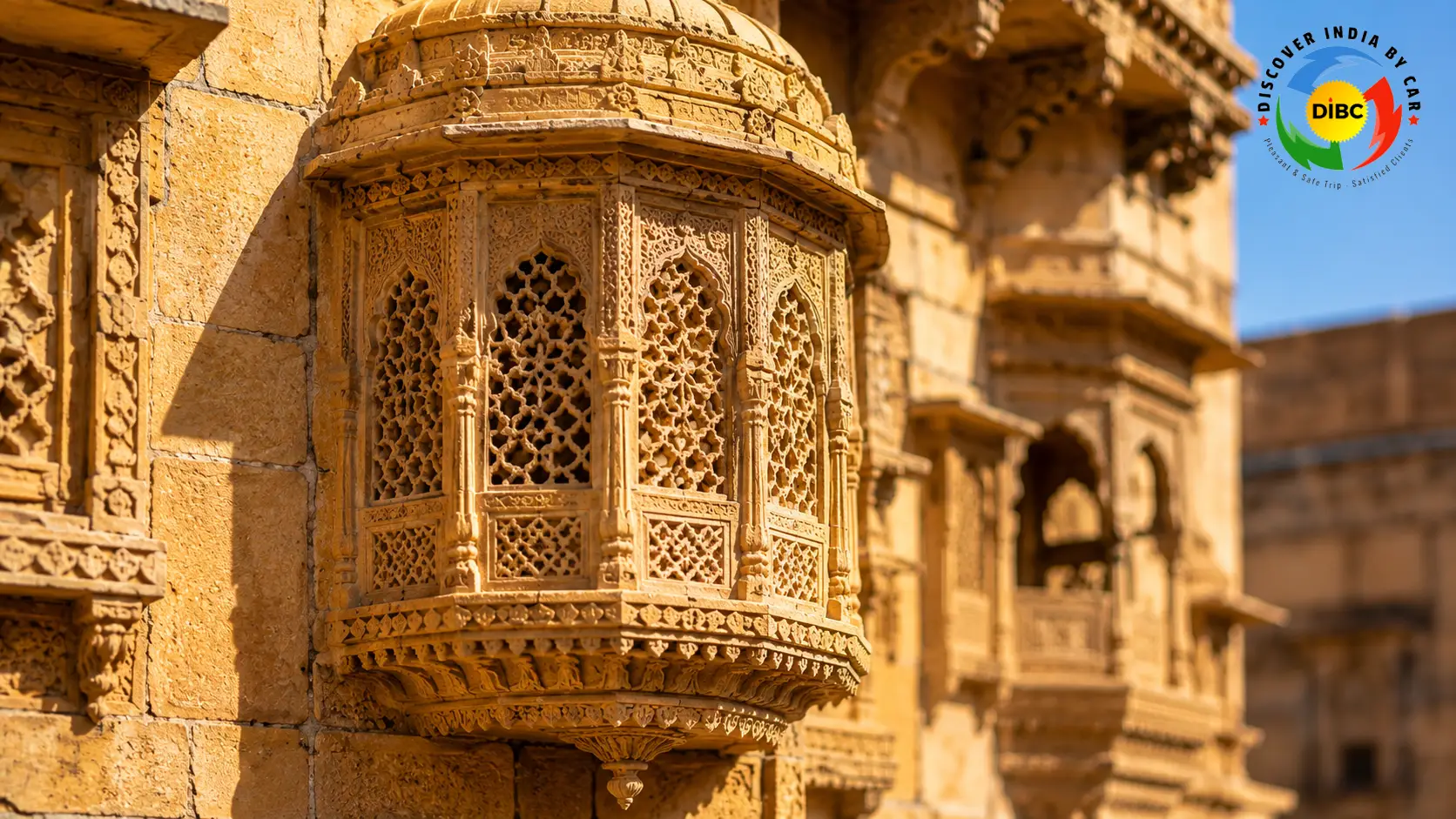
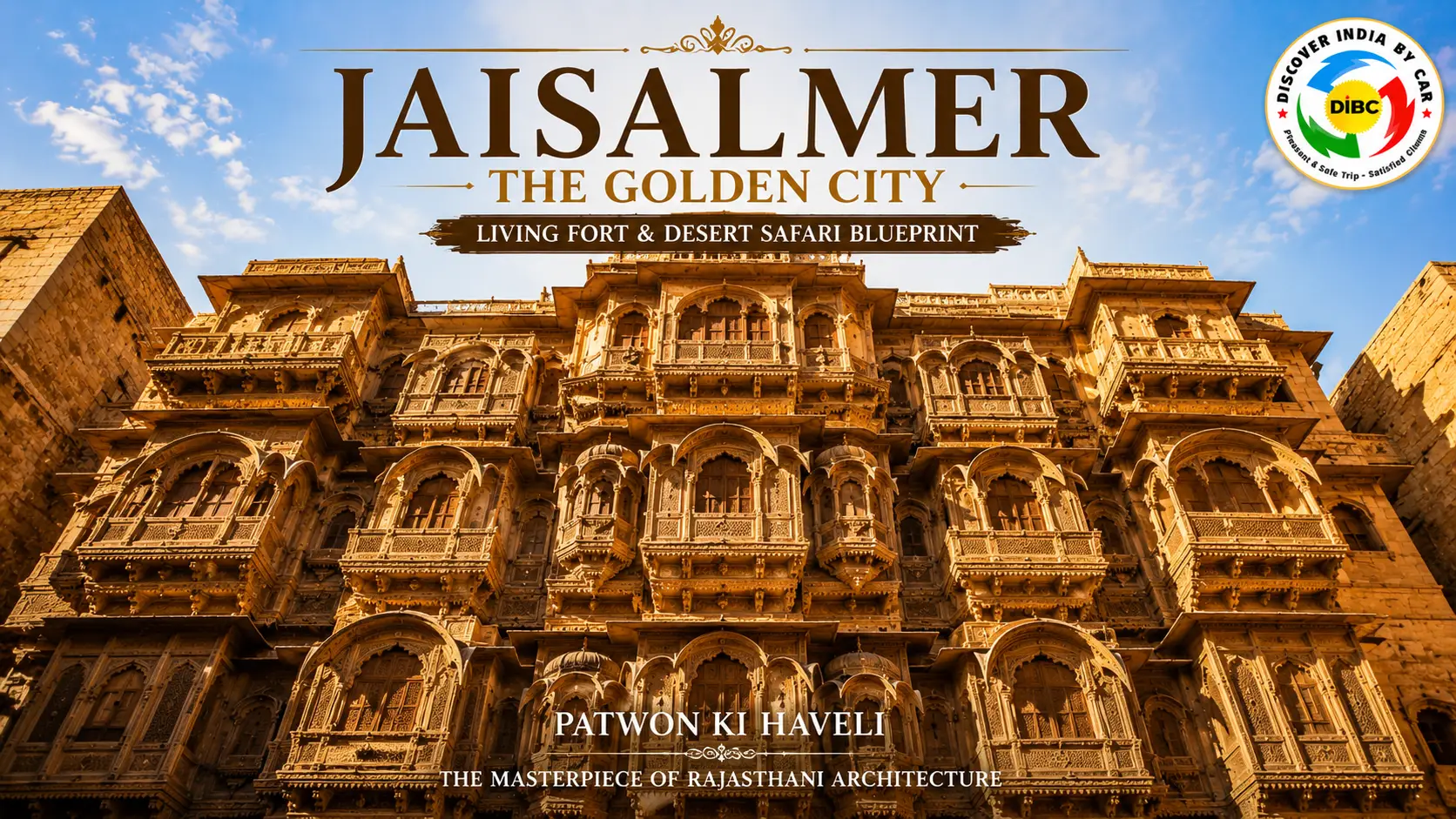
This is the largest and most visually spectacular mansion complex in the city. It is actually a row of five separate, interconnected houses built between 1805 and 1860 by a wealthy merchant named Guman Chand Patwa for his five sons. He made his fortune trading fine brocades, gold embroidery, and reportedly, a significant amount of smuggled opium.
The street-facing facade of this building is staggering. It features over 60 individual jharokhas (carved stone balconies) that look like miniature wooden birdcages hanging in mid-air. The lattice-work on these windows was highly functional; the tiny geometric holes compressed the hot desert air as it passed through, cooling it down before it entered the inner family courtyards. It is open from 9:00 AM to 5:00 PM daily, and the entry fee is INR 20 for Indians and INR 100 for foreign visitors.
Gadisar Lake
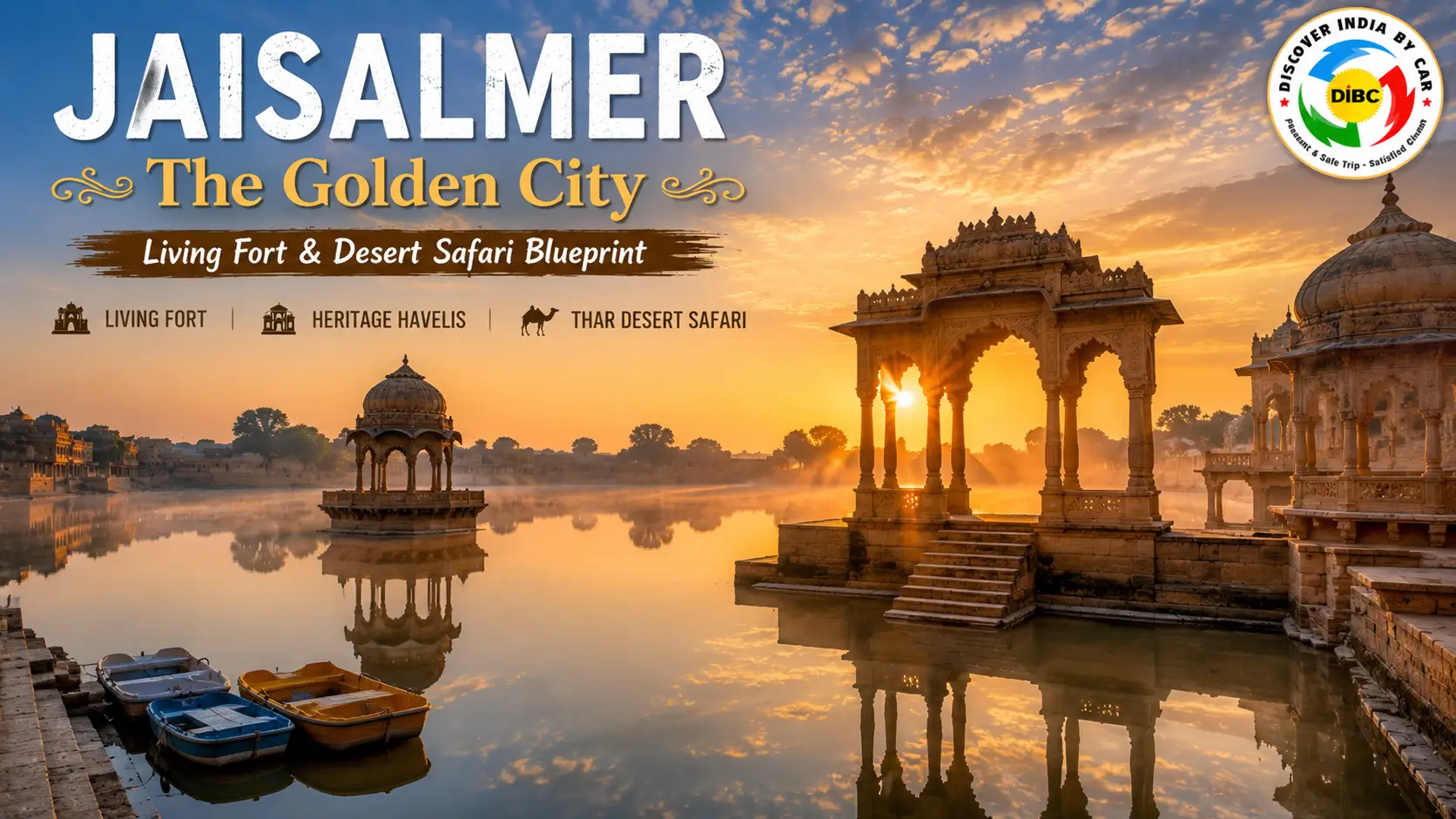
Built in the 14th century by King Gadsi Singh, this artificial reservoir was once the single source of drinking water for the entire desert capital. Because water was so incredibly precious, the community treated the lake with religious respect, surrounding it with shrines, stone ghats, and elegant sandstone pavilions known as chhatris.
The best way to see Gadisar is to wake up early and arrive exactly 20 minutes before sunrise. As the morning mist lifts off the water, the first rays of low sun illuminate the Tilon Ki Pol, a massive carved stone archway that spans the entrance to the lake. Legend says a famous court dancer built this gate with her own money. The king initially refused to walk under it because it was built by a common performer, so she quickly installed a small statue of Lord Krishna on the top, turning the archway into a temple overnight so the royal family could never tear it down. You can rent a simple pedal boat for a few hundred rupees to cruise past the floating stone pavilions.
Salim Singh Ki Haveli & Nathmal Ki Haveli
- Salim Singh Ki Haveli: Built in 1815 by a ruthless prime minister of the state. The building has a unique structural silhouette: the lower floors are incredibly narrow, but the top floor projects dramatically outward like the prow of a massive ship, supported by 38 distinct balconies carved with intricate peacock motifs.
- Nathmal Ki Haveli: Commissioned by two brothers who were master stone carvers. They decided to build the left and right halves of the mansion simultaneously without looking at each other’s progress. If you stand directly across the street and look closely at the central facade, you will notice beautiful, subtle differences in the carving patterns on either side—a permanent record of competitive sibling artistry.
Desert Safari & Sam Sand Dunes: The Ultimate Thar Experience
Leaving the sandstone streets behind to head into the deep dunes of the Thar Desert is usually the main highlight of a trip to Jaisalmer. However, this is also where your experience can vary wildly based on the specific location you choose.
Choosing Your Outpost: Sam vs. Khuri
- Sam Sand Dunes: Located about 45 kilometers west of the city. These are the massive, classic, wind-swept sand hills you see in travel documentaries. If you want dramatic, sweeping views of clean sand ridges, this is where you go. However, because hundreds of tent camps operate here, it can get highly commercialized in the winter evenings. Expect 4×4 jeeps racing across the sand, camel handlers competing for clients, and multiple desert resorts blasting loud folk music into the night air.
- Khuri Dunes: Located about 50 kilometers southwest of Jaisalmer. Khuri offers smaller, more scattered sand dunes but significantly more peace. It is clean, remote, and deeply quiet. If you want to sit on a sand ridge in absolute silence and watch the stars spin over the desert without hearing a speaker system in the distance, book a safari to Khuri or explicitly request a “non-tourist, private dune” package from an independent local guide.
The Thar Desert Experience
A realistic, boots-on-the-ground blueprint to navigating the dunes.
The Open-Top Jeep Departure
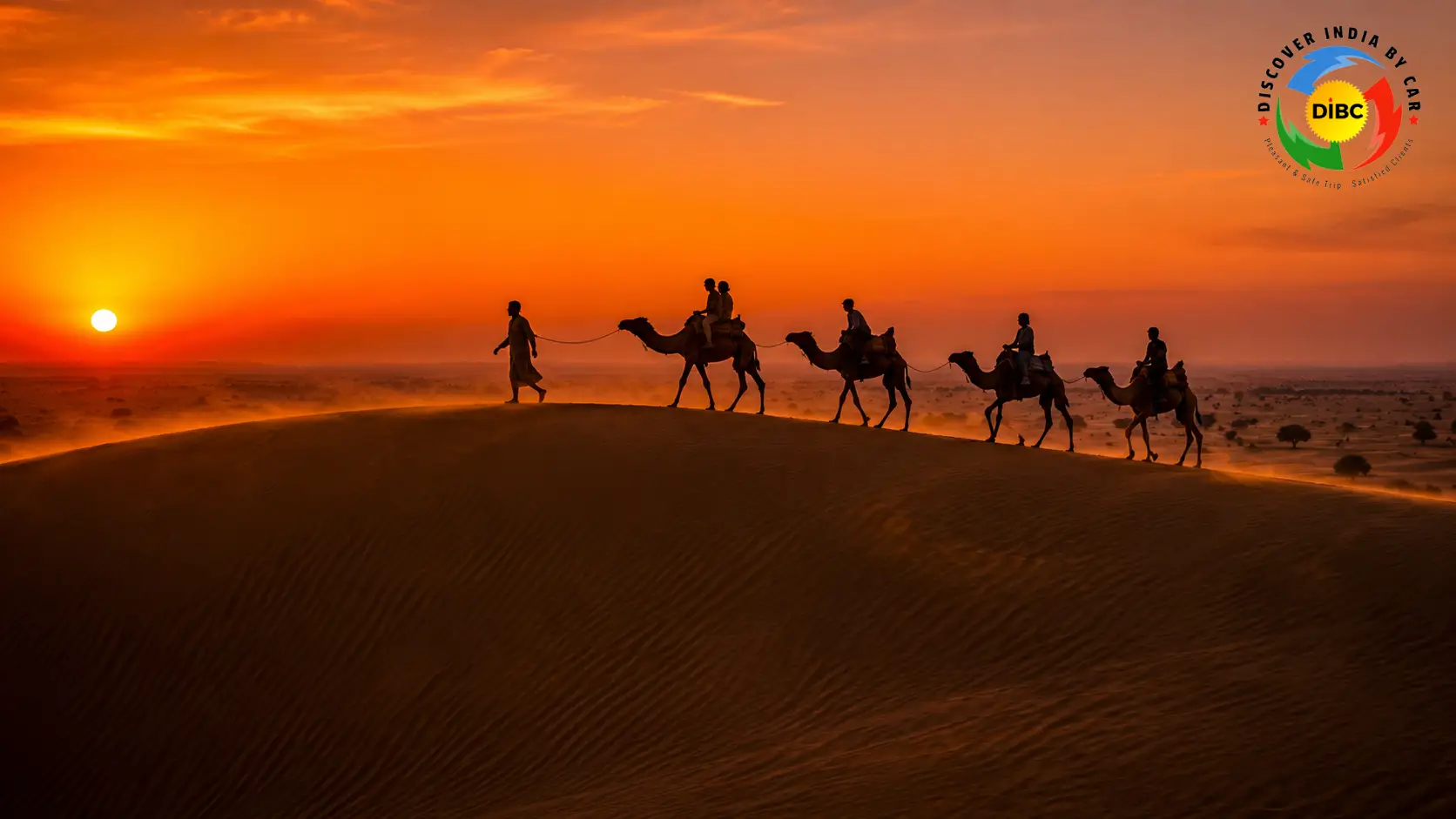
A standard desert excursion starts around 3:00 PM. An open-top 4x4 jeep collects you directly from your hotel lobby. The drive takes you away from the sandstone architecture of the city and out toward the edge of the desert reserve, transitioning from asphalt roads to desert tracks.
The Reality of a Camel Safari
At the edge of the dunes, you transfer onto camels. The Honest Truth: Riding a camel is a bumpy, physically demanding experience that can feel highly uncomfortable after an hour.
Premium Desert Camp Experience
As night falls, desert temperatures drop incredibly fast. The premium desert camps offer a modern take on old caravan travel, featuring large canvas Swiss tents built on permanent concrete bases. These are not basic camping setups; they are fully equipped with proper queen mattresses, electricity, and attached modern bathrooms with hot running water.
Bonfire, Manganiyar Folk Music & Local Feast
In the evening, guests gather around a central bonfire. Legendary folk musicians from the Manganiyar community play acoustic sets using ancient traditional instruments:
- Kamaicha: A rare 17-string bowed instrument made of mango wood that captures the haunting soul of the desert.
- Khartaal & dholak: Teakwood hand-clappers and twin-faced drums that drive fast, high-energy rhythms.
This musical soundscape is accompanied by fast-paced Kalbelia traditional dances (the famous snake-charmer dance forms) and an authentic Rajasthani buffet featuring Ker Sangri (wild desert berries and beans cooked in local spices) alongside Bajra Rotis (pearl millet flatbreads baked fresh over open wood coals).
How to Reach Jaisalmer Smoothly
Jaisalmer sits deep on India’s western frontier, but modern infrastructure has connected it efficiently to the rest of the country.
By Air
Jaisalmer Airport (JSA) operates scheduled flights year-round. Alliance Air provides direct daily flights linking Jaisalmer with Jaipur. If you are traveling from Delhi or Mumbai, booking a flight to Jaipur and catching the quick connecting flight directly to the desert is the fastest route, eliminating the old 12-to-15-hour overland road journeys.
By Rail
The Jaisalmer Railway Station (JSM) is well-connected to major northern hubs. The overnight Shalimar Malani Express runs directly from Old Delhi to Jaisalmer. Booking a 2AC or 1AC sleeper berth allows you to sleep through the long transit and wake up as the barren desert landscape appears outside your window.
The Jodhpur Overland Route
The most popular regional route is to fly into Jodhpur (The Blue City), spend two days exploring Mehrangarh Fort, and then hire reliable private car and driver in Rajasthan for the 280-kilometer drive west to Jaisalmer along National Highway 11 (NH11).
The highway is flat, exceptionally smooth, and completely empty compared to the rest of India. The drive takes roughly 4.5 hours. Keep an eye on the scrub brush along the roadside; it is common to spot wild peacocks, herds of camels, and chinkaras (Indian gazelles) running parallel to the asphalt. Make a mid-way stop at Pokhran for a hot lunch, and check out the Jaisalmer War Museum located just 12 kilometers before you enter the city.
Best Time to Visit & Ideal Trip Duration
Jaisalmer shares an ecosystem with the core Thar desert, meaning timing your holiday is critical.
- October to March (The Winter Window): This is the peak travel period. Daytime temperatures are highly comfortable, ranging between 22°C and 28°C under clear blue skies. But don’t let the sunny afternoons fool you—the open desert loses its heat the second the sun sinks below the horizon. If you are sleeping in a sand dune tent during December or January, the temperature routinely crashes down to a freezing 5°C or 7°C before midnight. You must pack a heavy jacket, thermal layers, and a warm beanie if you plan to stay in an outdoor desert camp.
- February (The Desert Festival): If you can align your trip dates, visit during the annual Maru Mahotsav (Jaisalmer Desert Festival) held during the full moon in February. The entire desert turns into a massive cultural celebration with camel polo, turban-tying competitions, and epic open-air musical gatherings.
- April to September (The Extreme Off-Season): Summer temperatures breach 45°C to 48°C. Outdoor exploration is practically impossible between 10:00 AM and 4:00 PM, and many desert camps close operations entirely due to the extreme heat.
Ideal Stay
An optimal trip duration is 3 Days and 2 Nights. This gives you one full day to explore the fort and merchant havelis, one afternoon and overnight stay in the deep sand dunes, and enough time to tour peripheral historic sites like Kuldhara—an eerie, abandoned 13th-century stone village that was mysteriously deserted overnight by its entire population to escape a tyrannical prime minister. If you want to expand this loop into a larger historical circuit, check out our comprehensive Rajasthan tour itineraries to map out your full regional travel window.
Planning the Jodhpur to Jaisalmer Route? Do the Math Before Booking.
As broken down in this guide, traveling the 280-kilometer NH11 desert corridor in a private car often costs the same for a small group as piecemeal train tickets combined with multiple city auto-rickshaws. Don't fight rail waiting lists or haul heavy luggage through crowded stations. Secure a comfortable private car and driver to cruise past the Thar landscape smoothly with total flexibility.
Stop at Hidden Sites — Take a mid-way break for lunch at Pokhran and tour the historic Jaisalmer War Museum along the highway seamlessly.
Zero Haggling Stress — No endless price disputes with local auto drivers at the fort gates or desert outposts. Everything is pre-calculated.
Wildlife & Photography — Spot wild peacocks, camel herds, and chinkaras running parallel to the smooth desert asphalt at your own pacing.
FAQ: Jaisalmer for First-Timers
Q1. Is Jaisalmer a safe place to visit if I’m traveling alone?
Honestly, it’s one of the safest towns you’ll find in Rajasthan. Because almost every family here earns their living directly from tourism, the local community is very protective of travelers. You don’t have to worry about violent crime, but you do need to be prepared for persistent shopkeepers, aggressive auto drivers, and endless safari salespeople. Keep your wits about you, set clear boundaries, and you’ll be completely fine.
Q2. How do I stop myself from getting ripped off by camel safari sellers?
This is the biggest headache in Jaisalmer. The moment you step off the train or bus, guys will follow you offering “luxury camel safaris” for an impossibly cheap price, like 500 rupees. Do not fall for this. It’s a classic setup. They will take you to a dirty, crowded patch of sand right next to a busy road, and then trap you into paying insane prices for basic things like bottled water, beer, or blankets. Skip the street touts entirely. Spend the extra money to book your desert night directly through a registered, highly reviewed independent operator or a reputable guesthouse.
Q3. What should I wear and pack for a night out in the sand dunes?
The desert climate is full of extremes, so you essentially need to pack for two different seasons. During the day, it’s hot and dusty—wear loose linen or cotton clothes, polarized sunglasses, and a wide hat. But the second the sun drops, the sand loses all its heat and the temperature plunges to single digits. If you’re sleeping out in a tent in December or January, you will freeze without a heavy jacket, a thermal base layer, and a thick woolen beanie. Also, skip the sandals and wear closed boots; walking up sand hills in flip-flops is a nightmare.
Q4. Can I actually go all the way to the Pakistan border?
Yes, you can, but it requires a bit of paperwork. You can drive out to the famous Tanot Mata Temple and the Longewala Battleground (where a legendary fight took place during the 1971 war) without any special permits. It’s a fantastic day trip through stark, open desert roads. If you are starting your entire Indian expedition from the capital city, you can sync this with a custom Delhi to Jaisalmer private car tour to experience the changing terrain first-hand. However, if you want to go beyond the temple to see the actual international border fence, you have to visit the BSF (Border Security Force) headquarters in Jaisalmer city a day in advance to get an official clearance pass.
Q5. What local food should I absolutely try while I’m here?
- Ker Sangri: Wild tree beans and local desert berries cooked in mustard oil and spices (earthy and tangy).
- Bajra Roti: Thick pearl millet flatbreads baked over open wood coals.
- Laal Maas: A fiery mutton curry made with local Mathania chilies.
- Ghotua: A dense, melt-in-your-mouth local sweet made from roasted gram flour, mawa, and pure ghee found near the fort entrance.
Connecting Your Rajasthan Journey
Jaisalmer marks the western frontier of the Indian desert experience, but it links effortlessly into a broader travel loop. Once you have explored the golden streets and spent a night under the stars, you can fly back to Jaipur to catch our signature Delhi Agra Jaipur Golden Triangle tour. From Jaipur, you can book quick trains north to see the Taj Mahal. From Jaipur, you can book quick trains north to see the Taj Mahal or head south into the romantic lake palaces of Udaipur and the tiger sanctuaries of Ranthambore. By traveling along these historic desert routes, you are stepping directly into a living heritage saga that has stood resilient against the shifting sands of time.