- Private car and driver in Delhi / India
- +91-8447445445
- info@discoverindiabycar.com sugar.ankit@yahoo.com
 +91-9818434712
- Follow us:




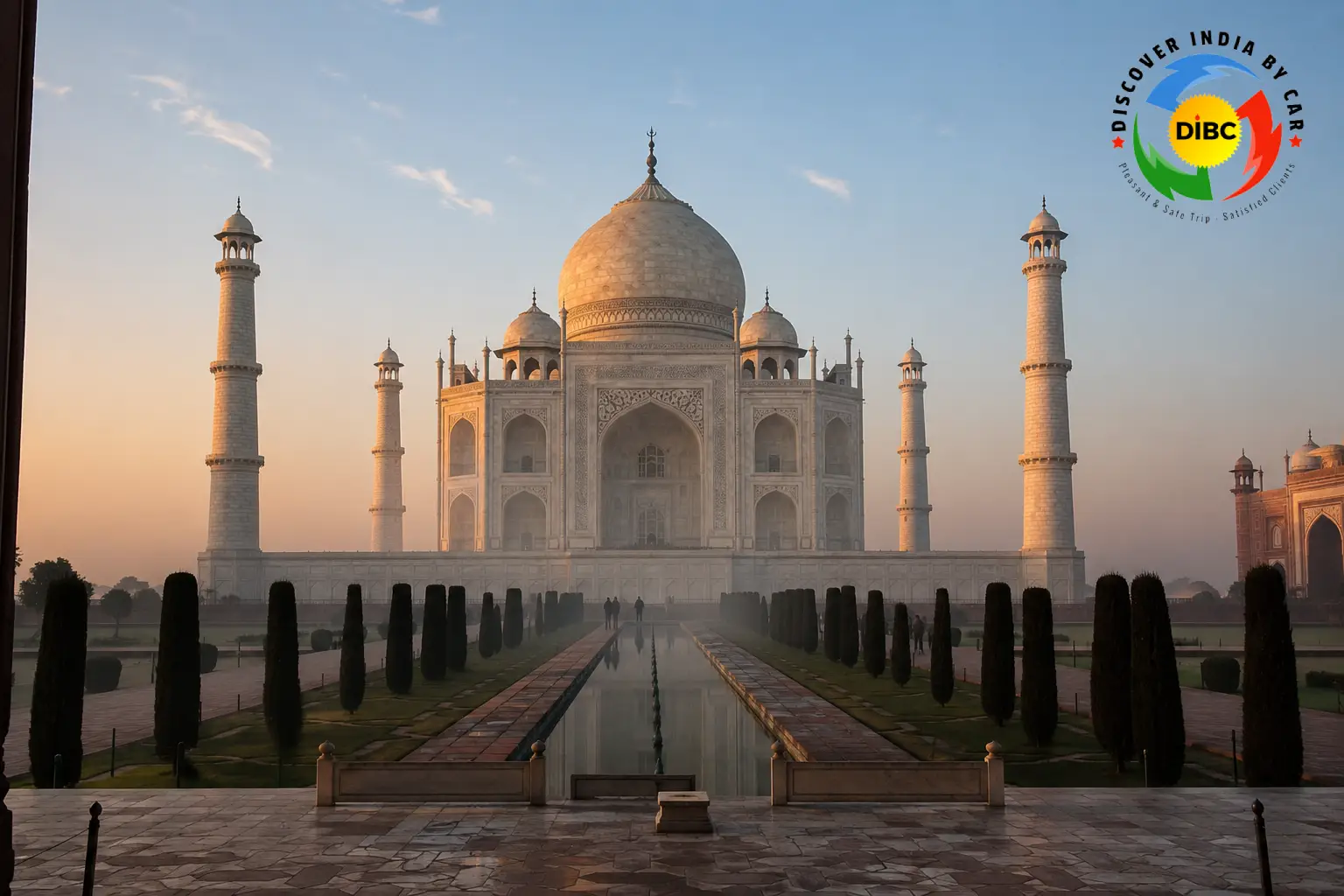
Taj Mahal Timings 2026: What I Tell My Guests Before Every Agra Trip
A few winters ago I picked up a couple from their Delhi hotel who had planned their whole India trip around one photograph. The Taj at dawn, empty, pink light on the marble. They'd seen it on somebody's Instagram and that was it, that was the dream. We reached the East Gate right on time, they went in glowing with excitement, and forty minutes later they walked back out looking like someone had cancelled Christmas.
January fog. The dome hadn't shown itself once.
I felt terrible, even though there was nothing anyone could have done. And that morning is basically why I now say the same thing to every guest before we leave for Agra: the Taj Mahal never has a bad day. Your timing does. Get the timing right and it will floor you. Get it wrong — wrong hour, wrong month, wrong day of the week — and you'll leave wondering what all the fuss was about.
So let me save you my couple's disappointment. Here's how the timings actually work in 2026, and how to use them.
Taj Mahal Timings 2026: Quick Answer
| What you're asking | The answer |
|---|---|
| When does Taj Mahal open? | About 6:00 a.m. as a rough guide. The official rule is 30 minutes before sunrise, so it ranges from roughly 4:45 a.m. in June to 6:30 a.m. in January. |
| When does Taj Mahal close? | About 6:30 p.m. as a rough guide. The official rule is 30 minutes before sunset, so it ranges from roughly 5:00 p.m. in December to 6:40 p.m. in June. |
| Is Taj Mahal closed on Friday? | Yes, closed to general visitors every Friday |
| What time do ticket counters open? | About 1 hour before sunrise |
| What time do ticket counters close? | Gates stop new visitors around 30–45 minutes before closing |
| Can I visit Taj Mahal at night? | Yes, on 5 designated nights around the full moon |
| Night viewing hours? | 8:00 p.m. to 11:59 p.m. per the official ASI listing — widely quoted at the ticket office as 8:30 p.m. to 12:30 a.m. Only 5 nights a month (details below). |
| How long do I need inside? | Two to three hours at least. Four or five if you love your camera. |
If you read nothing else, read the Friday line twice. I'll come back to why.
The Taj Doesn't Run on a Clock
Here's the thing nobody tells first-timers, and it catches people out constantly. That "6 a.m. to 6:30 p.m." you see everywhere? It's an average, not a rule. The monument opens half an hour before the sun comes up and shuts half an hour before it goes down, and since sunrise and sunset drift through the year, your real window quietly moves with them.
Which is why my June guests and my December guests are, in practice, following two completely different schedules — same official rule, different reality on the ground. In summer the sun is up and blazing before most people have found their shoes. In deep winter you can be standing inside the gates at quarter past six and still be waiting for the sky to do anything at all. Neither is a problem. But you should know which one you're walking into.
| Season in Agra | Sunrise around | Gates open around | What to actually expect |
|---|---|---|---|
| Summer (Apr–Jun) | 5:15–5:45 a.m. | 4:45–5:15 AM*. | Long days, but the marble turns into a griddle after 11. Six to nine is your only comfortable window. |
| Monsoon (Jul–Sep) | ~5:45 a.m. | ~5:15 AM* | Sticky, moody skies, thinner crowds. Keep a light cover handy for a sudden downpour. |
| Autumn (Oct–Nov) | ~6:15 a.m. | ~5:45 AM* | The good stuff. Clean air, kind weather, gorgeous light. My favourite window to bring people. |
| Winter (Dec–Feb) | 6:30–7 a.m. | 6:00–6:30 AM* | Peak season, thick crowds. January fog can swallow the dome until ten, exactly like it did to my couple. |
Note: These are approximate sunrise-based calculations, not fixed official clock timings. The Taj Mahal's official rule is 30 minutes before sunrise; actual sunrise varies by date.
The exact minute shifts every single day, so if you're chasing a specific light — a photographer on a tight schedule, say — just glance at that day's Agra sunrise before you set your alarm. Everyone else can round to "early, but not the crack of dawn in winter" and be fine.
And I'll be honest about the fog, because most sites gloss over it: a foggy Taj slowly emerging from the mist is one of the eeriest, most beautiful things I've seen in fourteen years. My couple couldn't see it that way at the time, and I understand why. But if it happens to you, don't rush out. Give it an hour. Sometimes the mist lifts and hands you a version of the monument almost nobody gets to see.
Taj Mahal Timings Today
The Taj Mahal does not have a fixed daily opening time. On normal visiting days, it opens 30 minutes before sunrise and closes 30 minutes before sunset. Because sunrise and sunset change throughout the year, the exact clock time for your visit changes by date.
If you're visiting today, don't rely on a generic 6 a.m.–6:30 p.m. schedule. Check the sunrise and sunset time for Agra on your travel date and use the official 30-minute rule to work out the approximate visiting window.
Important: The Taj Mahal is closed to general visitors every Friday.

Friday will ruin your day if you let it
I mean this literally. Of every mistake I watch people make, the Friday one costs the most, because it wastes not a couple of hours but the entire reason you came to Agra.
The Taj closes to general visitors every Friday. Prayers are held at the mosque inside the complex, and that's the whole complex off-limits — no morning slot, no afternoon sneak-in, no "surely just the gardens." Closed is closed.
When a guest's itinerary boxes them into a Friday in Agra, I don't let them sit in the hotel sulking. Agra Fort stays open, and it's magnificent in its own right — half the guests who go in grumbling come out saying it was the surprise of the trip. Fatehpur Sikri, forty kilometres out, is the one most people skip and later regret. There's Itmad-ud-Daula, the little jewel everyone calls the Baby Taj. And there's Mehtab Bagh across the river, which will actually hand you a clean view of the Taj without you setting foot inside the complex — a decent consolation prize on a closed day. If you're choosing between those two, I've written up the full Agra sightseeing circuit as well. Then we come back for the real thing at first light on Saturday, and nothing's lost but a lie-in.
Pick your gate on purpose
This is proper insider stuff, the kind of thing the official notice board won't frame for you. There are three gates and they are not the same.
| Gate | Status | The honest take |
|---|---|---|
| West Gate (near Saheli Burj) | Entry + tickets | The busy one. City tour buses dump their crowds here. |
| East Gate (Shilpgram) | Entry + tickets | Calmer. This is where I take early-morning guests. |
| South Gate | Exit only, no entry | It used to let people in; now it's exit-only. Don't plan to start here. |
Two things worth tattooing on your hand. First, if you want a gentler security line at dawn, the East Gate is usually the kinder choice, because the West absorbs the coach traffic. Second — and people get burned by this — your ticket is tied to the gate you buy it for. Buy for the gate you're actually entering, or you'll be trudging around the perimeter with the clock ticking and your sunrise slipping away. The ticket windows at both gates run from roughly an hour before sunrise until about 45 minutes before sunset.

Seeing it by moonlight
A full-moon Taj is a genuinely different monument. Cooler, quieter, almost silver. If it's on your list it's worth the extra hassle — but the rules are tight and the tickets are scarce, so pay attention here.
| Night viewing | Detail |
|---|---|
| Hours | 8:00 p.m. to 11:59 p.m. per the official ASI listing. Many sources and the ticket office quote 8:30 p.m. to 12:30 a.m. — confirm the slot printed on your ticket. |
| Which nights | Five a month only: the full-moon night, plus two before and two after |
| Blackout dates | Fridays, and all of Ramadan |
| Total visitors | 400 per night |
| How it runs | Eight batches of 50, half an hour each |
| Booking | Online or at the ASI office, at least 24 hours ahead — no walk-up night tickets |
| Where to report | Shilpgram, near the East Gate, about 30 minutes early for security |
| Bring | Valid photo ID, no arguments |
Do the maths and you'll see the problem: five nights, four hundred people. These slots vanish. If moonlight is the dream, book the moment you know your dates. This is not an evening-before decision.

What it costs in 2026
These match the current ASI chart. Foreign and SAARC/BIMSTEC visitors pay more at the base, and the inner tomb chamber — the "main mausoleum" — is a small optional add-on for everybody.
| Visitor | Day entry | + Main mausoleum |
|---|---|---|
| Indian / OCI cardholder | ₹50 | + ₹200 |
| SAARC / BIMSTEC citizen | ₹540 | + ₹200 |
| Foreign tourist | ₹1,100 | + ₹200 |
| Child under 15 | Free | — |
Night viewing is priced separately: ₹750 for a foreign adult, ₹510 for an Indian adult, ₹500 for a child aged 3 to 15, and free for the little ones under three.
Booking online shaves a few rupees off — about ₹5 per Indian ticket, ₹50 per foreigner ticket. Honestly, the discount is beside the point. What you're really buying online is the right to skip the counter queue, and on a peak-season morning that queue can eat the exact half-hour of good light you dragged yourself out of bed for. Prices do get revised now and then, so if a figure somewhere looks off, treat the official counter as the last word.
The hour you choose matters more than the season
If you take one opinion from a driver who's watched thousands of these visits play out, take this one.
Sunrise is the one I push, every time. The first hour and a half after opening gives you soft light sliding from pink to gold across the marble, air that hasn't turned to soup yet, and crowds that haven't woken up. That's the combination that makes people go quiet when they walk through the arch. If you're a photographer or you're bringing someone you love, this is your window and nothing else is close.
Midday is the version most people book by accident and then feel a bit cheated by. The light goes flat and harsh straight overhead, the colour drains out of everything, the crowds peak, and in summer the platform is hot enough to feel through your soles. It works if it's all you've got. But it's the Taj on its worst behaviour, and it's a shame to meet it that way.
Late afternoon into sunset is the underrated slot. The heat backs off, the light turns that soft silver-gold, and while it's usually busier than dawn, the mood is lovely. You'll just need patience to get people out of your frame.
However you slice it, give the place two to three hours minimum. Four or five if the photographs matter, because the light rewards the ones who wait and quietly punishes the ones who rush.
The best months, if you have a choice
October through March is the comfortable stretch, and if I'm being picky, the shoulders of it — October to November, and February into March — are the sweet spot: clear skies, mild air, and none of the deep-winter fog gambling with your morning. December and January bring the heaviest crowds and that thick fog I keep mentioning, which is magical if you're relaxed and maddening if you're on a schedule. Summer, April to June, is genuinely punishing by late morning — but here's the trade almost nobody mentions: a summer dawn is empty. The peak-season hordes simply aren't there. If you can stomach a 5:30 start and get out before the heat lands, an off-season sunrise can be the most peaceful visit of the lot.
Getting to Agra in time for the gates
Here's the part most timing guides leave out, and it's the part that actually decides whether you see the Taj at its best: the monument's opening hour is fixed by the sun, but whether you're standing at the gate when it opens is decided two hundred and thirty kilometres away, in Delhi, at four in the morning. In all the years I've driven this road, I've watched far more people miss the light because of the journey than because of the timings.
So plan the travel backwards from the gate, not forwards from your hotel.
| How you travel | Delhi to Agra | What it means for your timing |
|---|---|---|
| Private car | About 3.5–4 hrs | The only option that gets you to the gate before opening. A 3:30–4:00 a.m. Delhi departure puts you at the East Gate for a sunrise entry. |
| Fast train | Roughly 1.5–2 hrs | Very comfortable, but the earliest services still land you mid-morning. Good for a relaxed day visit, not for dawn. |
| Ordinary express train | 3–4 hrs | Cheap and frequent, less reliable on time. Fine if your plans are loose. |
| Bus / coach | 4–5 hrs | Slowest, most stops. Works on a budget; won't get you a sunrise. |
Note: Train timings and services change. Check the current timetable on IRCTC for your travel date rather than trusting a schedule you read on a blog.
The drive runs on the Yamuna Expressway, a tolled six-lane road that skips almost every town between Greater Noida and Agra. On a clear morning it's genuinely fast. The catch, and it's the one I warn every winter guest about, is fog: in December and January visibility on that expressway can collapse before dawn, and a drive that normally takes three and a half hours can take five. If you're travelling in deep winter and the sunrise slot matters to you, either leave an hour earlier than the maths says, or sleep in Agra the night before. That second option is what I quietly recommend to anyone whose whole trip is built around the photograph.
If you'd rather not do the round trip in one day, an overnight in Agra changes the visit completely. You wake fifteen minutes from the gate, walk in with the first batch, and you're not sitting in a car for eight hours on the same day you're trying to enjoy a wonder of the world.
The last 500 metres nobody warns you about
This one catches almost everybody, and it has nothing to do with opening hours.
No petrol or diesel vehicle is allowed near the monument. The area immediately around the Taj is a protected zone, so whatever you arrive in — taxi, private car, auto — stops well short of the gate. From that drop-off point you cover the last stretch on foot, or by battery-operated shuttle, cycle rickshaw or e-rickshaw. It isn't difficult. It is just a step people don't budget for, and it costs ten to twenty minutes they thought they had.
| Gate | Vehicles stop at | Covering the last stretch |
|---|---|---|
| East Gate | Shilpgram complex | Roughly a kilometre. Battery bus, e-rickshaw or an easy walk. This is where night-viewing visitors report too. |
| West Gate | Saheli Burj parking area | Shorter walk, but far busier — this is where the coach groups unload. |
| South Gate | Taj Ganj area | Exit only. Don't plan an arrival here. |
Two practical things. Build fifteen minutes into your plan for this last leg, on top of the security queue. And if you're arriving by train, Agra Cantt is the station almost every fast service uses; it's a short taxi or auto ride to either gate, and the queue for prepaid transport outside the station is worst exactly when the fast trains arrive.
If the logistics of all this sound like more moving parts than you want to manage on your one morning in Agra, that's fair — it's precisely the gap we fill. You can read how we run the Delhi to Agra day trip by car, the same-day Agra tour by train, or the overnight Agra trip that gets you to the gate at first light without a 3 a.m. start.
Where a driver actually earns his keep
I'll be straight with you, because you can plan all of the above yourself. The visit isn't the hard part. The logistics wrapped around it are where trips quietly fall apart — the Friday nobody flagged, the Delhi-to-Agra drive that ran late and cost you the light, the wrong gate, the queue with no ticket in hand.
That's the gap we fill. Discover India by Car runs private car-and-driver trips across the Golden Triangle, and the Taj sits right in the middle of everything we do. We time the Delhi–Agra run so you're at the right gate before it opens, we handle tickets so you're not standing in a line, and your driver already knows which gate is calmest on the morning you're travelling. A Delhi–Agra sunrise day trip, or the full loop through Jaipur — either way, you get the monument at its best and none of the moving parts to manage.
If that sounds like your kind of trip, we're easy to reach:
Questions people actually ask me
When does the Taj Mahal open and close?
Roughly 6:00 a.m. to 6:30 p.m. as a guide. The official rule is 30 minutes before sunrise to 30 minutes before sunset, so the exact clock time shifts daily with sunrise and sunset in Agra — earlier in summer, later in winter.
Is the Taj Mahal closed on any day?
Yes — all day every Friday, for general visitors, because prayers are held at the mosque inside. It's open every other day.
What are the night viewing timings and dates?
The official ASI listing says 8:00 p.m. to 11:59 p.m., though 8:30 p.m. to 12:30 a.m. is widely quoted at the ticket office — check the slot on your ticket. It runs on five nights a month: the full-moon night plus two nights either side. Not available on Fridays or during Ramadan, and you must book at least 24 hours ahead.
What's the Taj Mahal ticket price for Indians in 2026?
₹50 for Indian and OCI cardholders, with an optional ₹200 to enter the main mausoleum. Children under 15 go free.
What's the ticket price for foreign tourists?
₹1,100 for foreign tourists, plus an optional ₹200 for the main mausoleum. SAARC and BIMSTEC citizens pay ₹540 plus the same optional ₹200.
What's the last entry time?
Gates usually stop admitting new visitors around 30 to 45 minutes before the official closing time, and the ticket counter closes roughly 45 minutes before sunset.
Which gate should I use?
The East Gate (Shilpgram) is normally the least crowded, since the tour buses pile up at the West Gate. The South Gate is exit-only. Remember your ticket is gate-specific.
What's the best time of day to go?
Sunrise. The first 90 minutes after opening give you the softest light, coolest air and thinnest crowds. Midday is harsh and packed; sunset is a solid second choice.
How long should I spend there?
Two to three hours minimum, four to five if photography is your thing — the changing light pays off the slower you take it.
Do I have to book tickets online?
No, but it's worth it. You get a small discount and, more usefully, you skip the counter queue, which gets long in peak season.
Is night viewing on every full moon?
On the full-moon night and the two nights either side, unless one of those falls on a Friday or during Ramadan. Only 400 people are let in per night, so it books out fast.
Which season is best?
October to March is the comfortable half, with October–November and February–March the pick of it. December–January means crowds and fog; April–June is hot but gives you quiet, uncrowded sunrises.
How far is the Taj Mahal from Delhi?
About 230 km. By private car on the Yamuna Expressway it's roughly 3.5 to 4 hours each way, longer in winter fog. Fast trains cover it in around 1.5 to 2 hours.
What time should I leave Delhi to reach the Taj Mahal for sunrise?
Between 3:30 and 4:00 a.m. for most of the year, and earlier in December and January when fog slows the expressway. If sunrise is the whole point of your trip, staying overnight in Agra is the safer plan.
Can my car drop me at the Taj Mahal entrance?
No. Petrol and diesel vehicles aren't allowed near the monument. Your vehicle stops at the designated parking area — Shilpgram for the East Gate, Saheli Burj for the West — and you cover the last stretch on foot or by battery shuttle, e-rickshaw or cycle rickshaw. Allow an extra fifteen minutes for it.
Last fact-checked: September 2026. Opening hours, ticket prices and night-viewing rules are set by the Archaeological Survey of India and can change — please confirm at the official counter or booking page before you travel.