- Private car and driver in Delhi / India
- +91-8447445445
- info@discoverindiabycar.com sugar.ankit@yahoo.com
 +91-9818434712
- Follow us:



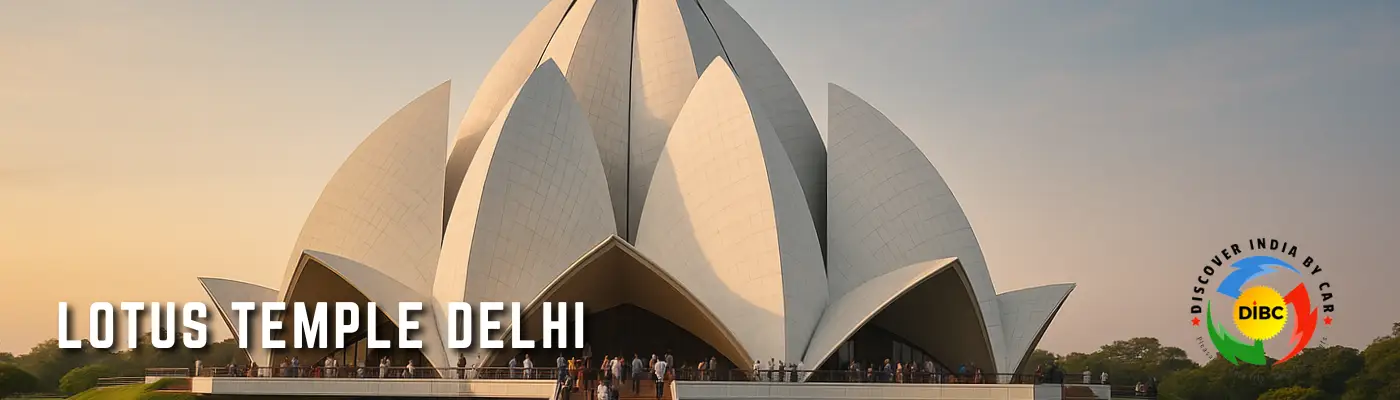
Lotus Temple Delhi: History, Latest Timings April 2026
The Flower That Blooms in Stone
If there’s one structure in India’s bustling capital that demands your full attention, not just for its beauty but for the profound calm it exudes, it’s the astonishing lotus temple delhi. As someone who has covered Indian tourism for over a decade and a half, I can tell you this isn’t merely a point on a map—it’s an experience unto itself.
Formally known as the Baháʼí House of Worship, this architectural masterpiece has cemented its global status as a powerful symbol of unity, serenity, and unparalleled engineering ingenuity.
What makes it utterly unique? It isn’t simply the spectacular form or the immaculate white marble. The real uniqueness lies in its foundational philosophy. Unlike most places of worship, this Temple consciously stands for non-denominational unity; it embraces all faiths—or no faith at all. Everyone is welcome to enter, sit, and reflect in absolute silence. It’s an active rejection of religious divisions. You’ll find it perfectly located amidst sprawling gardens in the heart of Delhi, specifically in the tranquil Bahapur area of South Delhi.
This is your indispensable guide. Forget the basic facts you find elsewhere; here, you’ll find comprehensive information essential for your visit. We promise to deliver a deep dive into its captivating lotus temple history, the intricacies of its construction, the essential, current lotus temple delhi timing, precise location details, and practical visiting tips you can use right away for a perfectly executed road trip stop.
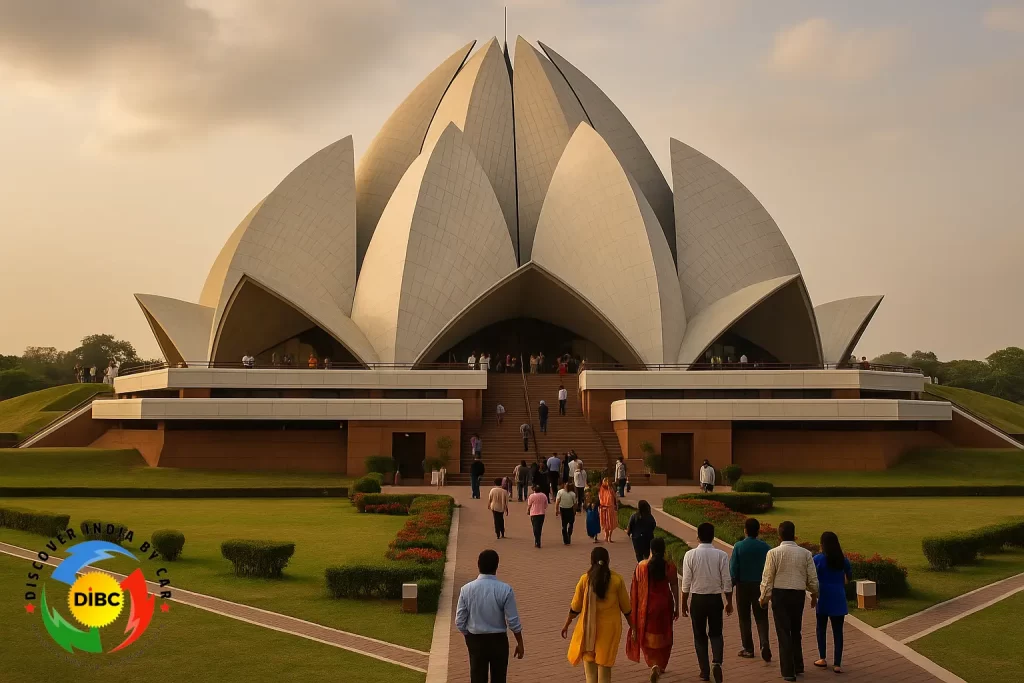
About Lotus Temple: Where Faith Meets Architecture
When most visitors ask, “about lotus temple,” they often start with “Is it a Shiva temple?” or “Is it a mosque?” The answer is fundamentally neither. Its classification as a Baháʼí House of Worship defines its entire function.
The Function: One God, One Door for Everyone
The Baháʼí Faith teaches a beautiful, revolutionary concept: there is one God who has sent a series of Messengers—the Prophets, Krishna, Buddha, Moses, Christ, Muhammad, etc.—to the world. Therefore, all religions are interconnected parts of a single truth. The Baháʼí Houses of Worship (also called Mashriqu’l-Adhkar) are the physical embodiments of this profound ideal.
The consequence for the visitor is striking: you will see no ritual, hear no sermon, find no idols, and you are welcome to bring the Holy Book of your own tradition inside for personal reading. Its core belief truly is the oneness of all religions and, critically, the unity of humanity. This space is purely for quiet adoration, meditation, and reflection.
The Architectural Logic: Purity and Peace
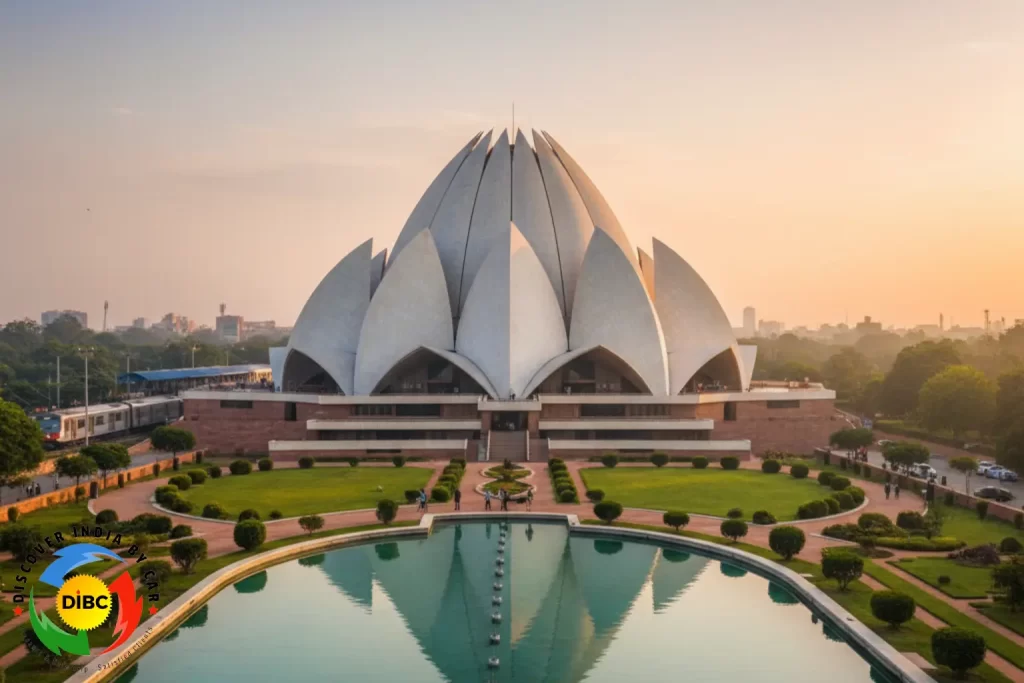
Architects couldn’t have picked a more relevant symbol for India. The very name and form are rooted in ancient culture. The design, modeled after a massive, partially open Lotus flower, taps directly into a powerful spiritual archetype. Across multiple Dharmic faiths, the lotus symbolizes purity (rising immaculate from the mud), peace, and spiritual ascension. By translating this powerful, natural image into white, permanent marble, the designers created a global symbol of tranquillity that is immediately recognizable and culturally relatable.
Essential Statistics Snapshot
As an expert, I always have these facts ready for you.
Fact/Metric | Detail You Should Know |
Architect | Fariborz Sahba (An Iranian-Canadian genius) |
Location | Bahapur, Kalkaji, New Delhi |
Year Built | Completed: December 1986 |
Structure Type | Baháʼí House of Worship (Mandir) |
Structural Theme | The Lotus—27 petals in clusters of three. |
Capacity | Easily holds 2,500 people simultaneously. |
Entry Fee | Zero. Absolutely FREE! |
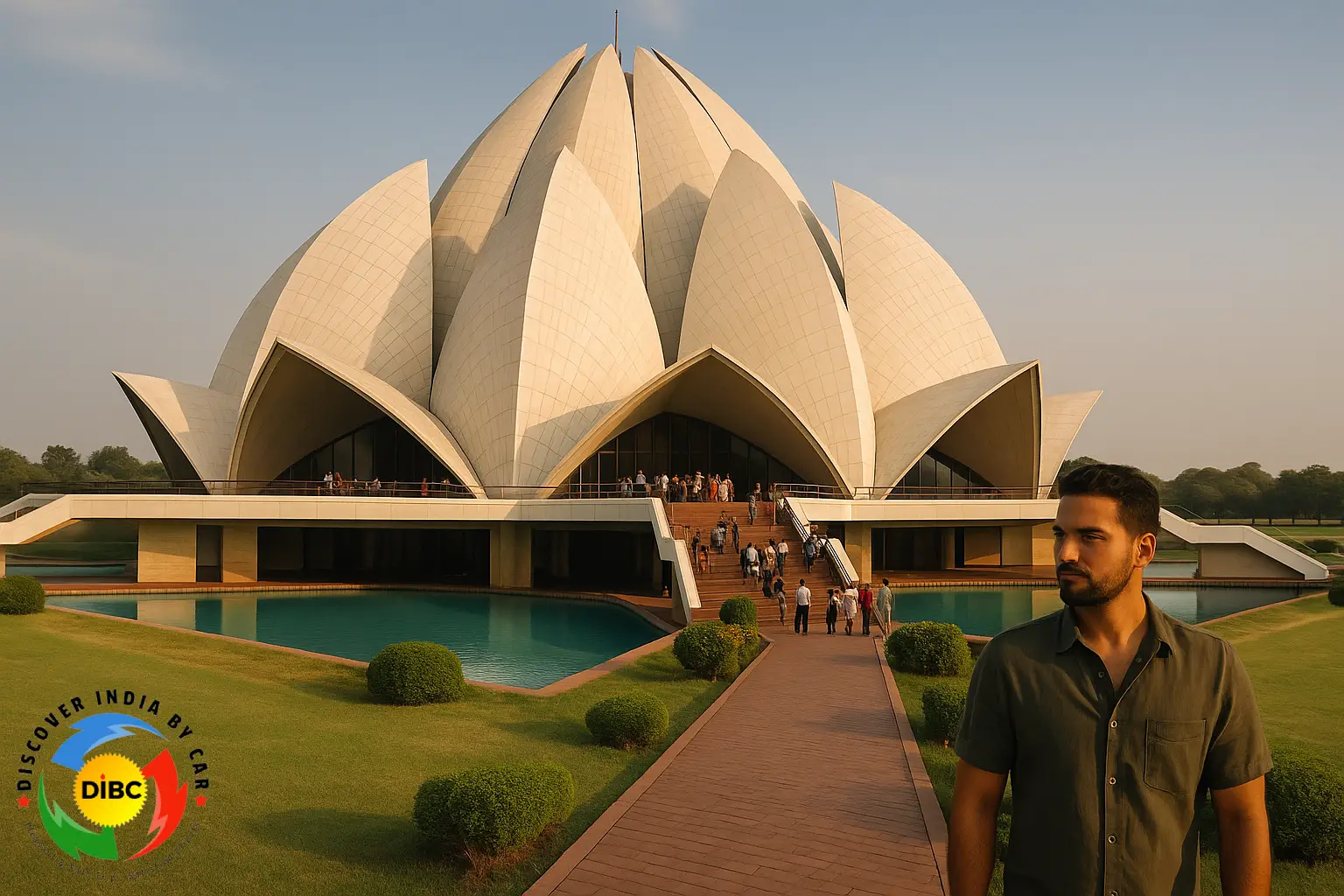
Lotus Temple History: The Story Behind the Symbol
Every monument with the kind of impact the Lotus Temple Delhi has needs an incredible backstory. Delving into its lotus temple history takes us through the late 20th century, a time of complex challenges for construction in Delhi.
The Commission and the Decade of Construction (1976-1986)
The Baháʼí community wanted an Indian House of Worship; the site was selected in Delhi. The global design search led to the eventual selection of Fariborz Sahba. The challenge he took on was gargantuan: converting a soft, natural curve like a lotus into hard, supporting, marble-clad concrete. Engineers had to innovate completely new solutions to handle the stress and curves of the three-dimensional concrete shells that form the petals.
The building work officially began in 1976. This wasn’t a quick build; it required almost a decade of continuous, precision-led effort to make those soaring petals meet without visible seams or joints, finally culminating in the opening in December 1986.
Built by Donations, Driven by Vision
An interesting human-interest aspect often missed is the funding source. The entire project was financed by donations—big and small—from the worldwide Baháʼí community. This massive, global voluntary contribution shows that the monument was, and still is, deeply cherished as a shared vision. It wasn’t built by a government but by millions of small acts of devotion to the core principle of human unity.
A Global, Enduring Message
The enduring concept woven throughout the entire lotus temple history and its physical form is simple: every spiritual journey starts somewhere different, but they all converge into one central space. The mandated nine sides, with a great door on each, ensure that any path you take ultimately leads into the one common spiritual sanctuary. This simple idea propelled it onto the world stage immediately.
- World’s Attention: For its first several years, the temple recorded higher annual visitation than even the iconic Eiffel Tower in Paris—it was a truly viral piece of architecture built on an unshakeable message.
- Architectural Accolades: The daring, sophisticated engineering of its shell structure garnered numerous global awards for both design and construction excellence, confirming that the spiritual idea was matched by technical innovation.
Architecture & Design: A Masterpiece of Modern India
As a specialist writing for an audience keen on travel and Indian sights, I stress that the Lotus Temple Delhi is a study in material science and spiritual symmetry. It’s impossible to ignore the immense logistical effort required.
The Shell Structure and Symmetrical Symmetry
The entire design consists of 27 petals, standing on their own as separate forms but structurally working together. These 27 are carefully divided:
- The Three Rings: The petals are formed into three distinct layers, or rings, creating nine sides, as is customary for all Baháʼí Houses of Worship globally. The structure’s sheer height—over 34 meters—demanded engineering previously unseen in India for a non-industrial shell structure.
- The Number Nine: Beyond spiritual unity, the number nine is an absolute must: nine doors leading into one vast, open space, a number of perfection and completion in the faith’s texts.
The Marvel of Greek Marble
Why is the Lotus Temple Delhi so bright? It is covered with magnificent Penteli marble. Yes, the material that covers the external concrete is white marble shipped all the way from the quarries of Greece—the very same place the marbles of the ancient Athenian Parthenon were sourced. This white cladding gives it that stunningly smooth, brilliant finish, ensuring it glistens in the Delhi sun and feels immaculately pure underfoot. The decision to use this specific material added considerable complexity, but ensured a non-ageing, truly world-class aesthetic.
The Inner Sanctum: Quiet, Cool, Cavernous
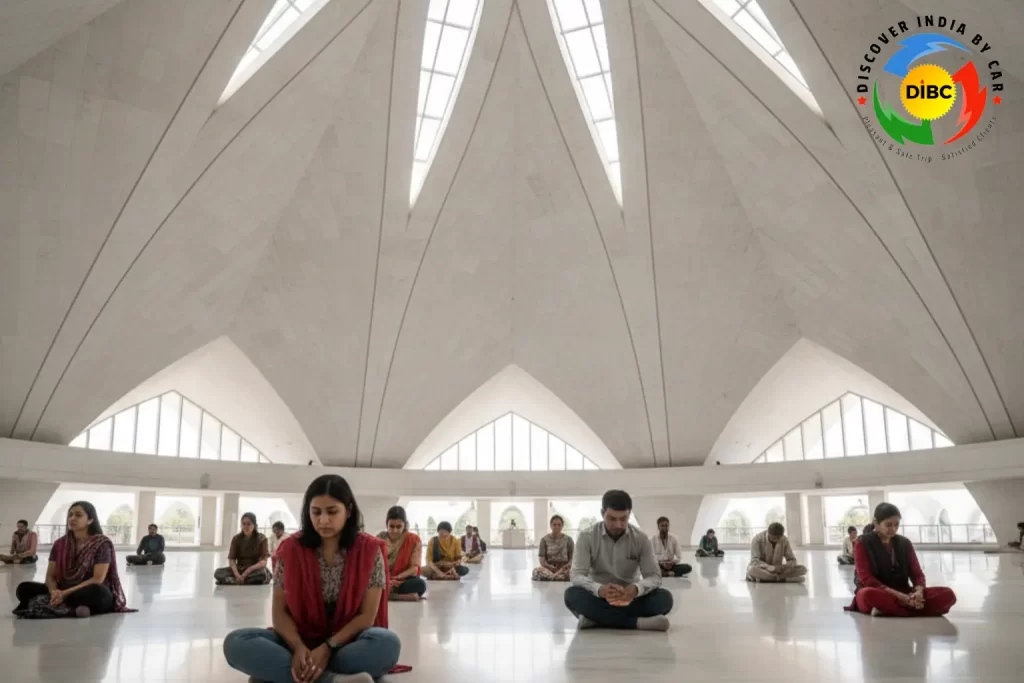
Stepping inside the central hall—after you remove your shoes and observe silence—is genuinely transportive. The ceiling is dizzyingly high. Since there are no pillars or beams visible within the main prayer area, the dome feels incredibly light and supported by an unseen force. Natural light gently floods the space from the petal arrangements at the top, a symbol of divine illumination. The capacity of 2,500 people means you can always find your small patch of quiet.
Reflection Pools: Design with Function
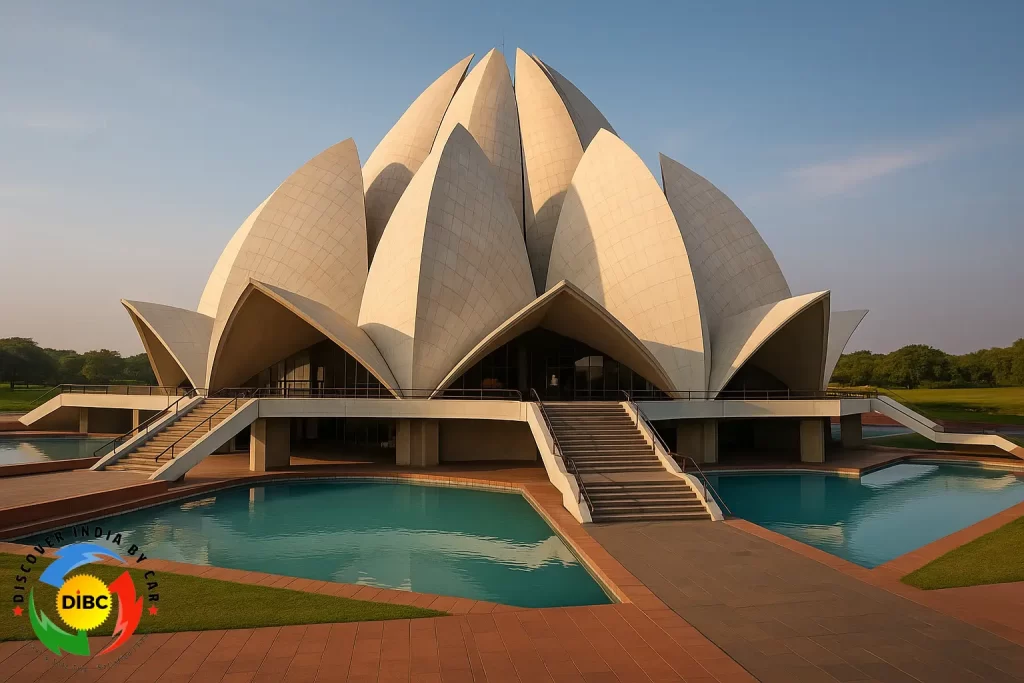
Notice the nine beautiful reflection pools at the temple’s base? They don’t just look pretty and offer mirrored photography opportunities. They are an intrinsic, environmentally conscious part of the design. The evaporative effect of the water helps pull hot air up and out while drawing cooler, ground-level air through the hall, a fantastic example of a passive cooling system tailored to Delhi’s hot climate.
Lotus Temple Delhi Timings
For a car traveler who values itinerary precision, knowing the strict lotus temple delhi timing is non-negotiable. Plan your visit accordingly, keeping an eye on the single day of closure.
Official Seasonal Visiting Hours (Critical Check!)
Since entry is always free, your only major time constraint is the entry/exit hours, which depend on the season.
Day | Opening Time | Closing Time | Travel Planning Note |
Monday | Closed | Closed | Absolute Closure. This is the one day you must not visit. |
Tuesday–Sunday (Oct–Mar: Winter) | 9:00 AM | 5:00 PM | Early lotus temple close timing; plan to be in line by 4:00 PM to be safe. |
Tuesday–Sunday (Apr–Sep: Summer) | 9:00 AM | 7:00 PM | Later closing means cooler evening visits are possible. |
Important Note: The lotus temple close timing means the gates are shut at that moment. Queues to enter the hall often shut down at least 30-45 minutes before the listed closing hour to ensure the last visitor has time to look around and leave. If you arrive late, be ready to miss out.
When to Schedule Your Arrival: My Best Advice
- The Hour of Peace (9:00 AM – 10:00 AM): Trust me: arrive the moment the gate opens. The marble is cool, the gardens are fresh, and you are guaranteed the lowest number of fellow visitors. This is when the silence inside the main hall is most profound and least disrupted.
- Golden Hour Shots (6:00 PM – 7:00 PM in Summer): If you are into photography, a later evening slot during summer hours, just before the final lotus temple close timing, will give you that sensational golden-hour light as the white marble structure catches the final rays of sun.
Where is Lotus Temple: Location & How to Reach
Pinpointing exactly where is lotus temple is one thing; navigating the high-density South Delhi area around it is another.
Precise Location for GPS
Set your navigation app to: Lotus Temple Rd, Bahapur, Shambhu Dayal Bagh, Kalkaji, New Delhi, Delhi 110019. It’s located just a stone’s throw from both Kalkaji Mandir (Hindu temple) and the sprawling ISKCON Temple complex.
Metro: The Expert Recommended Way (Avoid Stress)
Even on a road trip, I strongly recommend the Delhi Metro for your final approach if your lodging is far away. Traffic near the Lotus Temple can be truly punishing, especially on weekends.
- Key Station: Kalkaji Mandir Metro Station. This is an Interchange station—meaning you can access it easily from the major Violet Line (North to South Delhi) and the newer Magenta Line (West to East/Noida).
- From Metro to Gate: It’s an easy, short, and signposted 5-minute walk from the Metro station exit straight to the temple’s pedestrian gate. This eliminates all parking anxiety.
Driving Distance by Car (Time is Highly Variable)
For those who must drive right up to the spot, keep your expectations realistic about journey times due to traffic conditions.
Starting Landmark | Estimated Kilometres | Practical Peak Hour Driving Time |
New Delhi Railway Station (NDLS) | ~14 km | 50 min – 1 hr 20 min |
India Gate | ~11 km | 35 min – 1 hour |
Connaught Place | ~13 km | 45 min – 1 hr 15 min |
Transport & Parking Options
- Taxis/Cabs: The most stress-free door-to-door option if you don’t use the Metro.
- Parking Reality Check: Public parking is available but is often overwhelmed, small, and requires a lengthy walk to the main temple complex gate. If your website emphasizes discovering India by car, advise caution here. It’s easier to find parking at Kalkaji Mandir or another side road, which adds significantly to the final walking distance. For maximum comfort, take an organized drop-off.
Visiting Experience: Peace, Prayer & Reflection
You queue, you surrender your shoes (a simple courtesy), and then you begin the process of internal transformation. This is what sets the experience apart:
The Silence Barrier
The atmosphere inside is sacred not just to Baháʼís but to everyone seeking a brief break from noise. As you walk the final marble path toward one of the nine entrances, a collective hush falls over the crowd.
- Inner Hall Rules: Absolute silence must be observed. It is a massive cavern of peace. No murmuring, no tour guide explanations, no loud footsteps. This rule is maintained respectfully by staff.
- What Visitors Do: You are expected to sit on the floor and contemplate, reflect, pray according to your own faith, or simply appreciate the beauty and the light. It is your time to disconnect. Short, dignified readings from global Holy Books are recited softly at intervals—that’s the only human voice you’ll hear.
Necessary Restrictions to Maintain Sanctity
To preserve this fragile sense of quiet and reverence, some strict rules are in place:
- Photography Inside is Banned: Cameras stay off the moment you enter the prayer hall door. Security strictly enforces this. Exterior shots are encouraged, but no selfies inside!
- No Shoes Rule: Mandatory shoe removal ensures cleanliness on the white marble. Use the free storage facility.
- Conduct: No food, drink, loud conversation, rituals, offerings, or ceremonies are allowed inside the main dome structure. Respect the quiet zone at all times.
The Facilities Experience
The complex includes a modern, helpful Visitor Centre which should be utilized before you leave. Here, you can watch an excellent short film detailing the faith’s background, its purpose, and the lotus temple history from the architect’s perspective. It offers context, which enhances your experience retroactively.
Travel Tips for First-Time Visitors
Based on the patterns I’ve seen over the years, these crucial pieces of advice can make or break a first-time visit:
- Remember the Price Tag: Again, it is FREE ENTRY. Do not pay any local tout or parking assistant for any entry fee.
- The Right Clothing: Wear modest clothing (out of courtesy) and, importantly, wear light socks. The marble walkways can be either intensely hot in the summer or freezing in the winter after removing your shoes. Trust me, socks save your feet!
- Booking Tip: Avoid the day after closure (Tuesday morning) and certainly the weekends/public holidays. Go Wednesday morning for the best balance of peace and low crowds.
- Preparation: Bring only the necessities: a small water bottle (outside the hall), a small bag, and perhaps ID. Pass the security checkpoints quickly by leaving the non-essentials in your car.
- Time It Well: Budget a minimum of 2 hours. This allows time for the queue, the long, reflective walk from the outer gate, the requisite quiet time inside the hall, and exploration of the gardens/Visitor Centre without rushing.
Nearby Attractions You Can Explore
Since the Lotus Temple Delhi is centrally located, your travel itinerary can easily pivot from spiritual contemplation to cultural or historical immersion with minimal driving.
- ISKCON Temple Delhi: Located close by, this huge complex provides a completely different spiritual vibe—joyful, noisy, and full of fervent bhajan (chanting). It’s a fantastic comparison piece for a full spiritual afternoon.
- Kalkaji Mandir: An ancient and important Hindu temple dedicated to the manifestation of the Goddess Kali, it provides historical and religious continuity to the modern architectural wonder. It’s walkable or a very quick car trip.
- Humayun’s Tomb: Don’t skip this. Only about 20-25 minutes away, it’s a stunning Mughal masterpiece and a UNESCO World Heritage site. It gives excellent perspective on the history of large-scale architecture that influenced structures like the Taj Mahal.
- Nehru Place Market: If you need a completely chaotic palate cleanser, this is South Delhi’s ultimate tech and IT market. It’s loud, crowded, and utterly reflective of modern Indian business.
Final Thoughts: The Spiritual Heart of Modern Delhi
The final feeling as you step out of the complex, back onto the Delhi streets, is almost jarring. That temporary envelope of silence the Lotus Temple Delhi creates is what makes it unique—it is one of the most successfully realized attempts in the modern era to truly provide a home for all human hearts.
This place offers a genuine break. It reflects how light and openness can triumph over darkness and dogma. From its challenging lotus temple history to its perfect final execution, it’s an emotional monument. Every petal is a tribute to global cooperation, and every moment of silence inside is an act of shared, fundamental spirituality. If you find yourself journeying through India’s capital city, navigating traffic in your car or the bustling Metro lines, dedicate a solid morning to this beautiful, brilliant destination.
The Lotus Temple Delhi isn’t a sight you check off; it’s a connection you make—and it will stay with you long after the memory of the Delhi road traffic fades.
FAQs About Lotus Temple
These answers are compiled to address the most practical visitor queries you are likely to hear at the information centre.
Q1. What is the Lotus Temple famous for?
A. It is primarily famous globally for two aspects: its iconic, contemporary lotus flower architecture using 27 marble petals and the underlying philosophy that makes it a non-denominational place of worship. It is built on the tenet that all faiths are one, welcoming everyone for silent prayer.
Q2. Is Lotus Temple entry free?
A. Yes. It is one hundred per cent free. There is absolutely no charge for entry into the entire premises, including the gardens and the main prayer hall. Beware of anyone trying to sell you tickets or asking for a fee.
Q3. What are 5 essential facts about the Lotus Temple?
- Design: Its structure features 27 marble “petals” grouped into nine sides.
- Faith: It is a Baháʼí House of Worship (Mashriqu’l-Adhkar) which rejects all idols, ceremonies, and sermons.
- Stone: The bright white exterior is clad in Penteli marble—imported from Greece.
- Numbers: The emphasis on the number Nine (nine doors, nine pools, nine structural sides) is key to its spiritual and physical layout.
- Operation: It is always closed on Mondays for maintenance.
Q4. Can we take photos in Lotus Temple?
A. Exterior photography is freely permitted; it’s one of the most photographed buildings in India. However, to preserve the sanctity of the space for meditators, photography and videography are strictly prohibited inside the central prayer hall.
Q5. What is the prayer time in Lotus Temple Delhi?
A. Since it is non-denominational, there are no specific Hindu puja, Islamic Namaz, or Christian mass times. Visitors are encouraged to maintain individual, silent prayer/reflection during operational hours (9:00 AM until the lotus temple close timing). Quiet readings from Holy Texts of all major world religions are offered intermittently throughout the day.