- Private car and driver in Delhi / India
- +91-8447445445
- info@discoverindiabycar.com sugar.ankit@yahoo.com
 +91-9818434712
- Follow us:



National Chambal Sanctuary: A Complete Guide to Your Unforgettable Chambal Safari
National Chambal Sanctuary: Journey into India’s Last Wild River Haven
Tired of the crowded tourist circuits? Do you yearn for a travel experience that’s raw, authentic, and teeming with rare wildlife? Picture this: a pristine river flowing gently, flanked by dramatic ravines and ancient cliffs. On its sandy banks, prehistoric-looking crocodiles bask in the sun, while rare, long-snouted dolphins occasionally break the water’s surface.
This isn’t a scene from a forgotten world; this is the National Chambal Sanctuary, one of India’s best-kept secrets.
For too long, the name “Chambal” has been associated with tales of dacoits and outlaws. But let me peel back that outdated layer of history and show you the real Chambal—a sanctuary of life, a haven for critically endangered species, and the setting for one of the most serene and thrilling wildlife experiences in India.
In this comprehensive guide, we will dive deep into the heart of this incredible ecosystem. We’ll explore the legendary Chambal River, plan the perfect Chambal Safari, and get up close with the real star of the show: the magnificent Chambal crocodile. Get ready to add a truly unique destination to your travel bucket list.
The Legend and Legacy of the Chambal River
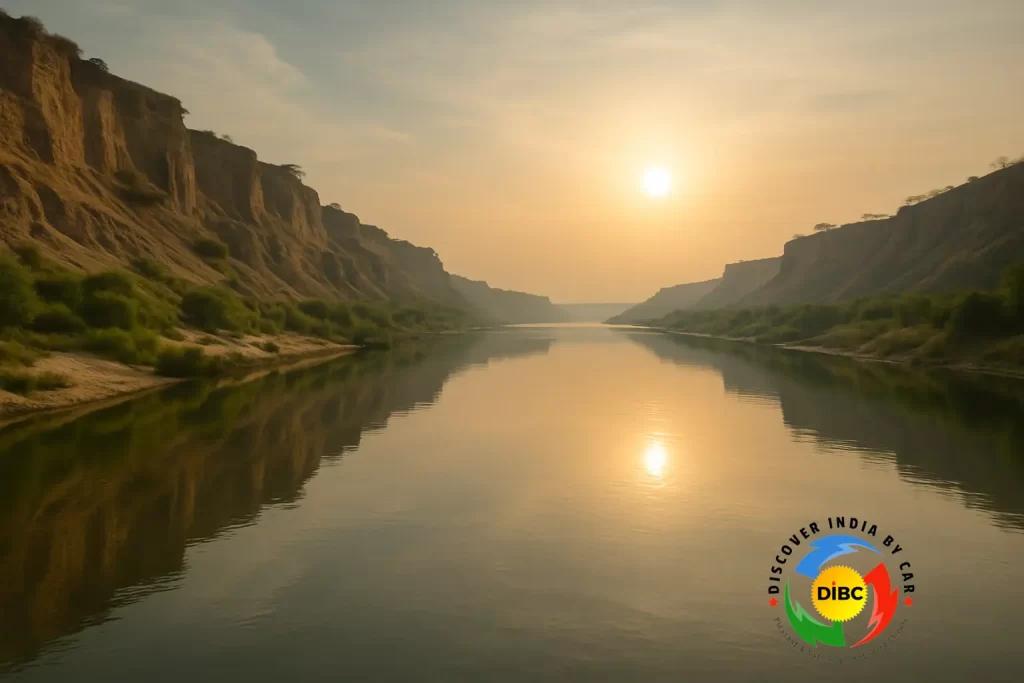
You can’t talk about the sanctuary without first paying homage to its lifeline: the Chambal River. Unlike many of India’s great rivers, the Chambal is considered mythologically ‘uncursed’ and remains one of the country’s most pollution-free rivers. Legend has it that the river originated from the blood of thousands of animals sacrificed by the Aryan King Rantideva. Its ‘impure’ origin kept it largely untouched by major human settlements and industrial exploitation for centuries.
This historical isolation became its greatest blessing. Today, this very purity is what makes the National Chambal Sanctuary a thriving ecosystem. It’s a powerful reminder of what our rivers once were and what they can be again.
A Sanctuary Across Three States
What makes the National Chambal Sanctuary so unique is its geography. It’s not confined to a single state. This protected area stretches over 425 kilometers along the Chambal River, forming a tri-state sanctuary managed by Rajasthan, Madhya Pradesh, and Uttar Pradesh. While the sanctuary spans three states, the most accessible and popular tourism hub is in Chambal Rajasthan, near the town of Dholpur, and the adjoining areas of Uttar Pradesh and Madhya Pradesh. This collaborative effort is crucial for the conservation of species that know no man-made borders.
The Stars of the Sanctuary: Wildlife Encounters of a Different Kind
Forget the frenetic chase for tigers. A Chambal Safari offers a different kind of thrill—it’s a slow, immersive experience where the rewards are unique and deeply satisfying.
The Gharial: The True Chambal Crocodile
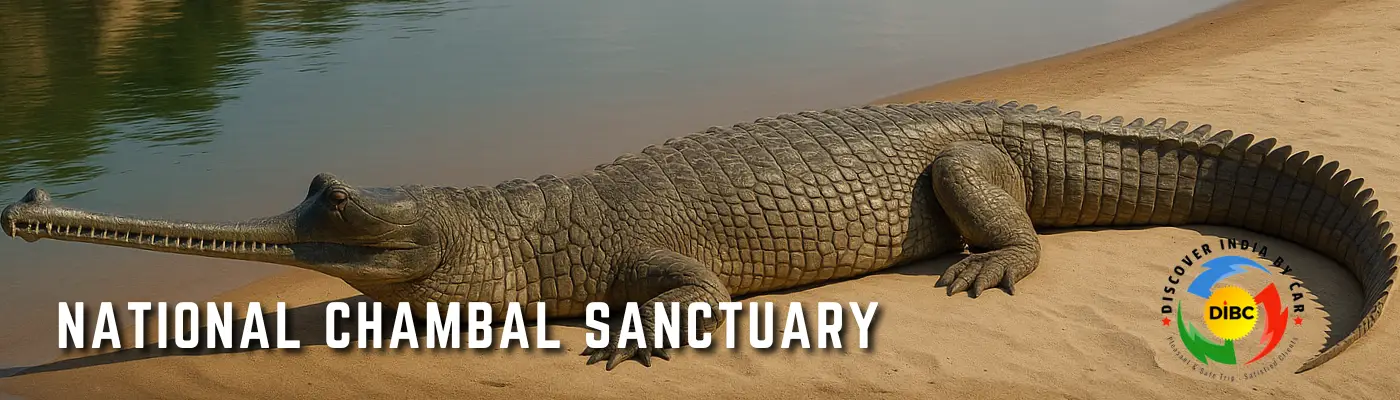
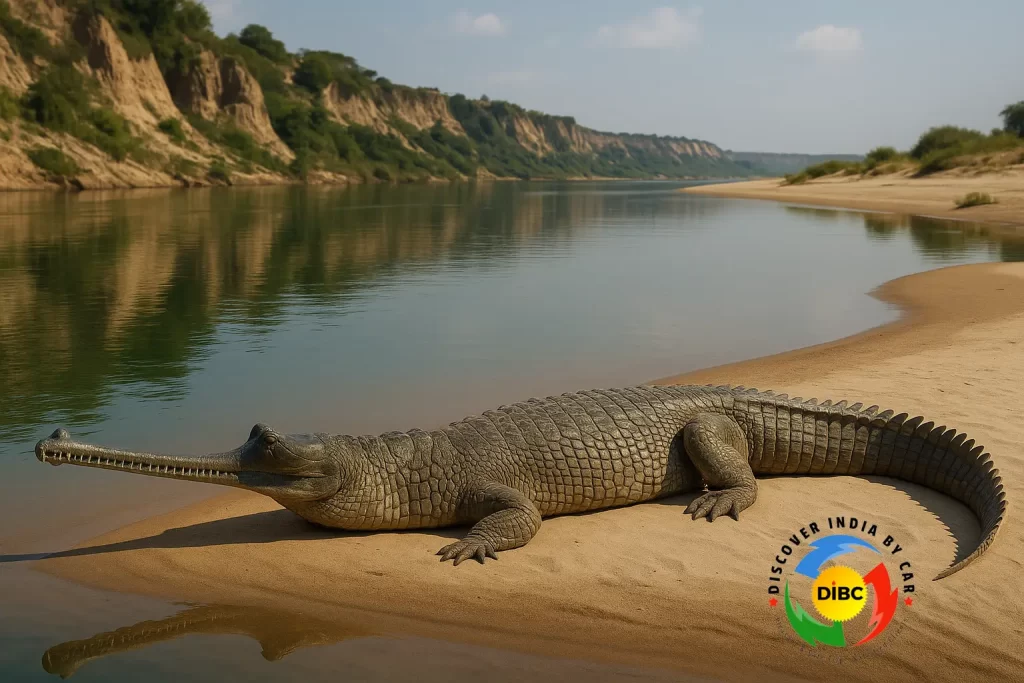
When people mention the Chambal crocodile, they are most likely referring to the Gharial (Gavialis gangeticus). This isn’t your standard-issue crocodile. The Gharial is a critically endangered, fish-eating crocodile distinguished by its long, incredibly thin snout ending in a bulbous pot-like shape called a ‘ghara’ (from which it gets its name).
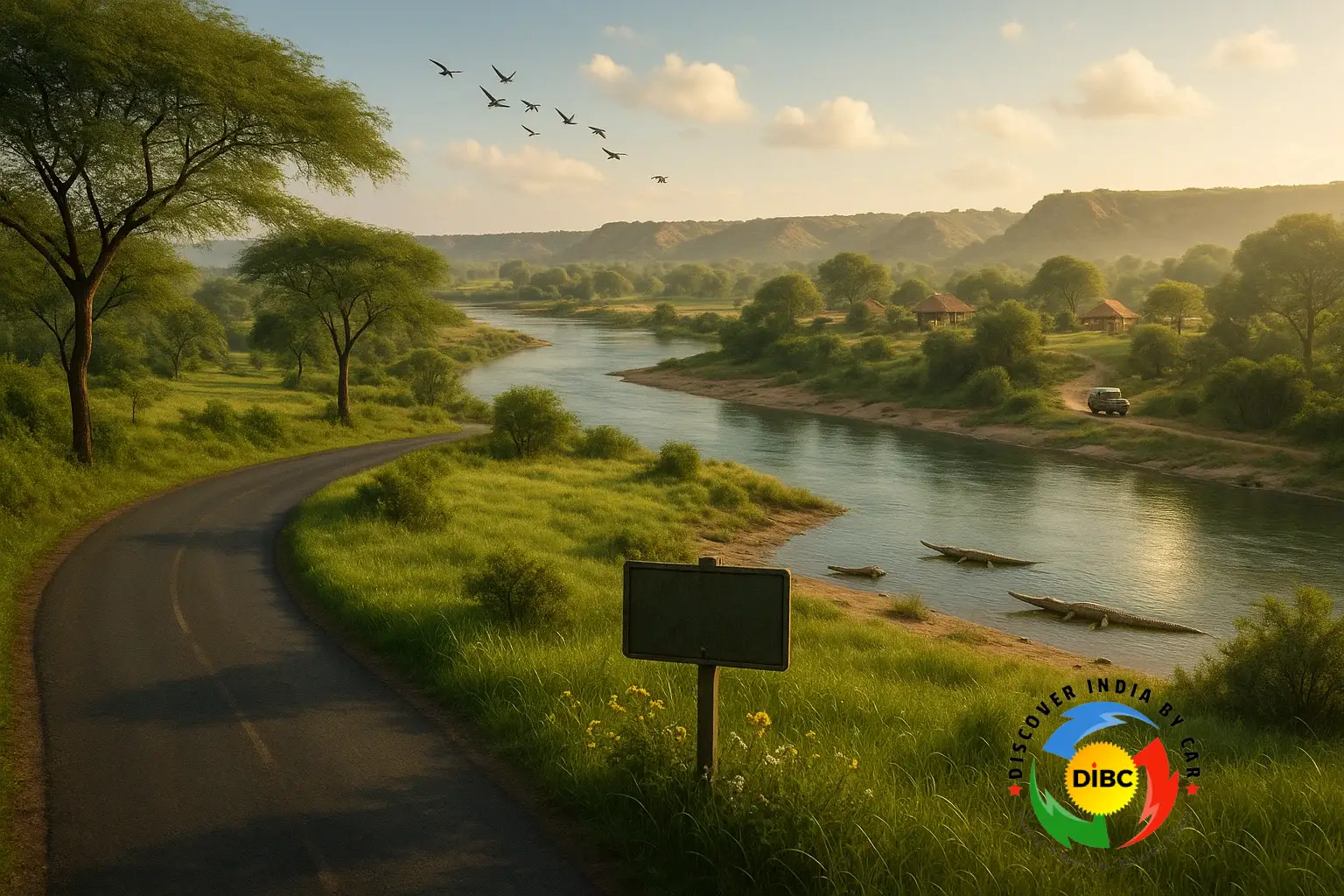
The National Chambal Sanctuary is the last major bastion for the Gharial, protecting an estimated 75% of its global population. Seeing these magnificent creatures, often in large family groups with tiny hatchlings, is the highlight of any trip. On a typical river safari, you’ll see them sunning themselves on the mid-river sandbanks, their unique forms creating a scene straight out of the Jurassic period. They are generally shy and pose no threat to humans, allowing for incredible, safe viewing from the boats.
Alongside the Gharial, you will also find the more common and robust-looking Mugger Crocodile. Seeing these two distinct crocodile species coexisting is a fascinating lesson in evolution and ecology.

The Elusive Gangetic River Dolphin
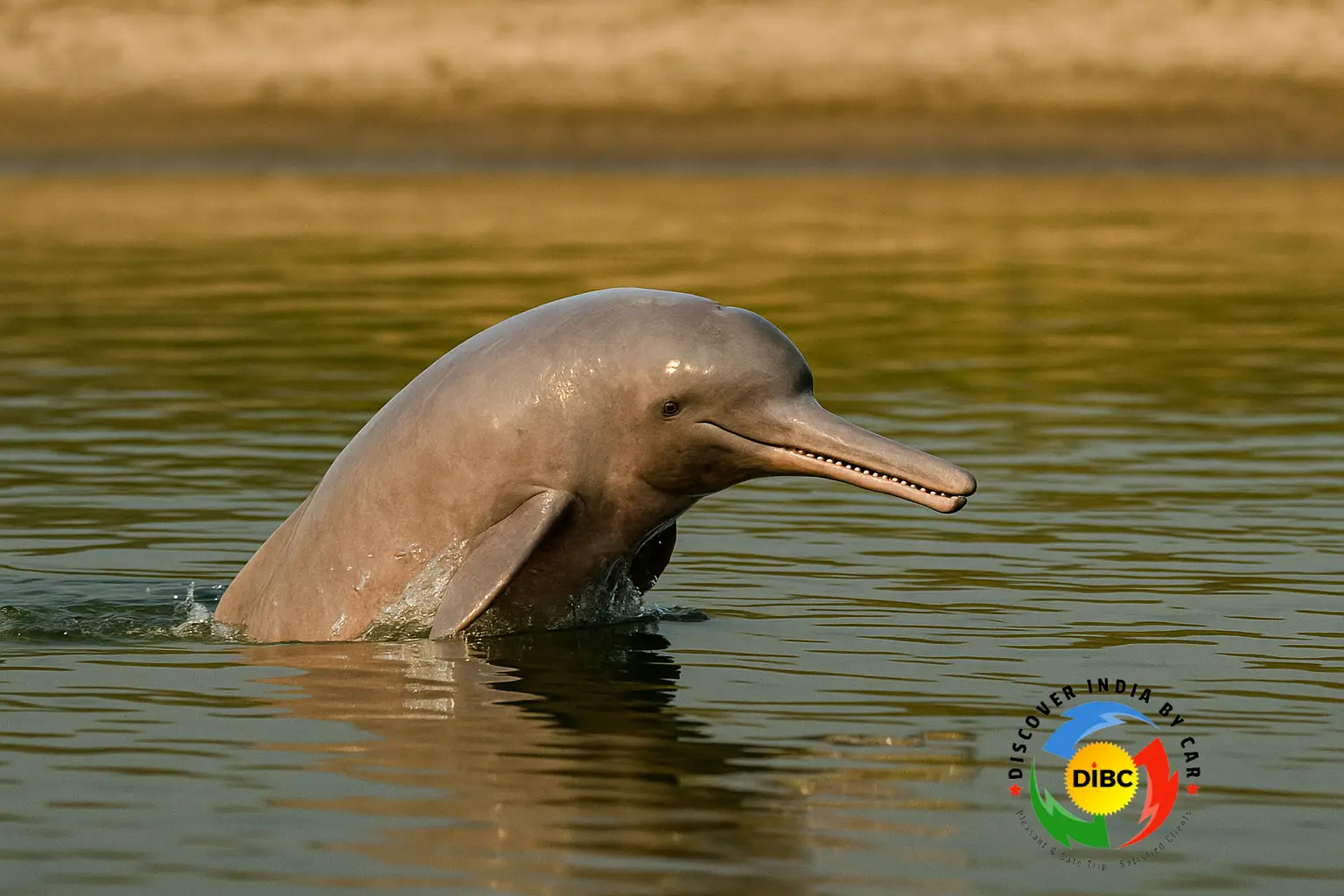
Yes, you read that right. The Chambal River is also home to the endangered Gangetic River Dolphin, one of the few freshwater dolphin species in the world. These are shy, elusive creatures. Spotting them requires patience and a bit of luck.
Unlike their marine cousins, they don’t leap out of the water in dramatic arcs. You’re more likely to see a flash of their pinkish-grey back or hear their distinctive “su-su” breathing sound as they surface for a split second. Catching a glimpse of this rare mammal in its natural habitat is a truly magical moment and a testament to the river’s health.
A Paradise for Birdwatchers
Even if you’re not a seasoned ornithologist, the sheer diversity of birdlife here will leave you spellbound. The sanctuary is a designated Important Bird Area (IBA) and a birdwatcher’s dream destination, especially from October to March. Key avian residents and migrants include:
- Indian Skimmer: This striking black-and-white bird with a bright orange bill is a major attraction. Watching them fly low over the water, “skimming” the surface with their lower mandible to catch fish, is a spectacular sight.
- Bar-headed Goose: These high-altitude champions migrate from Central Asia, flying over the Himalayas to winter in the sanctuary.
- Sarus Crane: The world’s tallest flying bird can often be seen in the fields adjoining the river.
- Raptors and Waders: Keep an eye out for Bonelli’s Eagles, Pallas’s Fish Eagles, numerous species of kingfishers, sandpipers, and pratincoles.

Your Ultimate Guide to an Unforgettable Chambal Safari
Planning your trip is the key to making the most of this unique destination. Here’s everything you need to know to organize the perfect Chambal Safari.
The Unmissable River Safari Experience
The signature experience at the National Chambal Sanctuary is the boat safari. This isn’t a high-speed affair; it’s a gentle, quiet journey that allows for intimate wildlife viewing without disturbing the animals.
- The Boats: The safaris are conducted in sturdy, quiet motorboats with a local guide and boatman. Their trained eyes are your best asset for spotting wildlife you might otherwise miss.
- What to Expect: As you drift along the Chambal River, your guide will point out basking Gharials, turtles sunning on rocks, and the diverse birdlife. The landscape itself is a spectacle—towering mud cliffs, deep ravines, and wide, sandy banks. The tranquility is profound, broken only by birdsong and the gentle lapping of water.
- Duration and Timings: A typical safari lasts for about 2-3 hours. The best times are early in the morning or late in the afternoon when the light is soft, and the animals are most active.

Exploring Beyond the River: Jeep Safaris
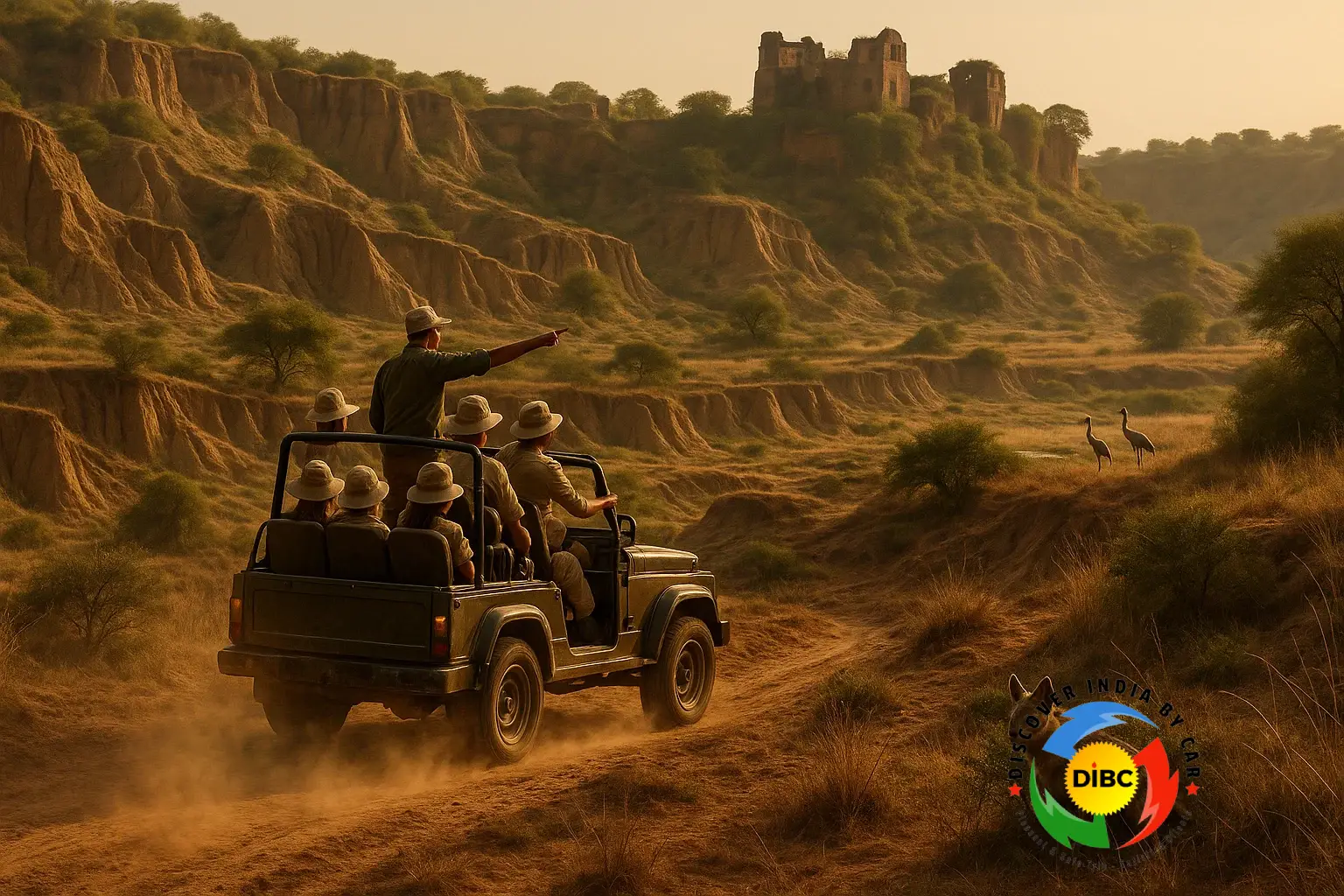
While the river is the main attraction, the surrounding ravines and terrestrial habitat are also worth exploring. A jeep safari takes you into the hinterland, offering a different perspective. You can explore the ancient ruins of Ater Fort, witness the dramatic landscape of the Chambal ravines up close, and spot terrestrial wildlife like the Indian Fox, Jungle Cat, or perhaps even a Striped Hyena. This is also the best way to spot the majestic Sarus Cranes in the wetlands and farmlands.
Best Time to Visit the National Chambal Sanctuary
The ideal time to visit is from October to March.
- October – November: The post-monsoon landscape is lush and green. The weather is pleasant, and migratory birds begin to arrive.
- December – February: This is the peak season. The weather is cool and perfect for long safaris. This is the best time for spotting Gharials, as they spend long hours basking in the winter sun.
- March: The weather starts to warm up, but it’s still an excellent time for sightings as animals congregate near the water.
The sanctuary is typically closed during the monsoon season (July to September) as the river is high and safaris are not feasible.
How to Reach the Sanctuary and Book Your Safari
The most popular gateway for the Chambal Rajasthan experience is Dholpur, which is well-connected by road and rail. Another popular entry point is Bah, near Agra in Uttar Pradesh.
- By Air: The nearest airports are Agra (approx. 70 km) and Gwalior (approx. 110 km).
- By Rail: Dholpur is a major railway station on the Delhi-Mumbai mainline.
- By Road: Dholpur is easily accessible from Agra, Gwalior, and Jaipur.
Booking your safari is best done through one of the reputable lodges located near the sanctuary or directly at the forest department booking counters. It’s highly recommended to book in advance, especially during the peak season.
Conservation and Responsible Tourism: Your Role in Protecting Chambal
The National Chambal Sanctuary is more than just a tourist destination; it’s a critical conservation success story. The Gharial was on the brink of extinction before dedicated breeding and reintroduction programs, centered in this sanctuary, brought it back.
However, the sanctuary still faces threats from illegal sand mining, fishing, and water pollution upstream. As a visitor, you play a vital role.
- Choose Responsible Operators: Opt for lodges and safari operators who are committed to eco-tourism.
- Leave No Trace: Do not litter. Carry your non-biodegradable waste back with you.
- Respect the Wildlife: Maintain a safe distance. Do not shout or make loud noises. Never attempt to feed the animals.
- Support Local Communities: By visiting, you provide an economic alternative to local communities, making them partners in conservation.
Frequently Asked Questions (FAQs)
Q1. What is the difference between a Gharial and a Mugger Crocodile in the Chambal River?
A. The Gharial is a specialist fish-eater with a very long, thin snout and is critically endangered. The Mugger Crocodile has a much broader, more typical crocodile snout and a more varied diet. The National Chambal Sanctuaryis one of the few places where you can easily see both.
Q2. Is the Chambal Safari safe for families and children?
A. Absolutely. The boat safaris are very safe. The boats are sturdy, life jackets are provided, and the guides are well-trained. The wildlife, including the Gharials, are not aggressive towards the boats, making it a wonderful and safe experience for all ages.
Q3. Can I book my safari online?
A. While some private lodges offer online booking as part of a package, direct government safari bookings are often done on-site. It’s best to check with your chosen accommodation, as they can usually facilitate the booking process for you seamlessly.
Q4. What should I pack for my trip to the National Chambal Sanctuary?
A. Essentials include binoculars, a good camera with a zoom lens, a hat, sunglasses, and sunscreen. During winter (Dec-Jan), pack warm layers, including jackets, gloves, and a cap, as the morning boat safaris can be very cold. Wear neutral-colored clothing to blend in with the surroundings.
Q5. Besides the wildlife, what else is there to see around the Chambal Rajasthan area?
A. The region is rich in history. You can visit the ruins of Ater Fort, the Bateshwar Temple complex (with over 100 ancient Shiva temples), and the town of Dholpur, which has its own historical sites. Combining a Chambal Safariwith a visit to nearby Agra (home of the Taj Mahal) is a very popular itinerary.
Conclusion: The Call of the Wild, Pristine River
The National Chambal Sanctuary offers an escape to a world that is beautifully wild and refreshingly real. It’s a journey back in time, a lesson in conservation, and an adventure for the soul. A Chambal Safari is not just about ticking off a list of animals; it’s about immersing yourself in the profound peace of the Chambal River, witnessing the delicate balance of a thriving ecosystem, and understanding our shared responsibility to protect it.
So, when you plan your next adventure, look beyond the obvious. Answer the call of this untamed river, and let the magic of the National Chambal Sanctuary leave an indelible mark on your heart. You won’t just come back with photographs; you’ll come back with stories of a river that time, and thankfully, humanity, almost forgot.