- Private car and driver in Delhi / India
- +91-8447445445
- info@discoverindiabycar.com sugar.ankit@yahoo.com
 +91-9818434712
- Follow us:



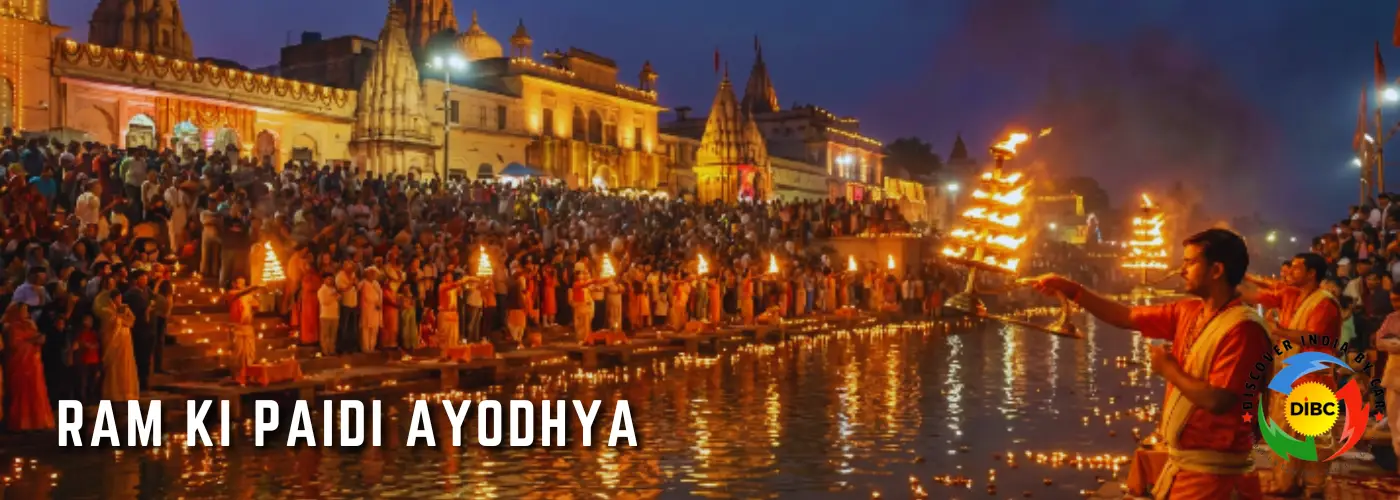
Ram Ki Paidi Ayodhya: Aarti Timings, Parking & Road Trip Guide
✍️ Written by Ankit Sugar | Road Trip Expert & Founder, Discover India By Car Having driven thousands of kilometers across Uttar Pradesh’s expressways and navigated Ayodhya’s newly built infrastructure multiple times, I created this ground-reality guide to help fellow travelers experience the Saryu Ghats without the logistical stress
Ram Ki Paidi: The Ultimate Insider’s Guide to Ayodhya’s Sacred Riverfront
Ram Ki Paidi is a magnificent series of sacred bathing ghats along the banks of the Sarayu River in Ayodhya. Originally built in 1984 for pilgrims, it now hosts the world-famous Deepotsav and a mesmerizing evening aarti. It remains the spiritual epicenter for devotees seeking deep purification and divine connection.
If you are planning a road trip to Ayodhya, you already know about the Ram Mandir and the heavy security. Navigating this bustling city by car requires a solid plan—especially when trying to reach the sacred riverfront.
But your pilgrimage remains wildly incomplete without spending time at the river. The water holds the history.
As a platform dedicated to seamless Indian road travel, this Discover India By Car guide breaks down everything you need to know. We will look at exact parking spots for your vehicle, avoiding traffic barricades, evening aarti timings, and secret spots for crowd-free photography. Let’s get into it.
Ram Ki Paidi at a Glance (Quick Facts for Travelers)
Skip the guesswork. If you are stepping off a train or a long drive and just need the absolute baseline logistics before hitting the ghats, this cheat sheet is for you. Knowing these facts upfront separates the seasoned travelers from the overwhelmed tourists.
Here is the unfiltered ground reality of visiting Ayodhya’s famous riverfront.
Essential Detail | The Quick Fact | The Ground Reality (What You Need to Know) |
Location / Accessibility | Banks of the Sarayu River. | Highly congested entry points. E-rickshaws will drop you 500 meters away. You must walk the final stretch. |
Entry Cost & Tickets | 100% Free. | Ignore anyone demanding a “VIP seating fee” for the aarti. It is a scam. Seating is strictly first-come, first-served. |
Aarti Schedule | Varies by season (approx. 6:00 PM – 7:30 PM). | You cannot stroll in exactly on time. Front-row steps are aggressively claimed a full hour before the fire starts. |
Photography Rules | Allowed everywhere (Mobile & DSLR). | Drones are strictly banned under severe security protocols. Police will immediately confiscate unauthorized drones. |
Footwear Policy | Shoes allowed on main upper walkways. | You must take your shoes off to step down near the actual river water or enter the adjacent Nageshwarnath Temple. |
Physical Demands | Moderate walking, uneven stone steps. | Wheelchair accessibility is very limited down by the water. The main promenade is flat, but descending the ghats requires good knees. |
The Unspoken Logistics
You cannot just roll up to the river with all your luggage. Security is tight across Ayodhya.
- Baggage: Do not bring heavy backpacks. Leave your main bags at your hotel or the railway station cloakroom. You will be walking through dense crowds, and a bulky bag makes you a target for pickpockets and slows you down on the steep stone stairs.
- Washrooms: Public sanitation has improved massively, but the “Sulabh” toilets near the parking zones get dirty fast during peak hours. Carry your own hand sanitizer and tissues. Do not rely on local facilities holding up during festival days.
- Mobile Network: Expect terrible cell reception. When 20,000 people cram onto the stone steps for the evening aarti, local cell towers choke. Download offline maps and pre-arrange a physical meeting spot with your driver or family in case you get separated in the dark.
Expert Pro-Tip: The stone steps retain the brutal summer heat. If you visit between May and July, the concrete will literally burn your bare feet even at 5:00 PM. Carry a pair of thick, cheap socks. You can slip them on after removing your shoes to protect your soles while still respecting the religious mandate of not wearing leather or rubber footwear near the water.
What is Ram Ki Paidi?
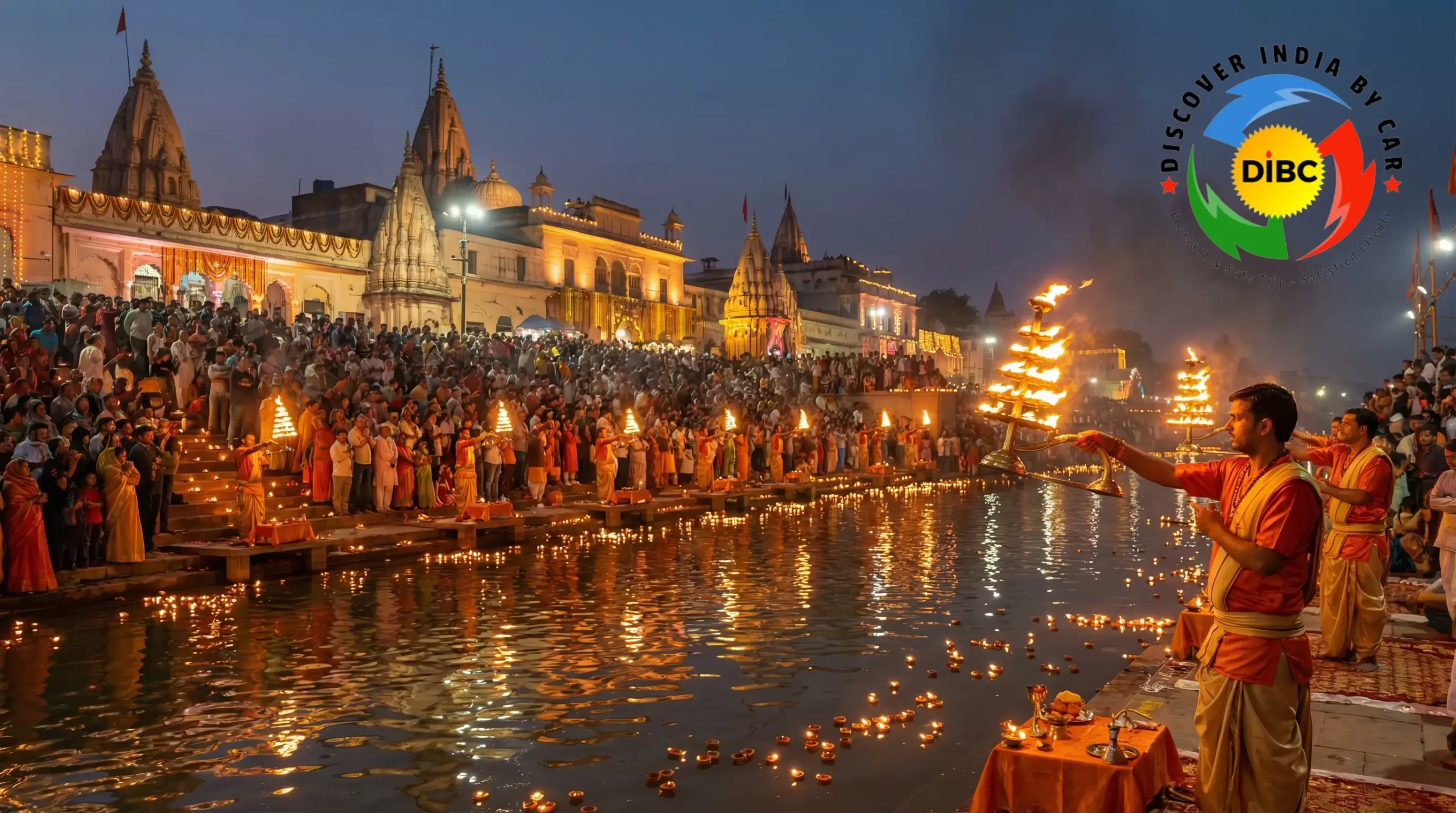
Imagine a massive, sweeping staircase descending directly into a fast-flowing, holy river. The air smells heavily of sandalwood, marigolds, and burning ghee. Thousands of tiny oil lamps flicker against the darkening sky. This is Ram Ki Paidi.
It is not just a single physical structure. It is an interconnected network of around 25 distinct bathing ghats running parallel to the Sarayu River. For devout Hindus, this water is an absolute lifeline. The belief is simple and absolute: taking a dip in the Sarayu washes away lifetimes of accumulated sins.
But beyond the strict religious texts, the ghats offer a profound sensory experience. During the day, it is a bustling hub of activity. Priests chant under colorful umbrellas. Families laugh and splash in the shallow waters. Vendors hawk everything from hot chai to religious souvenirs. By night, it transforms. The raw, chaotic energy of the day shifts into deep, synchronized devotion.
For a spiritual traveler or a foreign tourist, understanding this shift is everything. You do not just “visit” this place. You witness it. You feel the collective energy of thousands of people focusing their intentions on a single body of water.
Expert Pro-Tip: Do not just stand on the upper walkways. Take off your shoes, walk down the concrete steps, and physically touch the Sarayu River. The water is startlingly cold, even in summer. That sudden chill grounding you to the earth is a memory you will carry long after you leave India.
The Astonishing History of Ram Ki Paidi Ayodhya
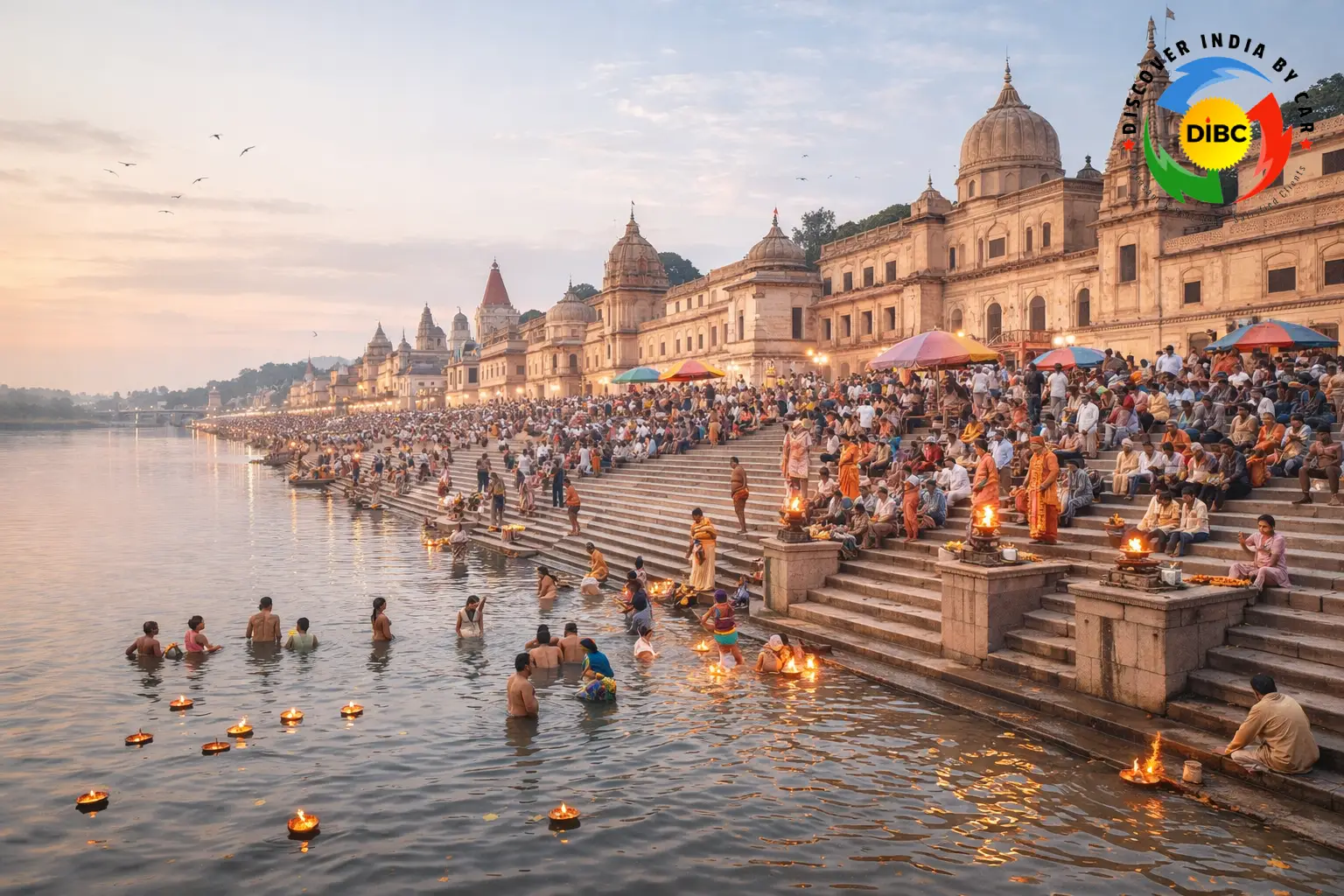
Most people assume these ghats are thousands of years old. They are not. The physical concrete steps you walk on today were primarily constructed in 1984.
However, the location is ancient. The banks of the Sarayu have hosted bathing rituals since the era of the Ramayana. For centuries, the riverbanks were wild, muddy, and largely unorganized. Pilgrims would slide down dangerous embankments to reach the holy water. By the early 1980s, the local government recognized the urgent need for structural safety and sanitation. Thus, the official history of Ram Ki Paidi as a structured complex began.
The project involved diverting a section of the river and building a secure, stepped embankment. It was a massive civic undertaking. But for decades, the water flow was stagnant. The pumps failed frequently. The ghats looked tired.
Then came the modern renaissance of Ayodhya.
The real transformation began post-2017 under the vision of Chief Minister Yogi Adityanath. The entire area underwent a massive renovation to revive Ayodhya’s ancient glory.
High-capacity water pumps were installed, ensuring a constant, clean flow of the Sarayu across the steps. The crumbling brickwork was replaced with premium polished stone, and high-tech lighting was deployed.
This robust modernization set the perfect stage for the annual Ayodhya Deepotsav. It is here that the city continuously breaks the Guinness World Record. Picture over 22 lakh earthen lamps (diyas) lit simultaneously across these exact steps by the UP Government and thousands of dedicated volunteers. It is a staggering visual spectacle.
The Spiritual Significance of the Sarayu River
You cannot separate the ghats from the water. The Sarayu River is the literal and metaphorical lifeblood of Ayodhya.
According to ancient Hindu scriptures, the Sarayu is of divine origin. It is not just melted glacier water; it is sacred energy flowing in liquid form. Lord Rama himself is said to have bathed in these waters, and eventually, it is the exact river where he took Jal Samadhi (departing the mortal world by entering the water).
Because of this intense mythological weight, every Sarayu River ghat in Ayodhya is treated with the same reverence as the inner sanctum of a temple.
When you sit on the steps of Ram Ki Paidi, you are sitting where millions of people have brought their grief, their hopes, and their prayers. Devotees perform Pind Daan here—a ritual to bring peace to the souls of their ancestors. You will see people with tears streaming down their faces, clutching handfuls of water, whispering mantras to the rising sun. It is heavy. It is real.
Even if you are completely secular, the raw human emotion concentrated at the water’s edge is impossible to ignore. The river absorbs it all.

Ram Ki Paidi Timings & Daily Schedule
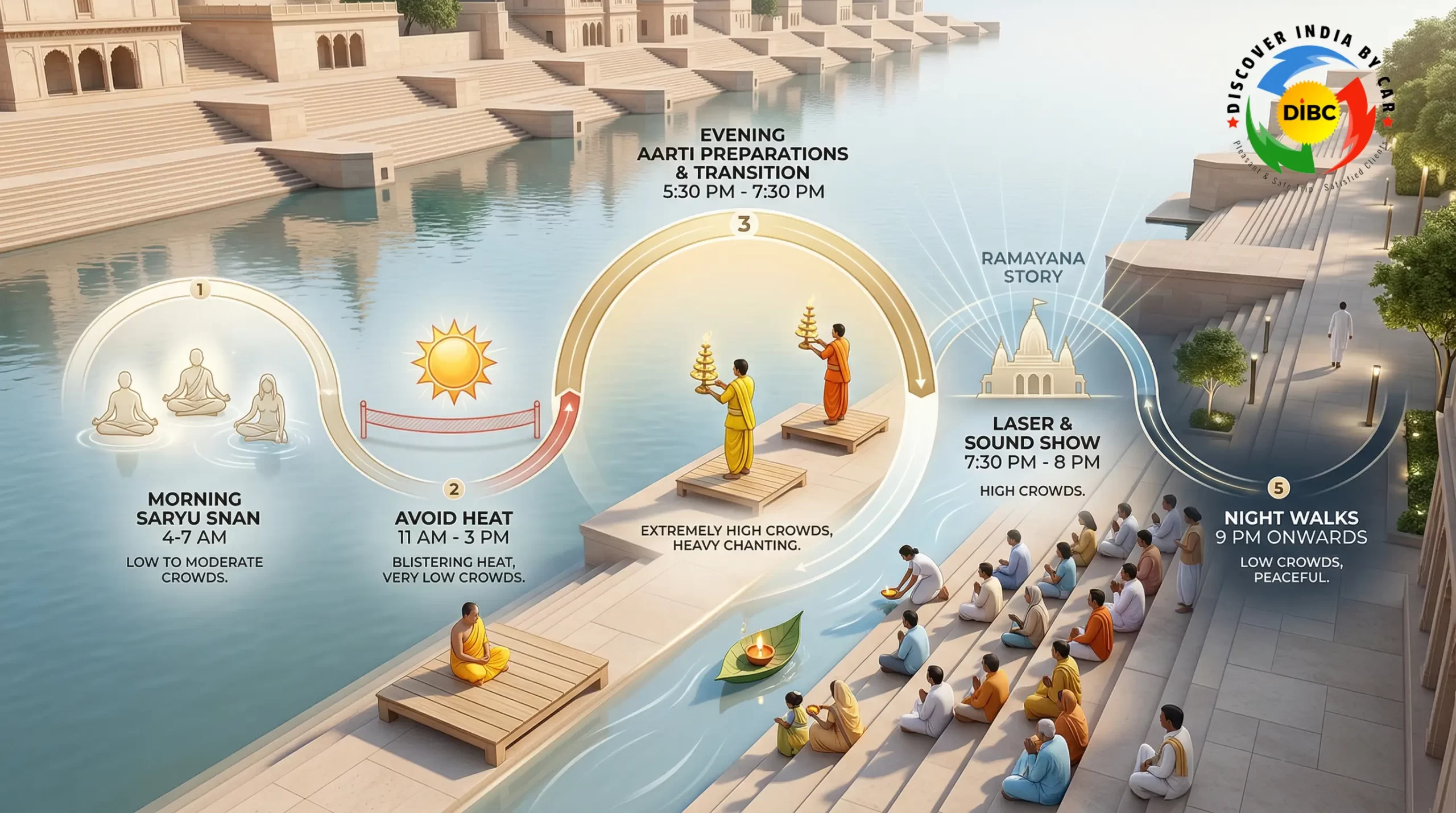
Planning your day around the local schedule is highly necessary to avoid the brutal afternoon heat and the thickest crowds. The ghats are technically open 24/7. There are no gates. There is no entry fee. But the atmosphere changes wildly depending on the hour.
Here is a breakdown of the daily flow to help you time your visit perfectly.
Saryu Ghat Daily Operations
Time of Day | Activity / Vibe | Crowd Level |
4:00 AM – 7:00 AM | Morning Saryu Snan (Holy Bath), quiet meditation. | Low to Moderate |
11:00 AM – 3:00 PM | Blistering heat. Mostly empty save for a few wandering tourists. | Very Low |
5:30 PM – 7:30 PM | Evening Aarti preparations, sunset views, heavy chanting. | Extremely High |
7:30 PM – 8:00 PM | Laser & Sound Show detailing the Ramayana. | High |
9:00 PM onwards | Peaceful, lit-up night walks along the water. | Low |
The Dazzling Laser Show
If you stick around after the sun goes down, you get a bonus experience. A massive projection-mapped laser show takes place directly on the water and the surrounding temple facades. Starting around 7:30 PM, this 20-minute show narrates chapters from the Ramayana in booming Hindi audio. It is a fantastic blend of ancient storytelling and modern technology.
Expert Pro-Tip: Do not rely strictly on Google for Ram Ki Paidi timing. In India, religious schedules bend to the seasons and local festivals. Always ask your hotel receptionist or a local auto-rickshaw driver to confirm the exact aarti and laser show times for that specific day.
The Magic of the Evening Aarti at Ram Ki Paidi
If you only do one thing in Ayodhya outside of the main temple, make it the evening aarti.
The evening Aarti at Ram Ki Paidi is not just a religious ceremony. It is a deeply theatrical, emotionally charged performance of faith. Long before the fire is lit, the anticipation builds. Organized meticulously by the Sarayu Aarti Samiti, the ceremony is a masterclass in devotion.
Priests in spotless yellow and orange robes take their positions on raised wooden platforms facing the river. Huge crowds gather, sitting cross-legged on the stone steps, perfectly managed by local volunteers.
Then, the bells start.
It starts as a slow rhythm and builds into a deafening, chest-rattling crescendo. The priests hoist massive, multi-tiered brass lamps filled with burning camphor and ghee. They move these blazing structures in synchronized, heavy circular motions, offering the light to the river goddess.
Ram Ki Paidi Ayodhya Evening Aarti Timing
The schedule shifts based on the setting sun.
- Winter Months (November to February): The sun sets early, and the air gets brutally cold. The aarti typically begins between 5:45 PM and 6:30 PM.
- Summer Months (April to August): The heat lingers long into the evening. The aarti starts later, usually between 7:00 PM and 8:00 PM.
You must arrive early. If the aarti starts at 6:30 PM, the front rows are completely claimed by 5:45 PM.
What to Expect During the Saryu Aarti
Expect sensory overload. The smoke from the camphor is thick. The sound of the conch shells cuts right through the noise of the crowd. People will be singing loudly. You will see devotees buying small leaf boats filled with marigold petals and a single lit candle. They light the wick, say a prayer, and release the boat onto the dark water. Watching hundreds of these tiny flames float away into the night is profoundly beautiful.
This is the exact moment you realize you are witnessing a living, breathing tradition that has survived for millennia.
Best Time to Visit: Sunrise Serenity vs. Sunset Grandeur
Travelers constantly ask: “When is the best time to visit ram ki paidi?” The answer entirely depends on what you want out of the experience.
Morning Saryu Snan (The Peaceful Option)
If you hate crowds, wake up at 4:30 AM. Get to the river before the sun breaks over the horizon. The morning vibe is stunningly peaceful. A thick layer of mist often rolls off the river in the cooler months. You will only find serious devotees, local sadhus (holy men), and perhaps a few stray dogs.
The morning light is soft, pink, and deeply forgiving. This is the time to sit quietly, write in a journal, or simply listen to the water lap against the stone. If you are looking for peaceful places in ayodhya, the ghats at 5:00 AM are completely unbeatable.
The Evening Grandeur (The High-Energy Option)
If you want to feel the pulse of India, go at sunset. Yes, you will be pushed. Yes, it will be loud. But the sheer scale of humanity gathering for a singular purpose is intoxicating. The evening aarti provides the famous, iconic visuals that you see in travel documentaries.
Expert Pro-Tip: Do both. Ayodhya is small. Wake up early for a quiet morning walk along the ghats. Go back to your hotel, sleep through the brutal midday heat, and return at 5:30 PM to secure a spot for the evening aarti. This dual approach gives you the complete picture.
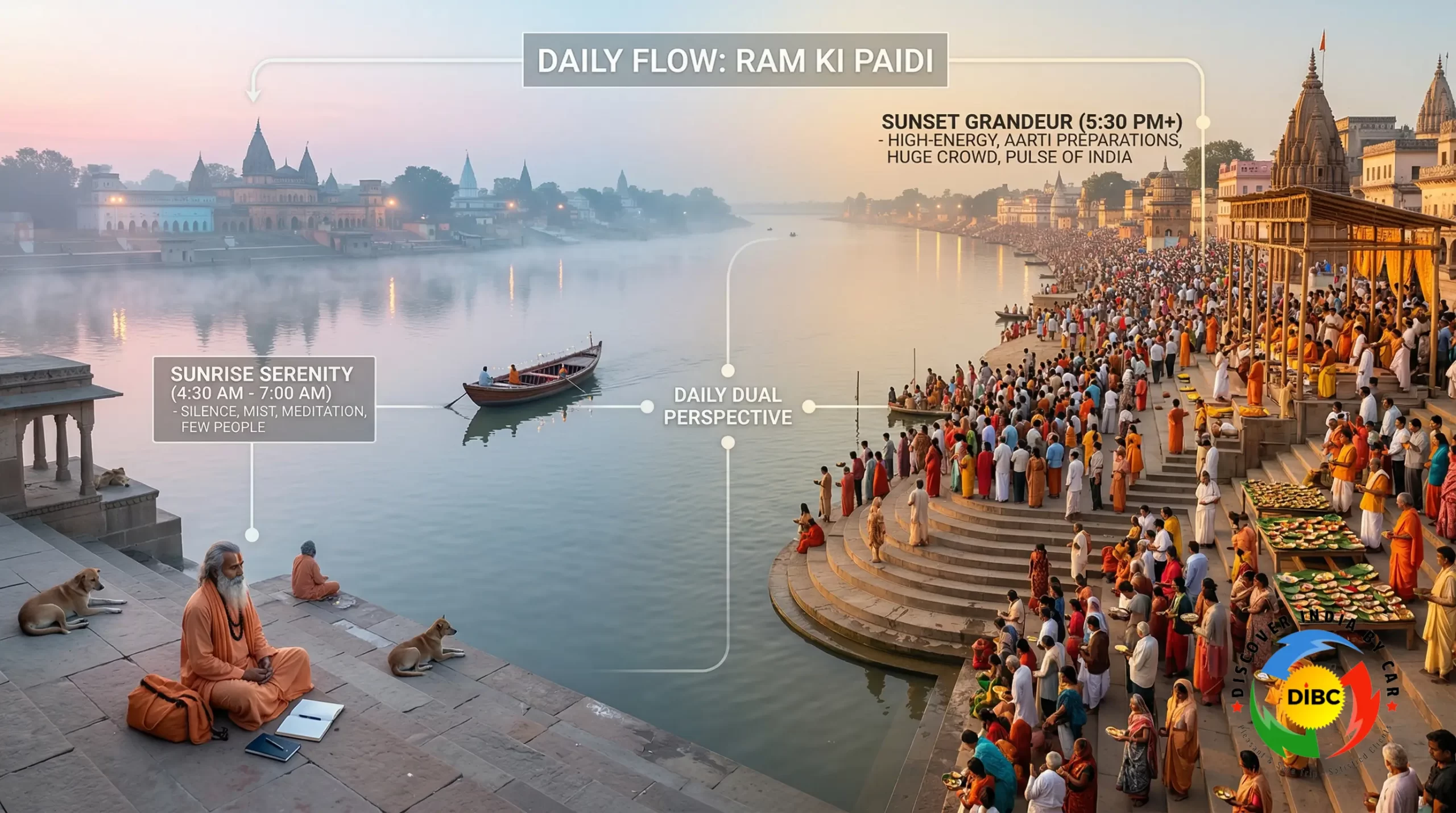
The Real Experience at Ram Ki Paidi (Peaceful Moments vs. Temple Crowds)
Is the ayodhya ram ki paidi worth visiting? Absolutely. But you need to manage your expectations regarding the crowds.
Ayodhya is currently experiencing a massive tourism boom. The sheer influx of daily visitors can be overwhelming. The area directly around the Ram Mandir is heavily fortified, heavily regulated, and packed shoulder-to-shoulder.
Ram Ki Paidi offers a necessary release valve. The ghats are wide. The open sky and the flowing water create a sense of vastness that you simply cannot find in the cramped alleyways of the city market.
However, “peaceful” is relative. On a Tuesday morning in February, you might have twenty yards of stone steps all to yourself. On a Sunday evening or during a festival like Diwali or Ram Navami, the entire complex becomes a sea of moving bodies.
If the main aarti area feels too chaotic, simply keep walking. The beauty of having 25 connected ghats is that you can always walk a few hundred meters down the riverbank to find an empty spot. Nageshwarnath Temple sits right on the edge of the ghats; the area behind it often hides quieter corners where you can escape the loudspeakers.
Photography & Sunset View at the Ayodhya Ghats
For content creators, professional photographers, and foreign tourists clutching heavy DSLR cameras, this location is pure gold. But it is also technically challenging.
The sunset view at Ram Ki Paidi is absolutely stunning, but shooting it correctly requires specific strategies.
- Shoot Against the Light: As the sun drops, the water turns into a massive reflector. Use this backlighting to capture striking silhouettes of pilgrims wading into the river or priests holding up their prayer items.
- Protect Your Gear: During the aarti, there is a lot of fire, ash, and flying water. People push. Do not bring a massive tripod into the main aarti crowd; you will just trip people and anger the local guards. A sturdy monopod or a fast prime lens (like a 35mm f/1.4) for low-light handheld shooting is your best bet.
- Capture the Micro-Moments: Everyone shoots the giant flaming lamps. Do not forget to turn your camera around. Photograph the faces in the crowd. The glowing amber light from the fire creates incredibly dramatic, high-contrast portraits of the devotees watching the ceremony.
- Drone Restrictions: Ayodhya has strict, heavily enforced no-fly zones due to high security. Do NOT launch a drone near the ghats without explicit, written permission from the local police. They will confiscate it immediately.
Expert Pro-Tip: For the best possible wide-angle shot of the entire ghat complex illuminated at night, cross the bridge to the opposite side of the Saryu River right after dusk. You need a telephoto lens (70-200mm), but you will capture the reflection of the thousands of lights perfectly mirrored on the dark water.
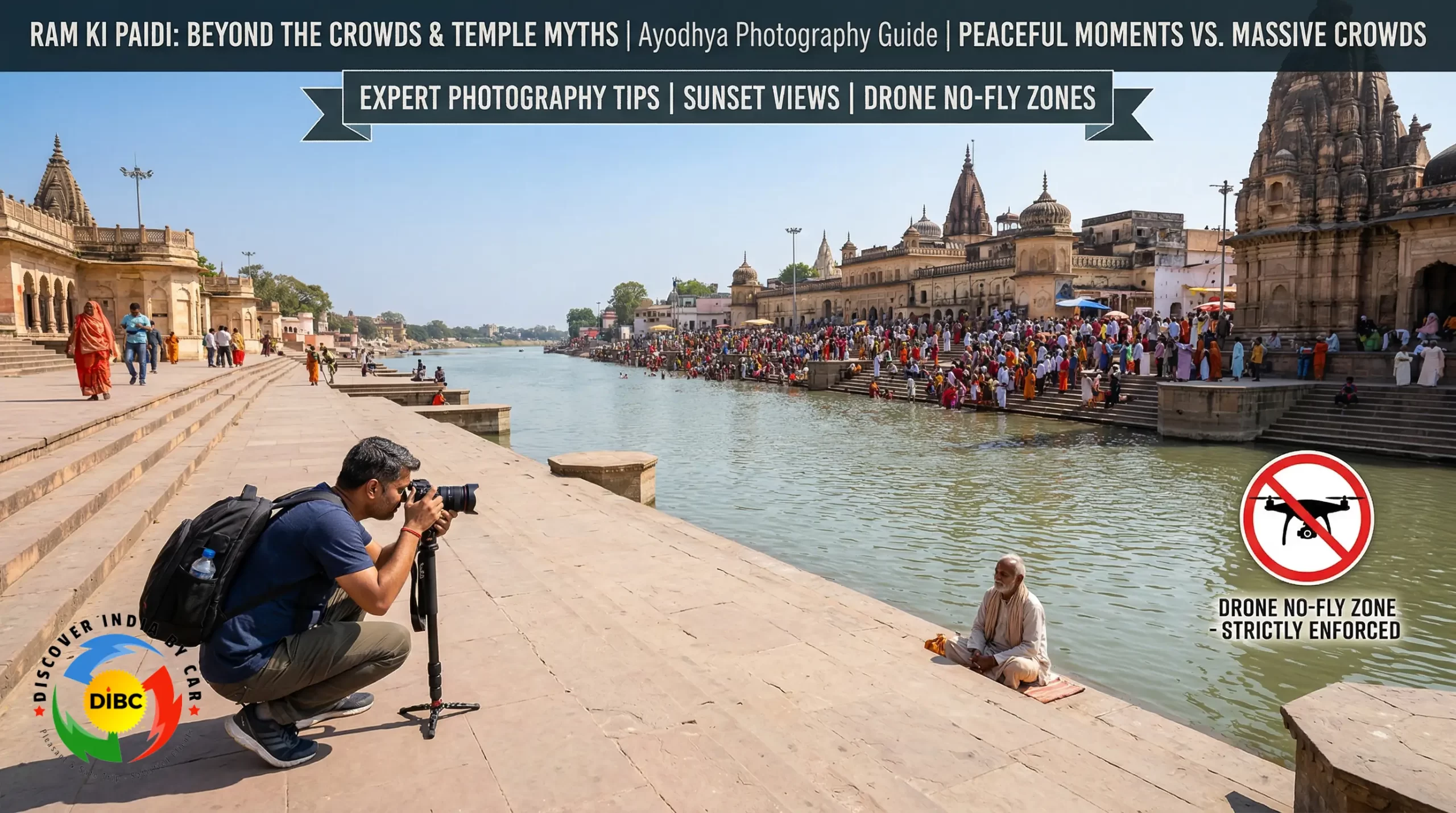
How to Reach Ram Ki Paidi by Car (Road Trip & Parking Guide)
Getting to the ghats is an incredible road trip experience, especially with the newly upgraded highway infrastructure connecting Ayodhya to major hubs. However, navigating the final mile requires a solid plan as Ayodhya’s core temple zones are heavily pedestrianized.
Road Trip Routes & Conditions:
- From Delhi (Approx. 700 km): The drive via the Yamuna Expressway and Agra-Lucknow Expressway is exceptionally smooth. It is a 10 to 12-hour journey. Traveler Tip: FASTag is mandatory for seamless toll plaza crossings. Stop at the Shiva Dhaba or standard food courts on the expressways for clean restrooms and safe, hygienic food.
- From Lucknow (Approx. 135 km): It is a quick 2.5-hour dash via the Purvanchal Expressway or NH27. The roads are pristine, making it a very comfortable drive even for larger SUVs.
- From Maharishi Valmiki International Airport: If you are flying in, the ghats are about 10 kilometers away. Booking a private cab in advance is highly recommended.
The Final Approach & Parking Logistics
You cannot take a private car directly to the Saryu steps. Your vehicle will be stopped at the Naya Ghat police barricades.
- Where to Park: If you are traveling with a hired car, direct your driver to the designated multi-level parking lot near the Ayodhya Bypass (parking fees are nominal, around ₹50-₹100).
- The Final Stretch: From the barricades or parking area, hail a local electric rickshaw (e-rickshaw). They charge around ₹20 per person. Tell the driver to take you via the newly developed Ram Path or Dharampath towards Naya Ghat. They will drop you right at the edge of the pedestrian zone. From there, it is a quick, safe 5-minute walk down to the water.
Essential Travel Tips for Foreign Tourists
Ayodhya is not a typical Western tourist destination. It is a deep, raw pilgrimage site. If you are visiting from the USA, UK, or Europe, you need to adjust your travel habits to match the local environment.
- Dress Codes are Non-Negotiable: This is deeply conservative territory. Men should wear long pants. Women must cover their shoulders and knees completely. Loose cotton clothing, like a traditional Kurta, is highly recommended. Revealing clothing will draw heavy stares and possible reprimands from temple guards.
- Taking a Dip: If you decide to participate in the holy bath, watch the locals. Men strip down to shorts or dhotis. Women usually bathe fully clothed in a saree or salwar kameez. Bring a dry change of clothes; there are modest changing rooms located near the top of the steps.
- Food and Water Safety: Never, under any circumstances, drink the river water. Do not even let it get in your mouth while bathing. Stick strictly to sealed, bottled water. Enjoy the local street food (the aloo tikki here is amazing), but ensure it is cooked fresh and served piping hot right in front of you.
- Respect the Rituals: Do not interrupt a priest mid-prayer for a selfie. Be a quiet observer. If you wish to participate by lighting a diya, buy one from a local vendor, smile, and ask for help. The locals are incredibly welcoming if you show genuine respect for their faith.
Book Your Safe & Stress-Free Ayodhya Road Trip
Navigating the bustling highways and local logistics of Uttar Pradesh can feel overwhelming for international visitors. If you want a seamless, comfortable journey, let the experts handle the wheel.
Premium, sanitized vehicles.
Highly experienced, English-speaking drivers.
Complete safety and itinerary management from Delhi or Lucknow.
Must-Visit Nearby Attractions in Ayodhya
You do not travel all the way to Ayodhya just for the river. Once you finish your Ram Ki Paidi darshan, string together a walking tour of the nearby historical heavyweights.
- Hanuman Garhi: Located just a 10-minute walk away. You have to climb 76 steep stairs to reach this massive, fort-like temple. Tradition dictates that you must seek the blessings of Lord Hanuman here before you even attempt to visit the Ram Mandir.
- Nageshwarnath Temple: Right on the edge of Ram Ki Paidi. Legend states this temple was built by Kush, the son of Lord Rama. During the festival of Mahashivaratri, this place explodes with energy and devotion.
- Kanak Bhawan: A 15-minute walk into the winding alleys. This is famously known as the palace gifted to Mother Sita immediately after her marriage. The architecture is stunning, and the inner courtyards provide brilliant shade during the hot afternoons.
- Guptar Ghat: Located further down the river. This is a much quieter, highly solemn ghat where Lord Rama is believed to have left the earth. If you want absolute silence, hire a boat from Ram Ki Paidi to take you down the river to Guptar Ghat.
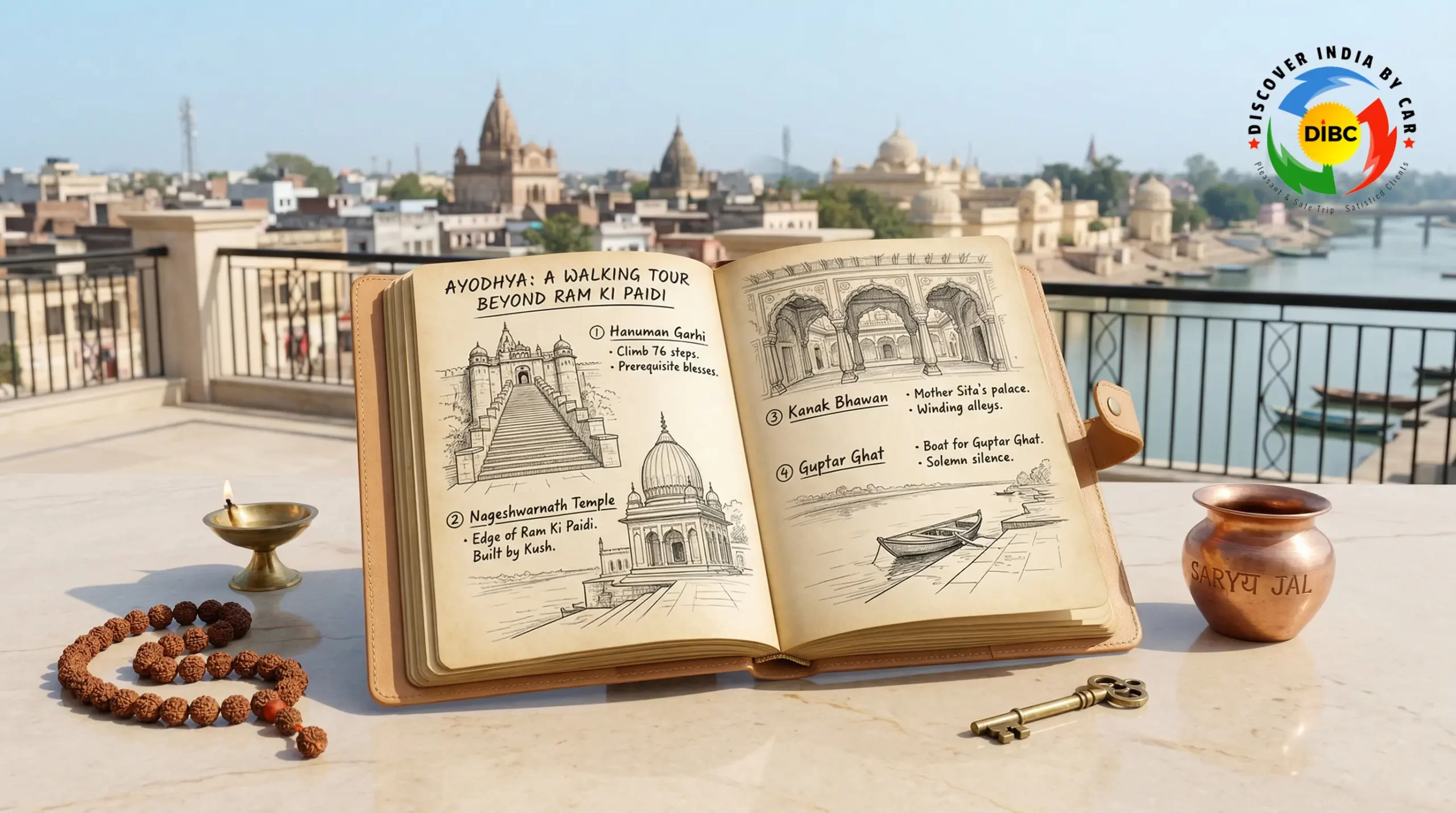
A Spiritual Awakening Awaits You
Standing on the steps of Ram Ki Paidi as the sun dips below the horizon forces you to pause. The sheer volume of history, faith, and human emotion concentrated in this single location is heavy. You watch the smoke from the aarti lamps drift across the black water. You hear the rhythmic chanting echoing off the stone walls. You realize that millions of people have stood exactly where you are standing, seeking the exact same things: peace, forgiveness, and a connection to something larger than themselves.
Whether you are a devout pilgrim carrying the weight of your family’s prayers, or a curious traveler trying to capture the raw essence of India through a camera lens, the Sarayu River demands your full attention. It is not just water. It is the living memory of Ayodhya. Go early for the silence. Stay late for the fire. Let the river work its magic.
Frequently Asked Questions (FAQs)
Q1: What are the exact Ram Ki Paidi Ayodhya aarti timings?
A: The evening aarti timing depends heavily on the season. To secure a front-row viewing spot, you must arrive at least 45 minutes before the ceremony begins. Here are the exact seasonal timings:
- Winter Months (November to February): 5:45 PM – 6:30 PM
- Summer Months (April to August): 7:00 PM – 8:00 PM
Q2: Is there an entry fee to visit the ghats or attend the evening aarti?
A: No. Entry to Ram Ki Paidi and participation in the evening aarti are completely free. The ghats are open 24 hours a day to the public. You only pay if you choose to buy a small floating lamp (diya) from a local vendor to offer to the river.
Q3: Can foreign tourists and non-Hindus participate in the Saryu river aarti?
A: Yes, absolutely. Foreigners and non-Hindus are warmly welcomed to watch, photograph, and even participate by floating diyas in the river. You simply need to dress modestly, remain respectful, and follow the crowd’s lead.
Q4: How far is Ram Ki Paidi from the main Ram Mandir?
A: It is located approximately 2 to 3 kilometers from the main Ram Janmabhoomi temple complex. You can easily cover this distance by hiring an electric rickshaw or walking through the city’s pedestrian-friendly pathways.
Q5: Is the water at the ghats safe for bathing?
A: Yes, for religious bathing (Saryu Snan). The water flow at the newly renovated ghats is actively managed by pumps to keep it clean and moving. However, it is not potable. Do not drink the water under any circumstances, and shower at your hotel afterward.