- Private car and driver in Delhi / India
- +91-8447445445
- info@discoverindiabycar.com sugar.ankit@yahoo.com
 +91-9818434712
- Follow us:



Rameshwaram Temple Guide 2026: Darshan Timings, 22 Sacred Wells, History & Travel Tips
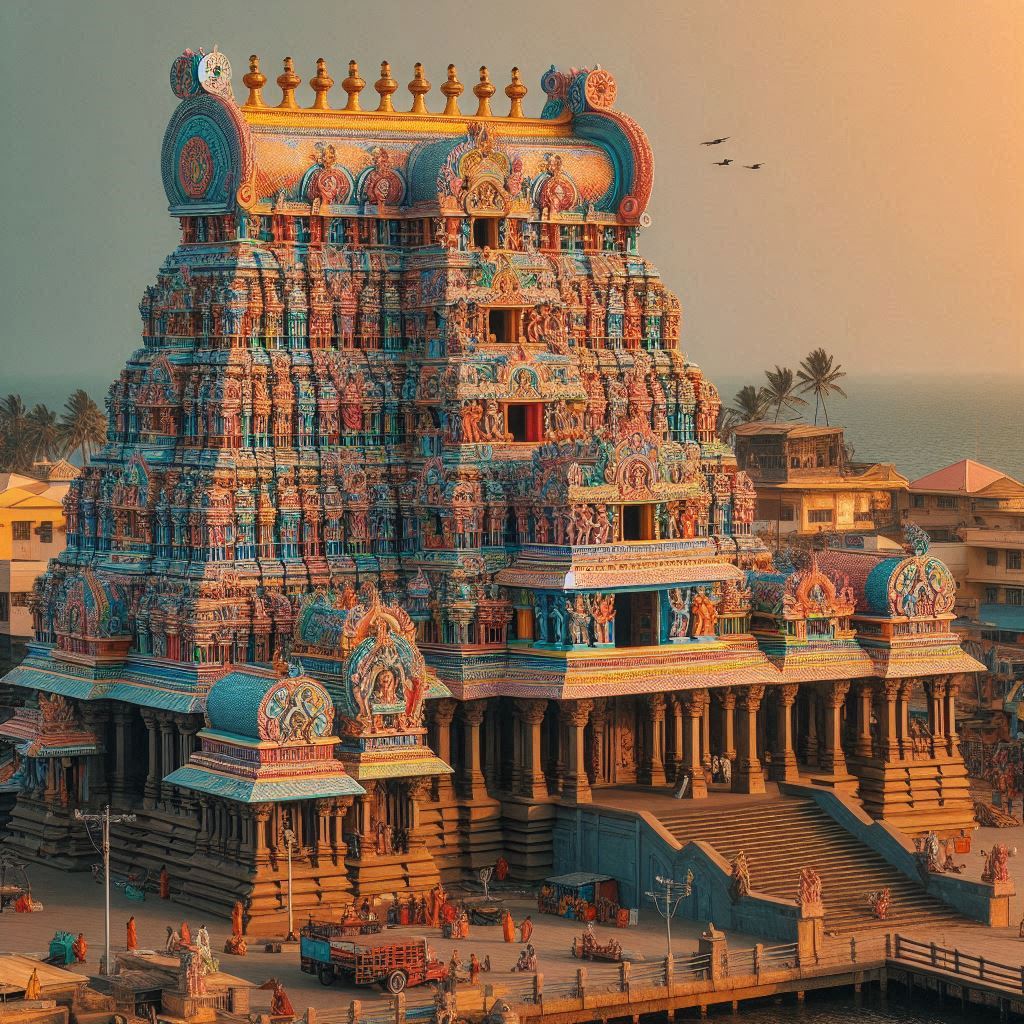
Rameshwaram is more than just a destination; it is an emotion for millions of devout Hindus. Sitting gracefully on Pamban Island in Tamil Nadu, separated from mainland India by the turquoise waters of the Indian Ocean, the Rameshwaram Temple (officially known as the Ramanathaswamy Temple) stands as a colossal beacon of faith, architecture, and history.
For centuries, travelers and pilgrims have journeyed here to complete their spiritual cycle. It is often said in Hindu tradition that a pilgrimage to Kashi (Varanasi) is incomplete without visiting Rameshwaram. But beyond the spirituality, the sheer magnitude of the temple—its endless corridors, colossal pillars, and the mystique of its 22 internal wells—makes it a marvel of Dravidian engineering.
In this guide, you will find everything you need for a smooth pilgrimage in 2026 — updated Rameshwaram temple darshan timings, the exact process of the 22 sacred wells bath, dress code rules, best time to visit, travel routes, and a practical 1-day and 2-day itinerary. Whether you are a first-time visitor or returning after years, this guide answers every question before you even ask it.
If you are planning a visit in 2026, the landscape of travel has changed slightly with new crowd management systems and updated timings. This comprehensive guide goes beyond the basic “tourist info.” It is written to act as your knowledgeable companion, walking you through everything from the history of the Sivalingam to the practicalities of the 22-well bath, updated Rameshwaram temple timings, and vital travel tips.
Let us explore the magnificence of the Ramanathaswamy Temple.
Why Rameshwaram Temple Is One of the Holiest Places in India
To understand the gravity of this temple, you have to look at how India’s spiritual geography connects the North and the South. Rameshwaram serves as the southern anchor of Hindu spirituality.
It holds a unique distinction that very few temples in India possess: it is part of the Char Dham (the four divine abodes) and is also one of the 12 Jyotirlingas.
The sanctity here is rooted in redemption. According to the Purana, this is the exact spot where Lord Rama worshipped Lord Shiva to absolve the sin (Brahmahatya Dosha) of killing Ravana, who was a Brahmin and a great devotee of Shiva. Therefore, the temple represents the convergence of Shaivism (worshippers of Shiva) and Vaishnavism (worshippers of Vishnu/Rama), making it universally entered by all sects of Hindus.
For the common devotee, a visit here represents a “cleansing.” Whether it is taking a dip in the Agni Teertham (the sea) or walking through the wet stone corridors after bathing in the temple wells, the experience is physically and mentally purifying.
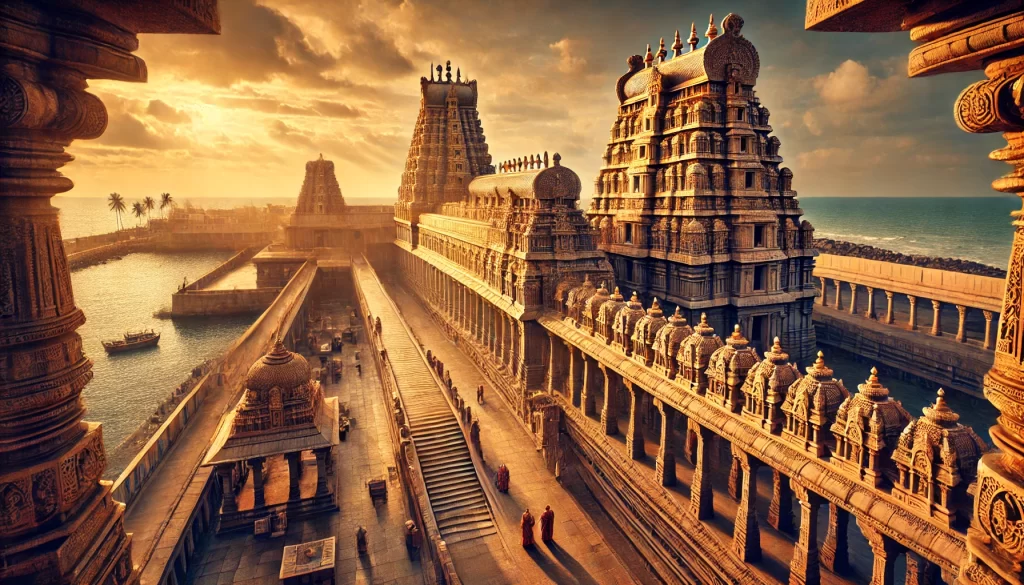
Is Rameshwaram Temple a Jyotirlinga or Char Dham?
Quick Answer:
Rameshwaram Temple is both a Jyotirlinga and a Char Dham site. It is the southernmost of the 12 Jyotirlingas of Lord Shiva and also one of the four Char Dham pilgrimage destinations established by Adi Shankaracharya.
This is the most common confusion for first-time visitors. The short answer is: It is both.
- A Jyotirlinga: There are 12 Jyotirlingas in India, which are considered the most sacred abodes of Shiva, where he appeared as a pillar of light. Rameshwaram is the southernmost Jyotirlinga and acts as the presiding deity for the Rasi (zodiac sign) of Aries.
- A Char Dham: Originally, the “Char Dham” defined by Adi Shankaracharya consists of four pilgrimage sites in four directions of India—Badrinath (North), Dwarka (West), Puri (East), and Rameshwaram (South).
Note: Do not confuse this with the “Chota Char Dham” in the Himalayas (Yamunotri, Gangotri, Kedarnath, Badrinath). The Rameshwaram temple helps complete the greater all-India circuit.
This dual status explains why you will see Sadhus from the Himalayas standing in the same queue as devotees from Kanyakumari. It is the unifying point of Indian dharma.
Rameshwaram Temple History: Ramayana Connection & Construction Timeline
The history of the Rameshwaram Mandir is a fascinating blend of epic mythology and documented architectural evolution.
The Ramayana Connection
The spiritual foundation of the temple dates back to the Treta Yuga. As per the legend, upon returning from Lanka after the war, Lord Rama wished to worship Shiva. He sent Hanuman to Mount Kailash to bring a Lingam. However, when Hanuman was delayed, Mother Sita crafted a Lingam out of sand (known as the Ramalingam or Prithivi Lingam) so the auspicious time would not be missed.
When Hanuman returned with the Vishwalingam from Kailash, he was disappointed. To appease him, Rama decreed that the Vishwalingam brought by Hanuman would be worshipped first in all daily rituals—a tradition strictly followed to this day.
Temple Construction Timeline
While the legend is ancient, the massive structure we walk through today was not built in a day or by a single dynasty. The core sanctum was likely a thatched hut in ancient times.
- 12th Century: The Pandya kings laid the initial stone masonry.
- 14th – 17th Century: The Setupati rulers of Ramanathapuram (Sethupathis) were the true architects of the modern temple complex. They donated lavishly and commissioned the massive corridors and gopurams.
- Colonial Era: There are records of local kings resisting foreign influence to maintain the sanctity of the temple town.
It is a living testament to centuries of royal patronage and devotion.
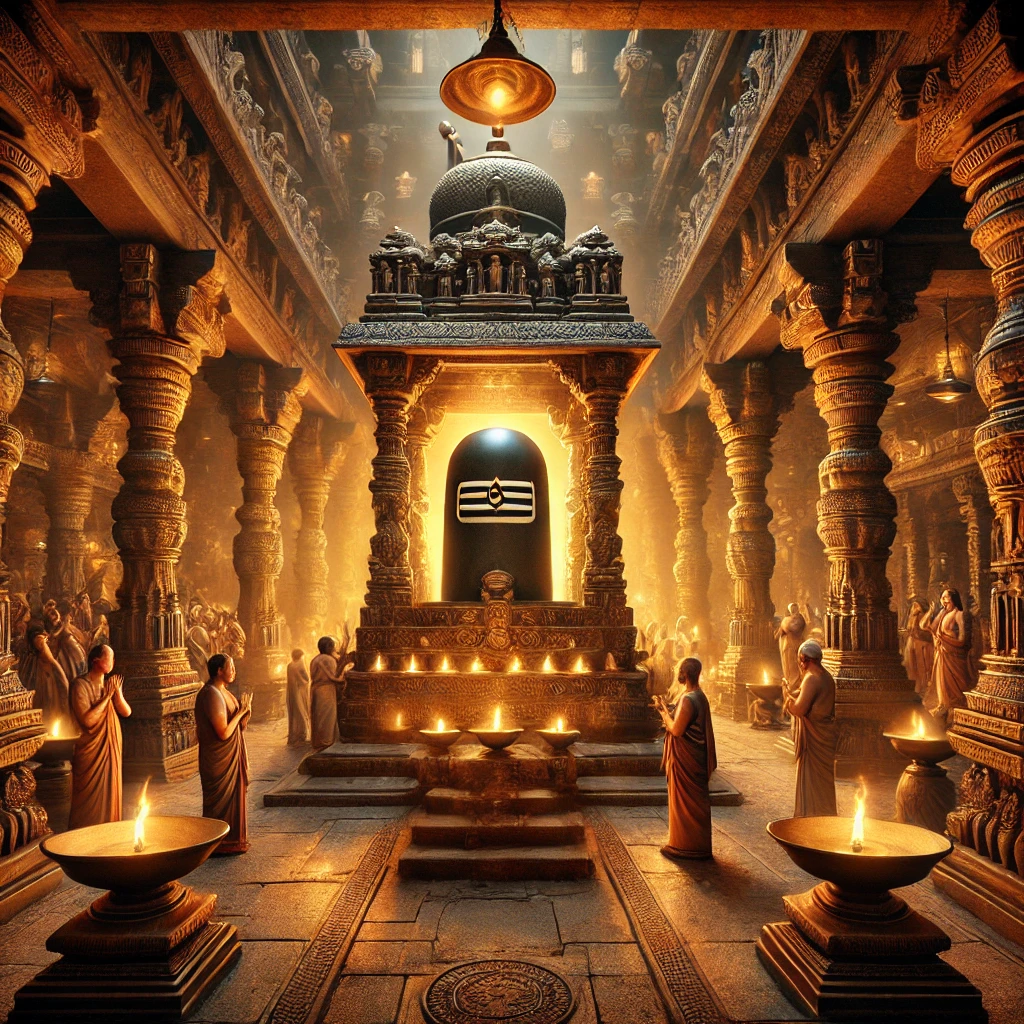
Architecture of Rameshwaram Temple: Longest Corridor & Dravidian Design
Walking into the temple, the first thing that strikes you is the sheer scale. It does not feel like a building; it feels like a fortress of faith. The architectural style is purely Dravidian, characterized by towering Gopurams (gateways) and intricate stone carvings.
The World-Famous Third Corridor
The claim to fame for Rameshwaram Temple in the architectural world is its “Third Corridor.” It is officially the longest temple corridor in the world.
- Dimensions: The corridor stretches about 197 meters (East-West) and 133 meters (North-South).
- The Pillars: There are approximately 1,212 massive pillars in the outer corridor alone.
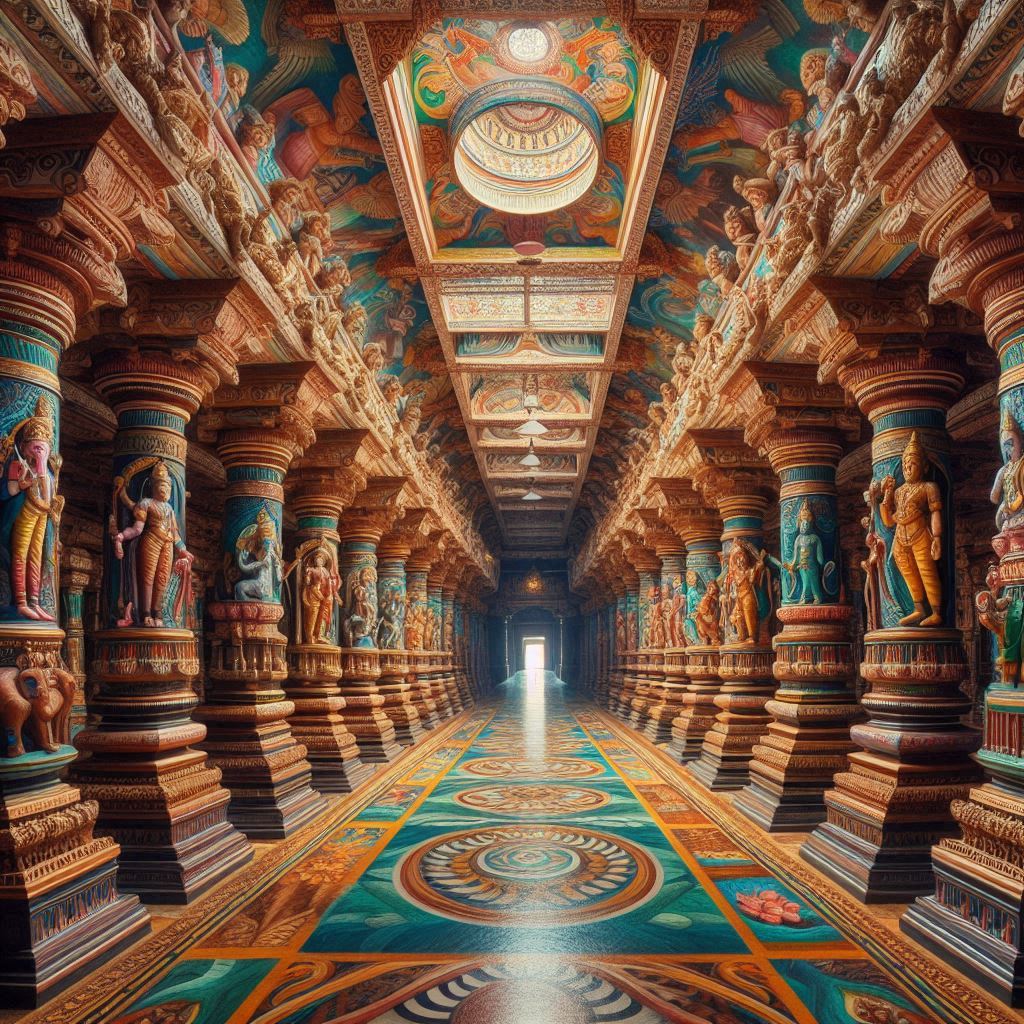
- The Visual Effect: The pillars are carved and painted in such a way that they create a tunnel-like optical illusion. As you look down the corridor, the pillars seem to converge into a single point in infinity.
Uniqueness
Unlike temples in Odisha or Varanasi, which often have smaller, compact sanctums, Ramanathaswamy Temple is expansive. The high compound walls enclose an area of over 15 acres. The East Gopuram (Rajagopuram) rises to nearly 126 feet with nine tiers.
The granite stones used for the construction were transported across the sea to the island, an engineering feat that baffles experts even today.
22 Sacred Wells of Rameshwaram Temple (The Teertha Snanam)
Quick Facts About the 22 Wells:
- Total sacred wells inside the temple: 22
- Purpose: Ritual purification (Teertha Snanam)
- Time required: 45 minutes to 2 hours
- Bathing order: Fixed and sequential
For many, the darshan is secondary to the ritual of the 22 wells. This is known as the “Teertha Snanam.” This process is integral to the Rameshwaram travel guide experience.
Spiritual Importance
There are actually 64 Teerthams (holy water bodies) in and around Rameswaram, but 22 of them are located inside the temple complex. The number 22 represents the 22 arrows in Lord Rama’s quiver. It is believed that bathing in these wells in a specific order absolves one of various sins and afflictions.
Order and Process of Bathing
You cannot simply walk to any well and dip a bucket. There is a strictly managed flow.
- Agni Teertham First: Before entering the temple, you must take a dip in the ocean (Agni Teertham) located directly opposite the East Gate. The sea here is unusually calm, devoid of waves, making it safe for everyone.
- Entry to Wells: Enter the temple through the specific North Gate (or indicated entrance) for the well bath. You need to buy a ticket for the attendants.
- The Bathing Ritual: You do not draw water yourself. Temple attendants pull buckets of water from the deep wells and pour it over the pilgrims. You proceed from Well 1 (Mahalakshmi Teertham) to Well 22 (Kodi Teertham).
- No Soap/Oil: This is a ritual rinse, not a cosmetic bath. Do not use soap, shampoo, or oil.
Time Required and Flow
Depending on the crowd, completing the 22 wells can take anywhere from 45 minutes to 2 hours. Since you will be moving in wet clothes, the stone floors can be slippery. The water in each well is said to have a different temperature and distinct taste (some saline, some sweet), owing to unique mineral compositions.
Quick Tip:
If you want to save time, complete the 22 wells bath early in the morning between 6:00 AM and 9:00 AM. Crowds increase sharply after 10:30 AM.
Rameshwaram Temple Darshan Timings (Updated 2026)
Knowing the exact Rameshwaram temple timings is crucial because the temple closes in the afternoon. Unlike some North Indian temples that stay open all day, Rameshwaram follows strict schedules.
Important Note:
Rameshwaram Temple follows strict opening and closing timings with an afternoon break. Planning your darshan around these timings is essential to avoid missing key rituals like the Spatika Lingam darshan.
Ritual / Darshan Type | Timing |
Morning Opening | 4:30 AM |
Spatika Linga Darshan | 5:00 AM – 6:00 AM |
General Darshan (Morning) | 6:00 AM – 1:00 PM |
Afternoon Break | 1:00 PM – 3:00 PM |
General Darshan (Evening) | 3:00 PM – 9:00 PM |
Palliyarai Deeparadhana | 8:45 PM |
Temple Closing | 9:00 PM |
Note regarding Spatika Lingam: The Spatika (Crystal) Lingam darshan is highly auspicious and happens only in the early morning. If you wish to see this, you must be in the queue by 4:00 AM.
Dress Code & Entry Rules for Devotees
Temples in Tamil Nadu are very strict regarding attire. In recent years, enforcement has tightened to maintain the spiritual ambience.
Men
- Mandatory: Dhotis, Veshti, or Pyjamas with Kurta.
- Allowed: Formal trousers and shirts are generally permitted now, but shorts, lungis, bermudas, and jeans are often restricted or frowned upon.
- Upper Body: While entering the inner sanctum, men may be asked to remove their shirts/vests, although this rule varies depending on the specific crowding level and season.
Women
- Mandatory: Saree, Half-Saree, or Churidar/Salwar Kameez with Dupatta.
- Strictly Prohibited: Sleeveless tops, tight leggings without a long kurta, jeans, T-shirts, and western skirts.
Electronics and Security
- Mobiles & Cameras: Strictly prohibited inside the temple premises. There are lockers available at the entrance, but the queues to deposit items can be long. It is highly recommended to leave phones, smartwatches, and cameras in your hotel room or car.
- Bags: Large travel bags are not allowed inside. Only small ladies’ handbags containing essentials (money, medicines) are permitted.
Senior Citizens
Wheelchairs are available, but navigating the wet areas of the 22 wells can be difficult. It is advisable for seniors to have a helper. There are special queue lines (Rs. 50 or Rs. 100 tickets) that expedite the darshan process, which seniors should definitely utilize to avoid standing for hours.
Best Time to Visit Rameshwaram Temple (Month-wise Guide)
While Rameswaram is a year-round destination, the weather plays a huge role in your comfort. Rameswaram is a tropical island; it gets humid and hot.
The Ideal Window: October to March
This is the winter season. The temperatures range from 20°C to 30°C.
- December & January: The weather is pleasant, but crowds are at their peak due to Sabarimala season and school holidays.
- February to March: Excellent weather.
Monsoon (July to September)
The island looks beautiful and green, and the rains are intermittent. If you don’t mind occasional showers, this is a good time to avoid peak crowds. However, rough seas might restrict bathing at Agni Teertham or visiting Dhanushkodi.
Summer (April to June)
Temperatures can soar above 35°C to 40°C. The stone floors of the temple get hot (though there are jute mats), and waiting in queues can be exhausting. Visit only if you can handle high humidity.
Festivals
- Maha Shivaratri (Feb/Mar): A grand celebration with temple cars and all-night vigils.
- Thirukalyanam (July/August): The celestial wedding of the deity. Expect massive crowds (2-3 lakh people).
How to Reach Rameshwaram Temple by Road, Train & Air
Rameswaram is well connected, but it requires some planning depending on your starting point.
By Road (A Scenic Drive)
Driving to Rameswaram is an experience in itself because you have to cross the famous Pamban Bridge (road bridge). Driving over the ocean with water on both sides is breathtaking. Buses run regularly from Chennai, Madurai, Trichy, and Kanyakumari.
Tip: Private sleeper buses from Bangalore or Chennai are comfortable and drop you near the temple area.
By Train (The Classic Route)
The Rameswaram Railway Station is just 1-2 km from the temple. The train journey across the historical Pamban Rail Bridge is iconic. Trains connect directly from Chennai, Coimbatore, Trichy, Madurai, and Bhubaneswar.
Note: Check the status of the Pamban Rail bridge, as it sometimes undergoes repair, forcing trains to terminate at Mandapam (on the mainland).
By Air
Rameshwaram does not have its own airport.
- Nearest Airport: Madurai International Airport (IXM).
- Distance: Approximately 175 km (3 to 3.5 hours by taxi).
- You can fly into Madurai and hire a pre-paid taxi or take a bus to Rameswaram.
Where to Stay Near Rameshwaram Temple
There are three main zones to consider when booking accommodation.
- Near East Gate / Agni Teertham:
- Pros: Walking distance to the sea bath and temple entrance. Ideal for early morning Darshan.
- Cons: Extremely crowded, noisy, and older budget hotels.
- Type: Budget to Mid-range lodges and Dharmashalas.
- Near the Bus Stand / Railway Station:
- Pros: Quieter, better accessibility to transport, newer constructions.
- Cons: You need an auto-rickshaw to reach the temple (1.5 km).
- Type: Mid-range and modern budget hotels.
- Outskirts / Highway:
- Pros: Luxury resorts, spacious rooms, car parking, peaceful.
- Cons: Far from the temple.
- Type: Premium properties and Resorts.
Traveler Tip: Since you will spend most of your time at the temple or traveling to Dhanushkodi, clean bed sheets and AC are more important than luxury amenities. Book in advance during festival seasons.

1-Day and 2-Day Rameshwaram Temple Itinerary
To get the most out of the Rameshwaram temple travel guide, use this structured plan.
Option 1: 1-Day Spiritual Sprint
- 5:00 AM: Arrive at Agni Teertham. Take the holy dip in the sea.
- 6:00 AM: Enter the temple. Purchase the ticket for the 22 wells bath.
- 7:30 AM: Complete the well baths. Change into dry clothes (mandatory facilities available near the exit of the wells).
- 8:30 AM: Stand in the queue for the Main Sanctum (Ramanathaswamy) and Goddess Parvatavardhini.
- 11:00 AM: Visit the Gandhamadhana Parvatham (Rama’s footprint) for a city view.
- 12:00 PM: Lunch.
- 2:00 PM: Visit Dr. A.P.J. Abdul Kalam Memorial.
- 4:00 PM: Drive to Dhanushkodi (Last Land of India) for sunset.
- 7:00 PM: Departure.
Option 2: 2-Day Relaxed Pilgimage (Recommended)
Day 1:
- Morning: Agni Teertham and Temple 22 Wells.
- Afternoon: Rest and Lunch.
- Evening: Visit the temple again for detailed architecture appreciation (Third Corridor) without the rush of bathing. attend the night ceremony.
Day 2:
- Early Morning: Spatika Linga Darshan.
- Mid-Morning: Trip to Dhanushkodi (Ghost Town) and Ram Setu point.
- Afternoon: Visit Pamban Bridge view point, House of Kalam, and Kothandaramaswamy Temple.
Important Travel Tips for First-Time Visitors
Experienced travelers know that the small details make or break a trip. Here is your cheat sheet:
- Change of Clothes: Since you bathe with your clothes on, carry a plastic bag for wet clothes and a fresh set of dry clothes. There are changing rooms available immediately after the 22 wells area.
- Beware of “Guides”: Many touts will approach you at Agni Teertham promising a “Special Puja” or “Fast Darshan.” Ignore them. Rely on official temple counters for tickets (Special Darshan usually costs Rs. 50 or Rs. 200).
- Footwear: You must leave footwear outside the temple. There is a designated shoe stand. Do not leave expensive shoes in random spots; they might disappear.
- Hydration: The temple complex is huge. While water is available, drink plenty before entering.
- Comb and Mirror: If you are bathing, you will look disheveled afterward. Carry a small comb/mirror if you plan to go directly to other sightseeing spots.
- Food: There is no food allowed inside. Eat a solid breakfast after your darshan. The streets around the temple (West Gate and South Gate) serve excellent South Indian vegetarian food (Idli, Dosa, Pongal).

FAQs About Rameshwaram Temple
Q1. What is Rameshwaram Temple famous for?
It is famous for being one of the 12 Jyotirlingas, a Char Dham pilgrimage site, and possessing the world’s longest temple corridor with over 1200 majestic pillars.
Q2. How many wells are there in Rameshwaram Temple?
There are 22 sacred wells (Teerthams) inside the temple complex. Pilgrims bathe in them serially for purification.
Q3. How much time does darshan take?
On a normal day, it takes 1 to 2 hours. On weekends or festival days, it can take 4 to 6 hours. Bathing in the 22 wells requires an additional 1 to 1.5 hours.
Q4. Can senior citizens do the 22 wells?
Yes, but it is physically demanding due to slippery wet floors. Using a wheelchair (where possible) and hiring a personal attendant to help them navigate is highly recommended.
Q5. Is mobile allowed inside Rameshwaram Temple?
No. Mobile phones, smartwatches, and cameras are strictly prohibited. You must deposit them in lockers outside, which consumes time. Leaving them at your hotel is the best option.
Q6. Why is it called Ramanathaswamy?
It translates to ” The Master of Rama.” Since Lord Rama worshipped Shiva here, Shiva is addressed as the Lord (Natha) of Rama.
Final Thoughts – Is Rameshwaram Temple Worth Visiting?
Rameshwaram is not just a checklist item on a religious tour. It is a place where history breathes through stone pillars and where the ocean seems to whisper legends of the Ramayana.
The experience of the cold water form the 22 wells hitting your back, the smell of camphor and wet stone in the dark corridors, and the sight of the deep endless pillared halls create a sensory imprint that lasts a lifetime. Whether you are a devout seeker chasing the path of Rama and Shiva, or a traveler admiring the brilliance of ancient Indian architecture, the Rameshwaram Temple commands awe.
Plan your trip well, respect the local culture, and arrive with an open heart. Rameswaram will take care of the rest.
Last Updated: January 2026
Written by: Anuj Kumar
Travel Content Researcher – Discover India By Car
This article follows Google’s Helpful Content and EEAT guidelines and is updated regularly to reflect the latest temple timings, travel rules, and visitor insights.