- Private car and driver in Delhi / India
- +91-8447445445
- info@discoverindiabycar.com sugar.ankit@yahoo.com
 +91-9818434712
- Follow us:



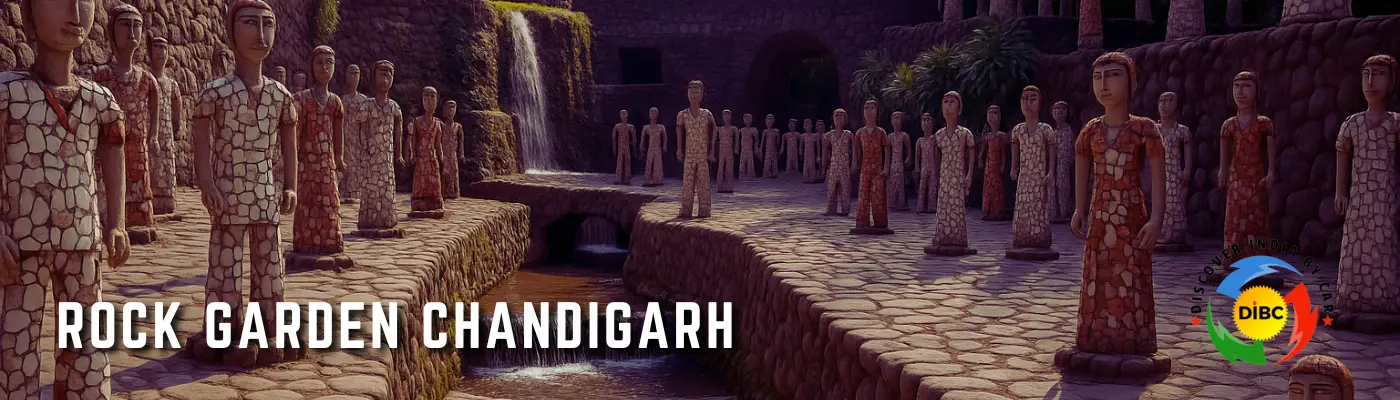
Rock Garden Chandigarh – Where Urban Waste Becomes Artistic Wonder
Rock Garden Chandigarh – A Masterpiece of Art & Creativity
Nestled in Sector 1 of India’s first planned city, the Rock Garden Chandigarh defies easy categorization. It is neither a botanical garden nor a conventional art gallery. Instead, it is a sprawling 40-acre dreamscape constructed entirely from urban and industrial waste—discarded porcelain, broken bangles, rusted car parts, electrical insulators, and even old toothbrushes—transformed into courtyards, waterfalls, and over 2,000 sculptures.
Created by a single individual working in secret for nearly two decades, the Rock Garden Chandigarh has evolved into one of the most distinctive Chandigarh tourist attractions in North India. Its appeal lies not just in visual spectacle, but in its powerful message: that beauty and meaning can emerge from what society discards. For travelers exploring the region by road, it offers a rare blend of cultural depth, affordability, and accessibility—especially when combined with other famous places in Chandigarh like Sukhna Lake or the Rose Garden.
History of Rock Garden
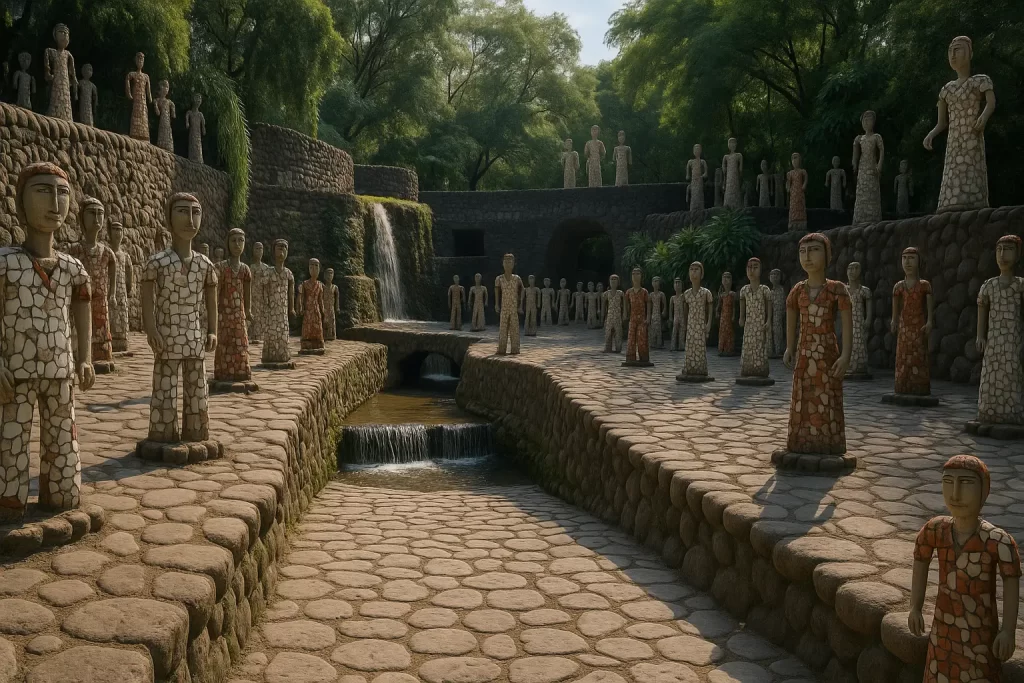
The story of the Rock Garden Chandigarh begins in 1957, during the early years of Chandigarh’s development as a modern city under the guidance of Swiss-French architect Le Corbusier. While the city embraced geometric order and functional design, a government road inspector named Nek Chand pursued a radically different vision—one born not from blueprints, but from memory and loss.
Working alone and under the cover of night, Nek Chand began collecting waste materials from demolition sites, junkyards, and household trash bins across the city. These included shattered tiles, ceramic shards, bicycle chains, and scrap metal. He transported them to a secluded ravine near Sukhna Lake in Sector 1, hidden behind dense forest cover, and began assembling a hidden world of figures, pathways, and water features using only basic tools and manual labor.
For 18 years, this project remained unknown to city authorities. When it was finally discovered in 1975, officials were astonished—not by the unauthorized use of land, but by the sheer artistry and emotional depth of the creation. Rather than dismantling it, the government recognized its cultural significance, officially inaugurated the Nek Chand Rock Garden in 1976, and appointed its creator as its first curator. What began as a personal act of remembrance became a public institution.
Nek Chand’s Vision Behind the Rock Garden
Nek Chand’s motivation was deeply rooted in personal history. Having lost his ancestral village of Saidpur (now in Pakistan) during the 1947 Partition, he carried with him vivid memories of rural life—folk dances, village deities, communal festivals, and organic village layouts. The Rock Garden sculptures were his attempt to reconstruct that lost world, not through nostalgia alone, but through tangible form.
Every element in the garden carries symbolic weight. A goddess made from porcelain shards echoes traditional village shrines. A courtyard filled with dancing figures recalls harvest celebrations. Even the winding, non-linear pathways mimic the unplanned, organic flow of pre-modern Indian settlements—standing in quiet contrast to Chandigarh’s rigid grid system.
His guiding philosophy was simple yet profound: “Waste is not waste until you waste it.” In his hands, a cracked sink became a royal throne, a broken radio dial became the eye of a mythical bird, and discarded glass became glittering ornamentation. The result is a space that challenges conventional ideas about art, value, and sustainability—long before “upcycling” became a global trend.
Things to See in Rock Garden
The Rock Garden Chandigarh unfolds across three terraced levels, connected by stone pathways, arched tunnels, rustic bridges, and cascading water channels. Unlike linear tourist sites, it rewards slow, curious exploration—each turn revealing a new surprise.
Unique Sculptures Made from Waste
More than 2,000 Rock Garden sculptures populate the site, all assembled without welding or modern adhesives—only cement, wire, and ingenuity. Among the most notable:
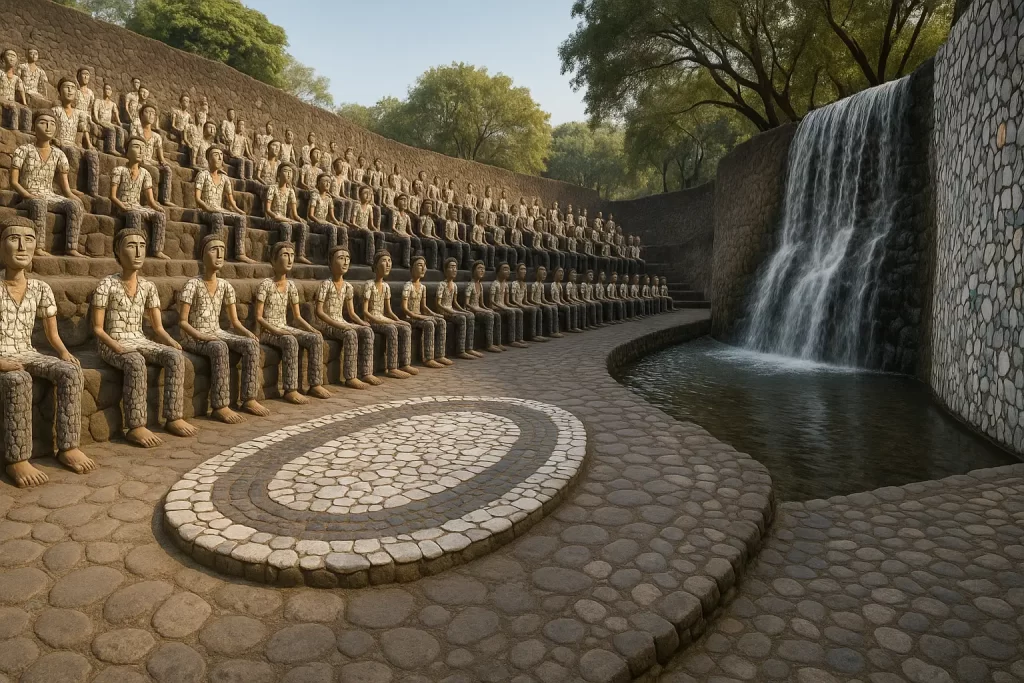
- The Amphitheatre: Built with over 500 seats crafted from electrical insulators, broken bangles, and ceramic fragments. Once used for live folk performances, it now serves as a popular photo spot and quiet resting area.
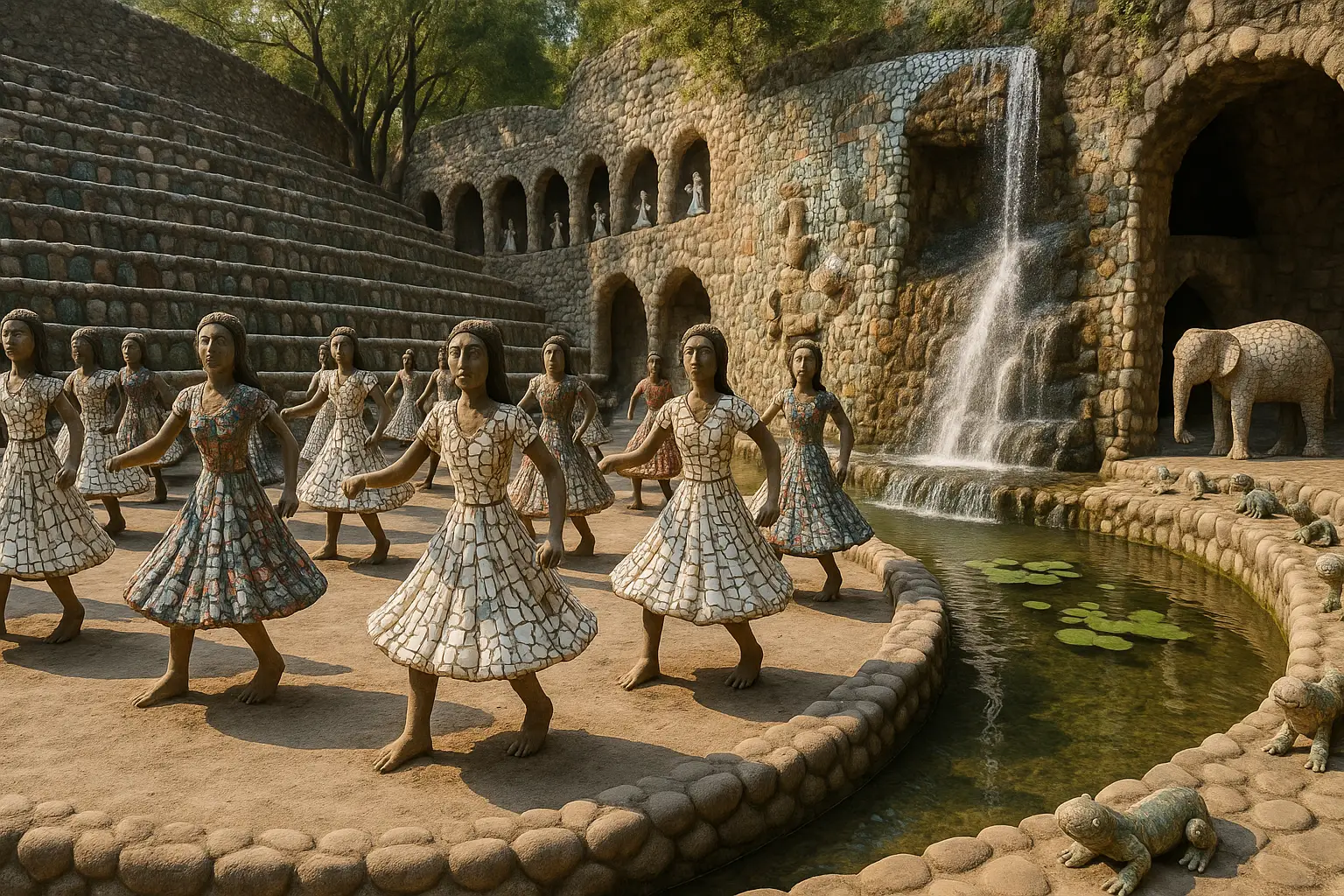
- The Dancer Courtyard: Features life-sized female figures captured mid-twirl, their skirts shimmering with embedded mirror pieces and colored glass. The attention to posture, fabric folds, and expression gives them an almost lifelike presence.
- Animal Kingdom: Includes elephants with ears made from tire treads, peacocks with tails of bottle caps, monkeys swinging from repurposed pipes, and serpents coiled from bicycle chains. These whimsical installations are especially engaging for younger visitors.
What distinguishes these works is their deliberate imperfection—no two pieces are identical, and the visible seams, rough textures, and asymmetrical forms add to their authenticity and emotional resonance.
Hidden Courtyards and Waterfalls
One of the garden’s greatest strengths is its sense of discovery. Narrow stone passageways lead to secluded courtyards where water gently trickles down mosaic-covered walls into small ponds lined with ceramic frogs and lotus motifs. Arched grottos house miniature temples, mythical beasts, and quiet meditation spots.
The water features serve both aesthetic and symbolic purposes. Flowing water represents renewal, continuity, and the passage of time—a quiet counterpoint to the static nature of traditional sculpture parks. On warm afternoons, these shaded nooks offer cool relief and a moment of calm amid the visual richness of the surroundings.
Timings & Entry Fee of Rock Garden
For a smooth visit, it’s essential to know the official schedule and costs:
- Rock Garden Chandigarh Timings:
Open daily from 9:00 AM to 6:00 PM.
Closed every Monday for maintenance and cleaning.
Last entry is permitted at 5:30 PM—gates are locked promptly thereafter. - Rock Garden Ticket Price (as of 2024):
- Indian adults: ₹30
- Children (5–12 years): ₹15
- Foreign tourists: ₹300
- Students (with valid college ID): ₹10
- Still photography: Free
- Video recording: ₹100
Tickets are sold at the main entrance gate. Both cash and UPI payments are accepted. No online booking system is in place, though weekday mornings typically see lighter footfall.
Best Time to Visit Rock Garden Chandigarh
While the garden remains open throughout the year, seasonal conditions significantly influence comfort and visibility.
The optimal period is October through March, when daytime temperatures range between 12°C and 28°C—ideal for walking and photography. Morning hours (9:00 AM to 11:00 AM) offer the best combination of soft natural light, cooler pathways, and fewer crowds.
April to June is generally discouraged due to extreme heat, with temperatures often exceeding 42°C and limited shade in upper sections of the garden. The monsoon season (July–September) brings lush greenery but creates slippery conditions on stone steps and near waterfalls.
Weekends and public holidays attract large numbers of school groups and tour buses. For a more peaceful experience, Tuesday through Thursday are recommended.
How to Reach Rock Garden?
Located in Sector 1, Chandigarh, the Rock Garden Chandigarh is well-connected by road and public transport:
- By car: From National Highway 5 (NH5) or NH7, take the Sector 1 exit. Free roadside parking is available near the main entrance and along the Sukhna Lake promenade. GPS coordinates: 30.7515° N, 76.7885° E.
- By auto-rickshaw: From Chandigarh Railway Station (approximately 11 km), fares range from ₹150 to ₹200. From Chandigarh International Airport (8 km), expect to pay ₹120–₹150.
- By city bus: Punjab Roadways and Chandigarh Transport Undertaking operate Routes 17 and 34, which stop at Sukhna Lake—just a 10-minute walk from the garden’s main gate.
Many visitors combine the trip with a morning walk at Sukhna Lake, creating a relaxed half-day cultural itinerary.
Places to Visit Near Rock Garden
Several top Chandigarh tourist attractions lie within a 15-minute drive, making it easy to plan a full day of sightseeing:
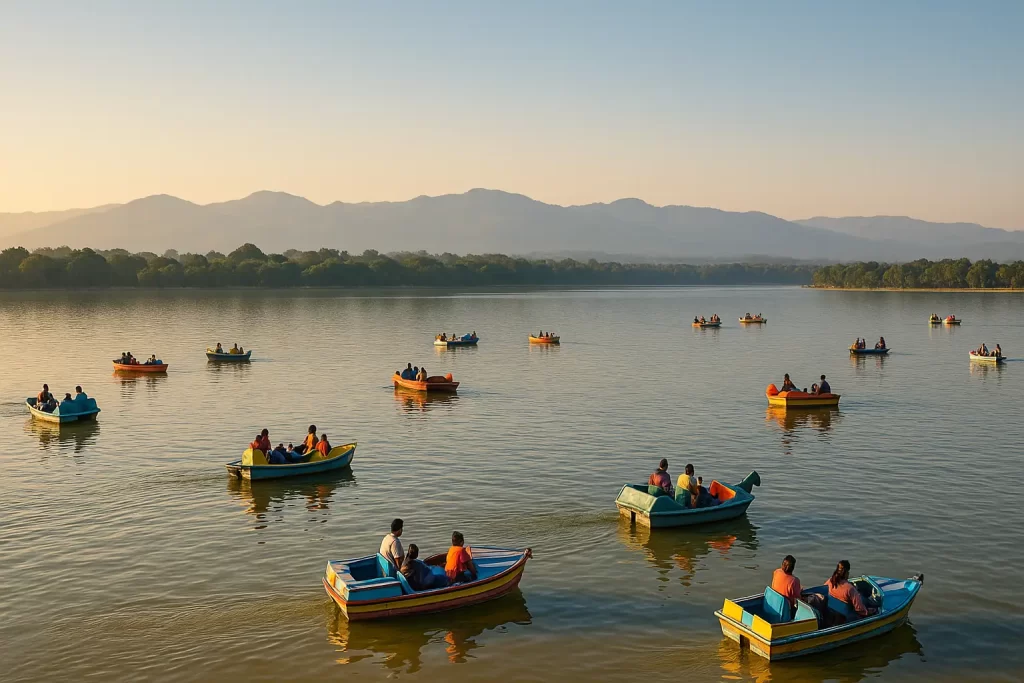
- Sukhna Lake (500 meters): A serene man-made reservoir ideal for paddle boating (₹150/hour), birdwatching (especially during winter migration), and sunset views.
- Zakir Hussain Rose Garden (2 km): Asia’s largest rose garden, featuring over 50,000 plants across 1,600+ varieties. The annual Rose Festival in February draws thousands of visitors.
- Government Museum and Art Gallery (3 km): Houses significant collections of Gandhara Buddhist sculptures, Pahari and Rajasthani miniature paintings, and a dedicated exhibit on Nek Chand’s life and work.
- Japanese Garden (4 km): A tranquil space with koi ponds, stone lanterns, Zen rock arrangements, and shaded walkways—ideal for quiet reflection.
- Elante Mall (6 km): Offers dining options, retail therapy, and air-conditioned comfort for post-sightseeing relaxation.
Most of these can be comfortably covered in a single day when starting early and using local cabs or app-based ride services.
Frequently Asked Questions (FAQs)
Q1. What is the timing of Rock Garden Chandigarh?
A. The Rock Garden Chandigarh is open from 9:00 AM to 6:00 PM every day except Monday. Last entry is allowed until 5:30 PM.
Q2. Who founded the Rock Garden in Chandigarh in 1957?
A. The Nek Chand Rock Garden was founded by Nek Chand Saini, a road inspector with the Chandigarh Public Works Department, who began building it secretly in 1957 using urban and household waste.
Q3. Is Rock Garden worth visiting?
A. Yes. The Rock Garden Chandigarh is widely regarded as one of the most unique famous places in Chandigarh. It offers a powerful blend of folk art, environmental consciousness, and emotional storytelling. Suitable for all ages, it provides exceptional value given its low ticket price and rich visual experience.
Q4. What is the ticket price of Rock Garden?
A. As of 2024, the Rock Garden ticket price is ₹30 for Indian adults, ₹15 for children aged 5–12, ₹300 for foreign tourists, and ₹10 for students with valid ID. Still photography is free; video recording incurs a ₹100 fee.
Q5. How to prepare for a rock garden?
A. Wear flat, non-slip footwear—paths are uneven and can be wet near water features. Carry drinking water, a hat, and sunscreen. Arrive early (before 11 AM) to avoid crowds and midday heat. A camera is highly recommended, as nearly every corner offers striking visual compositions.
Final Thoughts: Why Rock Garden Chandigarh Belongs on Your Itinerary
More than six decades after its humble beginnings, the Rock Garden Chandigarh remains a landmark of human imagination and resilience. It stands as living proof that creativity does not require expensive materials—only vision, patience, and respect for the overlooked.
For those traveling by car across North India, it represents a rare combination: deep cultural significance, minimal cost, and convenient location near other major Chandigarh tourist attractions. With clearly defined Rock Garden Chandigarh timings, an affordable ticket price, and a layout designed for unhurried exploration, it integrates seamlessly into any regional road trip.
Rather than just another stop on a checklist, the Rock Garden Chandigarh offers a moment of reflection—a place where broken things are made whole again, and where art emerges not from studios, but from the streets.
For verified road trip itineraries, hidden gems, and practical travel guides across India, visit discoverindiabycar.com.