+91-9818434712
Keshi Ghat anchors the Yamuna River. It is the undeniable heart of Vrindavan. Forget the noise. The evening aarti here shifts your perspective completely. History runs deep into these ancient stones, linking directly back to the ultimate heavy-hitter of legends. You are standing on the exact battleground where Lord Krishna destroyed the Keshi demon. Today? It draws genuine seekers and sharp-eyed travelers looking for real spiritual weight. According to belief, this is the very place where Krishna defeated the Keshi demon, making it a sacred destination for devotees and travelers alike.
We are laying it all out. No generic advice. You get the exact aarti timings, the raw history, and the hidden photography angles. Do not go there without any information. We built this breakdown to guarantee you experience the real Vrindavan, not just the tourist traps.
Vrindavan isn’t just another dot on a map. It’s a feeling. A loud, chaotic, deeply overwhelming feeling. You step out of your vehicle, and the energy hits you instantly. The smell of sandalwood. The constant ringing of temple bells. The heavy, sweet scent of crushed marigolds.
Many visitors make a huge mistake. They rush through the packed Banke Bihari temple, get pushed around in the crowds, and leave exhausted. They completely miss the actual soul of the city. If you want to find peace here, you head to the water. You need a proper keshi ghat travel guide because showing up unprepared guarantees you will miss the magic. Let’s break down exactly how to shoot, explore, and experience this place like a pro.
To actually feel the weight of the keshi ghat vrindavan experience, you have to know what happened on these steps. Every single brick has a story.
The Bhagavata Purana outlines a pretty intense ancient conflict. King Kamsa wanted his nephew, Lord Krishna, dead. He tried a dozen different ways to kill him. All failed. Desperate, Kamsa sent his absolute worst assassin: Keshi. This was no ordinary hitman. Keshi was a massive, terrifying demon shaped like a wild, man-eating horse. He tore through the dirt streets of Vrindavan. Locals panicked. Dust choked the air.
Krishna didn’t blink. He waited for the beast to charge with its jaw wide open. Instead of dodging, Krishna simply shoved his left arm straight down the demon’s throat. His arm expanded. The horse choked, collapsed, and died right there in the dirt.
Covered in the demon’s blood, Krishna walked down to the Yamuna River to wash off. That exact spot? That is Keshi Ghat.
Taking a dip in the water here is a massive deal for locals. Devotees firmly believe that bathing at this specific yamuna river ghat vrindavan purifies the soul entirely. It carries the exact same spiritual weight as dipping into the Ganges over in Varanasi.
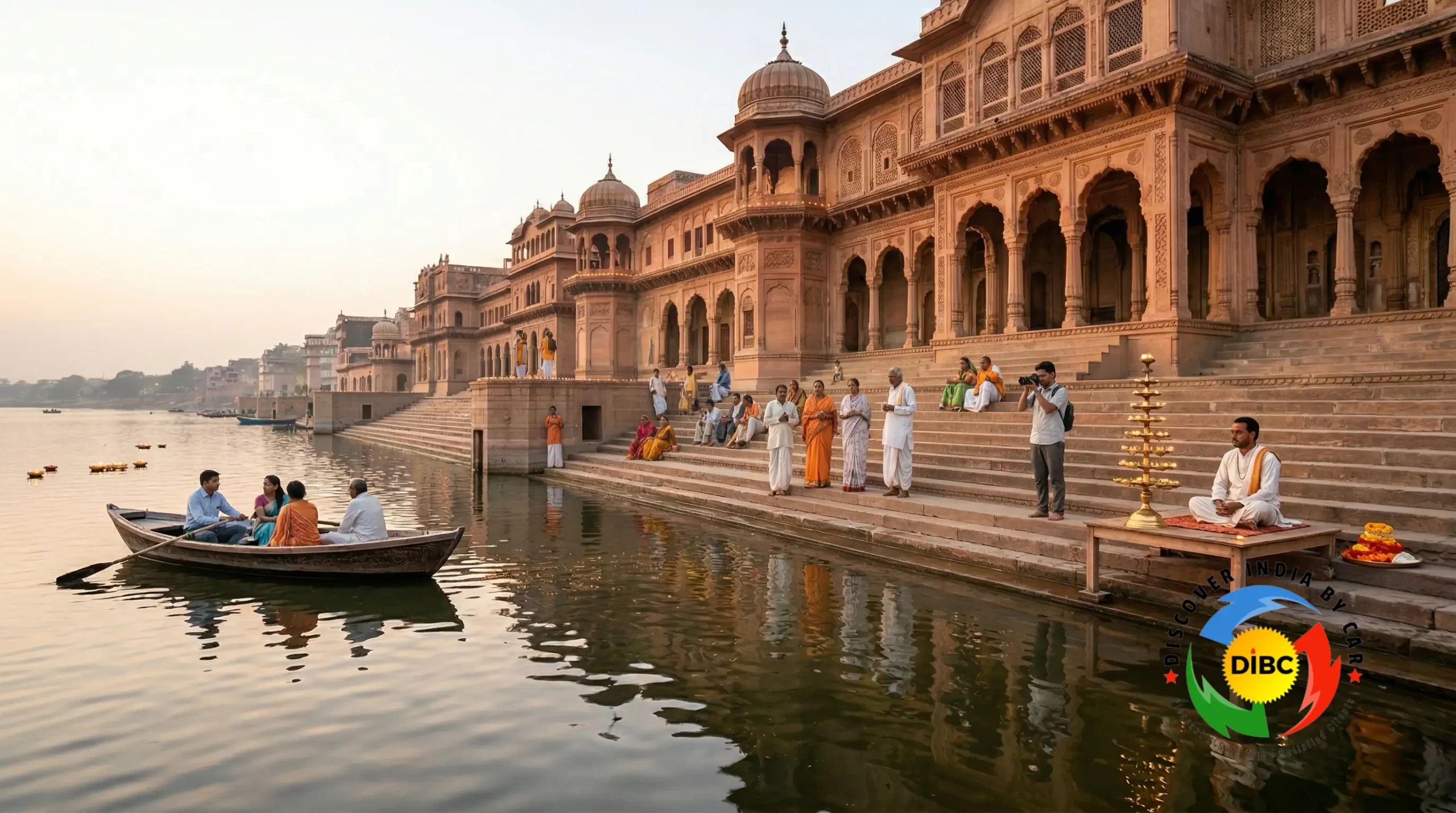
Forget the myth for a second. The physical structure of the ghat will stop you in your tracks. Queen Laxmi Devi of Bharatpur built this in the 17th century. It is a pure, unfiltered masterclass in Rajasthani design.
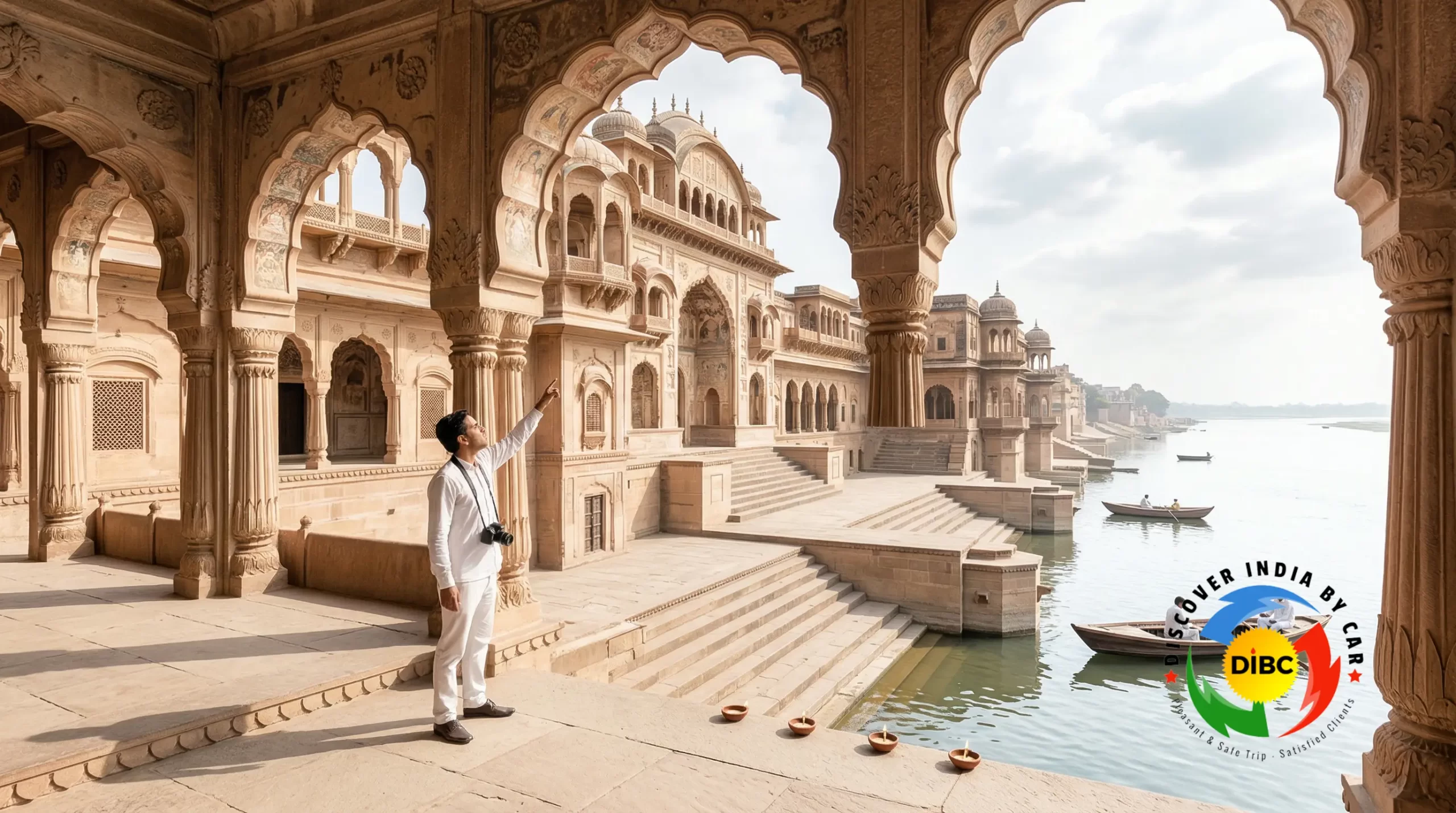
Massive arched pavilions dominate the skyline. Intricately carved sandstone pillars support the heavy roofs. Beautiful jali (lattice) stone windows line the walls. The steps cascade dramatically down into the dark water, forming a natural amphitheater. Modern concrete riverfronts feel dead. This place feels alive. The royal palace structure sitting in the background turns an ordinary riverbank into a cinematic masterpiece.
Expert Pro-Tip: Stop staring at the water. Turn around. Look up at the top arches of the palace behind you. You will spot faded, centuries-old frescoes and tiny stone carvings that 99% of tourists completely ignore. The real artistic beauty hides high above eye level.
Keshi Ghat is open 24 hours for visitors. However, the best time to visit Keshi Ghat Vrindavan is between 5:00 AM–7:30 AM for sunrise and 4:30 PM–7:30 PM for sunset and evening aarti. These hours offer the most peaceful and visually stunning experience.
Time dictates everything here. You cannot just show up randomly and expect a good experience. The atmosphere flips completely depending on where the sun is in the sky. The ghat technically never closes. But the energy? That runs on a strict schedule.
Time of Day | Lighting & Core Activity | The Vibe & Crowd Level |
5:00 AM – 7:30 AM | Soft blue hour, morning prayers, sunrise boat rides. | Deeply quiet. Almost empty. Perfect for serious photographers and introverts. |
9:00 AM – 3:30 PM | Harsh, flat sunlight. Local bathing and washing. | Visually boring. Very hot. Heavy monkey activity. Skip this window entirely. |
4:30 PM – 6:00 PM | Golden hour. Keshi ghat sunset photography peaks. | High energy. Packed with people. The visual sweet spot for rich colors. |
6:30 PM – 7:30 PM | The Maha Aarti (Fire Ritual). | Intense devotion. Loud music. Mesmerizing. A total sensory overload. |
Do not arrive at noon. You will get a sunburn and leave disappointed. Plan your keshi ghat vrindavan darshan for the extreme edges of the day.
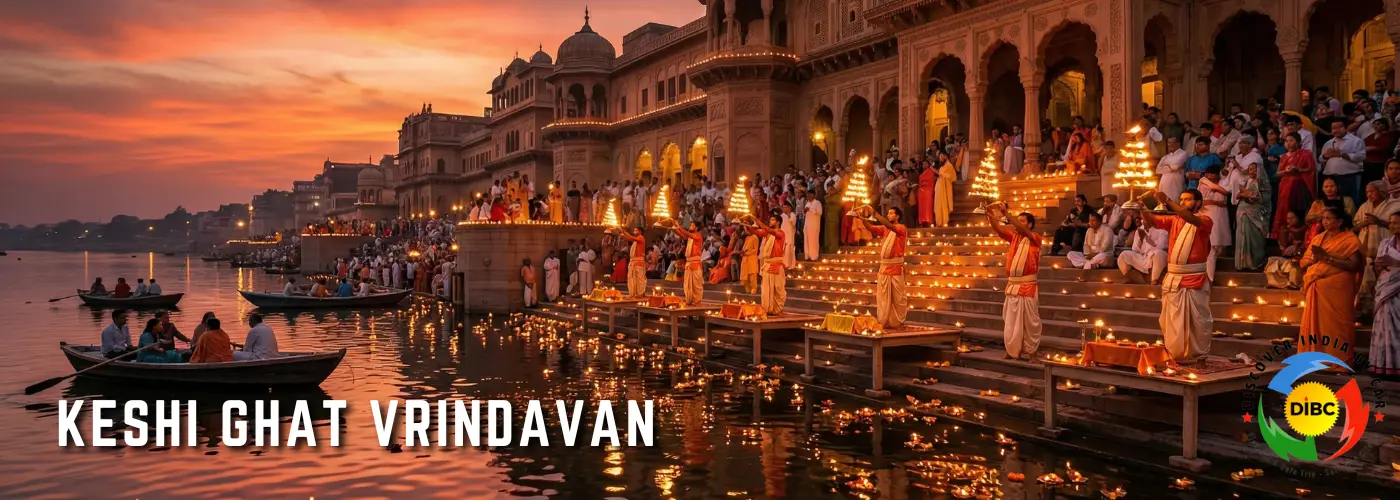
The evening aarti at Keshi Ghat takes place daily at sunset. In winter (November to February), it starts around 5:30 PM, while in summer (April to August), it begins around 6:45 PM to 7:00 PM. Visitors should arrive at least 30–45 minutes early.
If you skip the keshi ghat evening aarti, consider your trip ruined. Period. As the sun drops, the local priests prep for the daily worship of the Yamuna River. It is absolute theater.
The keshi ghat aarti timing shifts with the Indian seasons. During the bitter North Indian winters (November through February), the ritual kicks off around 5:30 PM. In the sweltering summer months (April to August), it gets pushed back to 6:45 PM or 7:00 PM. Get there 45 minutes early. Grab a spot on the steps.
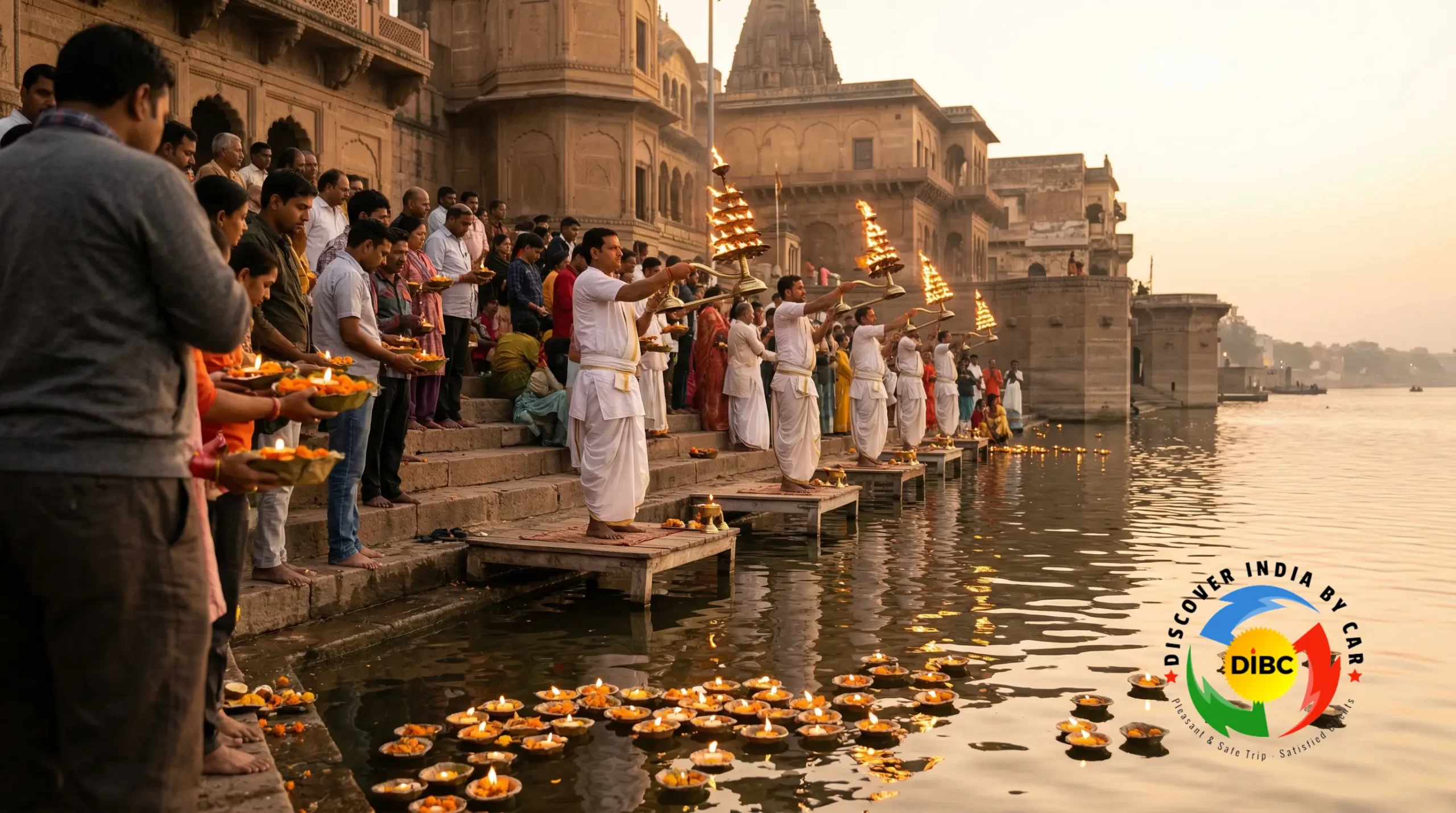
It starts with a deep, echoing blast from a conch shell. Priests wearing crisp dhoti-kurtas step onto small wooden platforms right above the water. They hoist massive, multi-tiered brass deepams (lamps). These things weigh several kilos. Drummers start pounding the mridangam. Bells ring frantically. The priests swing the blazing lamps in huge, synchronized circles.
The flames reflect off the pitch-black Yamuna. The heavy smell of burning camphor blankets the crowd. People light tiny candles inside leaf bowls filled with marigolds and push them out onto the water. Hundreds of floating lights drift away into the darkness. It hits you right in the chest.
Tourists always ask how it compares to the Ganga Aarti in Varanasi. Here is the honest truth. Varanasi is massive. It is highly commercialized. You sit fifty rows back and watch it on a giant LED screen.
Vrindavan is gritty and intimate. You stand five feet away from the fire. You feel the heat on your face. You hear the raw, unpolished voices of the locals singing. It feels authentic.
So, when is the actual best time to visit keshi ghat? It depends on your personality.
Wake up at 4:30 AM. Walk through the empty, freezing alleyways. When you hit the water, thick fog usually coats the river. You can hire a boatman for almost nothing. The only sound is the wooden oars slicing the water. The light is soft and cool. If you want to sit quietly and actually think, sunrise is your only option.
Sunset is pure chaos. The sky explodes in orange and magenta. The late sunlight hits the sandstone palace, turning the whole building into a glowing gold brick. The steps are packed with sadhus, wandering cows, and photographers. The energy is wildly electric. This is the absolute best window for a keshi ghat sunset.
Expert Pro-Tip: Do both. It sounds exhausting, but it works. Use your morning visit to shoot wide-angle architectural photos without people ruining your frame. Come back in the evening to shoot tight portraits and watch the fire ritual.
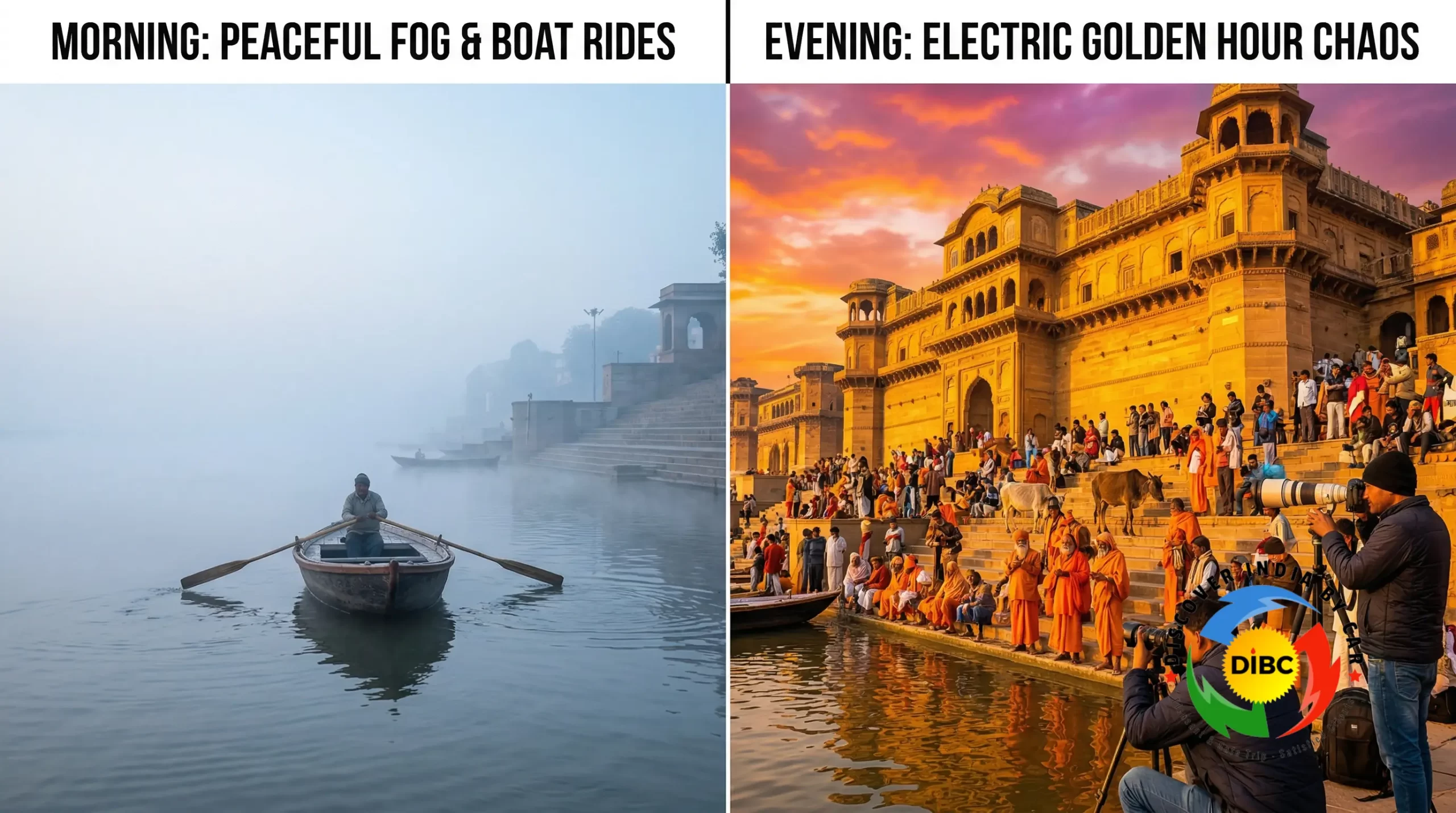
For travel bloggers and visual artists, keshi ghat sunset photography is the jackpot. Ancient stones, moving water, wooden boats, and golden light. It is a cheat code for good photos. But getting the perfect shot takes work.
Never shoot from the main steps. They are far too crowded. Someone will always walk in front of your lens. Instead, rent a small wooden rowboat. Haggle with the boatman. A 30-minute ride should run you roughly 300 to 500 INR. Tell him to row out into the exact center of the river and stop.
From out there on the water, you get a massive, sweeping view of the entire palace. Throw on a 24-70mm lens to capture the whole scene. Switch to a 70-200mm telephoto to snipe tight, emotional shots of the priests from a distance.
Vrindavan has a serious monkey situation. The macaques around the ghat are aggressive, fast, and incredibly smart. They steal for fun.
Keep your shutter speed fast (1/250s or higher) on the boat. The water chops around and will blur your shots. During the evening aarti, open your aperture all the way up (f/1.8 or f/2.8) and push your ISO. You want to capture the bright flames against the pitch-black night sky.
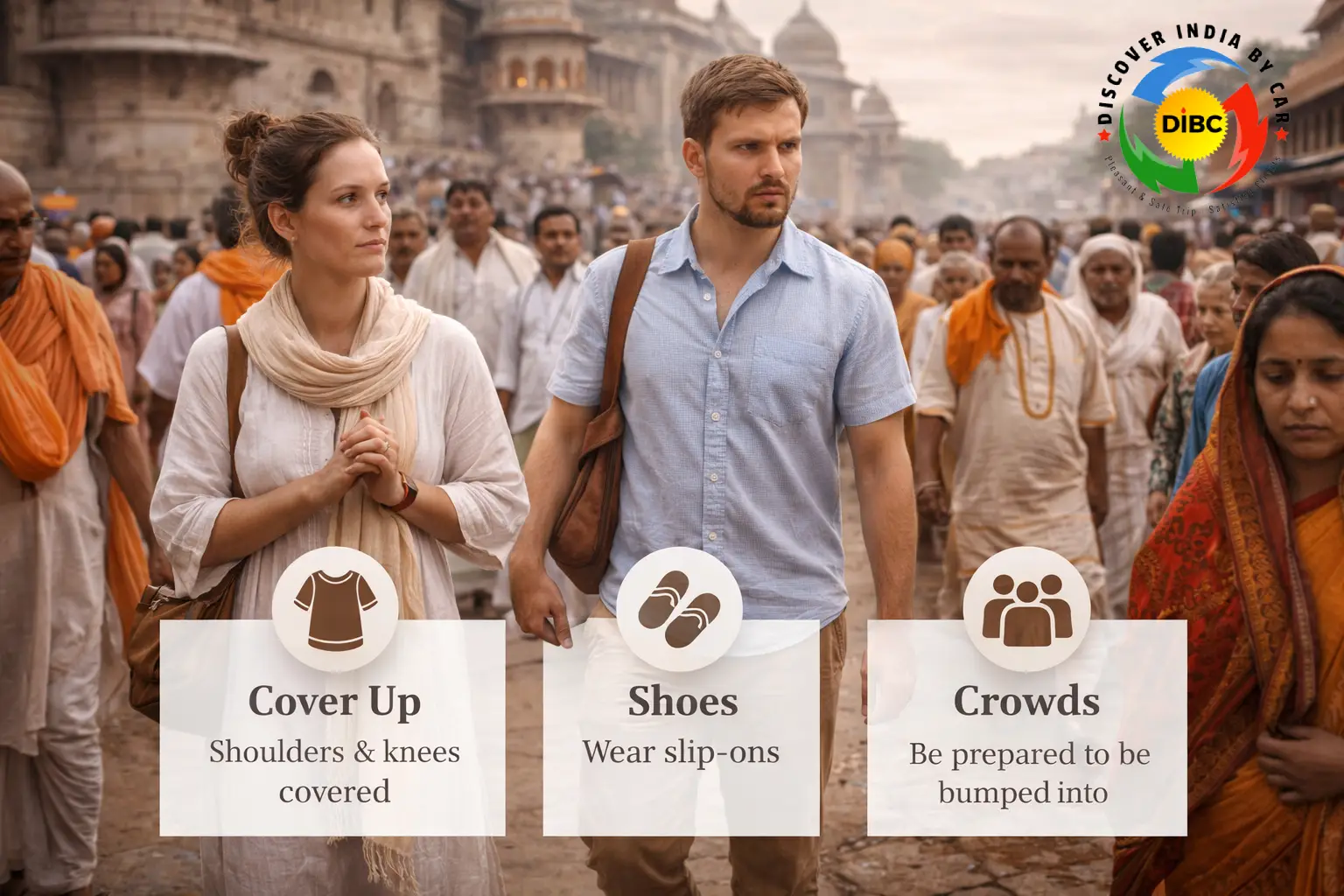
Vrindavan pulls in thousands of international tourists yearly. Many come for the ISKCON temples. But walking out of a modern Western airport and straight into rural Uttar Pradesh is a massive culture shock. You need to adapt fast.
This is a highly conservative, strictly vegetarian, and entirely alcohol-free city. Respect the ground rules.
The Yamuna River is spiritually flawless. Physically? It is heavily polluted. Do not drink it. While locals dive in headfirst, a foreign immune system cannot handle it. If you want to participate, just dab a few drops of water on your forehead. Rely on sealed bottled water for drinking.
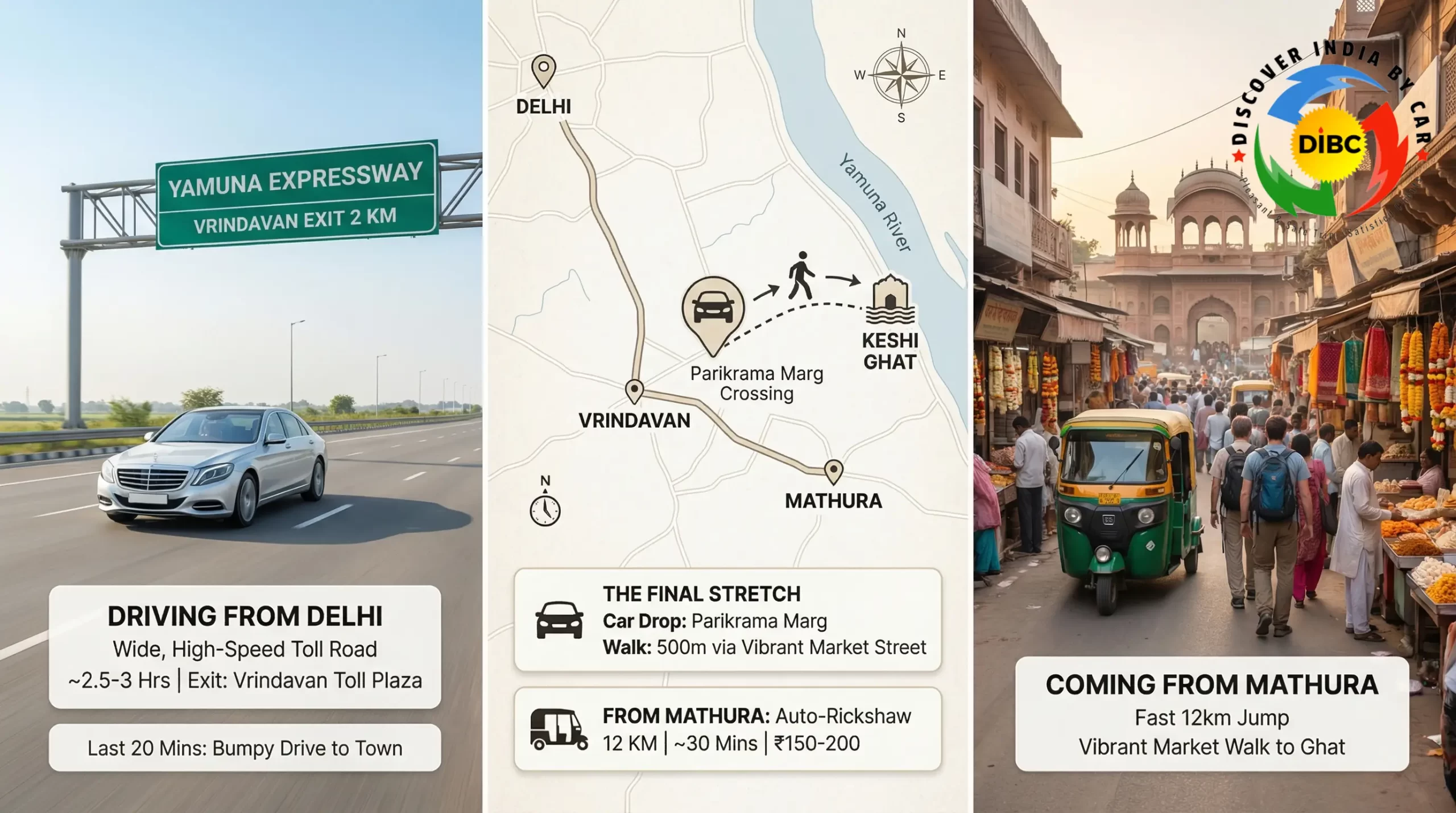
Getting here is surprisingly easy, especially if you are exploring India by car.
Driving from Delhi: This is a breeze. Hit the Yamuna Expressway. It is a wide, smooth, high-speed toll road. The drive takes about 2.5 to 3 hours depending on traffic leaving the capital. Exit at the Vrindavan toll plaza. From the exit, it is a bumpy 20-minute drive into the heart of town.
Coming from Mathura: If you are visiting keshi ghat mathura (most people do both cities in one trip), it is a fast 12-kilometer jump. Grab a local auto-rickshaw for 150-200 INR. You will weave through heavy traffic for about 30 minutes.
Cars cannot physically drive down to the water. The streets are too narrow. Your driver will drop you near the Parikrama Marg crossing. You have to walk the last 500 meters through a loud, vibrant market street.
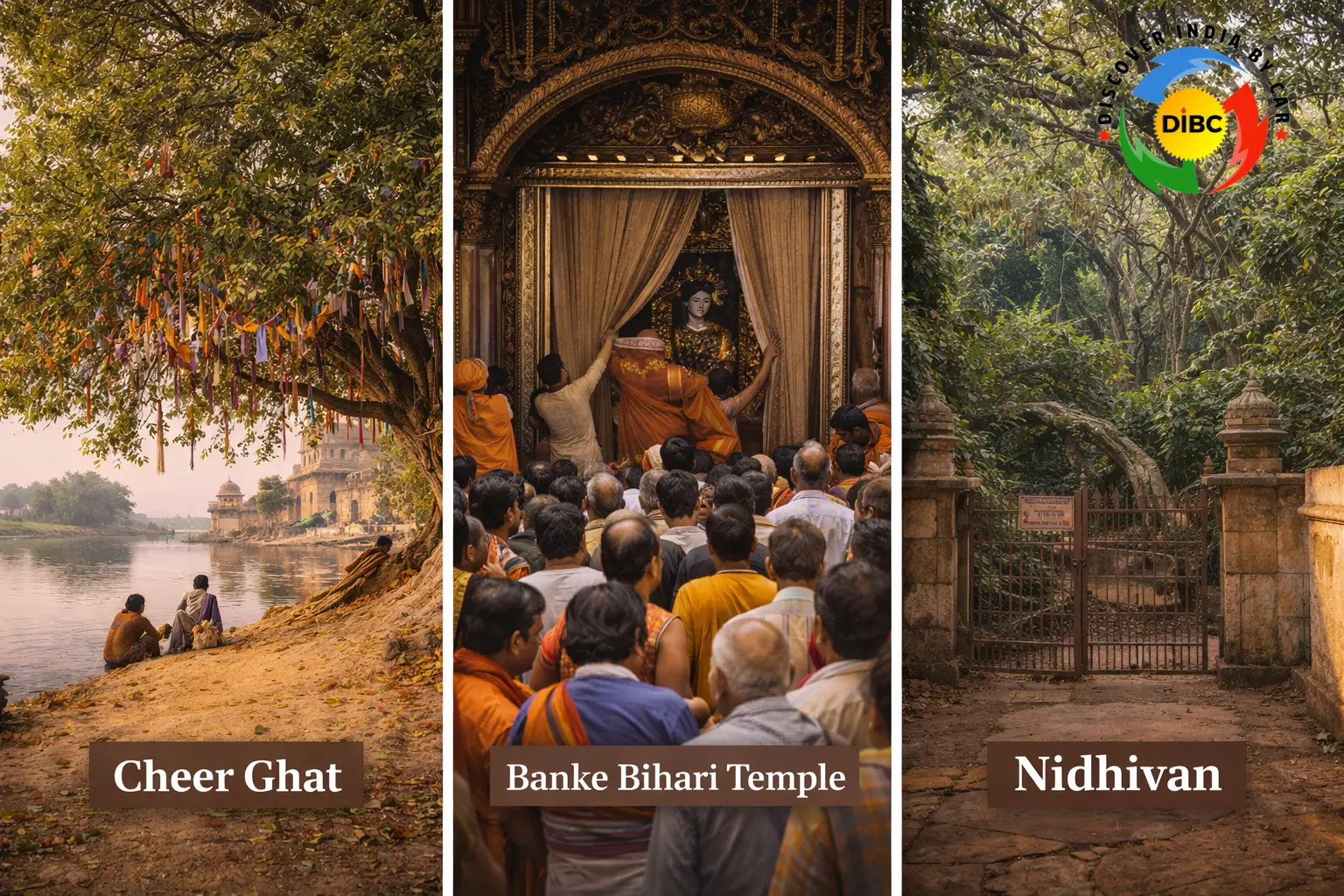
Don’t just see Keshi and leave. The best ghats in vrindavan and the hidden temples nearby deserve your time.
Cheer Ghat: A quick walk down the dirt bank brings you to this tiny spot. It is famous for a massive Kadamba tree. Legend says Krishna stole the bathing Gopis’ clothes and hid in the branches here. Today, the tree branches are weighed down by thousands of colorful cloth strips tied by people making wishes.
Banke Bihari Temple: The heavyweight champion of Vrindavan temples. Brace yourself for wild crowds. The devotion here is so intense that priests constantly pull a curtain shut in front of the idol. They believe staring too long will make you pass out from pure spiritual ecstasy.
Nidhivan: A bizarre, deeply creepy, and fascinating dense forest right in the city. The trees grow in twisted, unnatural shapes. Locals swear Krishna and Radha still visit this forest every single night. They lock the iron gates at sunset. Nobody stays inside after dark. Period.
Standing on the cold stone steps at night changes your perspective. The relentless honking from the main road fades out. You watch an old man carefully light a clay lamp. You watch a stray cow chew on some discarded marigolds. You realize this place refuses to change.
Keshi Ghat survives massive monsoon floods. It survives the heavy foot traffic of mass tourism. It ignores modern development. It just sits there, anchoring millions of people to a story thousands of years old. You do not need to be deeply religious to feel the heavy gravity of this riverbank. You just need to show up, sit down, and shut up for a few minutes. The river does the rest.
Keshi Ghat isn’t just another stop on your Vrindavan itinerary. It demands your full attention. The sheer spiritual gravity here hits hard. Visually? It is an absolute masterpiece of ancient stone meeting dark river water.
But timing dictates everything. Show up at sunrise. The fog rolls in, and the silence feels heavy. Need raw, electric energy? Hit the evening aarti at sunset. Just do yourself a massive favor and skip the brutal afternoon sun. Mid-day visits guarantee nothing but severe sunburns and entirely flat, dead photography lighting.
Sit on those cold sandstone steps. Watch the wooden boats drift. Listen to the temple bells. Do not rush this. Let the centuries of devotion sink into your bones. The Yamuna River remembers everything. Experience it properly, and it will permanently rewire how you see North India.
Q1. Is Keshi Ghat worth visiting?
A: Yes. It is the architectural crown jewel of Vrindavan. If you hate crowded indoor temples, this open-air, 17th-century Rajasthani riverfront offers the best photography and the most peaceful environment in the entire city.
Q2. What are the Keshi Ghat Aarti timings?
A: It happens every single evening at sunset. In winter (Nov-Feb), expect it to start around 5:30 PM. In summer (April-Aug), it pushes to 6:45 PM or 7:00 PM. Always show up 45 minutes early to grab a spot on the steps.
Q3. Can you take a bath at Keshi Ghat?
A: Locals bathe here daily for spiritual purification. However, the Yamuna River suffers from severe industrial pollution. Foreign tourists or those with sensitive stomachs should strictly avoid full submersion and just sprinkle a few drops on their head instead.
Q4. How far is Keshi Ghat from Banke Bihari Temple?
A: Barely 2 kilometers. But distance in Vrindavan is deceptive. An e-rickshaw gets you there in 10 minutes if traffic behaves. Walking? Give it 25 minutes. The market alleys are packed tight, so plan accordingly.
Q5. How much does a boat ride at Keshi Ghat cost?
A: Expect to pay 300 to 500 INR for a half-hour rowboat trip. But listen closely. You have to bargain. Sunset rates spike hard. Fix the exact price with the boatman before your foot touches the boat. No surprises.
About the Author
Forget the standard tourist brochures. This guide is built directly from years of on-the-ground research and countless miles driven across North India. From the crowded lanes of Vrindavan to the ancient steps of Varanasi, these are hard-earned, on-the-ground travel insights. Real roads. Real experiences.