- Private car and driver in Delhi / India
- +91-8447445445
- info@discoverindiabycar.com sugar.ankit@yahoo.com
 +91-9818434712
- Follow us:



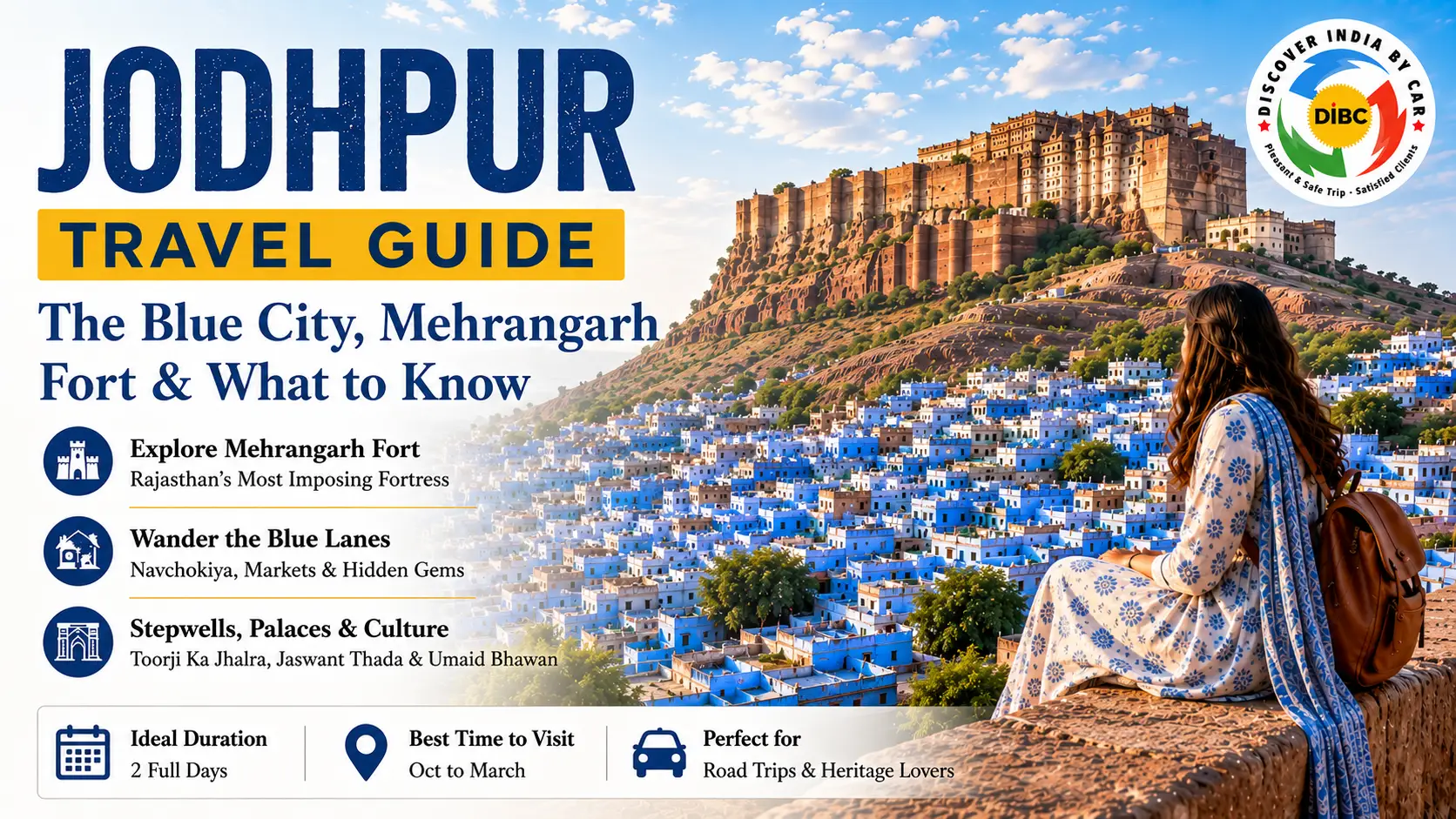
Jodhpur Travel Guide (2026): Secrets to the Blue City & Fort
Ankit Suga
Senior Heritage Content Strategist & Founder, Discover India By Car
Having spent 14 years managing private car tours and handling ground-reality transport logistics across Rajasthan, I crafted this Jodhpur blueprint directly from years of lived operational experience. I don't analyze routes from a laptop; I deal with the day-to-day realities of North India's travel terrain every single day. From leading professional photography groups onto the soaring ramparts of Mehrangarh Fort to charting cost-effective highway circuits that flawlessly link Jaipur, Jodhpur, Jaisalmer, and Udaipur, everything in this guide is born from practical field expertise. Whether pinpointing the exact alleyways of the Navchokiya quarter for true indigo framing or helping small groups bypass railway waiting list stress by utilizing dedicated vehicles, my focus is keeping your travel smooth, authentic, and exceptionally managed.
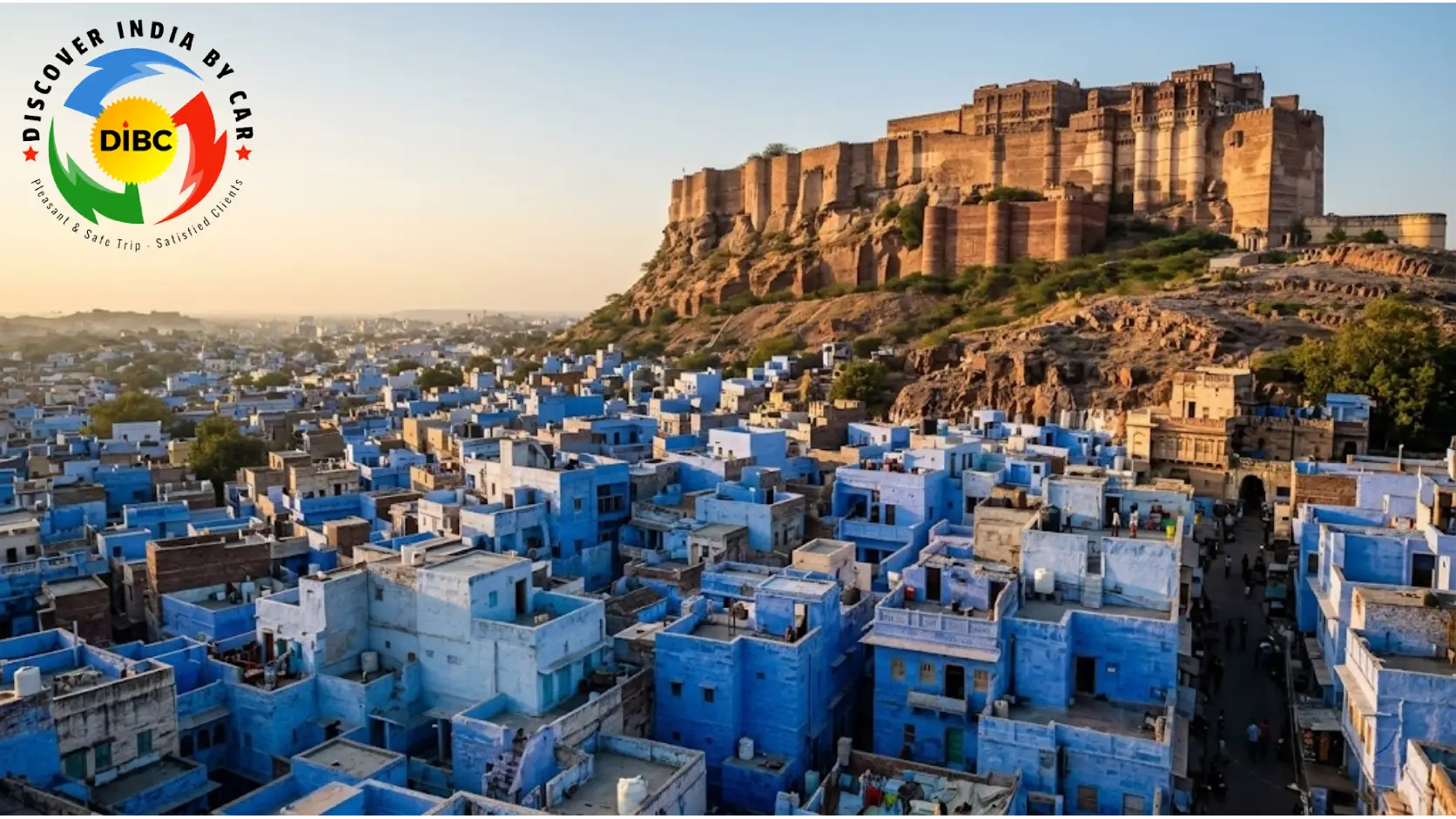
There are blue cities, and then there is Jodhpur — a sea of indigo houses spilling out beneath one of India’s mightiest forts.
📸 From the Field: I still remember the first time I brought a group of German photographers up to the ramparts of Mehrangarh. We’d done Jaipur the week before, and they’d been polite about it — nice forts, nice palaces, lovely. Then they walked out onto the terrace at Mehrangarh, looked down at the old city four hundred feet below, and went completely silent. One of them finally said, quietly, “Why did nobody tell us about this?”
That’s Jodhpur in a sentence, honestly. Fourteen years of running tours across Rajasthan, and it’s still the city where guests most consistently feel they’ve stumbled onto something. Jaipur gets the buses. Udaipur gets the honeymooners. Jodhpur, somehow, still gets to keep a bit of its soul — even though it has, by my reckoning, the single most dramatic fort-and-city view in all of India.
This guide is everything I’d tell you over chai before you went: what makes the city blue, how to do Mehrangarh properly, where to get lost in the old town, what’s worth your money and what isn’t, and how Jodhpur fits into a bigger Rajasthan trip. Let’s start with the question everyone asks first.
🗺️ Jodhpur At A Glance (2026 Travel Metrics)
| Ideal Trip Duration | 2 Full Days (Recommended for core heritage) |
| Peak Experience Season | October to March (Mid-20s°C / Night cools) |
| Must-Visit Core Hubs | Mehrangarh Fort, Navchokiya Lanes, Toorji Ka Jhalra |
| Primary Route Access | Delhi/Mumbai Direct Flights or Rajasthan Private Road Circuits |
Why Jodhpur Is the Blue City
So, why blue? Ask five locals and you’ll get five answers, which is part of the charm.
The story you’ll hear most often is about caste — that the blue wash originally marked the homes of Brahmin families, the priestly class, and that over the centuries the colour simply spread because everyone liked the look of it. Another explanation, more practical, is that the indigo-tinted limewash keeps the houses cooler in the punishing desert summer and is supposed to deter termites and insects. The romantic version says the blue echoes the sky and keeps the city feeling serene. The honest answer is probably all three at once, stacked up over a few hundred years.
What matters for you is the effect. Jodhpur isn’t blue in a painted-for-tourists, single-photogenic-street way. Climb to any rooftop in the old city — or better, look down from the fort — and the blue goes on and on, thousands of cube-shaped houses tumbling over each other in every shade from washed-out sky to deep, saturated indigo. It’s the kind of view that doesn’t quite look real, even while you’re standing in it.
And the city underneath the colour is wonderfully alive. Jodhpur isn’t a museum piece. It’s the second-largest city in Rajasthan, founded in 1459 by Rao Jodha (the city carries his name), and the old walled quarter still functions exactly as it has for centuries — spice grinders, sari shops, tea stalls, kids playing cricket in lanes barely wide enough for a scooter. The blue is the backdrop, not the show.
One small expectation-setter, because I’d rather you hear it from me: the most uniformly blue area is the Navchokiya / Chandpole side of the old city, northwest of the fort. Some lanes elsewhere are more grey-and-blue than postcard-blue. Wander toward Navchokiya and you’ll find the streets you came for.Wander toward Navchokiya and you’ll find the streets you came for.
(If you are planning to head deeper into the Thar after this, check out our comprehensive Jaisalmer Travel Guide to navigate the golden fort and sand dunes seamlessly.)
Mehrangarh Fort — Rajasthan’s Most Imposing Fortress
Let me say something that will annoy fans of Jaipur and Chittorgarh: Mehrangarh is the best fort in Rajasthan. Not the biggest by area, not the oldest — the best. I’ve taken hundreds of travellers through every major fort in the state, and nothing produces the reaction Mehrangarh does.
Part of it is pure geology. The fort doesn’t sit on a hill so much as erupt out of one — a sheer 400-foot cliff of rock with walls growing straight out of the stone, so seamlessly in places that you can’t tell where the cliff ends and the masonry begins. Rudyard Kipling, who saw a fort or two in his time, described it as the work of giants. Stand at the base and look up and you’ll see his point.
Rao Jodha started building it in 1459 when he moved his capital from Mandore, and successive rulers kept adding to it for nearly five centuries. What you walk through today is a layered thing — battle-scarred outer gates (look for the cannonball marks on Loha Pol, left by Jaipur’s armies), then progressively more refined palaces as you climb inward, until you reach courtyards of carved sandstone so delicate it looks like lace.
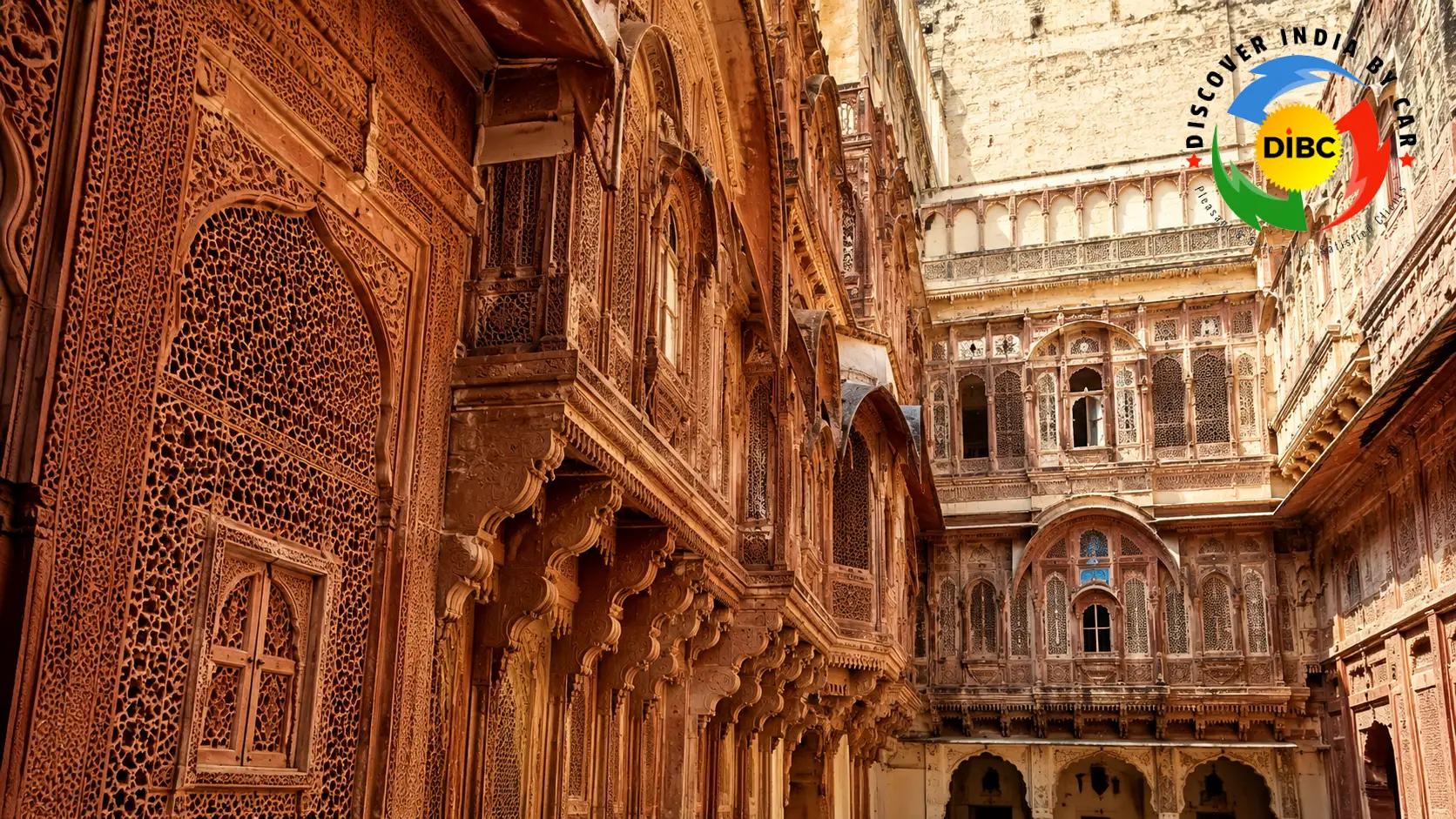
Inside, the must-sees: Moti Mahal (the Pearl Hall, where rulers held court under a ceiling of gold and mirrors), Phool Mahal (the Flower Hall — the pleasure room, dripping with gilt), Sheesh Mahal (mirror work), and the haunting collection of royal palanquins and cradles. The museum here is genuinely excellent — widely considered the best-run royal museum in Rajasthan, with proper curation rather than dusty cases.
Three pieces of hard-earned practical advice.
First, take the audio guide. It’s included with the foreigner ticket, it’s genuinely well-produced, and it turns a pretty walk into an actual story. I’ve watched guests skip it to save time and regret it within twenty minutes.
Second, give it half a day, not two hours. Between the palaces, the museum, the ramparts (the cannon-lined walls with that view over the blue city), and the courtyards, three to four hours disappears fast. The light on the old city is best from the ramparts in late afternoon.
Third — and this is the one most people miss — walk down, don’t drive down. There’s an old walking path that drops from the fort through Fateh Pol gate directly into the blue lanes of Navchokiya. Fifteen minutes downhill, and you descend from royal Rajasthan straight into living, breathing, laundry-on-the-line Rajasthan. It’s the best transition in the city.
If you’ve got adrenaline to burn, there’s also a zip-line circuit (Flying Fox) that runs across the fort’s ramparts and the desert rocks around it — six lines, views you can’t get any other way. Not for everyone, but the travellers who do it never stop talking about it.
The Blue Old Town & Clock Tower Market
Down in the lanes is where Jodhpur stops being a monument and becomes a city.
The heart of the old town is the Sardar Market, instantly recognisable by the Ghanta Ghar — the clock tower — rising out of its centre. This is not a market arranged for tourists. It’s where Jodhpur actually shops: pyramids of red chillies and turmeric, bangle-sellers, tailors with ancient sewing machines, vegetable carts, silversmiths, the occasional indifferent cow. Come in the late afternoon when the heat softens and the whole place fills up.
A few specific things worth seeking out around the clock tower, all of them tested on years of guests:
The makhaniya lassi at the famous old lassi shop near the tower’s gate — thick enough to need a spoon, topped with cream and saffron. Guests have told me it alone justified the trip to Jodhpur. They were exaggerating, but not by much.
The spice shops in and around the market. Jodhpur is a serious spice town, and a small packet of properly fragrant garam masala or saffron makes a far better souvenir than anything from an airport shop. The established shops will vacuum-seal for travel.
Mirchi vada and pyaaz kachori from the snack stalls — Jodhpur’s two great fried gifts to humanity. A chilli fritter and an onion-stuffed pastry, both best eaten standing up, slightly too hot, with tamarind chutney.
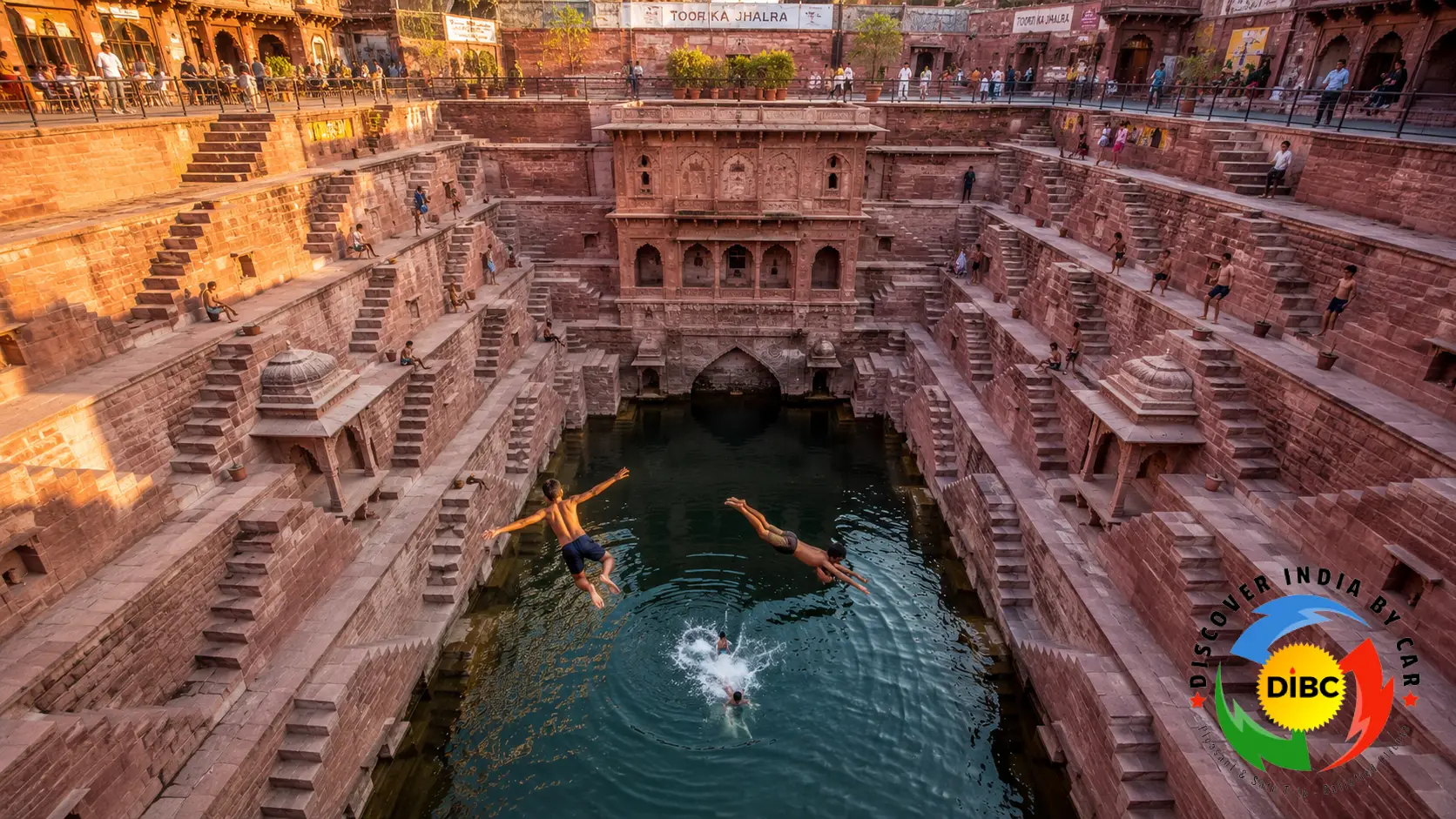
Then there are the lanes themselves. Put the map away for an hour or two and just walk — toward Navchokiya for the bluest streets, through Tripolia market for textiles and handicrafts, past stepwells and small temples that appear out of nowhere. The old city’s newest star is the restored Toorji Ka Jhalra stepwell — a centuries-old geometric well of red sandstone steps descending to the water, now ringed by cafés. Sunset here, with local kids leaping into the water and travellers nursing coffees on the steps, is one of the loveliest free hours in Rajasthan.
A practical note on rooftops: half the old city’s guesthouses and cafés have fort-view terraces, and the evening view — Mehrangarh floodlit gold above the darkening blue city — is the image you’ll take home. Pick at least one dinner for it.
Jaswant Thada & Umaid Bhawan Palace
Two more stops round out the royal Jodhpur picture, and they sit at opposite ends of the story.
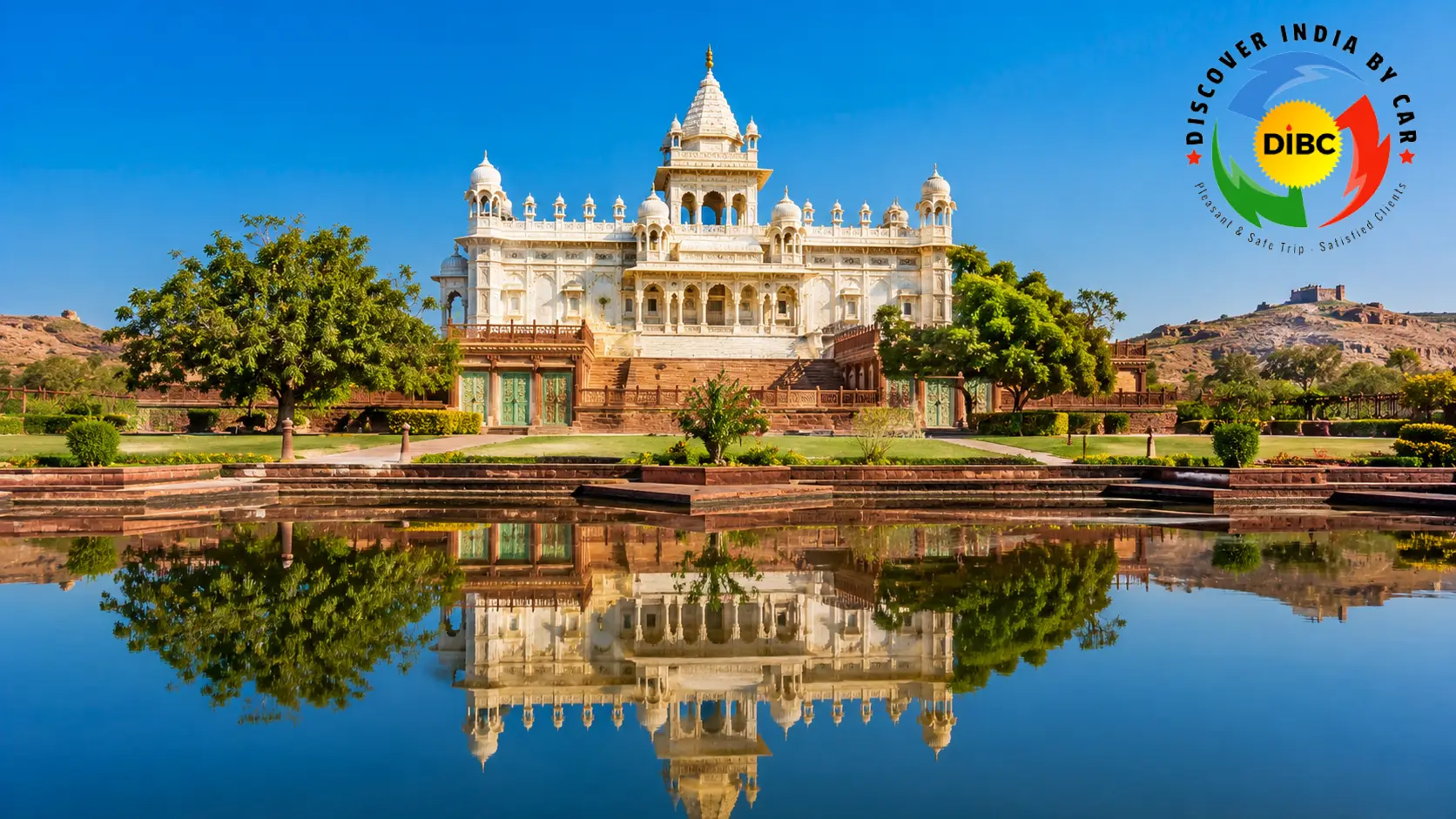
Jaswant Thada, a short hop from the fort, is the one travellers most often skip and most often regret skipping. It’s the royal cremation ground — which sounds grim and is anything but. The main memorial, built in 1899 for Maharaja Jaswant Singh II, is carved from sheets of milky white marble so thin they glow translucent when the sun hits them. People call it the “Taj Mahal of Marwar,” which oversells it slightly, but the building is genuinely beautiful, the gardens are calm, the lake below reflects the fort, and you’ll often have the place nearly to yourself. Twenty minutes to an hour, depending on how long you sit. Sit longer.
Umaid Bhawan Palace, across town on Chittar Hill, is the other end of the timeline — one of the last great palaces ever built in India, finished in 1943. There’s a humane story under the grandeur: Maharaja Umaid Singh commissioned it substantially as a famine-relief project, employing thousands of local people through years of drought. The result is a vast golden-sandstone Art Deco palace — a genuinely strange and wonderful collision of Rajput architecture and 1930s glamour.
Here’s what you need to know before you go: the palace today is split three ways — the royal family still lives in one wing, a famous luxury hotel occupies the largest part, and only a relatively small museum is open to regular visitors. The museum covers the palace’s history, the Art Deco interiors, and a courtyard of the Maharaja’s vintage cars. It’s worth an hour if you’re interested in the era; it will disappoint you if you arrive expecting to roam palace halls. Unless, of course, you book a night or a meal at the hotel — for honeymooners with the budget, dinner at Umaid Bhawan is the most regal evening Jodhpur offers.
If your time is tight and you have to choose: fort first, always; Jaswant Thada second; Umaid Bhawan third.
How to Reach Jodhpur & Getting Around
Jodhpur sits in central-western Rajasthan, which makes it the natural hinge of any Rajasthan circuit — roughly midway between Jaipur and Jaisalmer, with Udaipur an easy run south.
By air:
Jodhpur has its own airport, barely 5km from the old city, with regular direct flights from Delhi and Mumbai. Flying in from Delhi takes about an hour and a half. For travellers short on time, this is the painless option.
By train:
Jodhpur Junction is well connected — overnight trains from Delhi (roughly 10–12 hours, and the Mandore Express is the old reliable), plus convenient links from Jaipur (around 5–6 hours). The station sits close enough to the old city that you’re at your guesthouse fifteen minutes after stepping off the platform.
Rajasthan Hub-and-Spoke Road Connections
- The Golden Loop (Jaipur to Jodhpur | ~6 Hours): Can easily route past the remarkable Jain temples at Ranakpur if you swing south, or pair naturally with a stopover in Pushkar.
- The Heritage Core (Jodhpur to Udaipur | 5–6 Hours): This route via Ranakpur (1,444 carved pillars) and the great hill fort of Kumbhalgarh is, for my money, one of the two or three finest driving days in India.You can explore our verified list of strategic Rajasthan road trip packages and custom itineraries to map these inter-city connections without rail delays.
- The West Desert Run (Jodhpur to Jaisalmer | ~5 Hours): Takes you west into proper desert, the landscape emptying and goldening as you go — with the eerie abandoned village of Kuldhara and desert temples en route.
💡 The Reality: None of these iconic mid-way stops are practical or accessible by rail. They are only effortless with a private car and a driver who knows the backcountry roads.
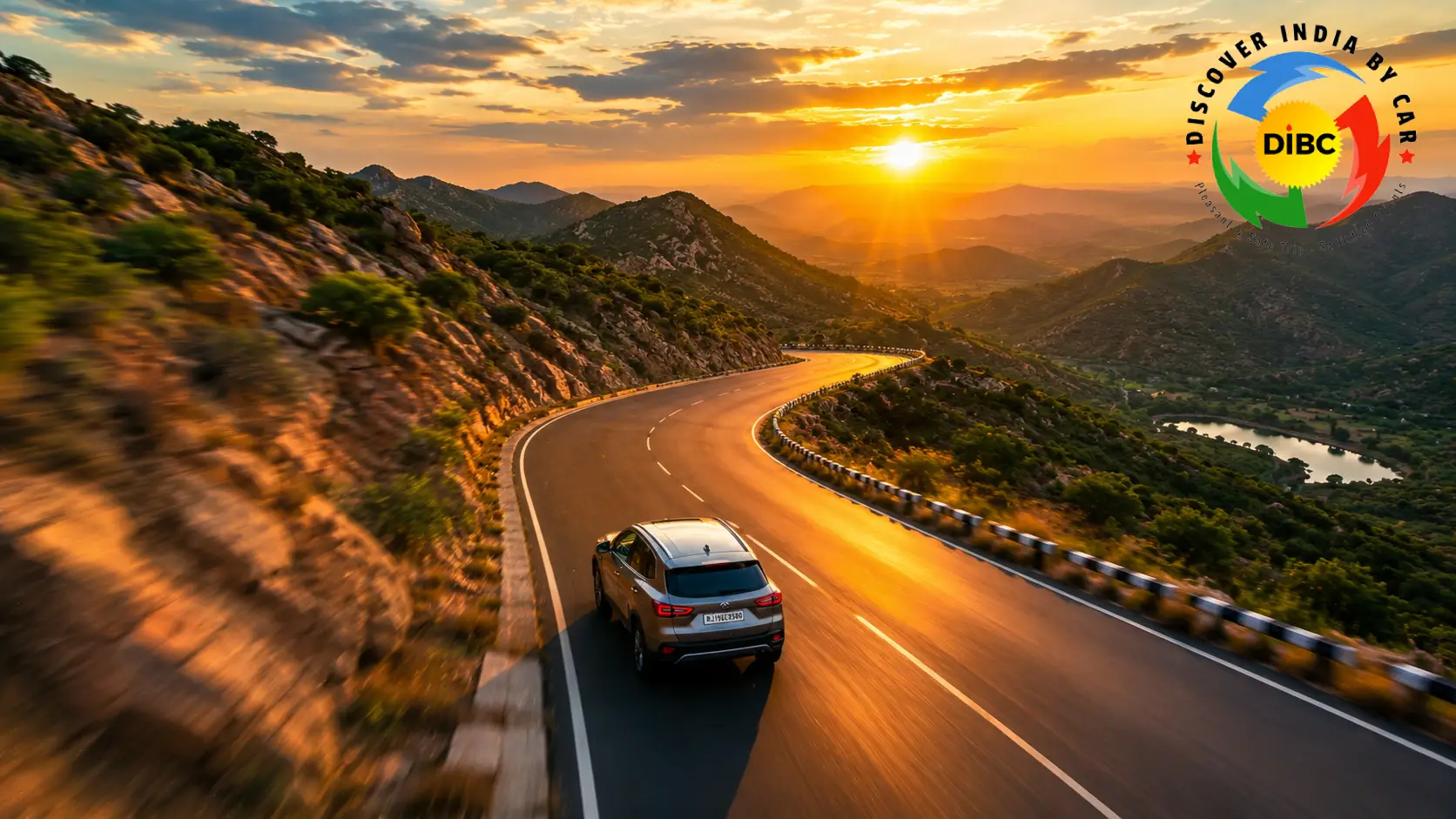
Getting around the city itself: the old town is a walking place — the lanes are too narrow for anything else, and walking is the point. For the fort, Jaswant Thada, Umaid Bhawan and Mandore Gardens, auto-rickshaws are everywhere (agree the fare first, or use the ride apps which work well in Jodhpur), or your driver simply handles it all if you’ve come by car. The fort is a steep 20–30 minute walk up from the old city if you’re feeling energetic; most people ride up and walk down through Fateh Pol, which is the right way around.
Best Time to Visit & a Suggested Itinerary
Jodhpur is desert country, and the calendar matters more here than almost anywhere in India.
October to March is the season, no argument. Days run warm and dry — mid-twenties Celsius, roughly — and the evenings turn genuinely cool, sometimes properly cold in late December and January. The light is clean, the sky is that hard desert blue, and walking the old city is a pleasure rather than an endurance event. December and January are the busiest months; book the good guesthouses ahead.
There’s a bonus in October too: the Rajasthan International Folk Festival (RIFF) is held at Mehrangarh Fort itself around the autumn full moon — world-class folk musicians performing inside the fort under the night sky. If your dates can flex to match it, make them flex.
April to June is the hard season. Jodhpur in May regularly crosses 40°C and keeps going; this is one of the hottest corners of India. Prices crash and crowds vanish, but sightseeing becomes a dawn-and-dusk operation with a long air-conditioned retreat in between. I’d steer first-timers away from it.
July to September, the monsoon, is gentler here than most of India — Jodhpur sits in the desert’s rain shadow and gets modest, dramatic bursts rather than weeks of downpour. The desert briefly greens, clouds make the fort photogenic in a moodier way, and rates stay low. An acceptable shoulder choice if winter doesn’t work for you.
The Definitive Jodhpur Chrono-Routine
How long do you need? Two full days is the sweet spot. Here is the exact blueprint I recommend, refined over a lot of actual road trips.
The Royal City & The Great Descent
Start your morning and early afternoon pacing through the grand palaces, curated museum spaces, and cannon-lined ramparts of Mehrangarh Fort.
The Living Core & Artisan Quarters
Begin your morning slowly nursing a coffee on the red sandstone steps of Toorji Ka Jhalra stepwell. Once the city wakes up, transition to the buzzing lanes of Sardar Market around the iconic Clock Tower.
- Mandatory Pitstop: Stop for a thick, saffron-loaded makhaniya lassi near the market gate.
- Post-Lunch Walk: Explore the deepest, most uniformly blue-washed alleyways of the Navchokiya quarter before visiting the Art Deco architectural galleries of the Umaid Bhawan Palace museum.
Evening Option: If you have the hours free, drive out to the peaceful ruins, green gardens, and high-set cenotaphs of Mandore—the old historical capital before Jodhpur ever existed. It is a quiet, crowd-free closing chapter to the city.
The Outpost Excursions
A third day opens up raw rural exposures outside the urban wall. Head south for an authentic Bishnoi village visit to interact with the local community whose deep, structural reverence for wildlife and nature spans centuries. Keep your eyes on the brush—you will very likely spot indigenous blackbuck antelopes roaming free.
Alternatively, use this third day for slower, unscripted repeats of whatever corner of the blue lanes or spice markets you loved the most.
Fitting Jodhpur Into a Rajasthan Circuit (Transparent Note)
I’ll be upfront: this is the part of the guide where my business enters the picture, so weigh it accordingly.
Jodhpur’s location makes it the pivot of the classic Rajasthan circuit — and that circuit is overwhelmingly best done by road, because the treasures of this state sit between its cities as much as in them. Ranakpur’s 1,444 carved pillars, Kumbhalgarh’s great wall, Kuldhara’s abandoned streets, the Bishnoi villages — there’s no train to any of them.
Planning Your Rajasthan Road Strategy? Let us Handle the Highway Mechanics.
As broken down across this guide, traveling the magnificent corridors of Rajasthan in a private car often costs the same for small groups as balancing train waiting lists paired with unpredictable city auto-rickshaws. Discover India by Car bypasses the logistics stress, granting you total flexibility to explore heritage checkpoints seamlessly.
The Extended Triangle
Delhi → Agra → Jaipur → Jodhpur. Perfect for adding the Blue City to the classic route.
The Deep Desert Run
Jodhpur → Jaisalmer Dunes. Scheduled meticulously to catch the shifting sand sunset.
The Full Comprehensive
Jaipur → Pushkar → Jodhpur → Jaisalmer → Udaipur (via the deep Ranakpur & Kumbhalgarh loops).
FAQ: Visiting Jodhpur
Q1. Why is Jodhpur called the Blue City?
Jodhpur’s old town is painted in shades of indigo-blue limewash — a tradition explained variously as marking Brahmin homes, keeping houses cooler in the desert heat, and repelling insects. Over centuries the colour spread across thousands of houses, and the view of the blue old city from Mehrangarh Fort’s ramparts is now Jodhpur’s defining image. The bluest lanes are in the Navchokiya area, northwest of the fort.
Q2. Is Jodhpur worth visiting?
Very much so. Jodhpur combines what many consider Rajasthan’s finest fort (Mehrangarh), one of India’s most photogenic old cities, a superb food scene, and fewer crowds than Jaipur or Udaipur. Most travellers rank it among the highlights of their Rajasthan trip.
Q3. How many days do you need in Jodhpur?
Two full days covers the essentials comfortably — Mehrangarh Fort, the blue old town and Clock Tower market, Jaswant Thada, the Toorji Ka Jhalra stepwell, and Umaid Bhawan. Add a third day for Mandore Gardens, Bishnoi village excursions, or simply a slower pace.
Q4. What is Mehrangarh Fort’s entry fee and timing?
The fort generally opens around 9am and closes around 5pm. Foreign visitors pay a combined ticket (roughly ₹600, including the excellent audio guide); Indian nationals pay considerably less, with a small extra fee for cameras. Fees are revised periodically — confirm at the gate or the fort’s official website when you visit.
Q5. What is the best time to visit Jodhpur?
October to March, when days are warm and evenings cool. December–January is peak season. April to June is extremely hot (regularly above 40°C) and best avoided by first-time visitors. The RIFF folk festival at Mehrangarh in October is a superb reason to time a trip.
Q6. How far is Jodhpur from Jaisalmer, Udaipur and Jaipur?
Jaisalmer is about 285km west (roughly 5 hours by road), Udaipur about 250km south (5–6 hours via Ranakpur), and Jaipur about 340km northeast (6 hours). All three drives pass worthwhile stops — Ranakpur, Kumbhalgarh, Kuldhara — that trains don’t serve, which is why most multi-city Rajasthan trips are done by private car.
Q7. Is Jodhpur safe for tourists?
Yes — Jodhpur is among the more relaxed major Rajasthan cities, and solo and female travellers generally find it comfortable. Standard precautions apply in crowded markets. Touts around the fort and market are mild by Indian standards; a polite, firm “no thank you” works.
Q8. What food is Jodhpur famous for?
Makhaniya lassi (thick saffron-cream lassi), mirchi vada (chilli fritters), pyaaz kachori (onion-stuffed pastry), and the fiery laal maas (red mutton curry) at the city’s traditional restaurants. The stalls around the Clock Tower are the classic place to graze.
Discover India by Car has been organising private car tours across Rajasthan and North India for 14 years — Golden Triangle, Jodhpur–Jaisalmer–Udaipur circuits, and custom routes built around your dates. Office: A98, 2nd Floor, Jain Park, Uttam Nagar, New Delhi – 110059 | info@discoverindiabycar.com | +91-9818434712 | +91-8447445445
Note: Entry fees, timings and festival dates are approximate 2026 figures and are revised periodically — verify current details before your visit.